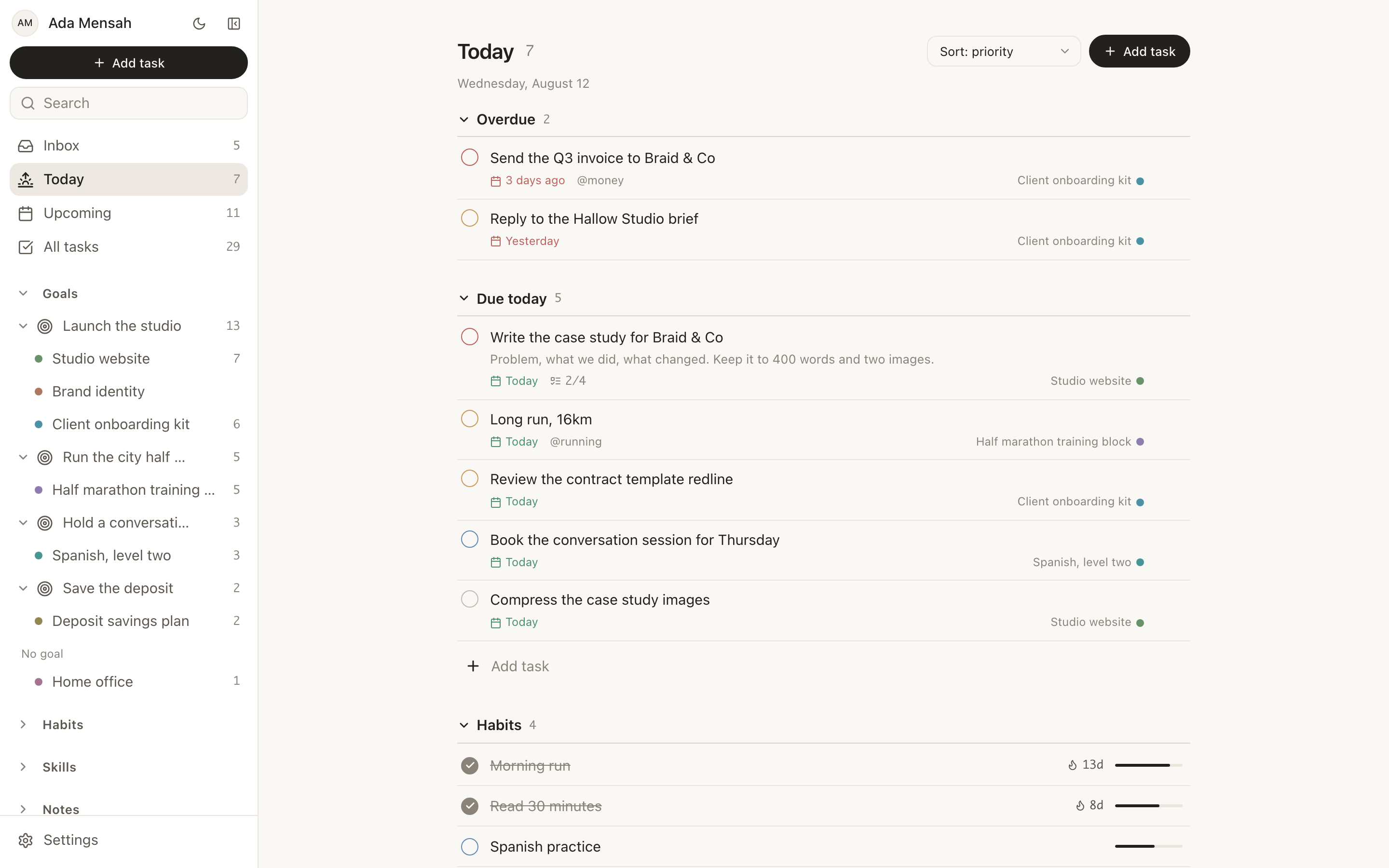
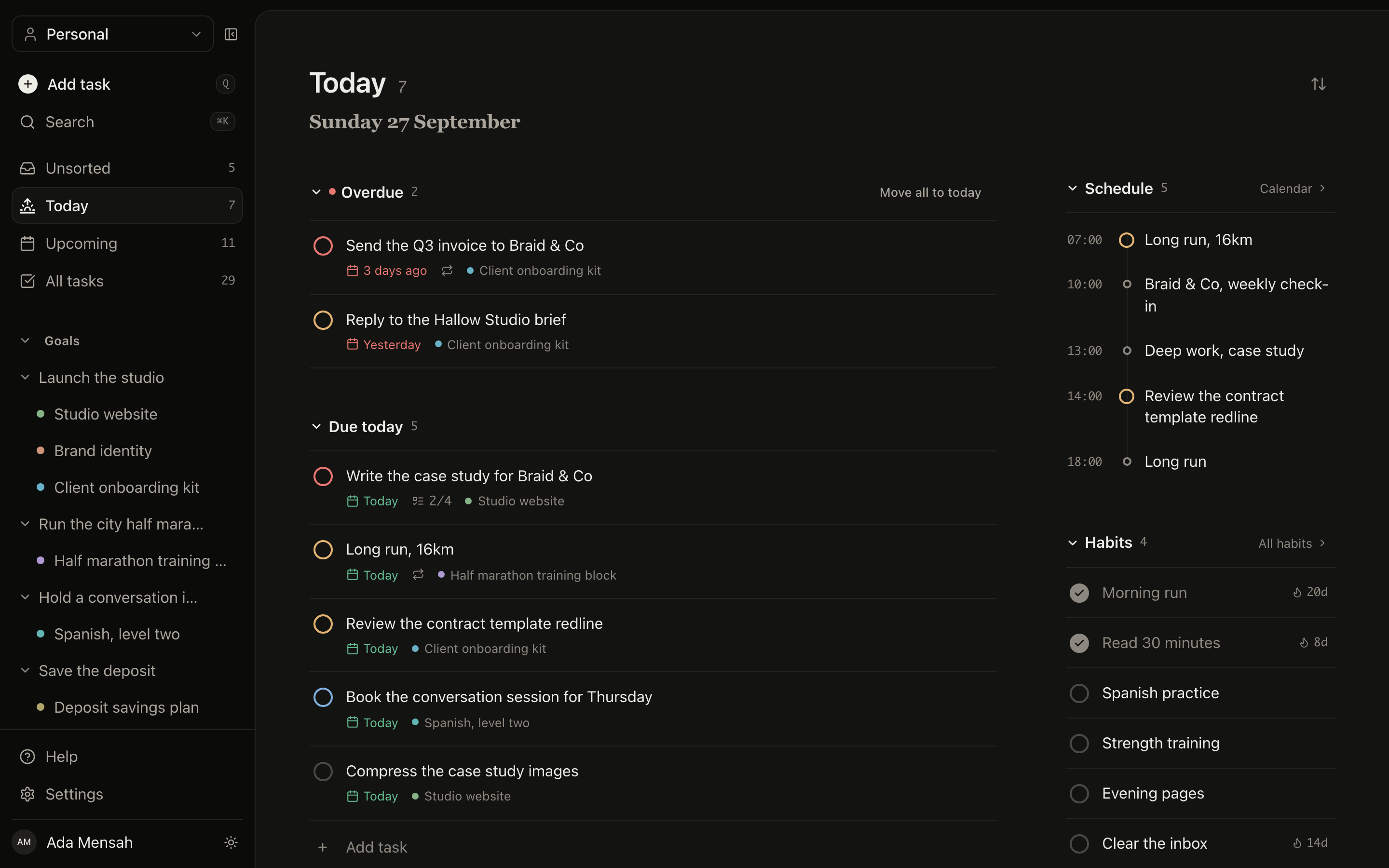
Notion is a tool you build a system in. EvyOS already is one. Goals, projects, tasks, habits, skills, notes and a calendar are there the moment you sign in, wired to each other, with nothing to design. That is the trade: you give up Notion's freedom and get structure that works on day one.
Free plan, no card. 2 goals, 5 projects, 20 open tasks, 5 habits, 5 skills.
None of this is a template you install or a database you configure. It is the application. The fields below are the fields, and the links between them are already made.
A category, a priority, a target date and milestones. Progress is calculated from the projects and tasks underneath, never typed in, so the number cannot flatter you the way a manual percentage field does.
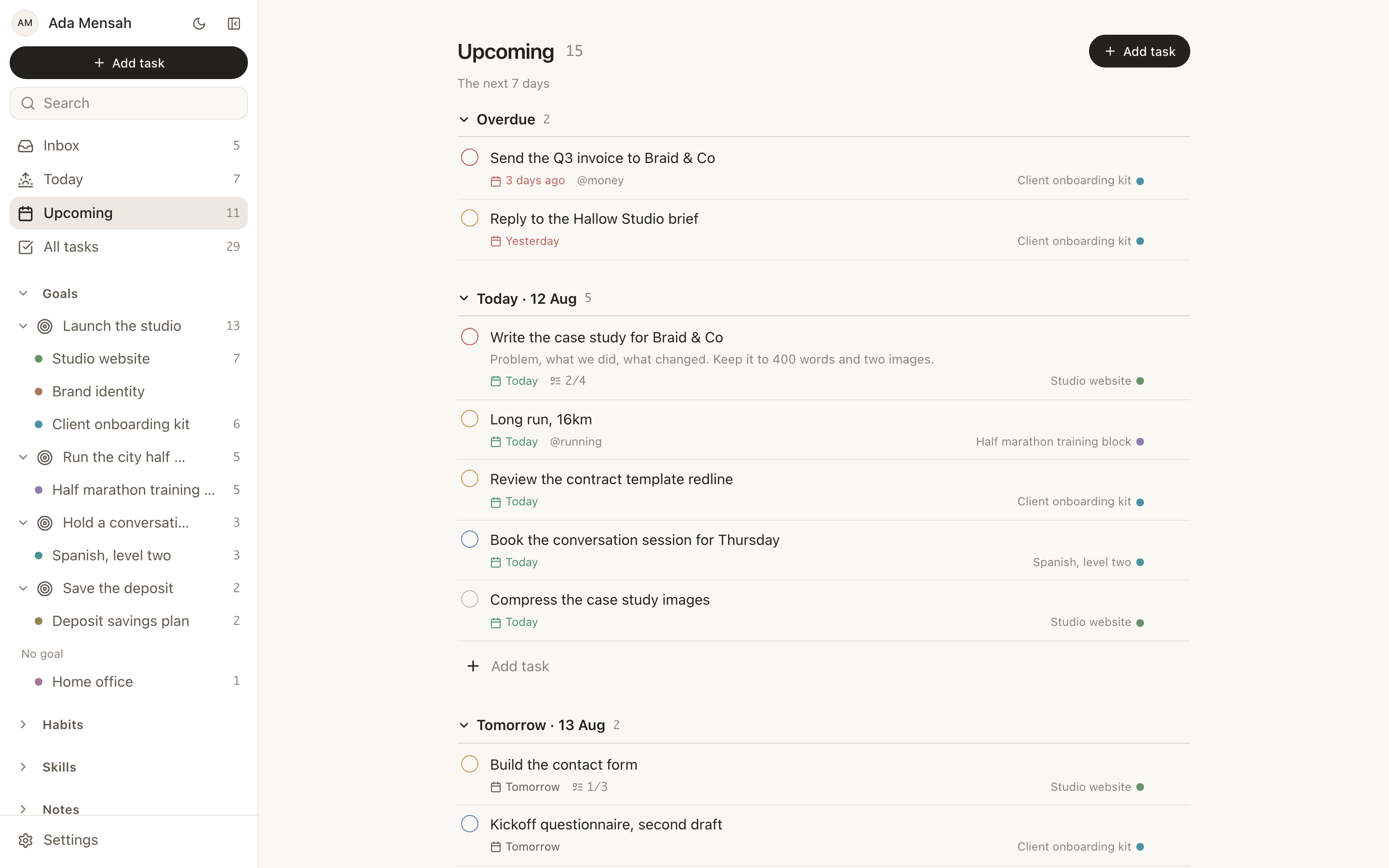
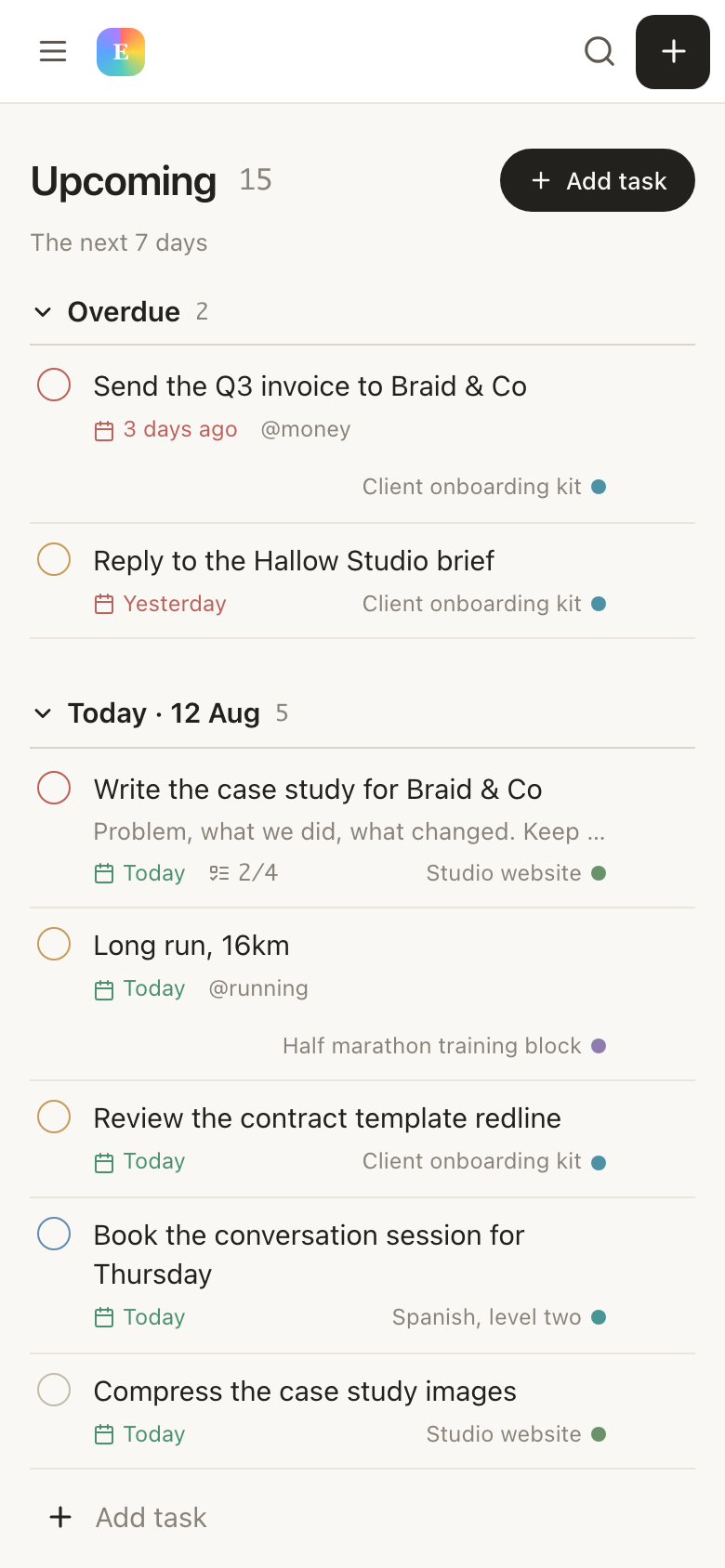
Projects carry milestones, a deadline and an optional parent goal. Tasks carry 4 priority levels, a due date, estimated and actual minutes, subtasks, comments, attachments, tags and recurrence. A task with no project lands in an unsorted inbox.
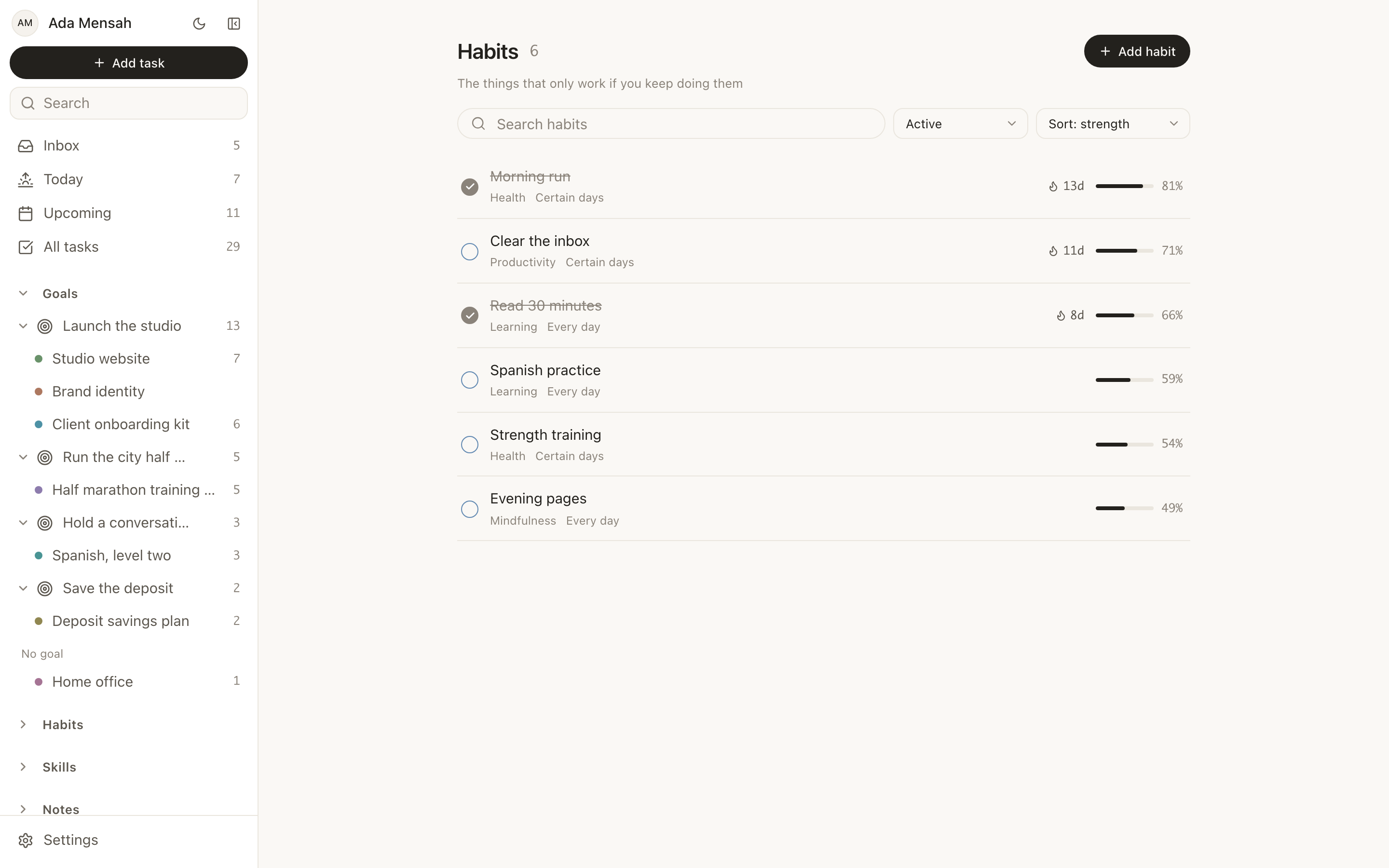
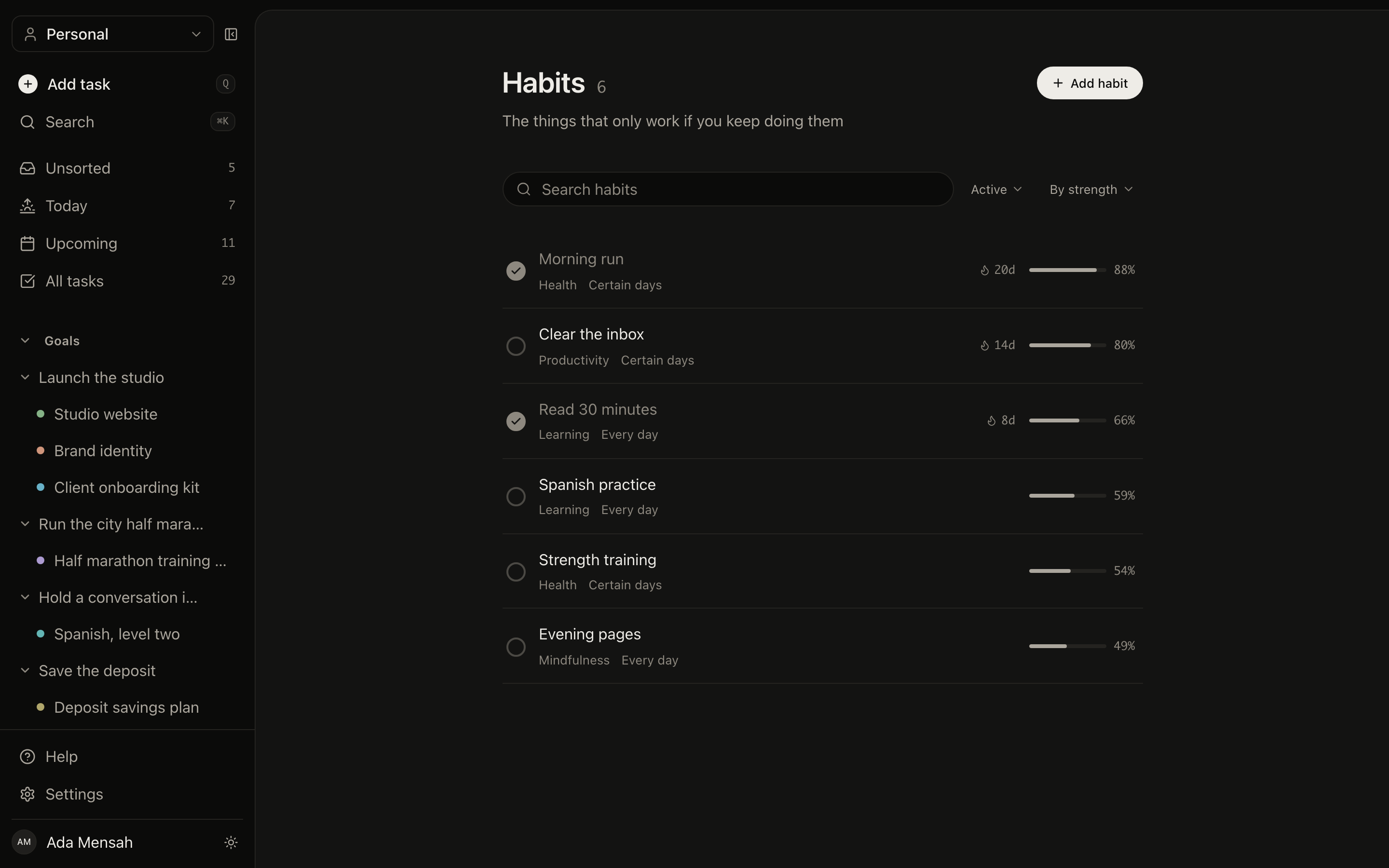
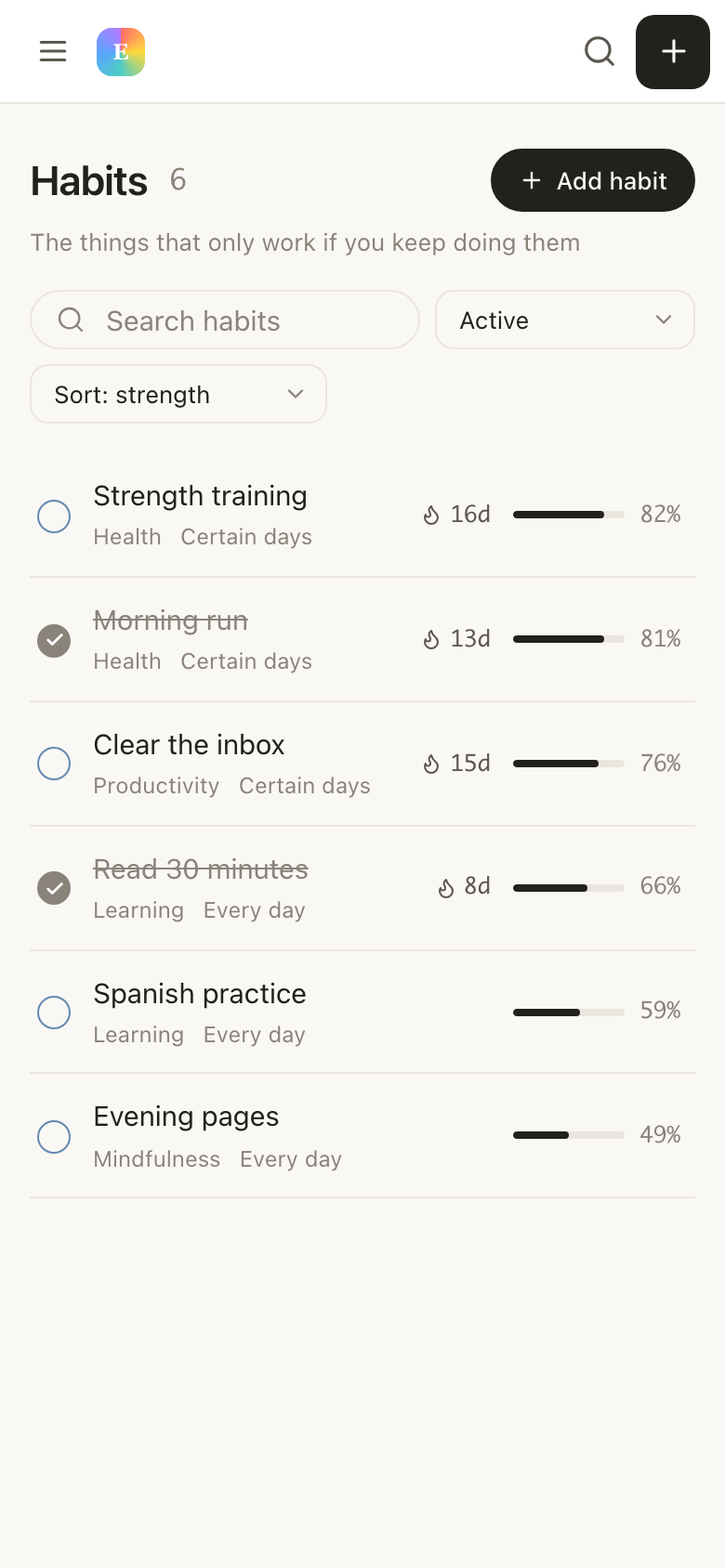
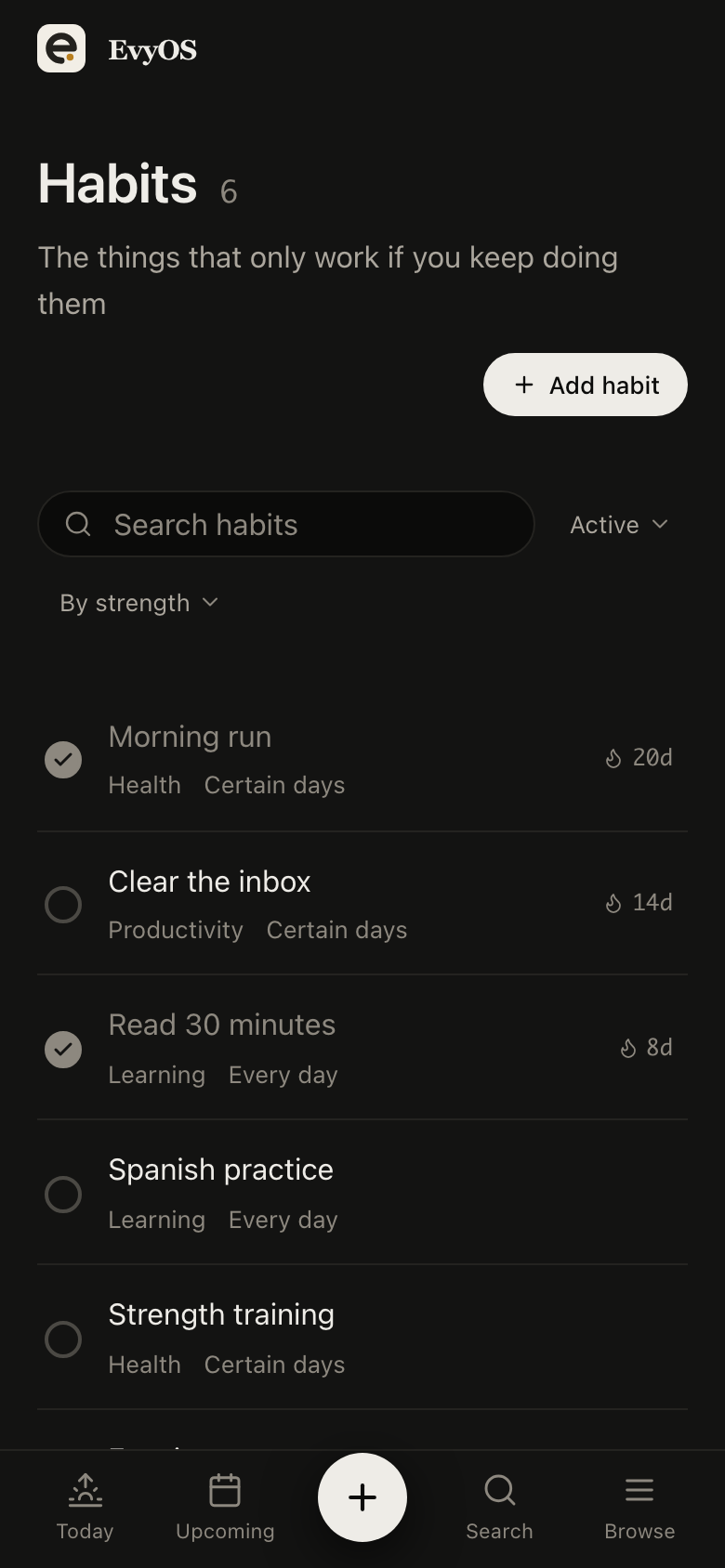
Daily or named weekdays, a streak, a strength score built from consistency and recency, and a year-long contribution graph. Notion has no native habit tracking, which is the single most common reason people end up on this page.
A level and a target level, practice sessions logged in minutes with an activity type, and a library of the resources you are working through. The other thing a database can only imitate.
Markdown, folders, tags, search and version history, with [[Title]] wiki-links that produce backlinks and an optional public share link. Simpler than a Notion page on purpose, and sitting next to the work it belongs to.
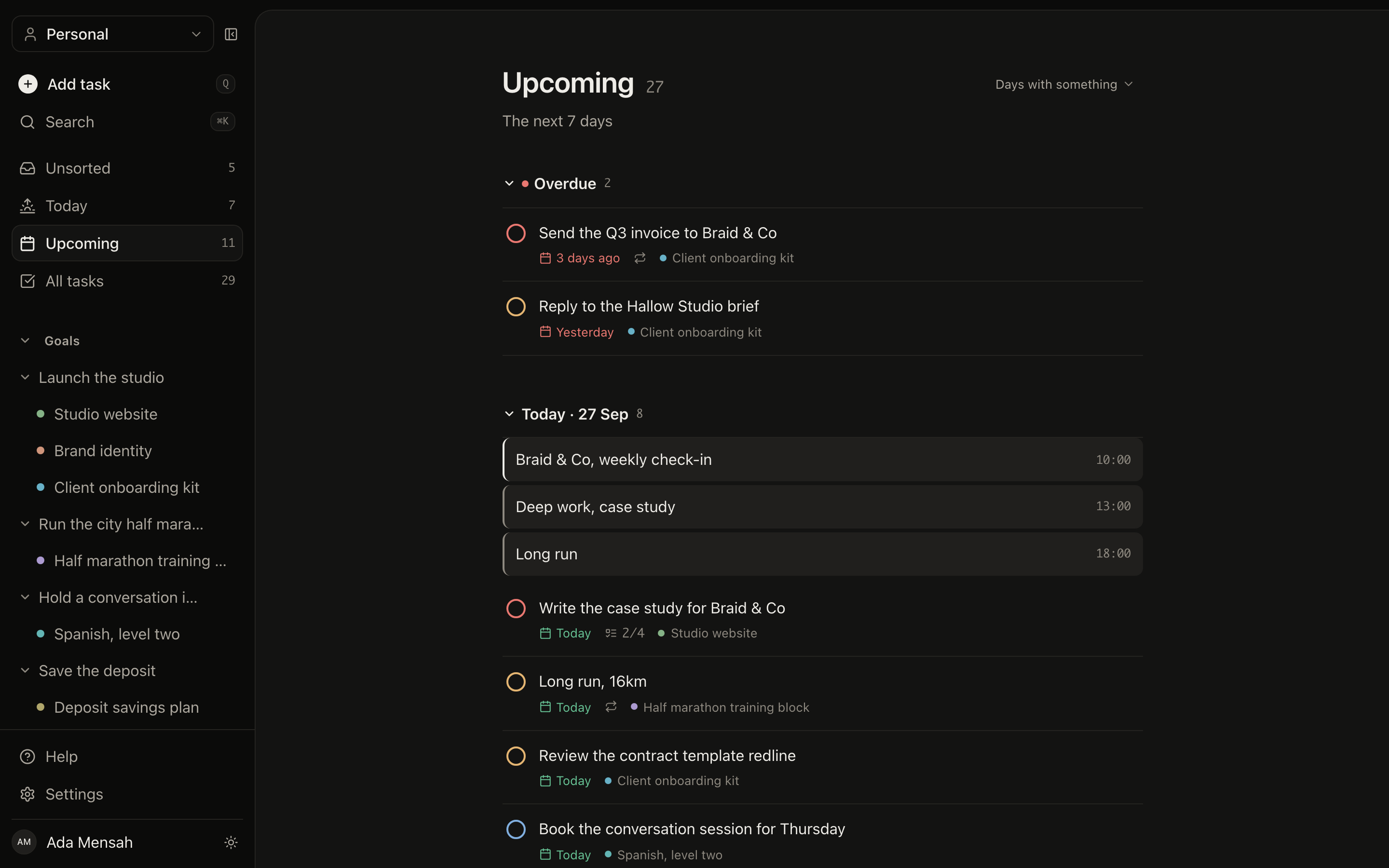
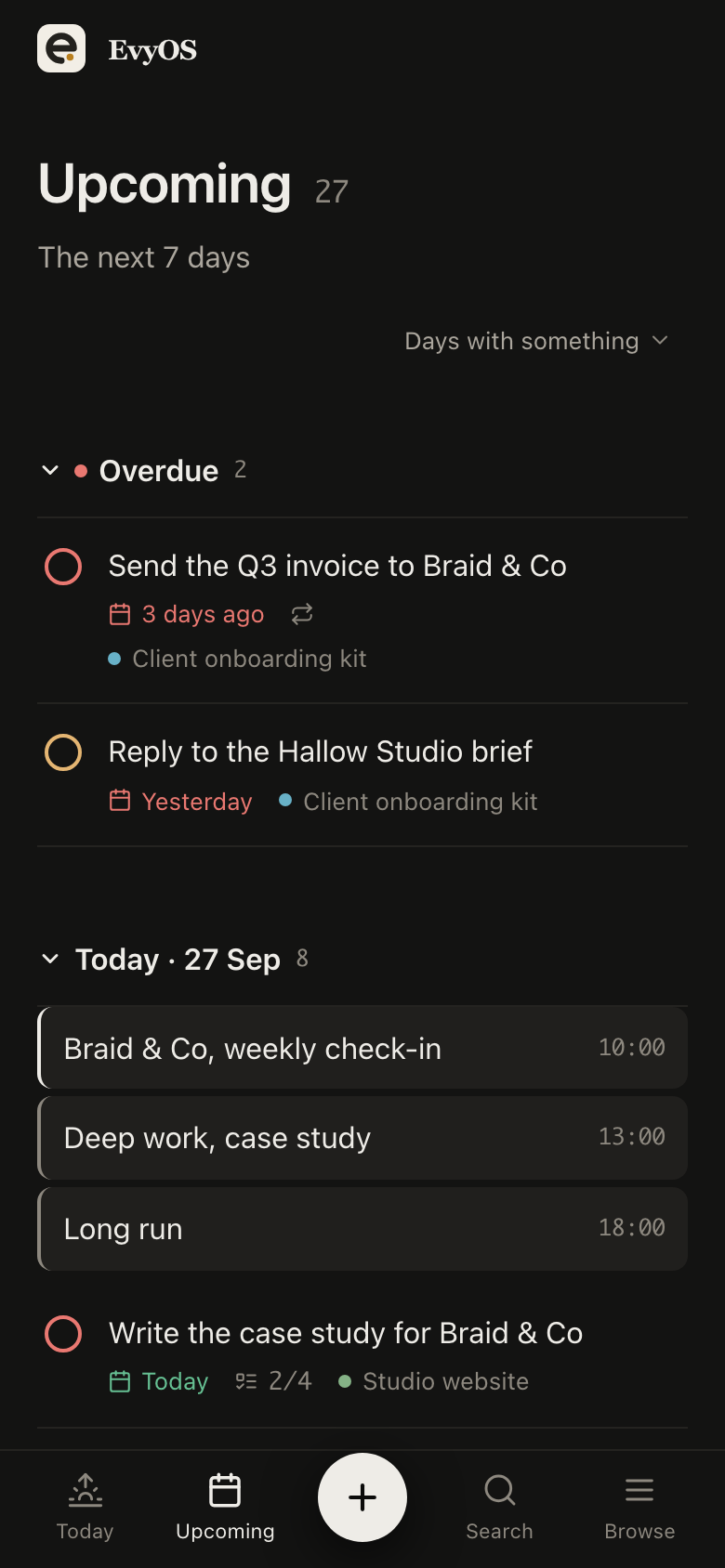
A date, a time, a duration and recurrence, in day, week and month views, and on the Today screen under everything else the day is asking of you.
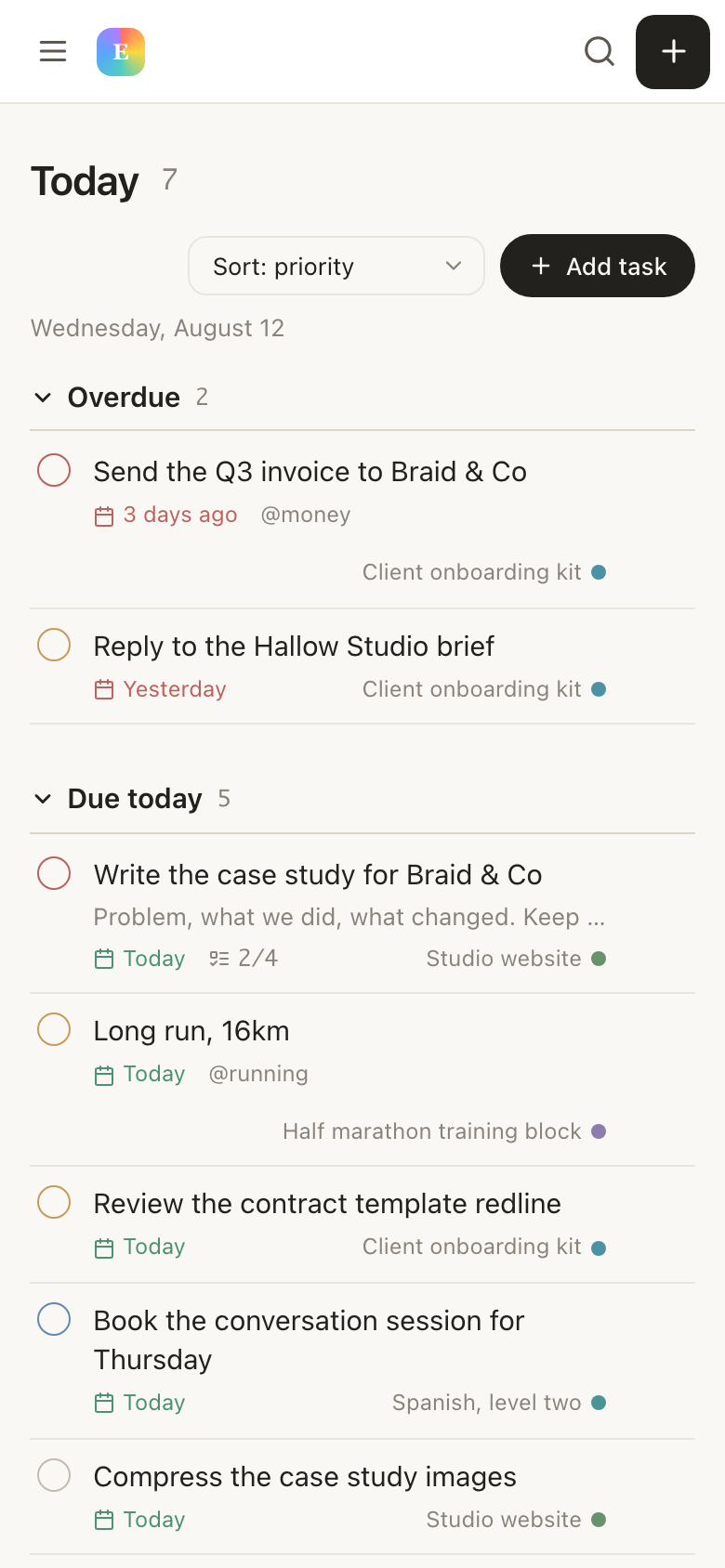
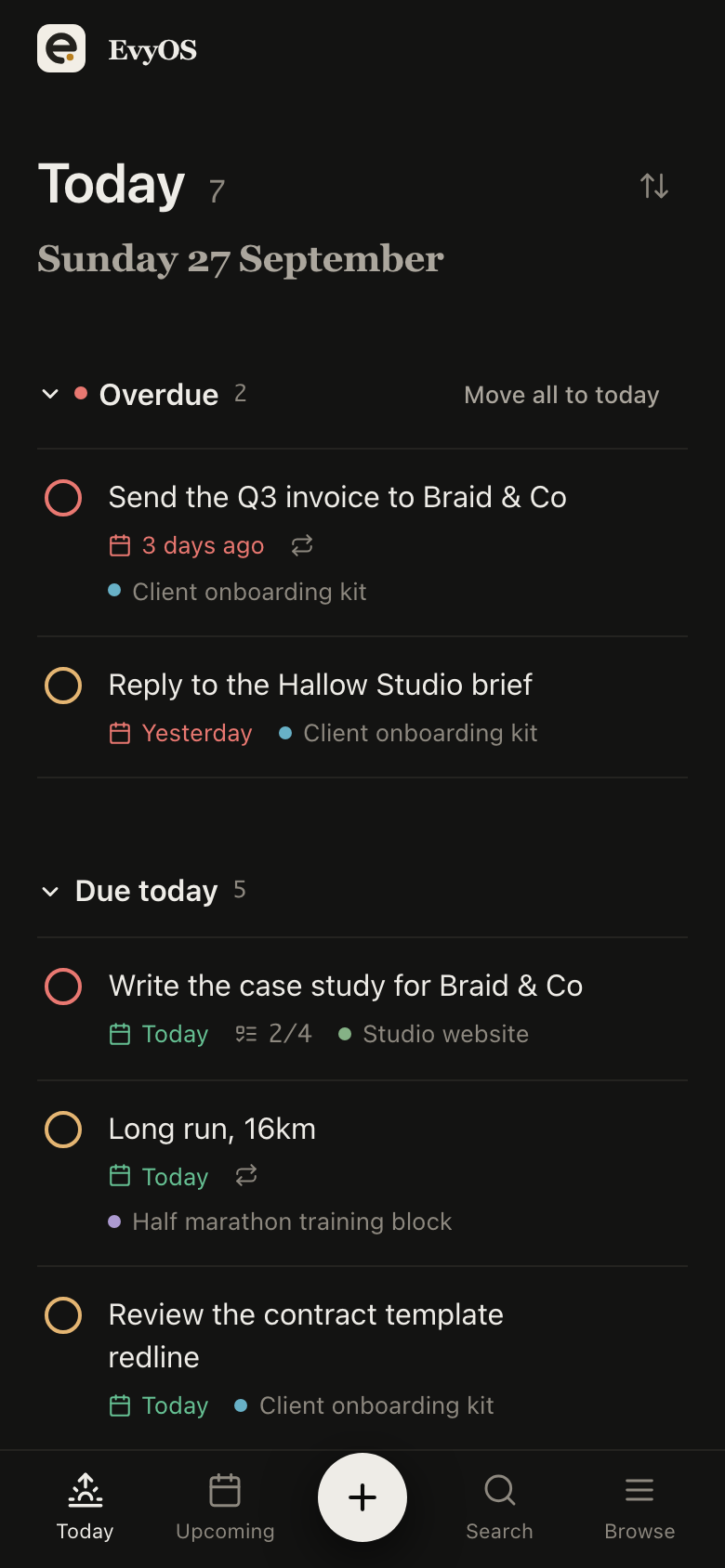
In Notion the home screen is something you make: linked databases, filters, a formula or two, and a rebuild every time the way you work shifts. Here there are two fixed views. Today puts overdue work at the top, then what is due, then the habits scheduled for today, then the calendar. Upcoming lays out the next 7 to 14 days, one section per day. Neither needs setting up, and neither quietly stops matching reality.
Notion will happily store a row per day. What it will not do unless you build it is compute a streak, weight recent weeks more heavily than old ones, or draw a year. A habit here arrives with all three, plus a schedule that keeps it out of Today on the days it is not meant to happen. A skill records practice in minutes, with an activity type, against a level you are working towards.
This is the half of the trade that costs you something. A note is markdown with folders, tags, search, version history, [[Title]] wiki-links with backlinks, and a public share link if you want one. It is a good personal knowledge base and a good place to write down the thinking behind a project. It is not a wiki you shape into nested pages, and there is no block editor. If long documents are the centre of your system, Notion is better at them.
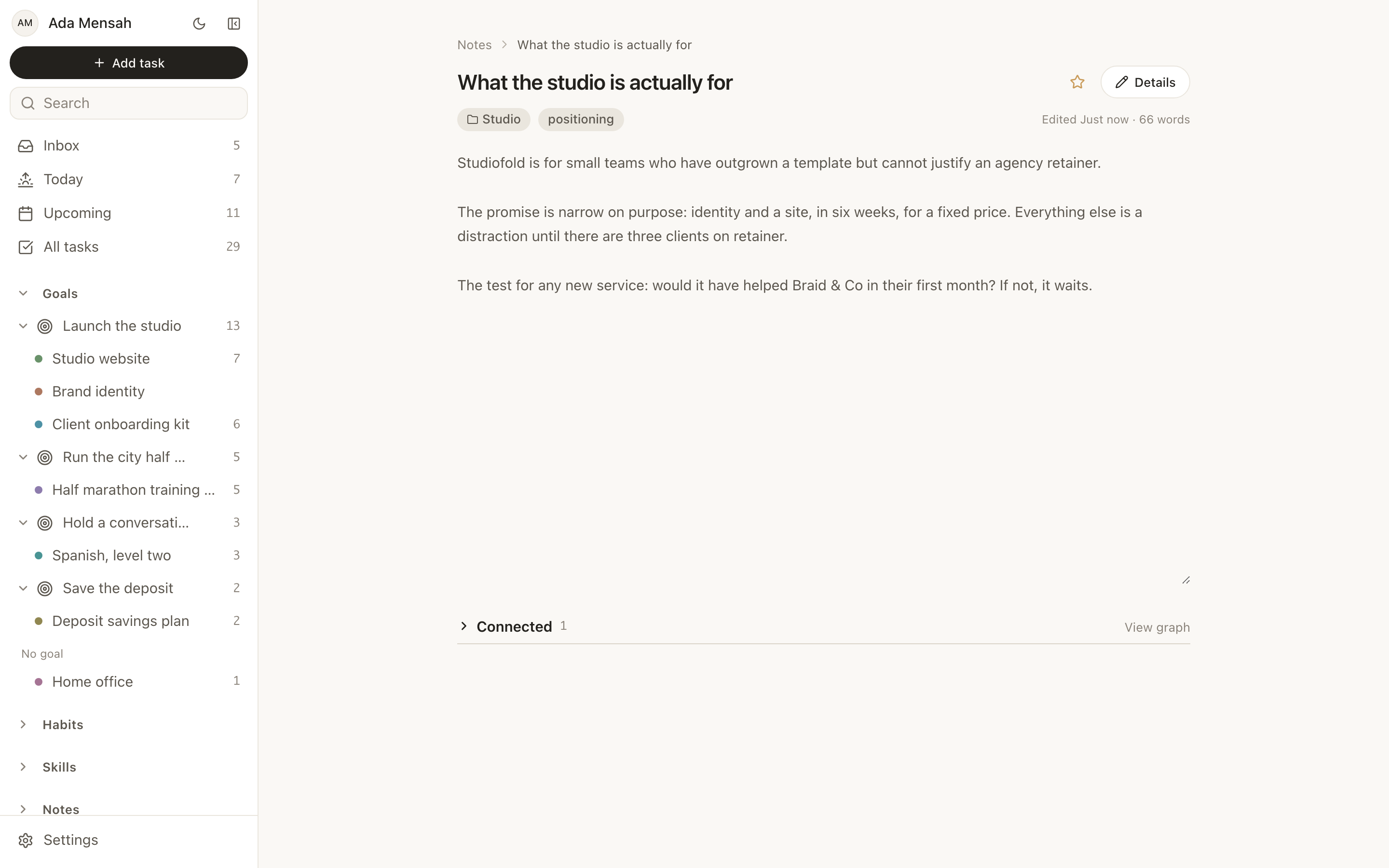
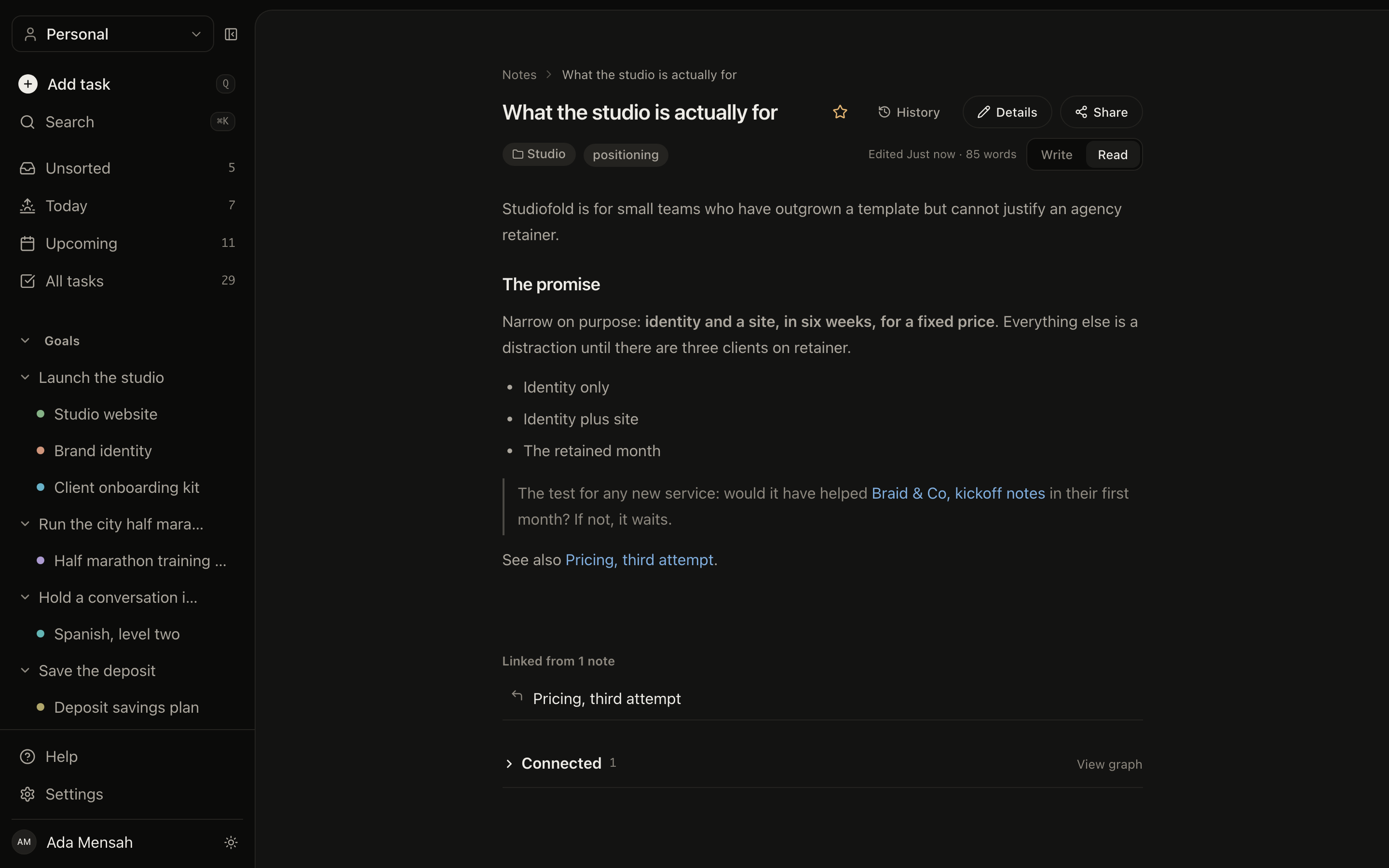
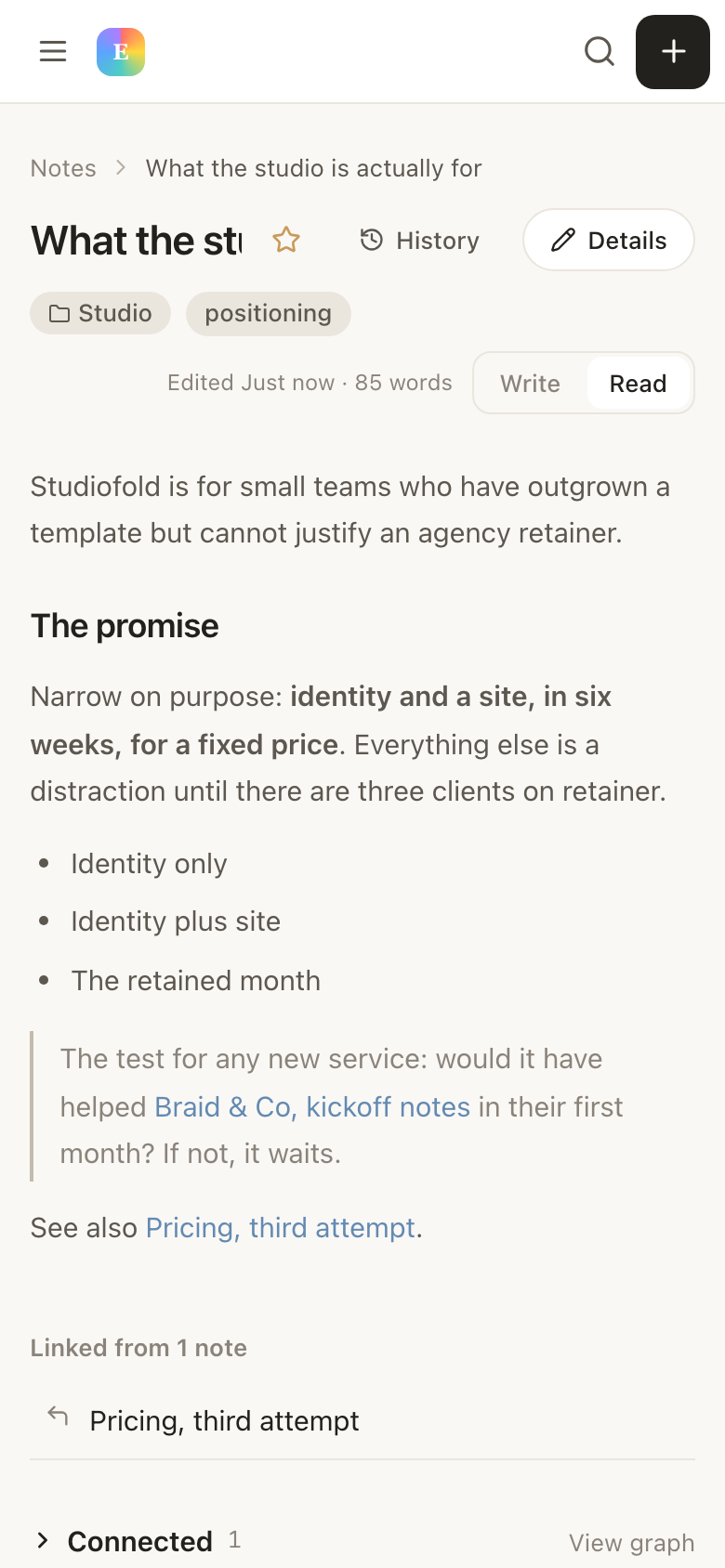
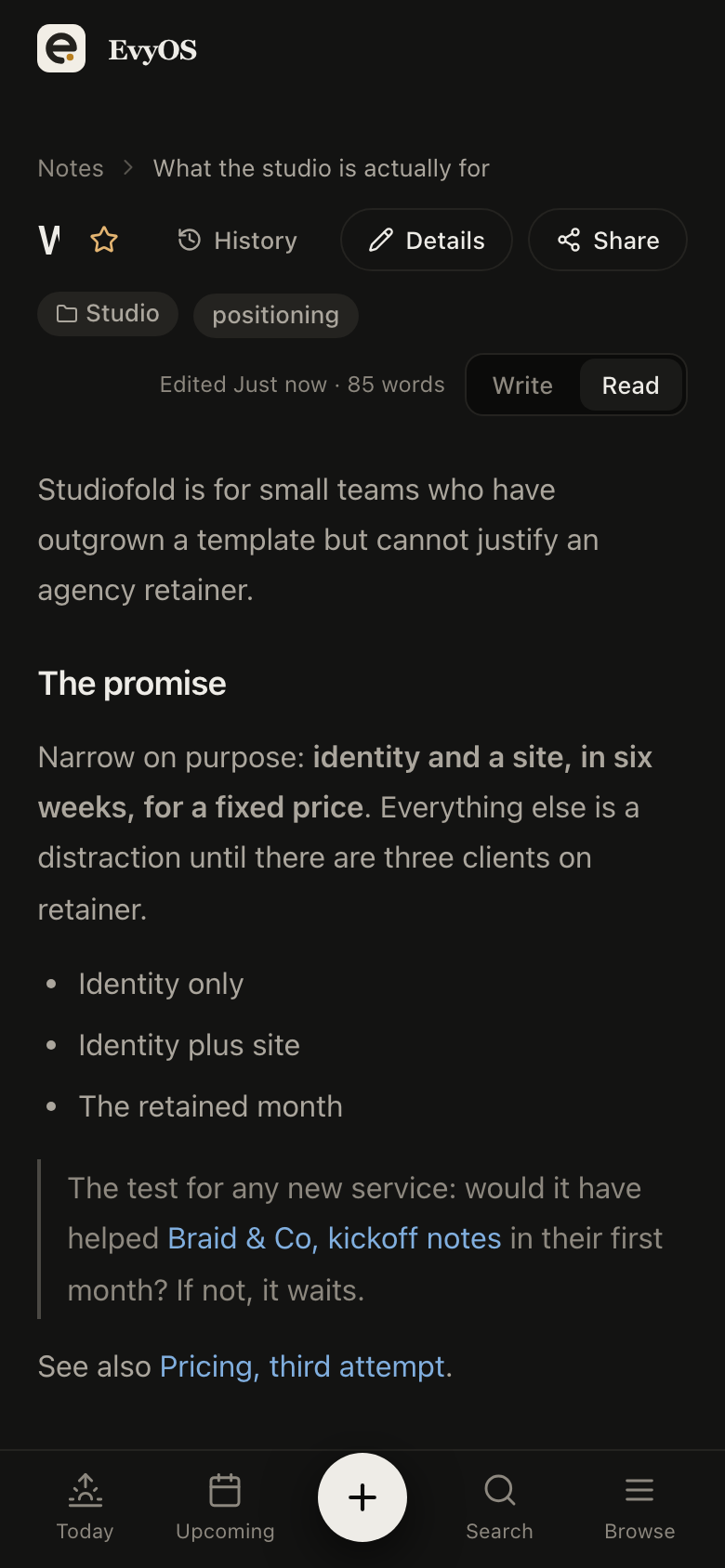
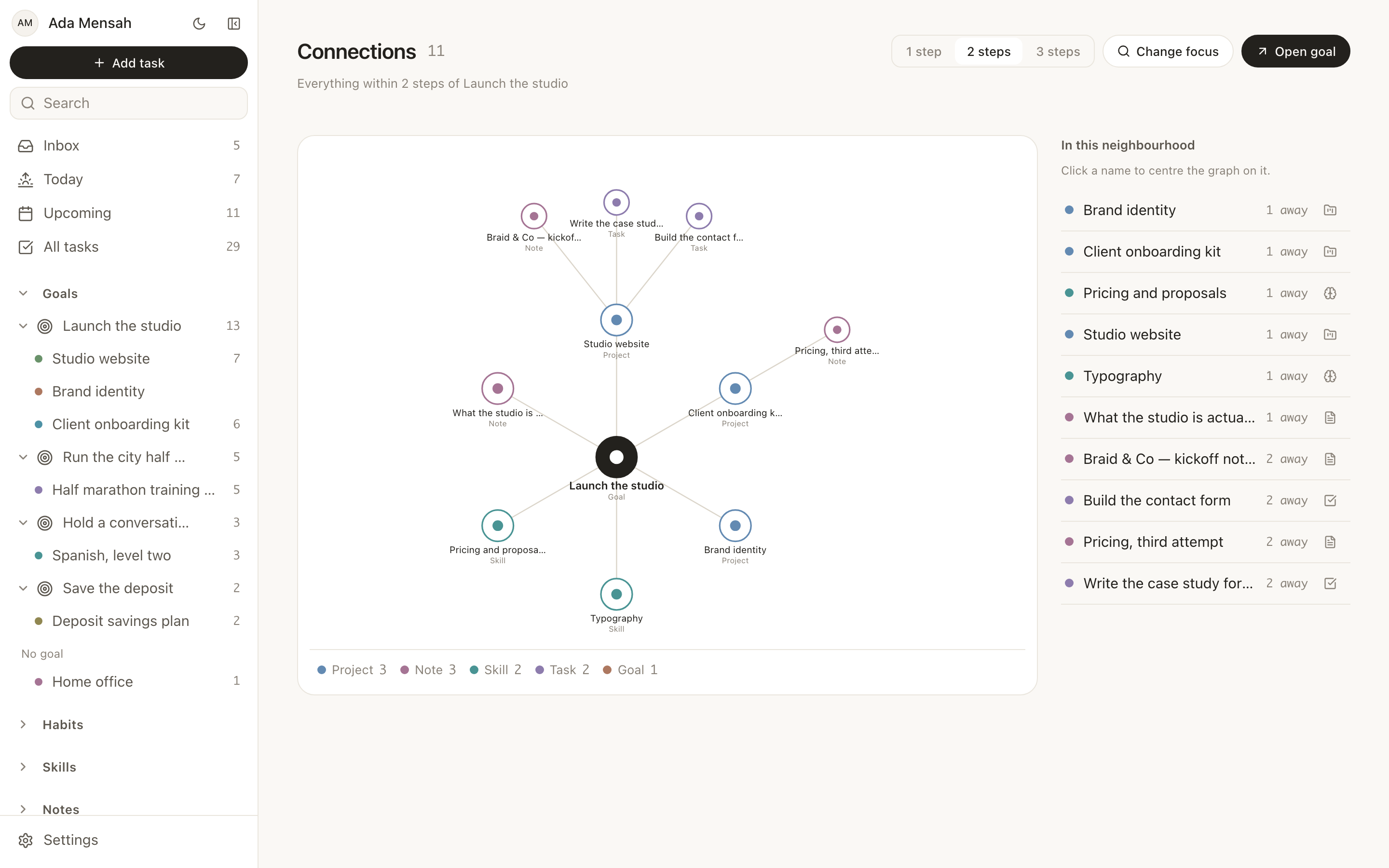
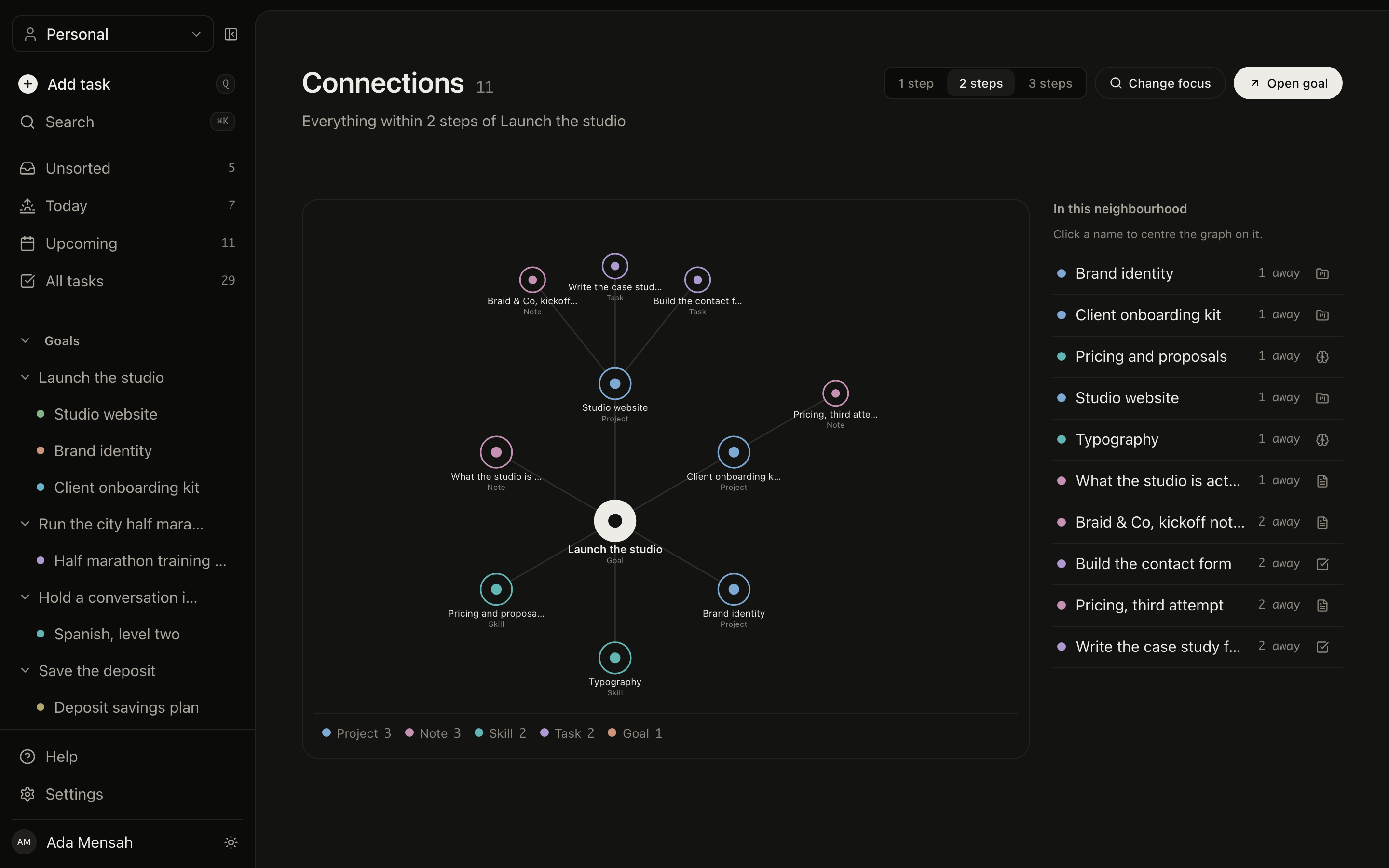
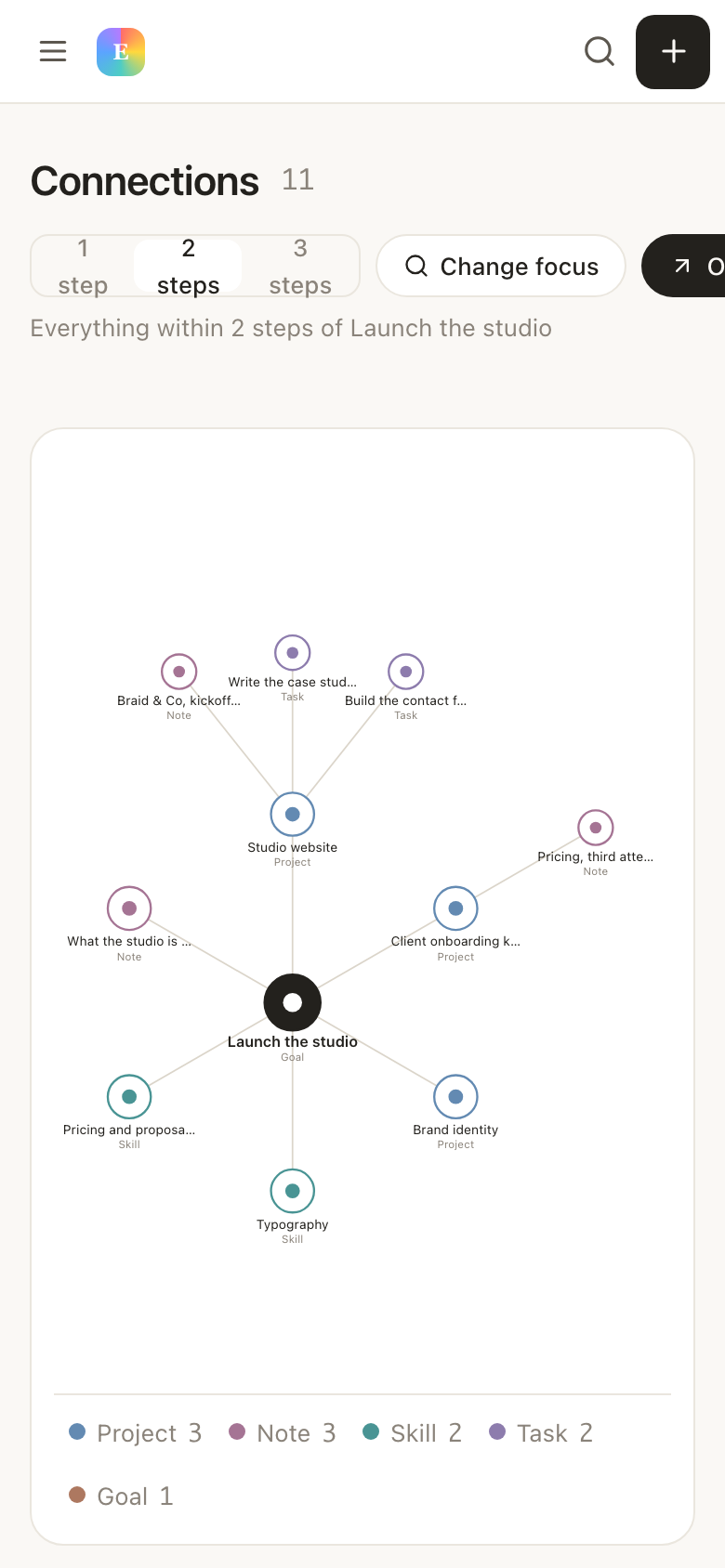
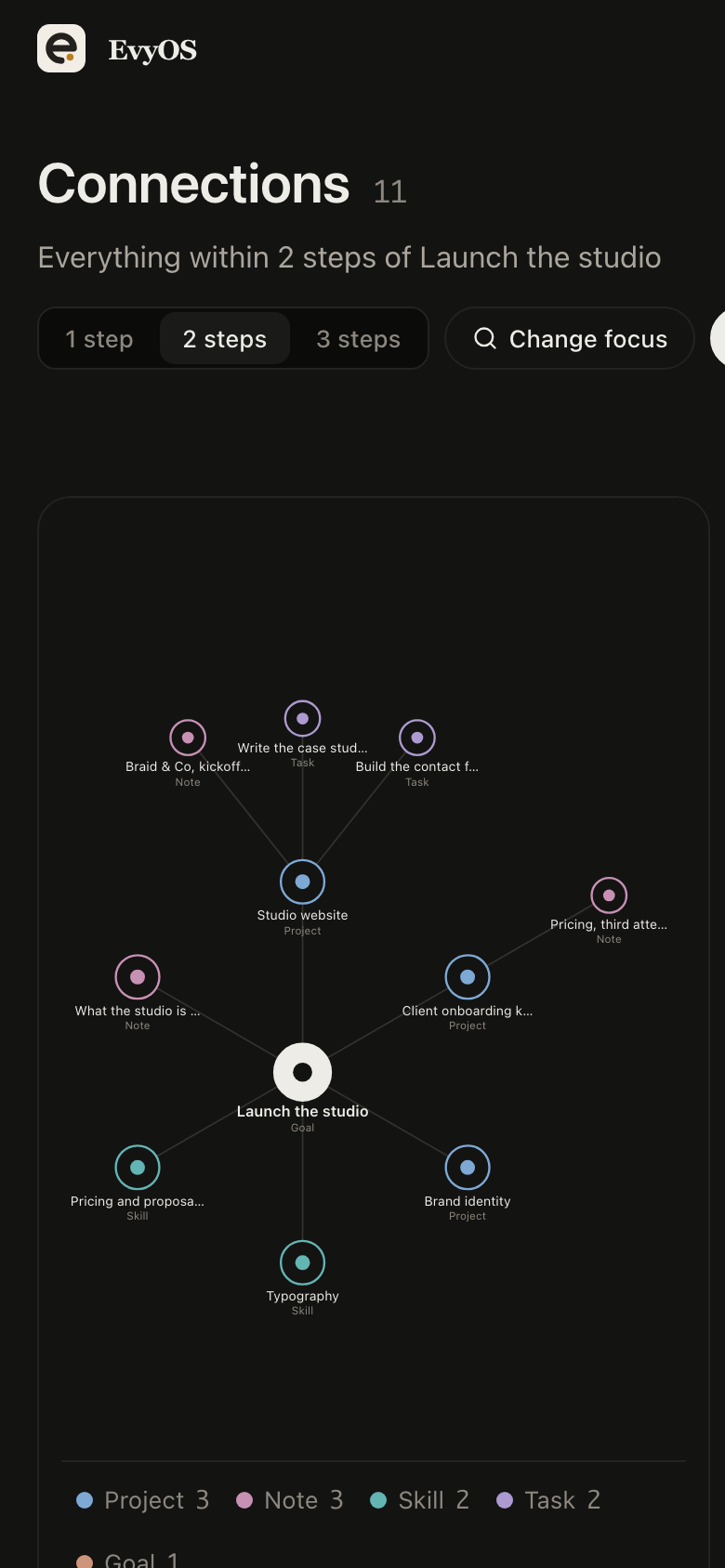
The connection graph links any record to any other with a typed relationship: this note explains that project, this skill serves that goal, this habit supports that project. It is the nearest thing here to a Notion relation, with one difference that matters on the first day. You do not define which databases may point at which. You point at the thing and say what the link means.
A comparison that only flatters one side is not worth reading, and it is not worth writing either. Three things Notion does that this cannot, and will not.
A Notion page can be shaped into almost anything: a nested wiki, a handbook a company reads, a brief with sections that fold away. For long-form documentation Notion is the better tool and it is not close.
Custom properties, relations, rollups, formulas, and the same records rendered as a table, a board, a gallery or a calendar. If the way you work does not match anybody else's shape, that flexibility is the whole reason to stay.
Thousands of published templates, years of tutorials, and somebody else's finished system to duplicate. EvyOS has none of that. What it has instead is one system, already made, that nobody has to publish.
To be exact about the limits: no databases you define, no custom properties, no formula fields and no freeform page building. No Gantt charts, no offline mode, and no Google Calendar or iCal sync. No importer for a Notion workspace. The only integration is the connector for ChatGPT and Claude.
Two or three, typed in by hand. There is no Notion importer, and this is the one place that works in your favour: you re-read what you were trying to do rather than migrating a database of things you stopped caring about in March.
The projects under each goal, then the tasks that are still open. Anything finished stays in Notion. The free plan counts only open items, so completing something hands the slot straight back.
The routines and the practice Notion never had a native place for. Five of each on the free plan, which is already more than most people sustain. From here Today tells you what the day is asking, and you stop maintaining the tool.
The free plan is a working system rather than a demonstration of one, and its limits count open items only, so it rewards finishing things instead of punishing you for having a long history.
See the plans →Sign in and the goals, projects, tasks, habits, skills, notes and calendar are there, connected. Nothing to design, and nothing to maintain afterwards.
Start for free →