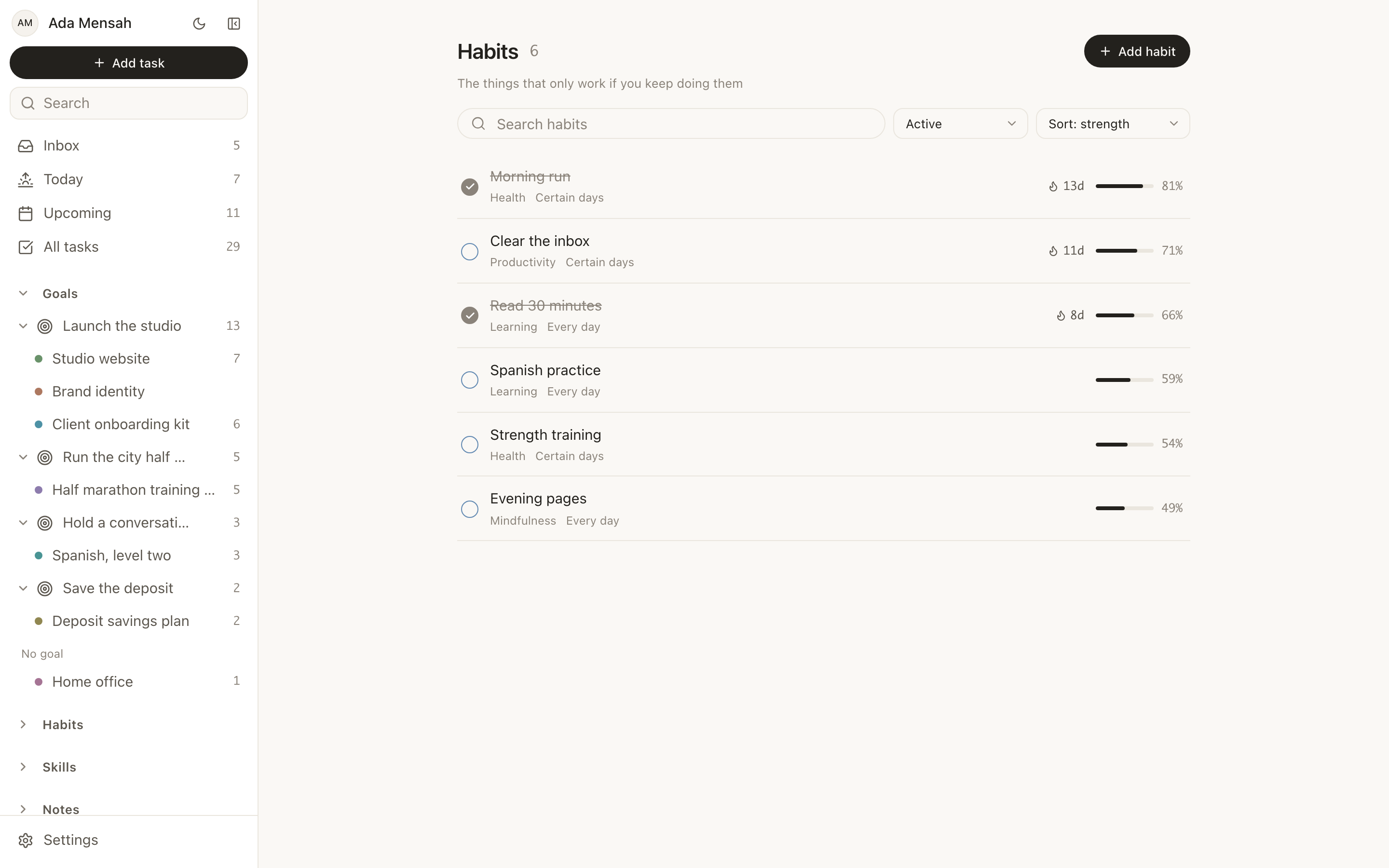
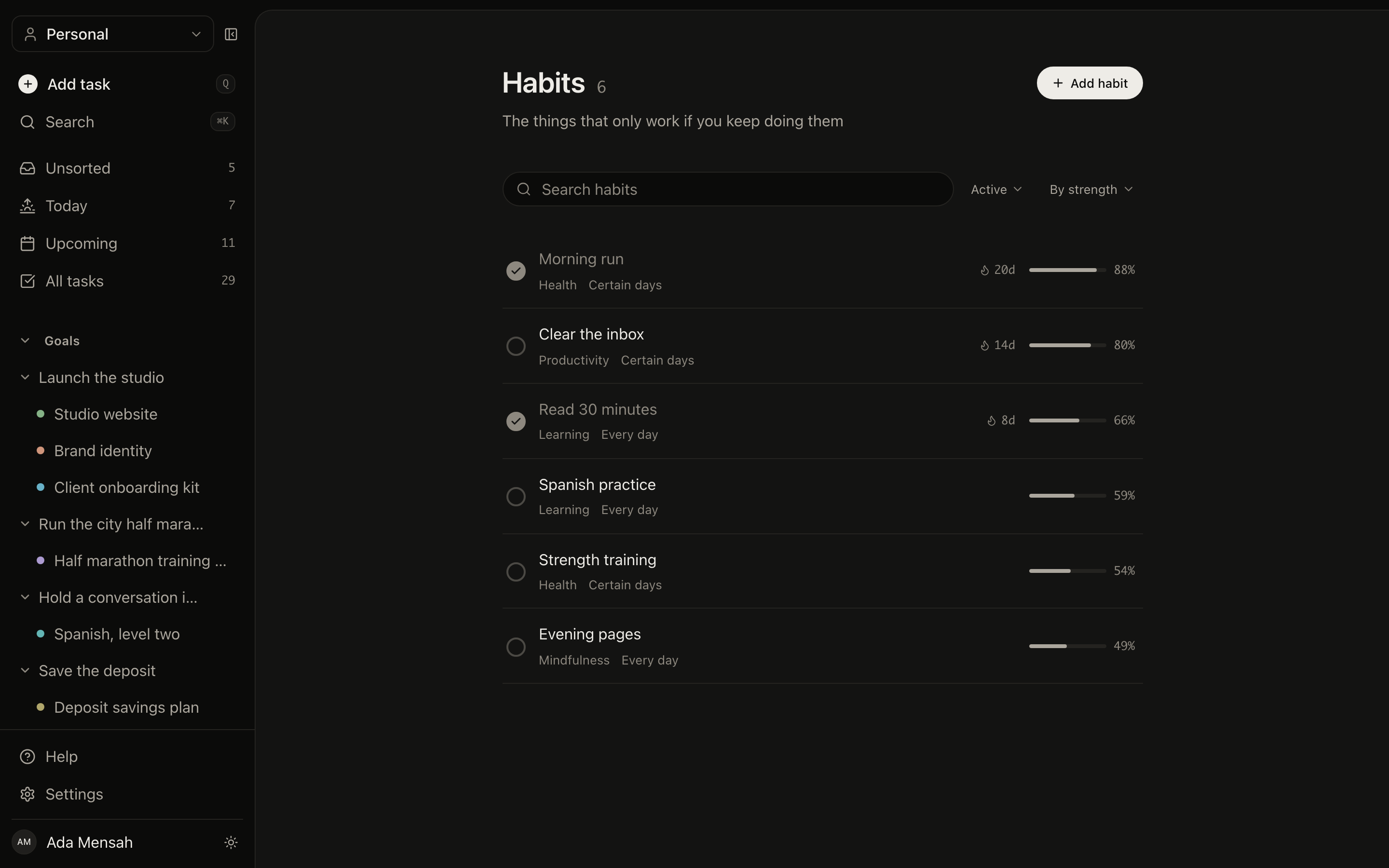
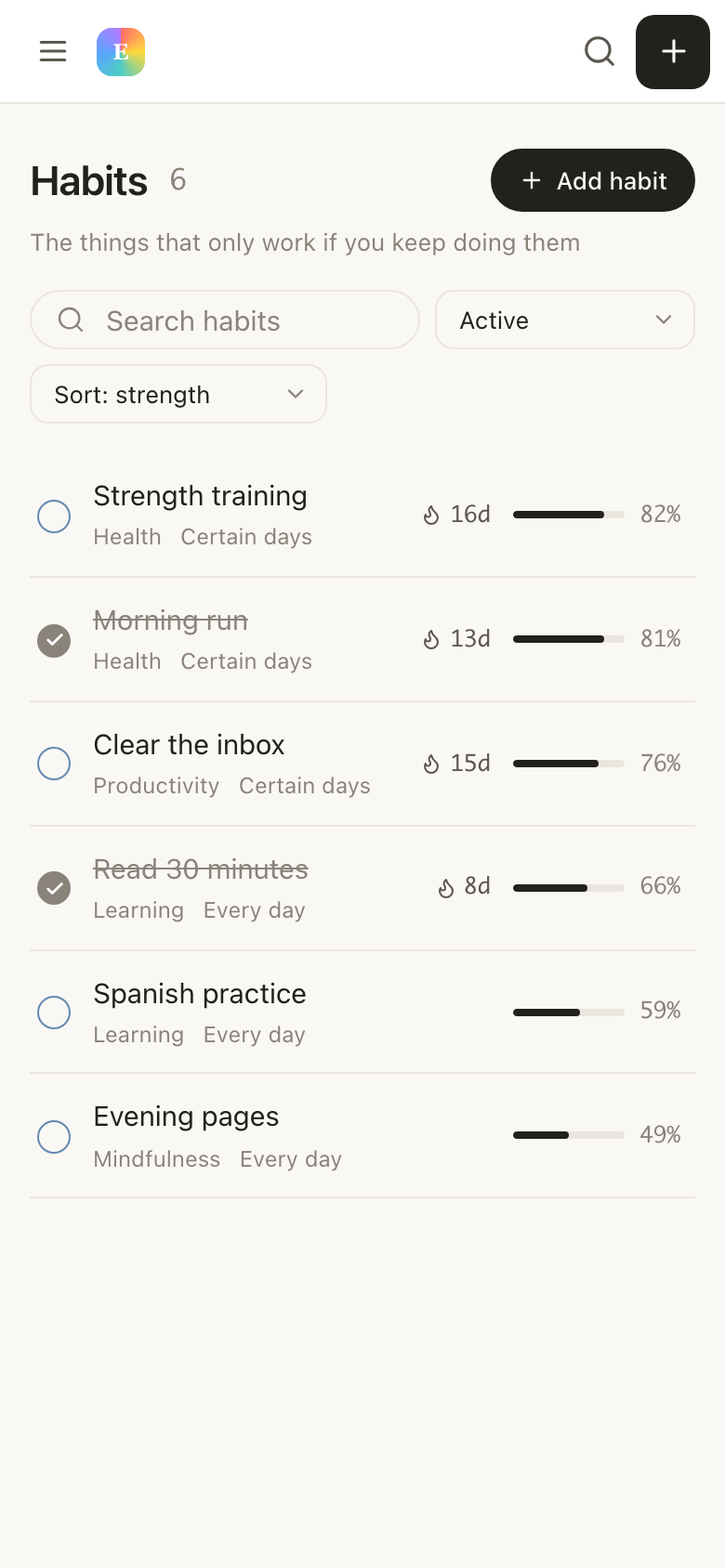
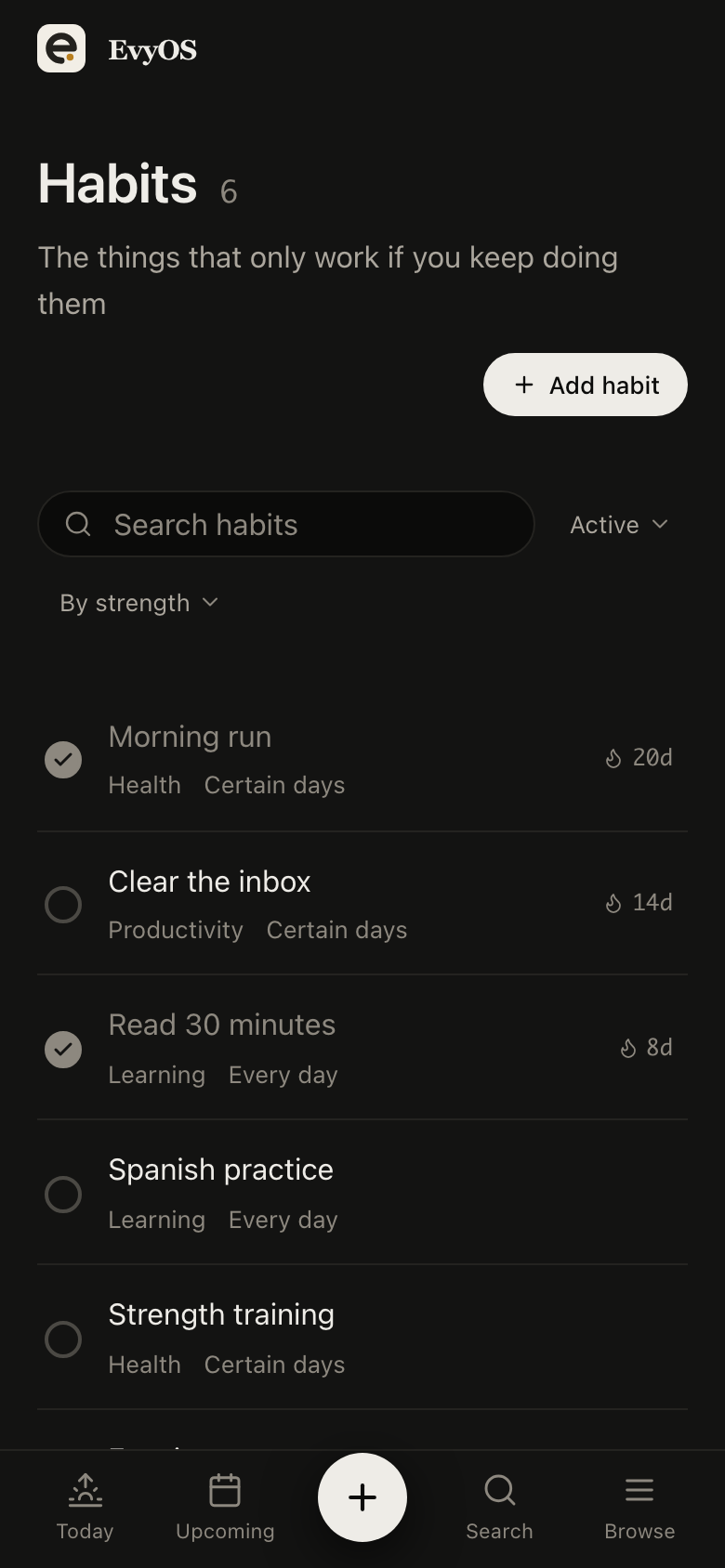
Streaks are motivating right up to the day you break one, and then they are the reason people quit. EvyOS keeps the streak, but scores a habit on consistency and recency, and draws a year of it, so one bad week reads as a gap rather than a verdict.
5 habits free. No card, and no streak-repair upsell.
A habit here is a commitment with a shape: the days it is meant to happen, the days it did, and the goal it exists to serve.
Every night, or only on the days you name — Monday, Wednesday and Friday. A habit only shows up in Today on the days it is scheduled, so the day never lies about what it is asking of you.
The count you already understand, kept honest: it resets when you miss. It is one number among several rather than the whole story, which is why breaking one is survivable.
Computed from consistency and recency rather than raw count, so a habit you kept most days for two months outranks one you did 40 times and dropped in February.
A contribution graph covering the last 12 months. Seasons show up in it, and so does the fact that you have done this 200 times even though you missed last Thursday.
Attach the habit to the goal it feeds. Reading 20 minutes a night stops being a chore on a list and starts being the visible mechanism of a goal about books.
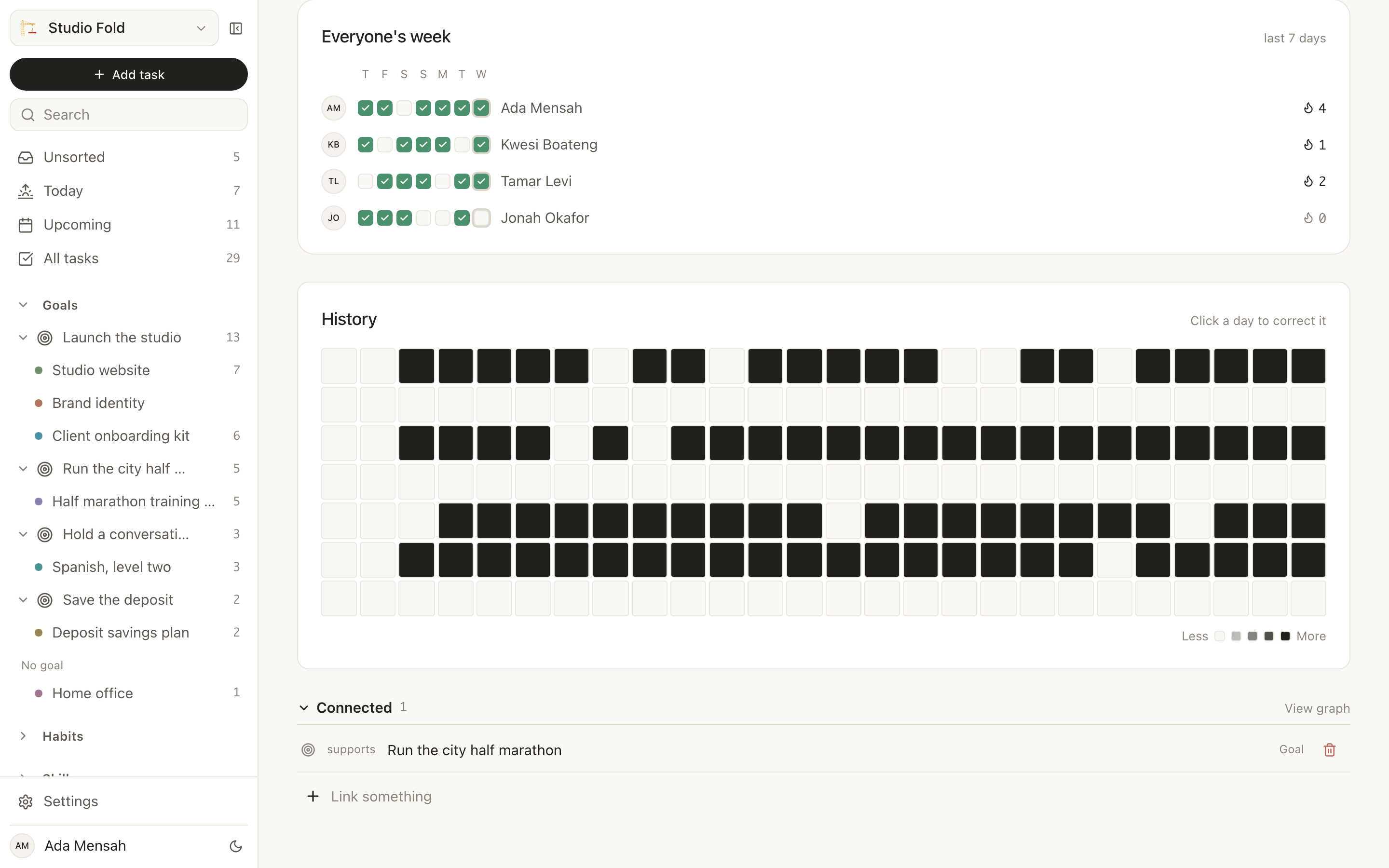
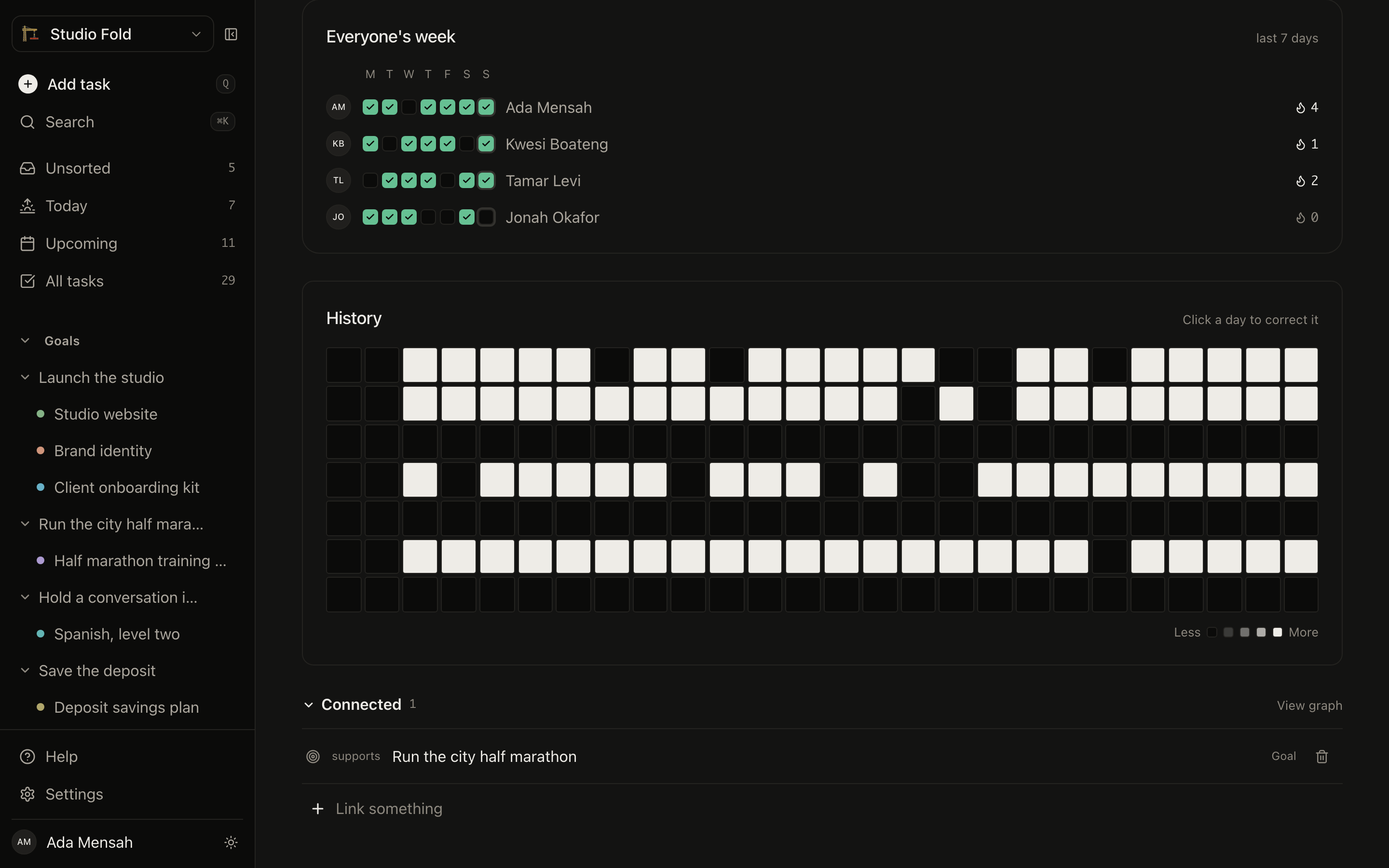
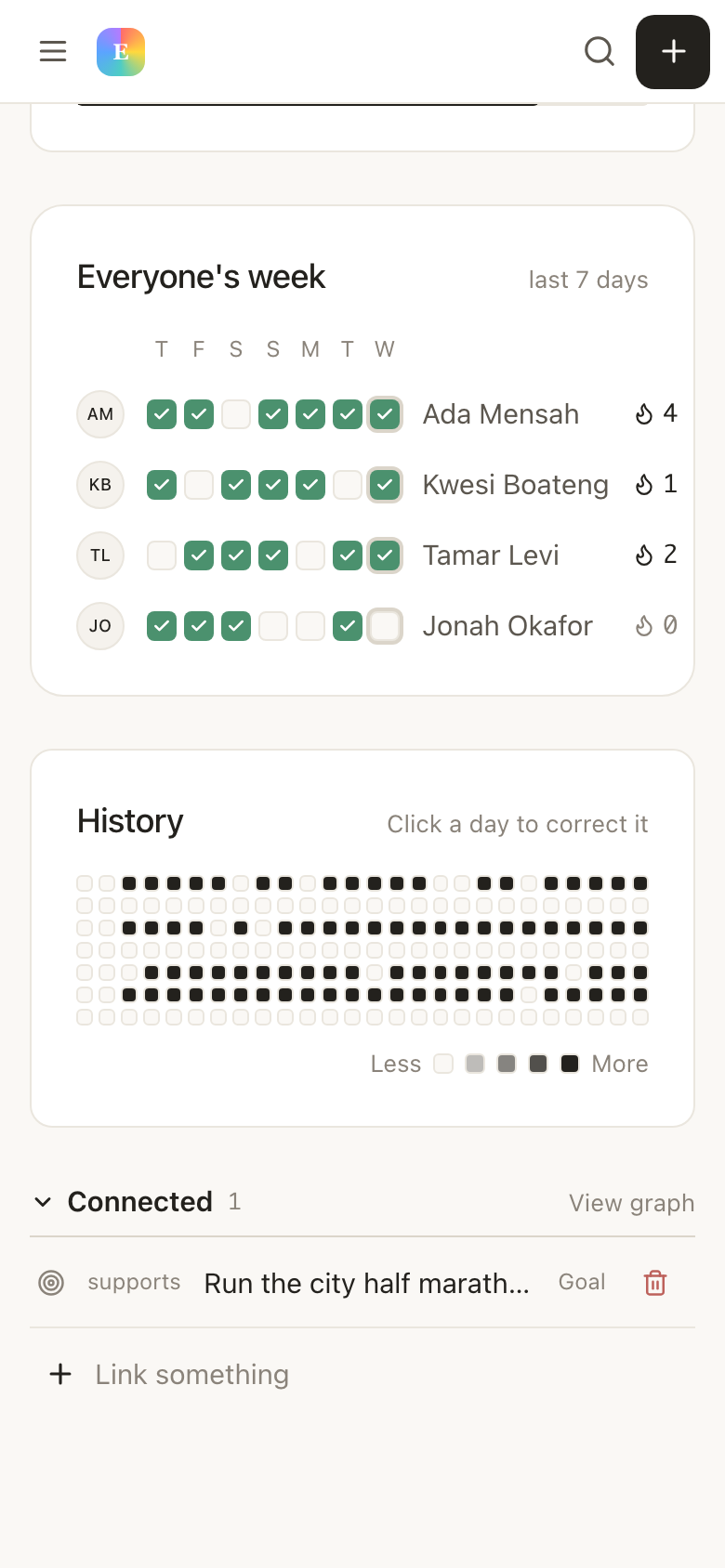
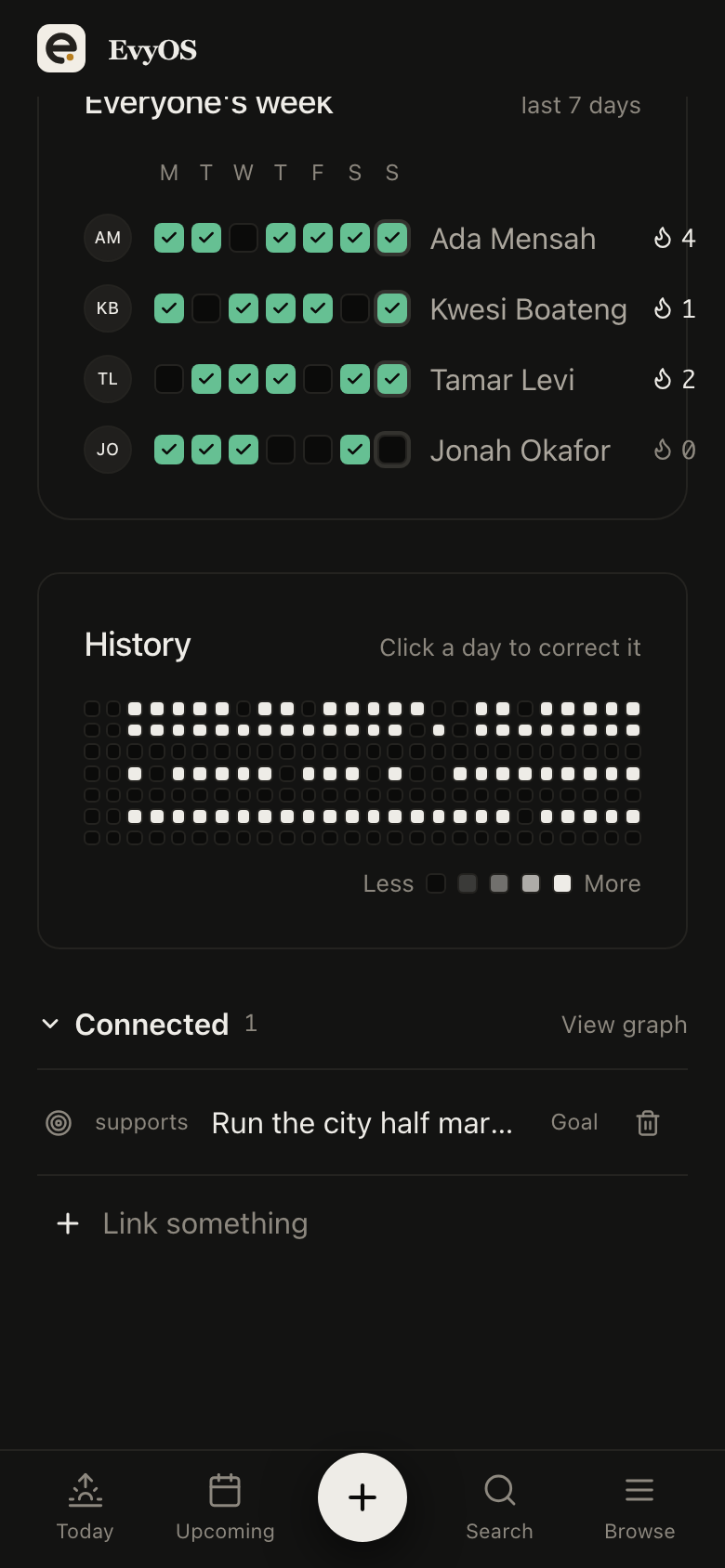
In a shared workspace a habit has a single definition and a separate record for everyone in it, side by side. Nobody completes it on your behalf, and nobody breaks your streak.
Open a habit and you get the last 12 months as a contribution graph, the current and longest streak, and a strength score that weights consistency and recency over sheer volume. Together they answer the question a streak alone cannot: is this actually part of my life at the moment, or was it in the spring.
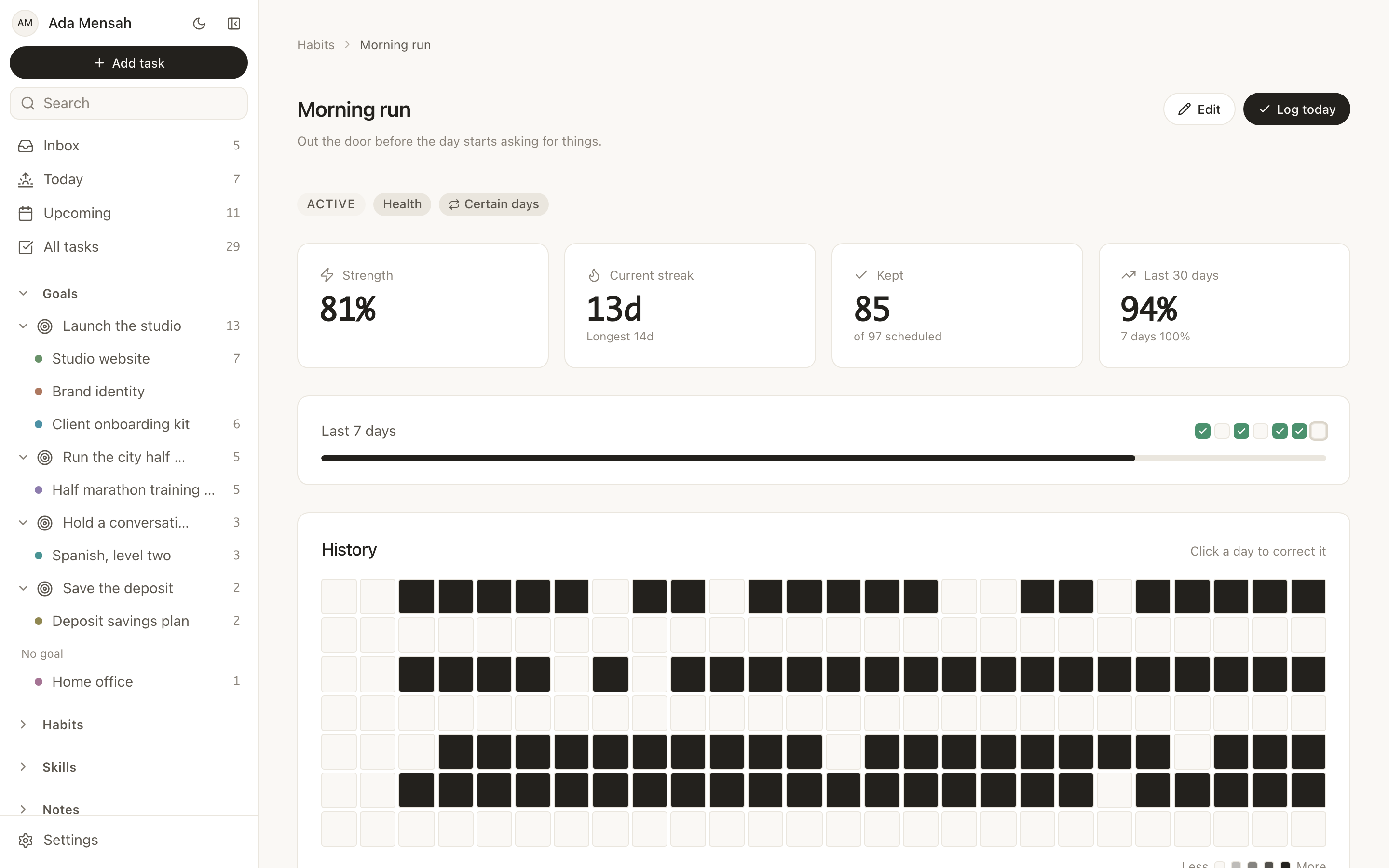
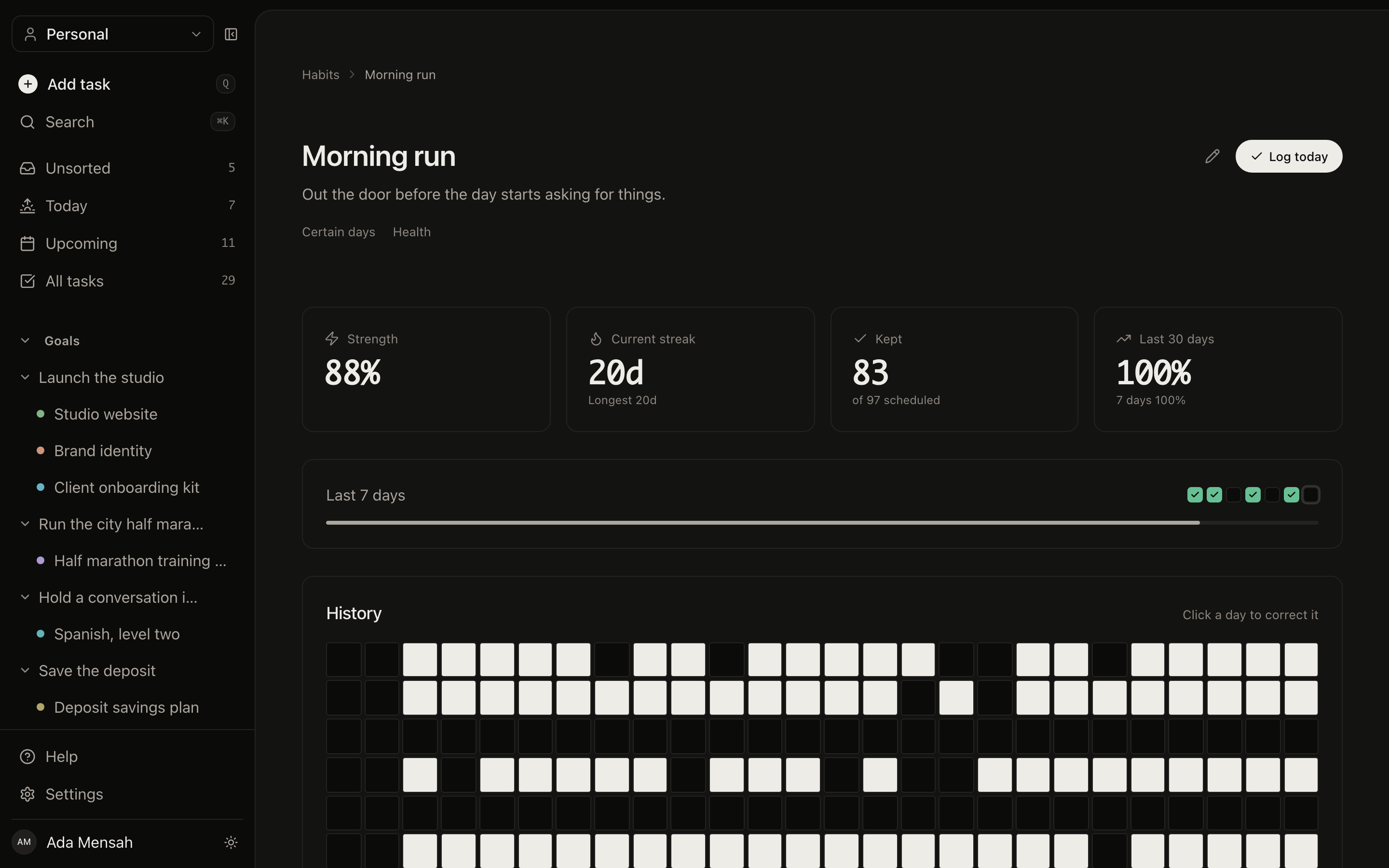
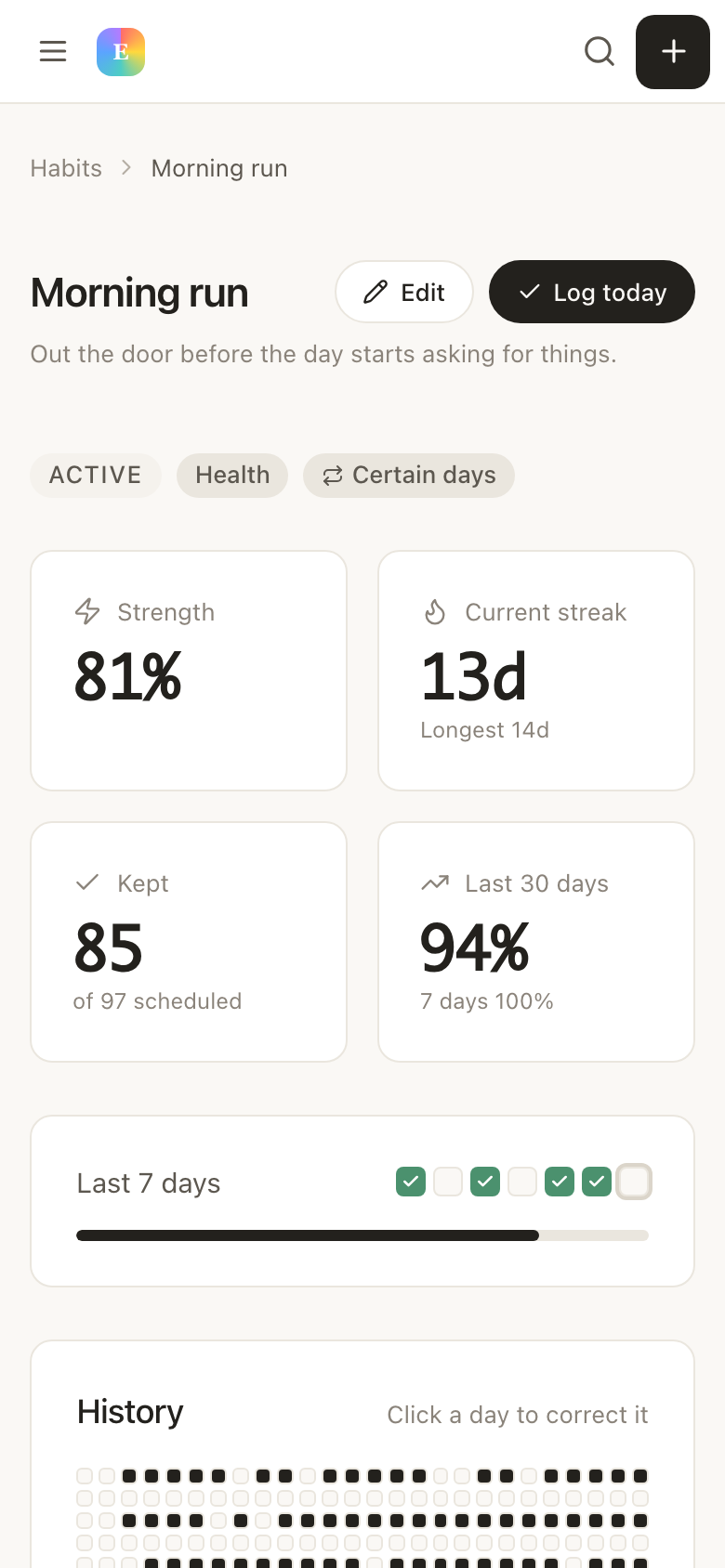
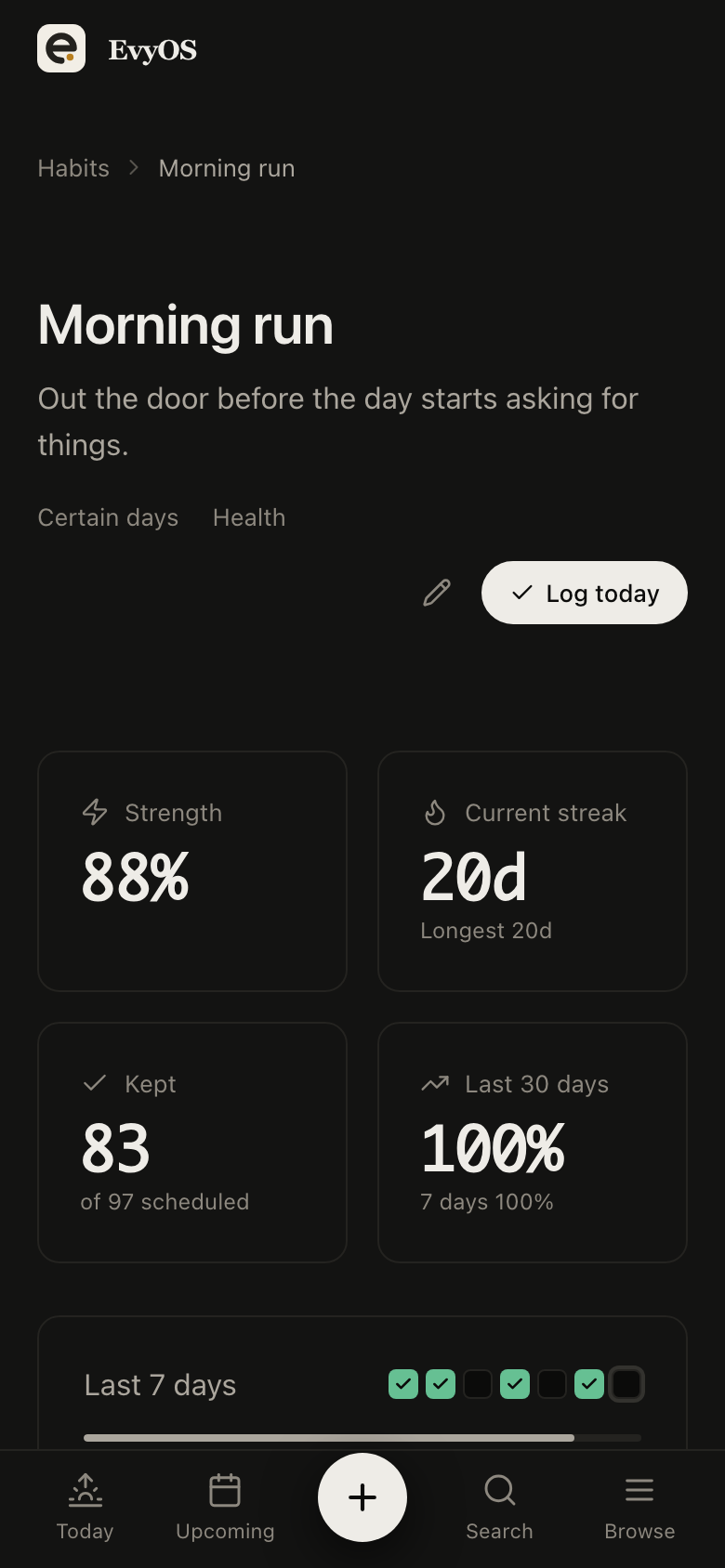
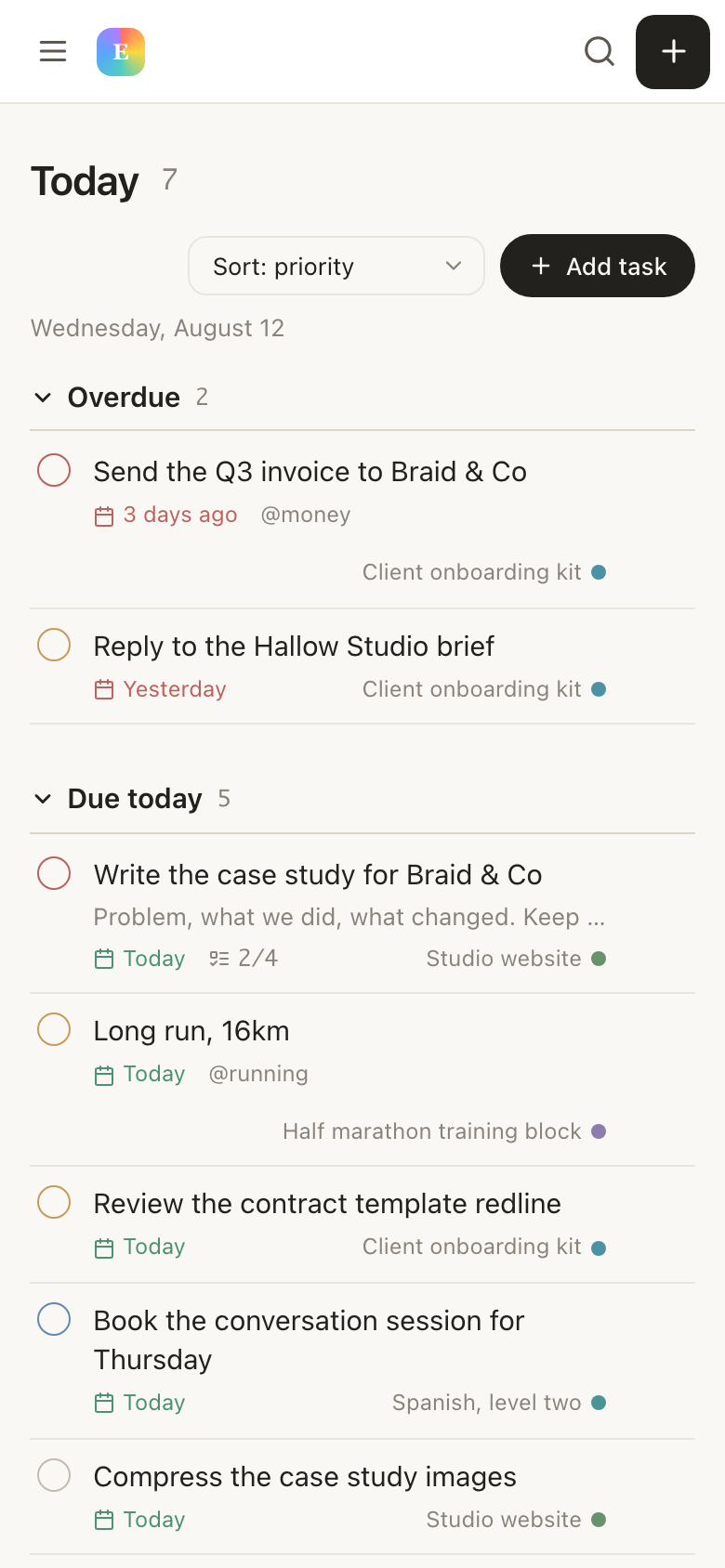
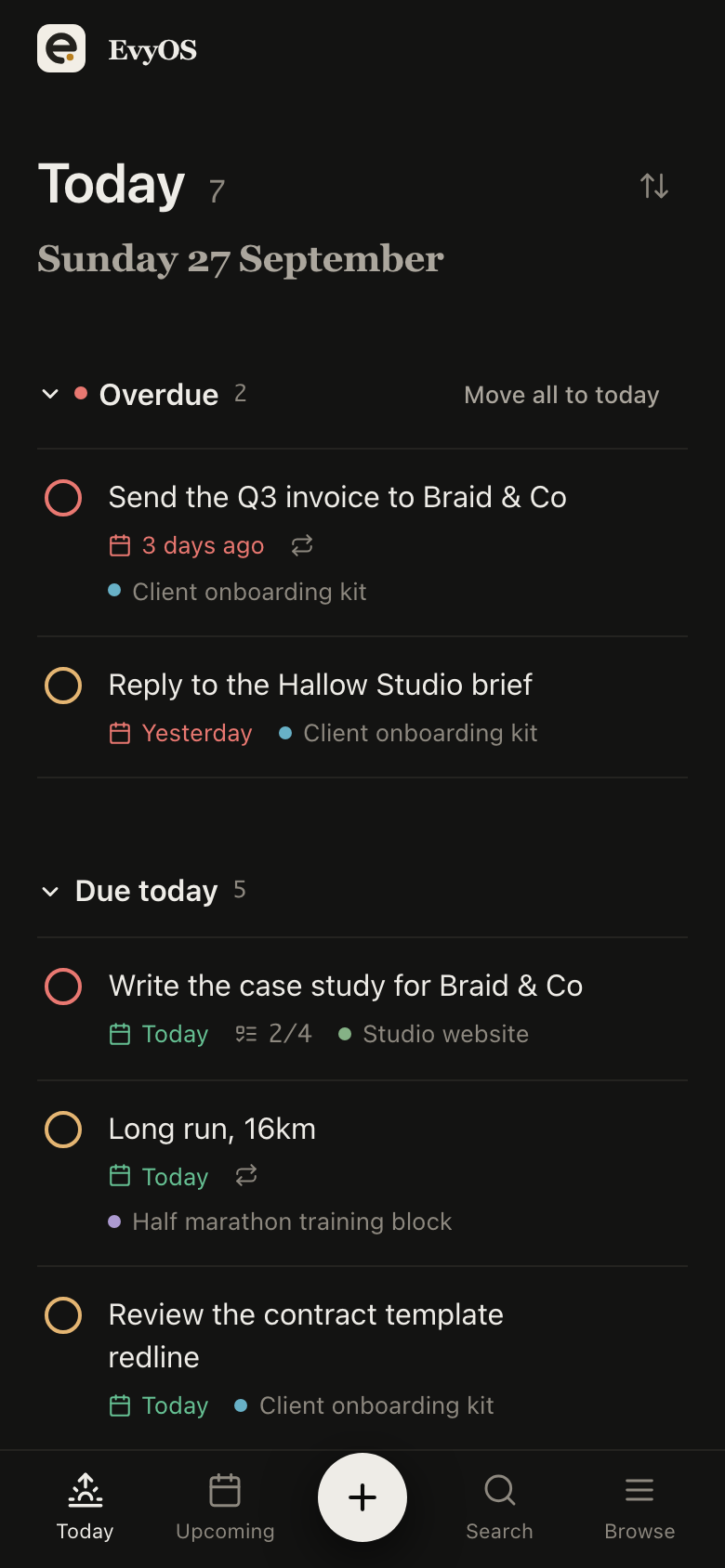
Habits are not a separate app you remember to open. The ones scheduled for today sit in the Today view under the tasks that are due, next to the calendar, so the walk after dinner and the invoice you owe someone are on the same screen. Tick it there and the streak, the score and the graph all move.
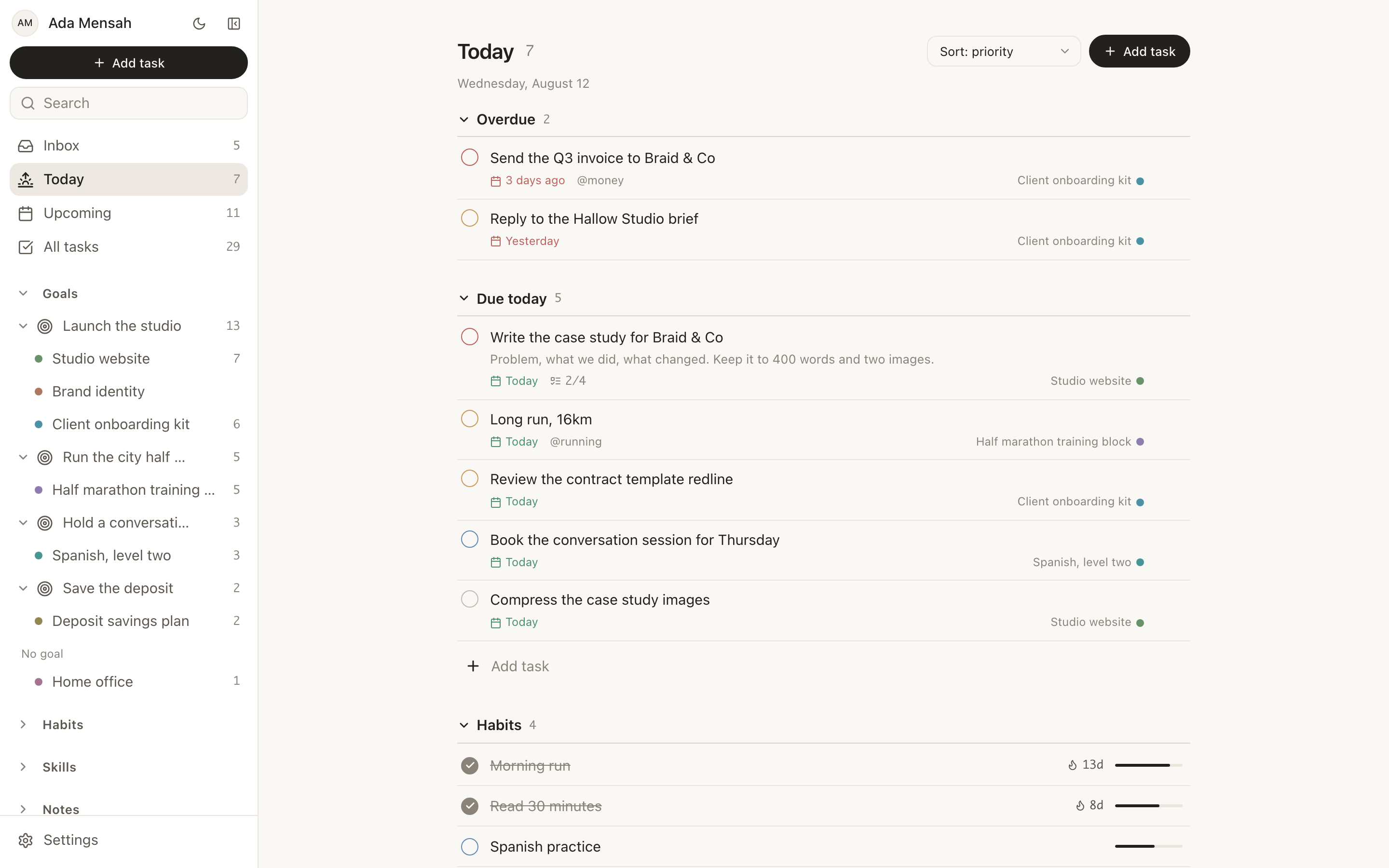
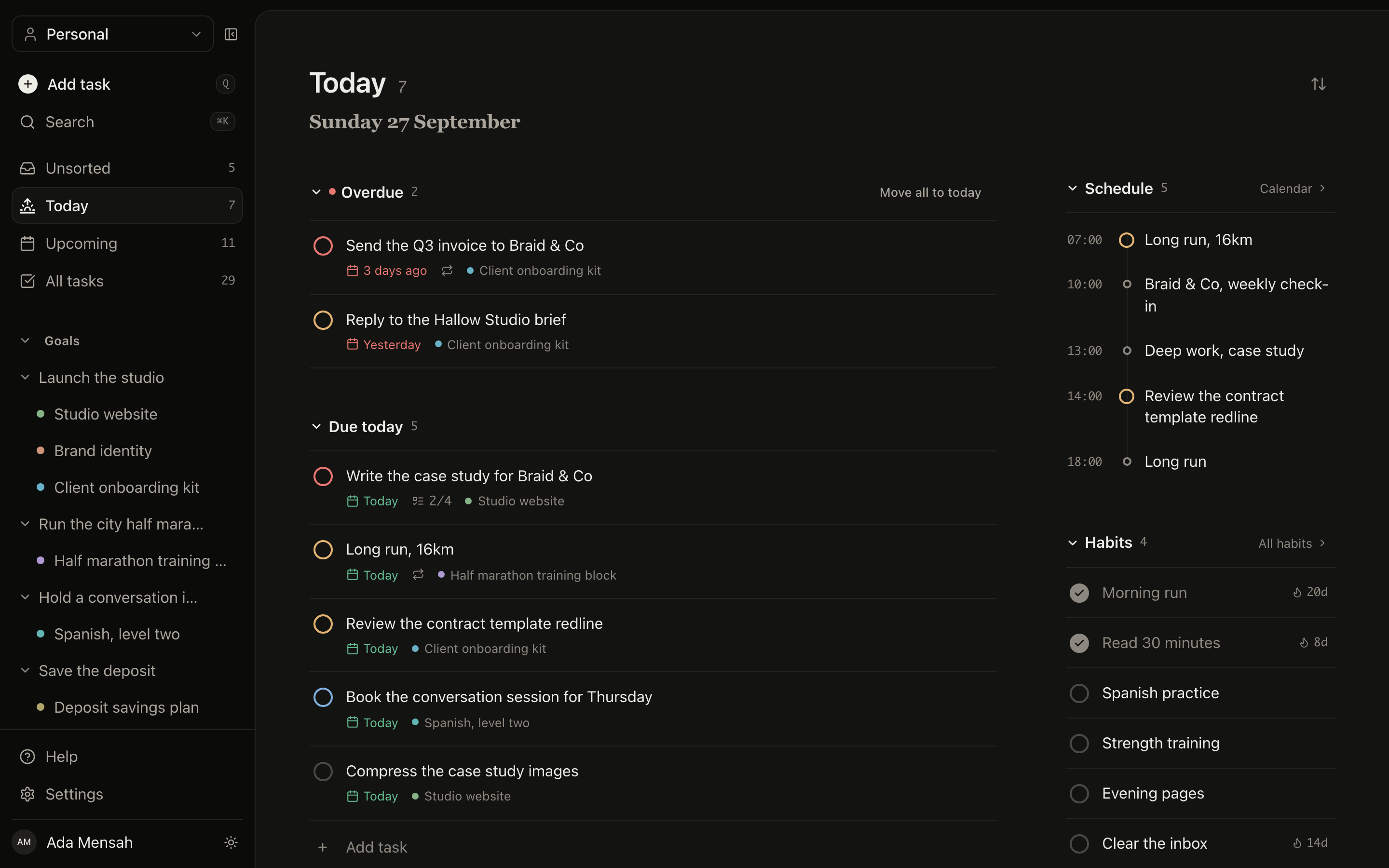
Most shared trackers make a habit a single checkbox, so one person ticking it lets everyone else off and one person missing a day wrecks a record that was never theirs alone. In a shared workspace EvyOS keeps one definition and a separate record per member: your streak, your completion history, your strength score, shown next to everyone else's. It is the difference between a couple both walking every evening and one of you doing the walking.
A standalone habit app can tell you that you meditated 40 times. It cannot tell you whether that had anything to do with what you were trying to change. Here the habit hangs off the goal it serves.
Attach the habit to the goal it feeds, and it appears there beside the projects and tasks. Goals get the two things that move them: the work you finish, and the practice you keep.
Some things belong on a list once, some belong in a routine forever. Keeping both in one app is what stops the routine from quietly becoming 30 repeated to-dos.
A habit says you practised. A skill records the minutes and what they went into, which is the other half of getting better at something on purpose.
Not the aspirational list. The 2 things that, kept for a month, would change how the month went. The free plan allows 5, and 5 is already more than most people sustain.
Daily, weekly, or the specific days you will actually do it. A habit scheduled 3 days a week and kept is worth more than a daily one you fail 4 times out of 7.
They appear in Today on their scheduled days, under the tasks that are due. After a few weeks, read the year graph rather than the streak.
Habit tracking is the part of this people try first, so it is not behind a trial. Pro is for when you want more of them, or a workspace to keep them in with somebody else.
See the plans →Track the few habits that matter, see a year of them at once, and keep them next to the goals they were meant to serve.
Start for free →