Skill trackerYou put in the hours.
Nothing counted them.

A skill in EvyOS is the record of having practised. Log a session with how long it ran and what kind of practice it was, and the hours accumulate next to the level you are at and the level you are going for.

Start for free →See pricing

Free covers 5 skills. Pro removes the limit, at $9.99 a month.

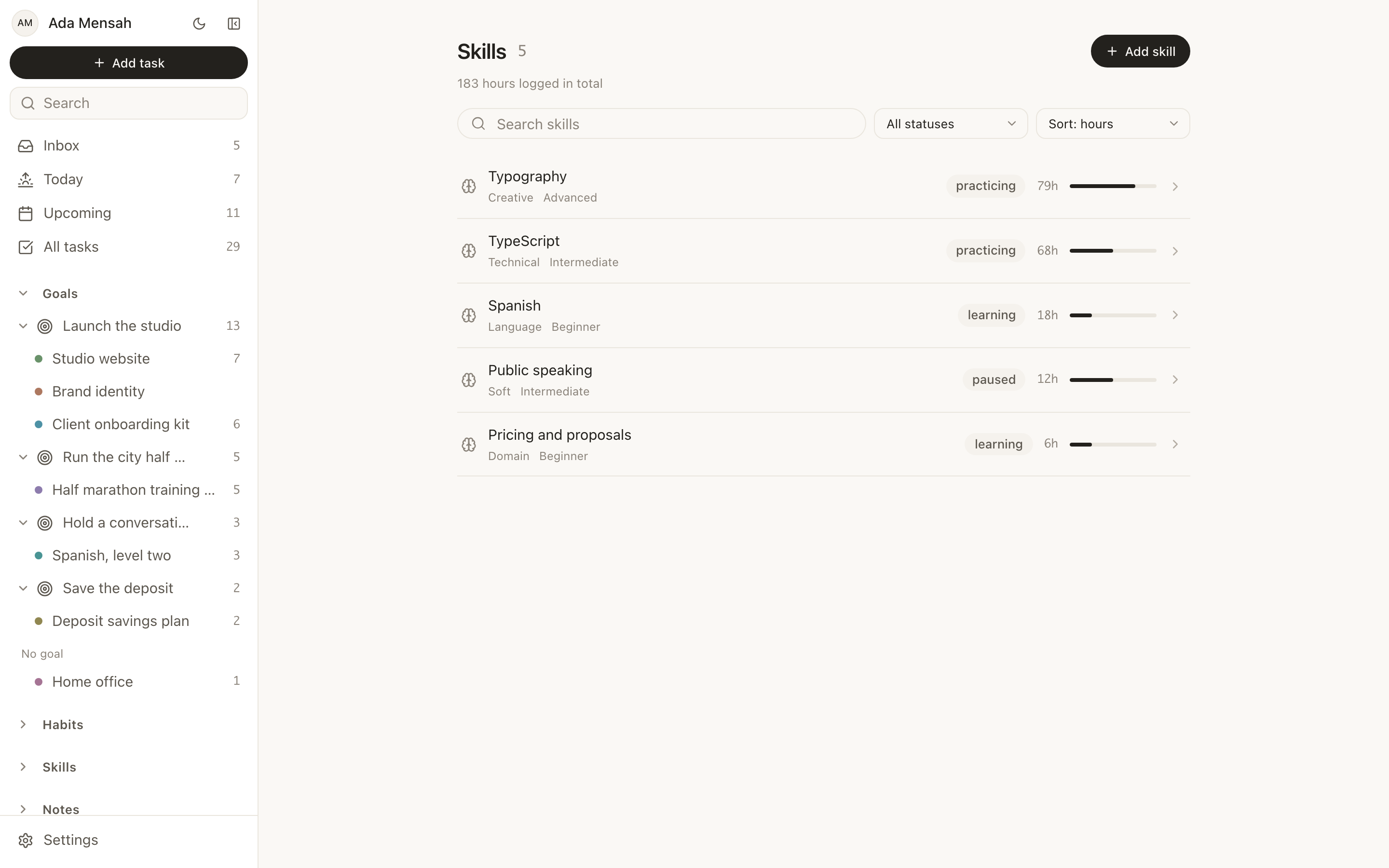
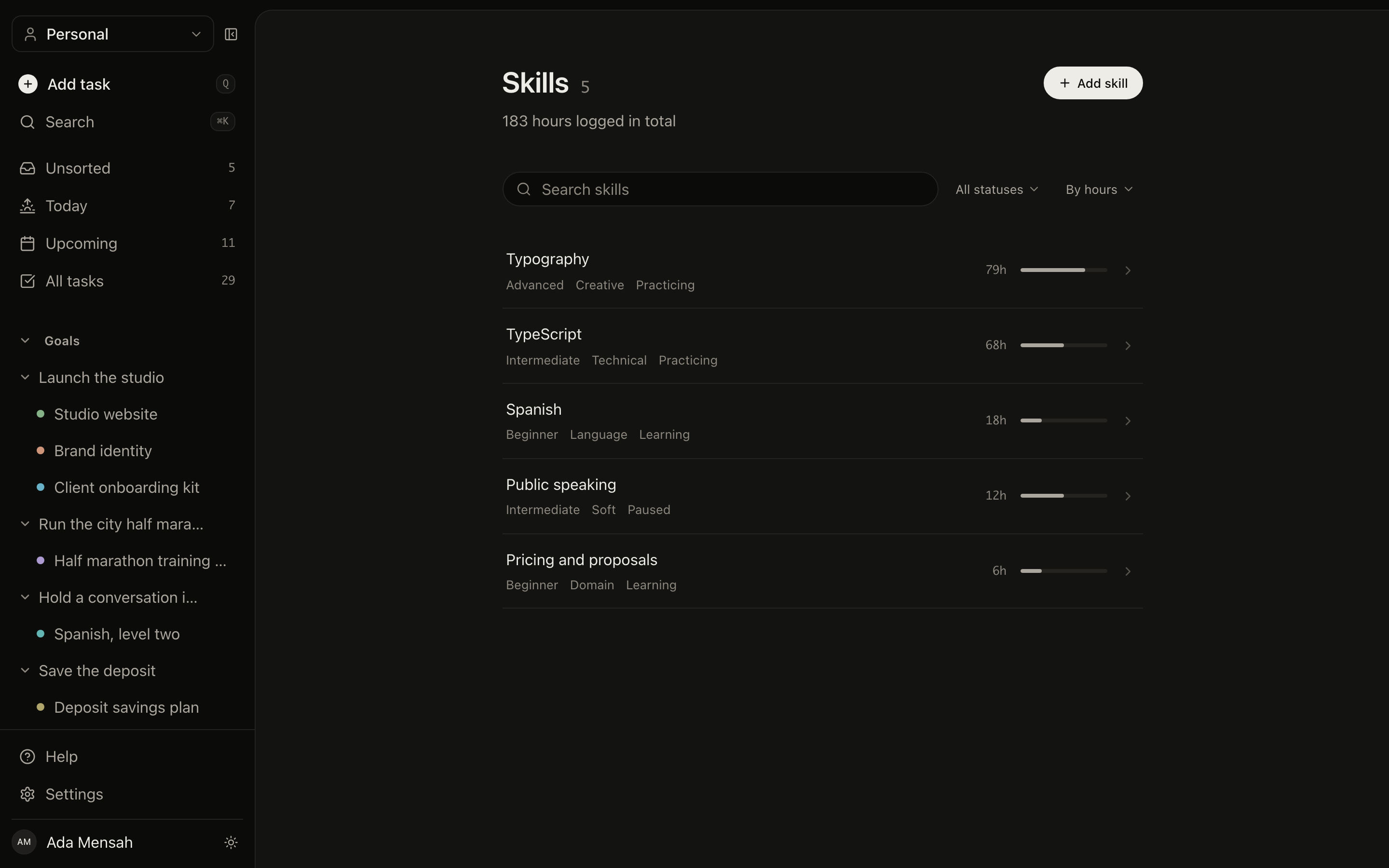
The skills list in EvyOS: 5 skills sorted by hours, each with its category, current level, status and hours logged, under a running total of 183 hours
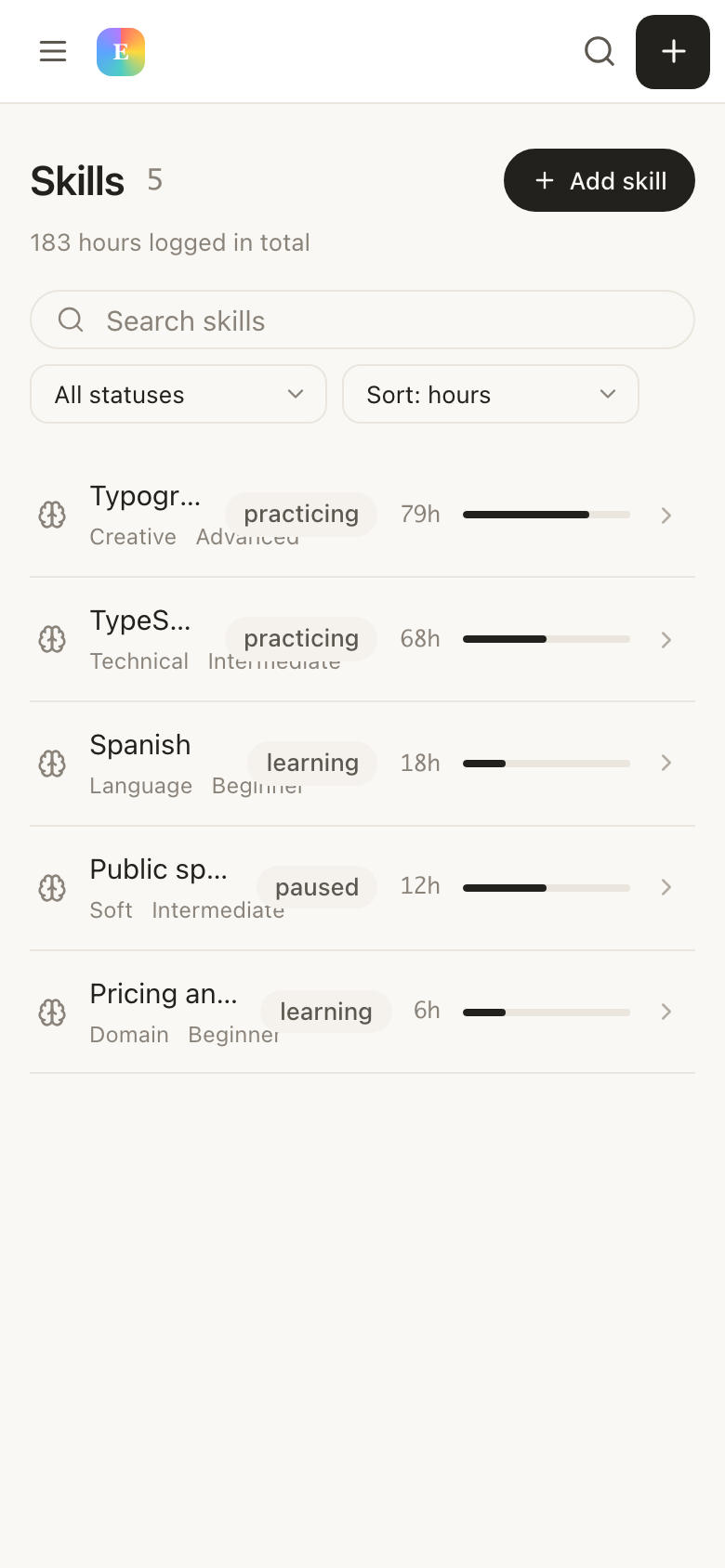
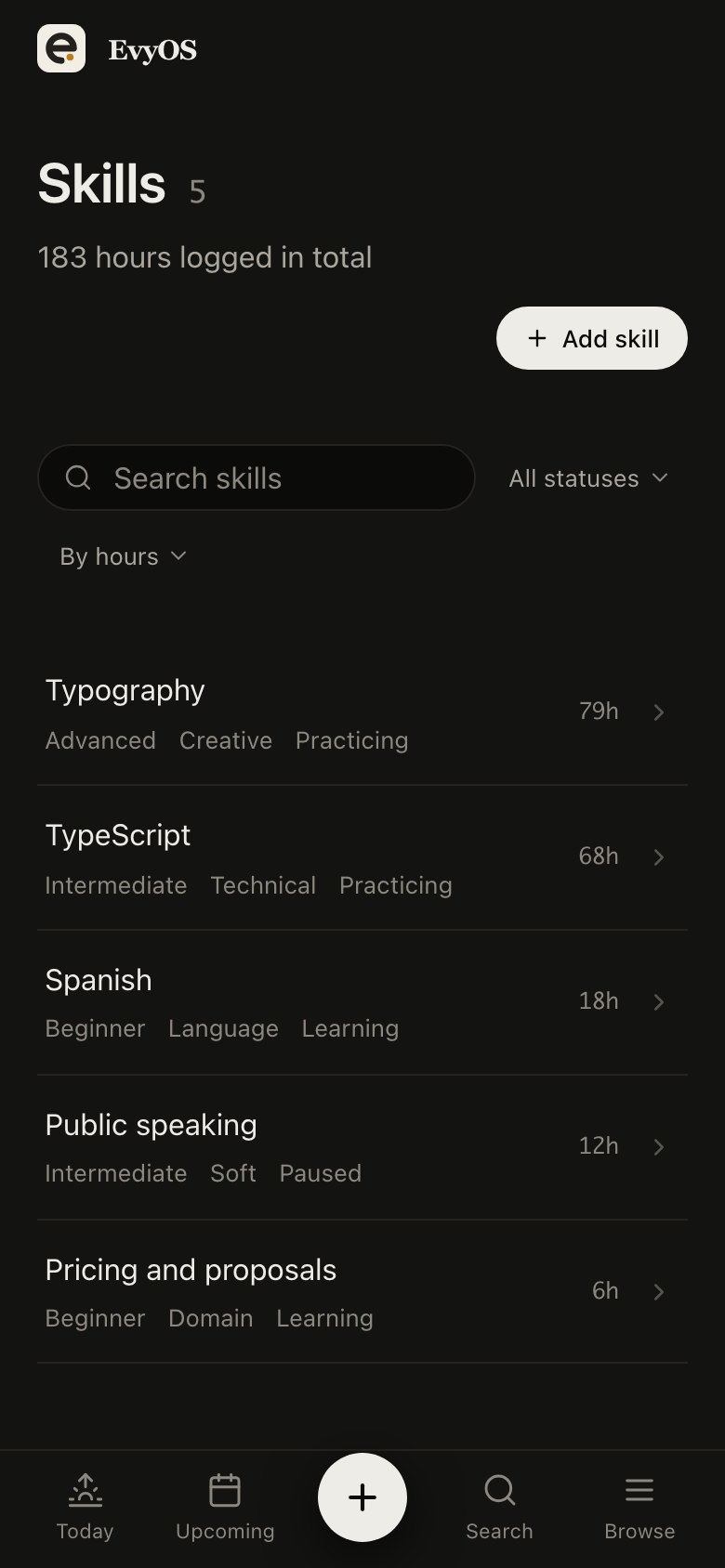
The skills list in EvyOS: 5 skills sorted by hours, each with its category, current level, status and hours logged, under a running total of 183 hours, on a phone
✦ What a skill holds

A practice log, not a wish.

Most learning apps ask what you want to get good at. This one asks what you did on Tuesday. Everything a skill knows about you comes from sessions you logged, which is why the number at the top can be trusted.

Sessions in minutes

Every practice session carries a date and a duration. 25 minutes counts as 25 minutes, so the short sessions you would otherwise not bother recording are the ones that build the total.

🎯
An activity type

Each session says what kind of practice it was. Reading about typography and setting type are both worth doing and are not the same work, and a log that flattens them is a log you stop believing.

📈
A level, and a target

Where you are now and where you are heading, so progress is a distance rather than a feeling. Beginner to intermediate is a different piece of work from advanced to expert, and the skill says which one you are in.

📚
The resources, attached

The course, the book, the three articles you keep meaning to finish, kept on the skill itself and marked off as you get through them. Not another bookmark folder nobody opens.

📊
An activity graph

Half a year of practice as one picture. The dense stretches are obvious and so are the gaps, which is the part most people are quietly hoping not to see.

🔄
The habit beside it

A habit is the commitment to practise; the skill is the evidence that you did. Keep both and you can see whether the routine you built is actually producing hours.

✦ The parts worth explaining

An app to track hours of practice
only works if logging is quick.

01 - The record

Where the time actually went.

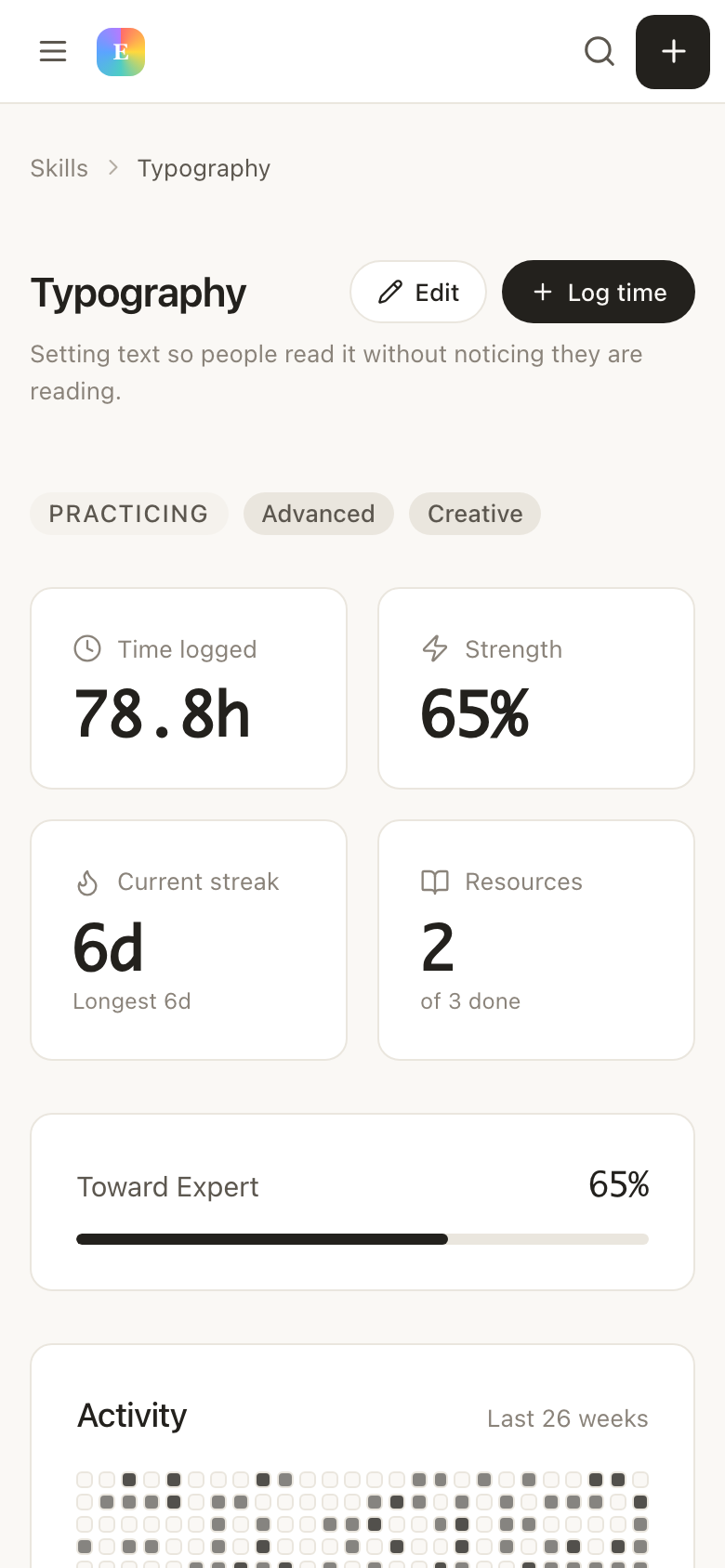
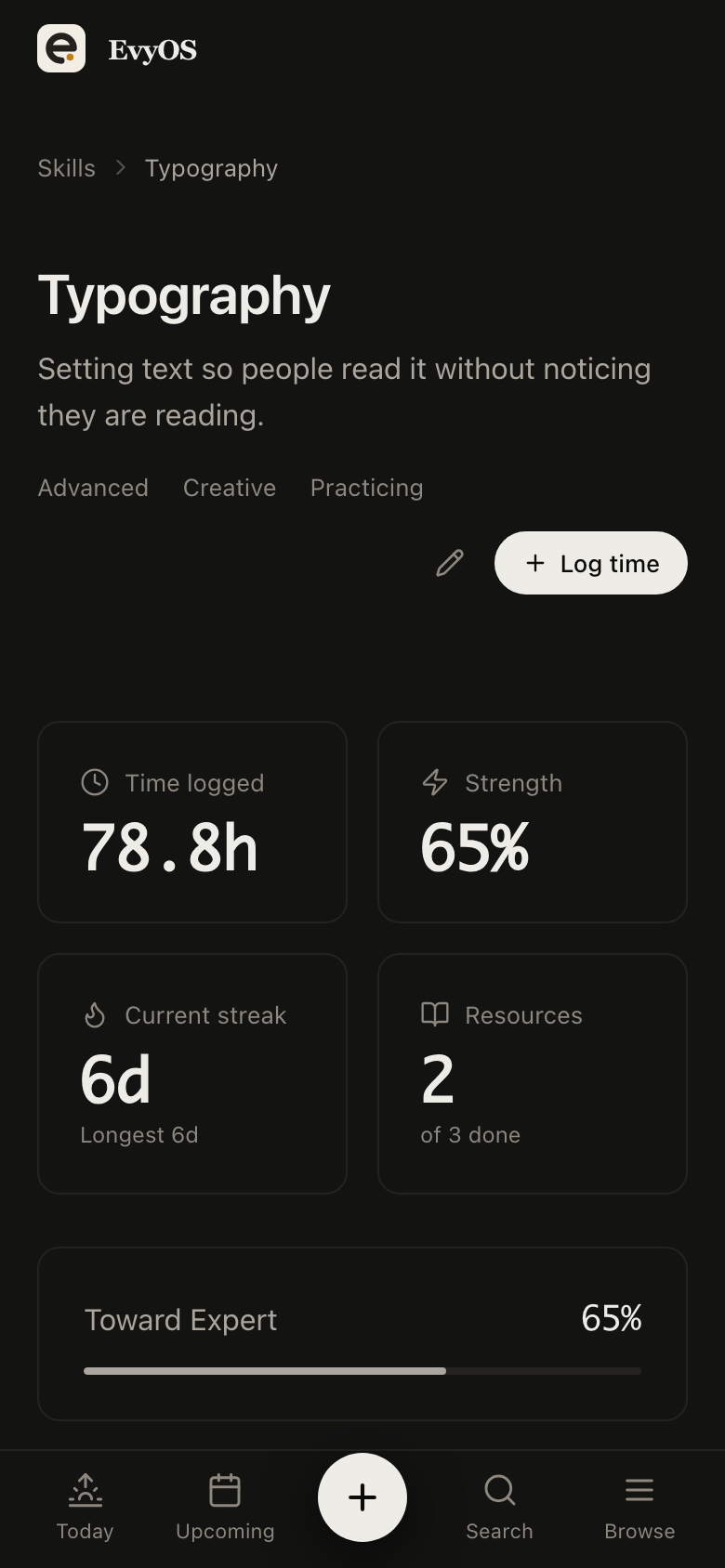
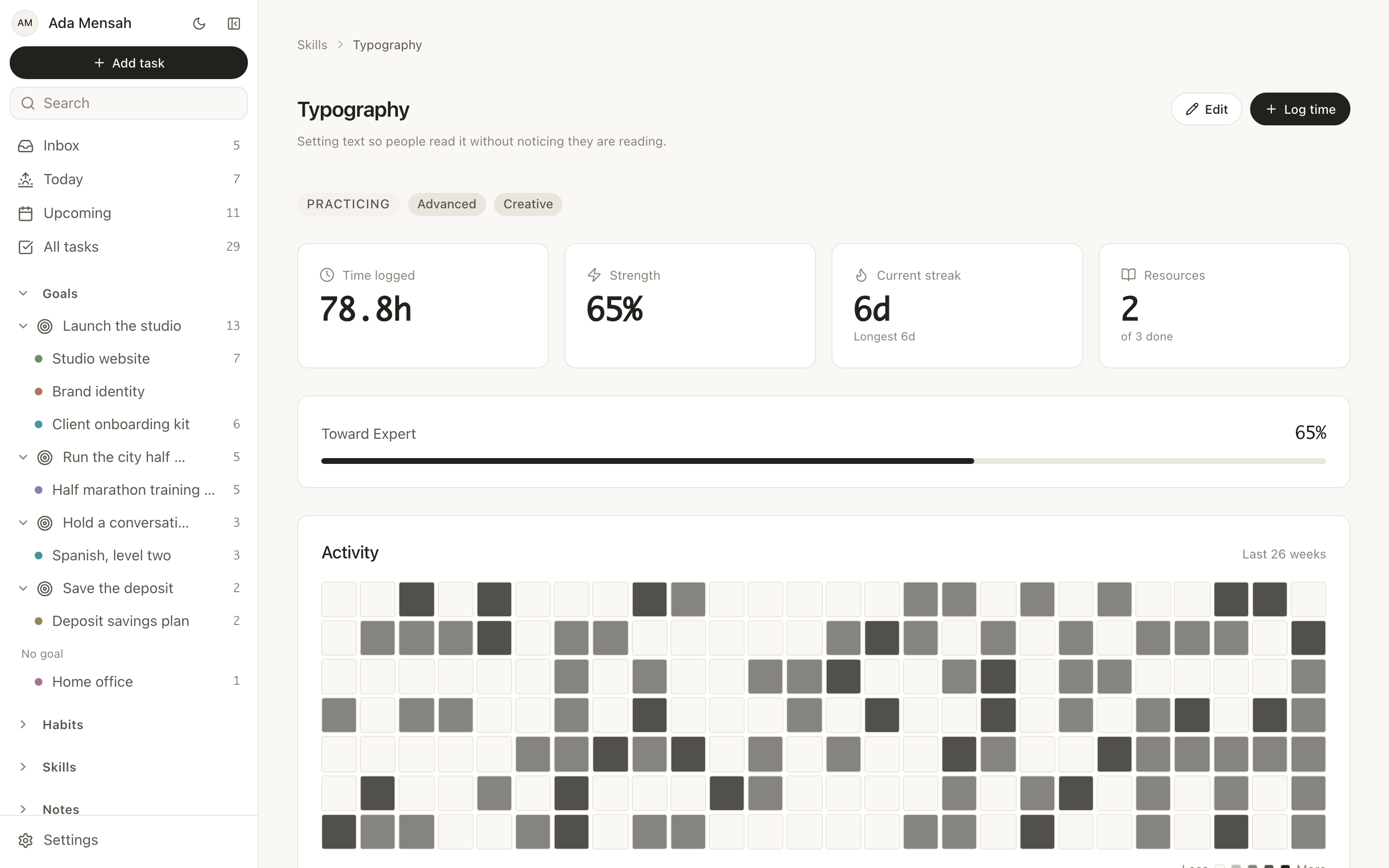
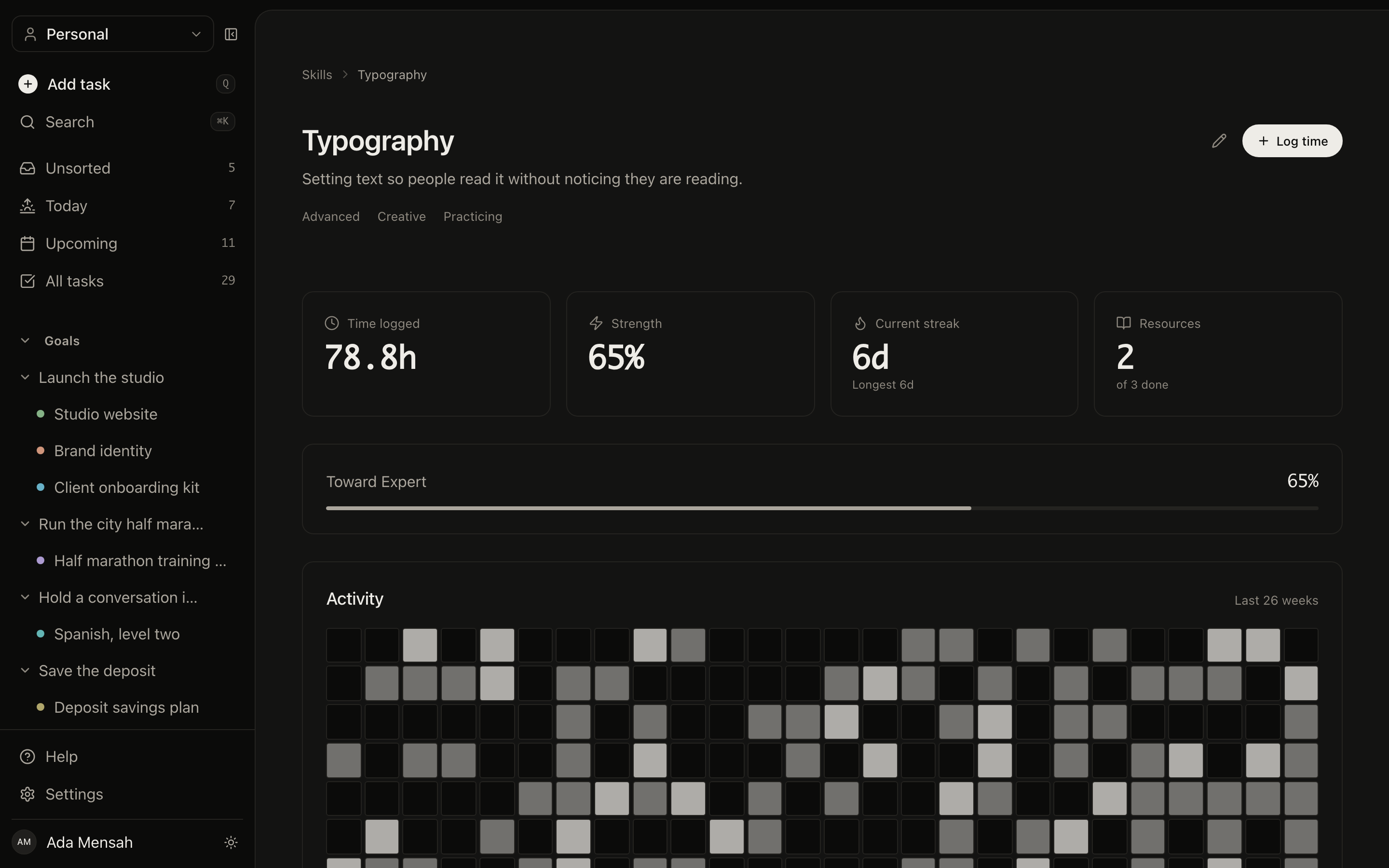
Open a skill and the whole history is on one screen: total hours logged, the current streak of practice days, how far along you are toward the level you set, the resources still unread, and half a year of sessions as a graph. It is the answer to a question most people cannot answer about their own learning, which is simply how much.
Hours loggedPractice streakProgress to targetActivity graph
A skill open in EvyOS: 78.8 hours logged, a 6 day practice streak, 65 percent of the way to the target level, 2 of 3 resources done, and 26 weeks of practice as an activity graph
A skill open in EvyOS: 78.8 hours logged, a 6 day practice streak, 65 percent of the way to the target level, 2 of 3 resources done, and 26 weeks of practice as an activity graph, on a phone
02 - The habit that feeds it

Showing up, and having shown up.

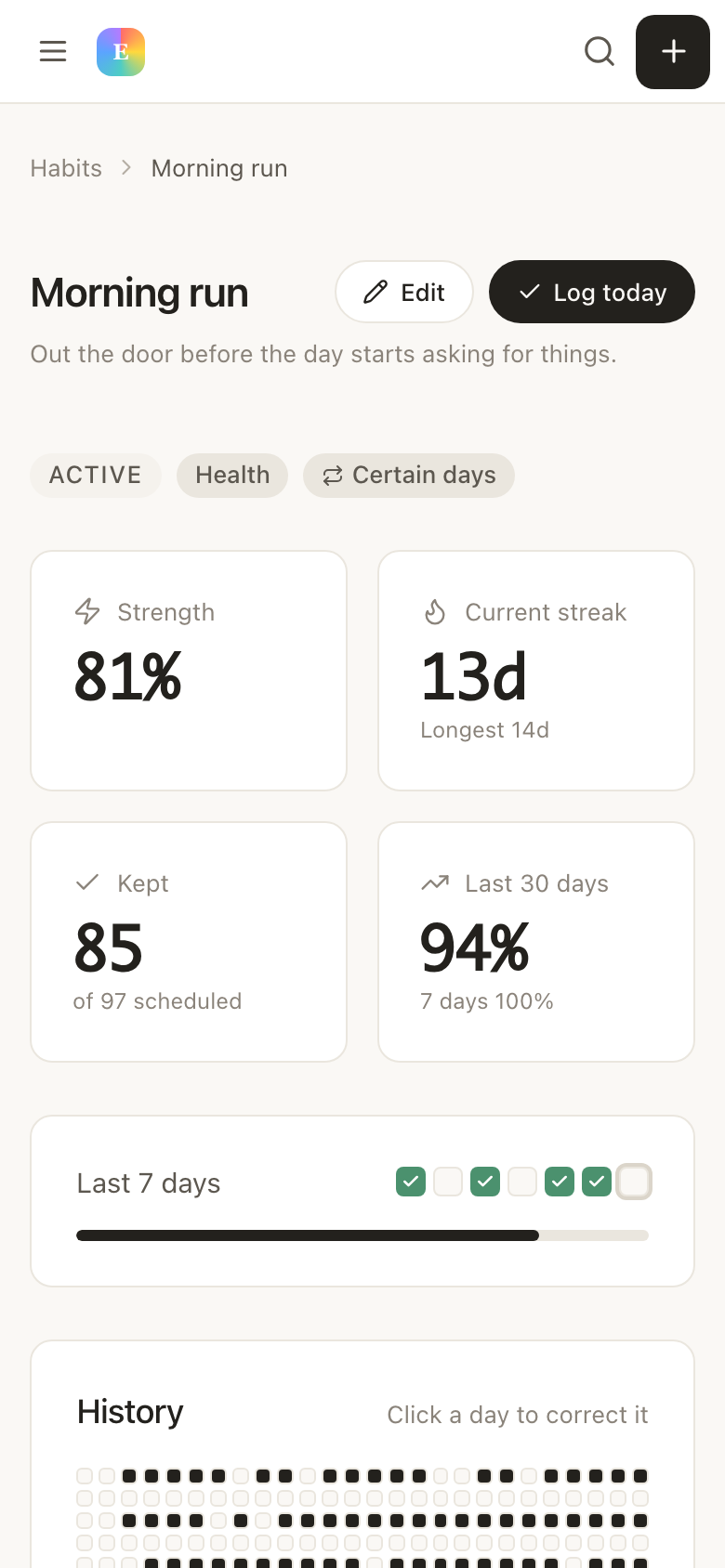
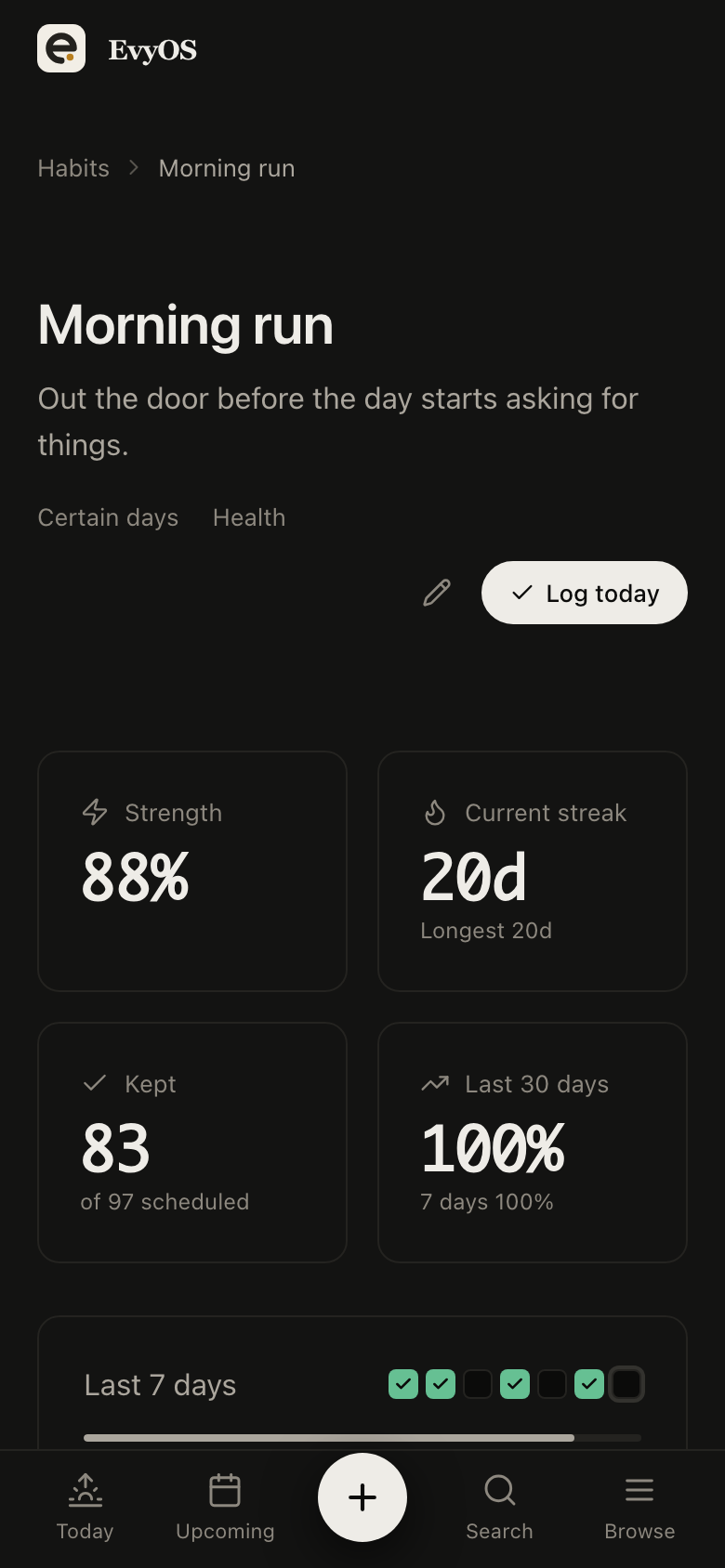
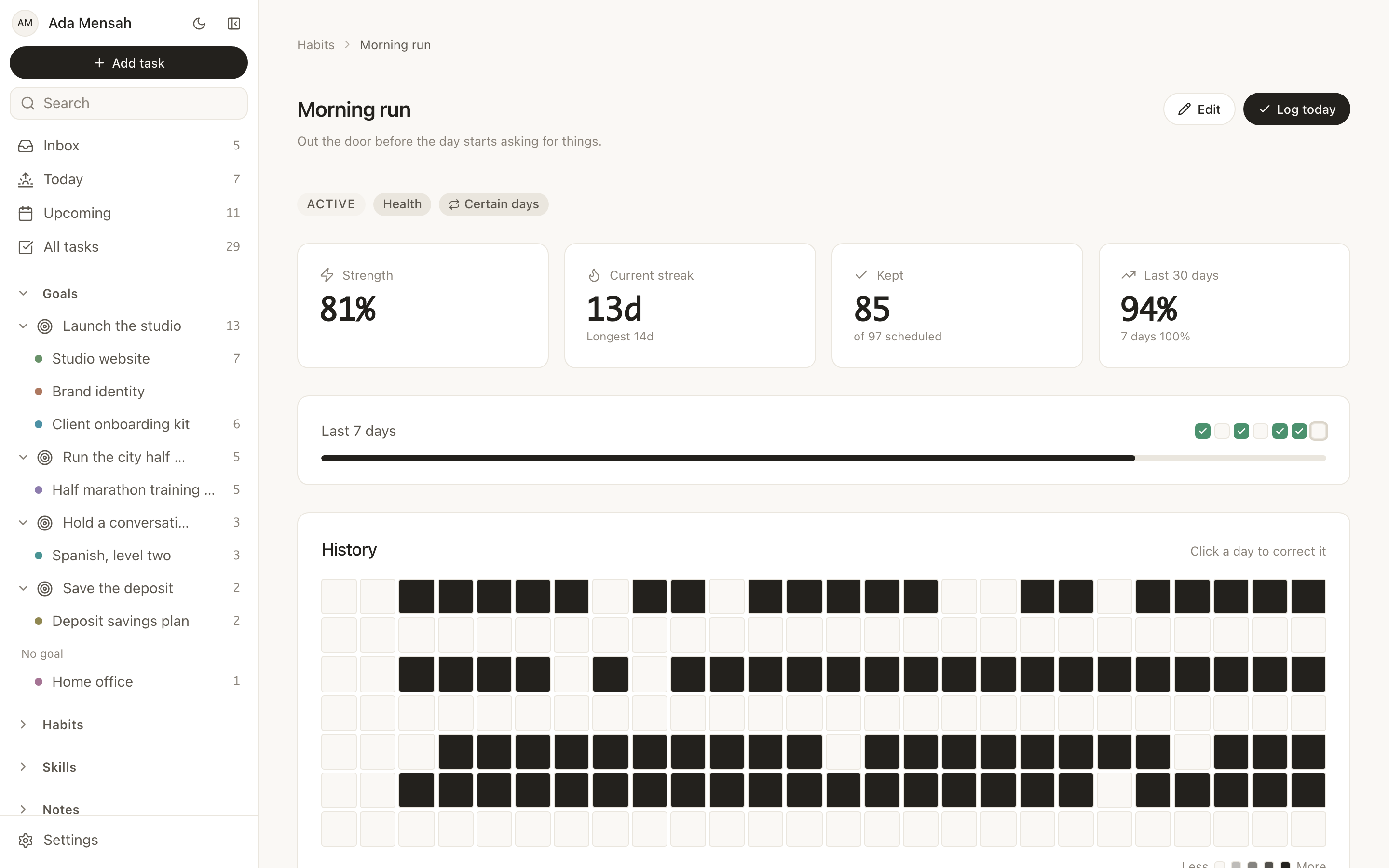
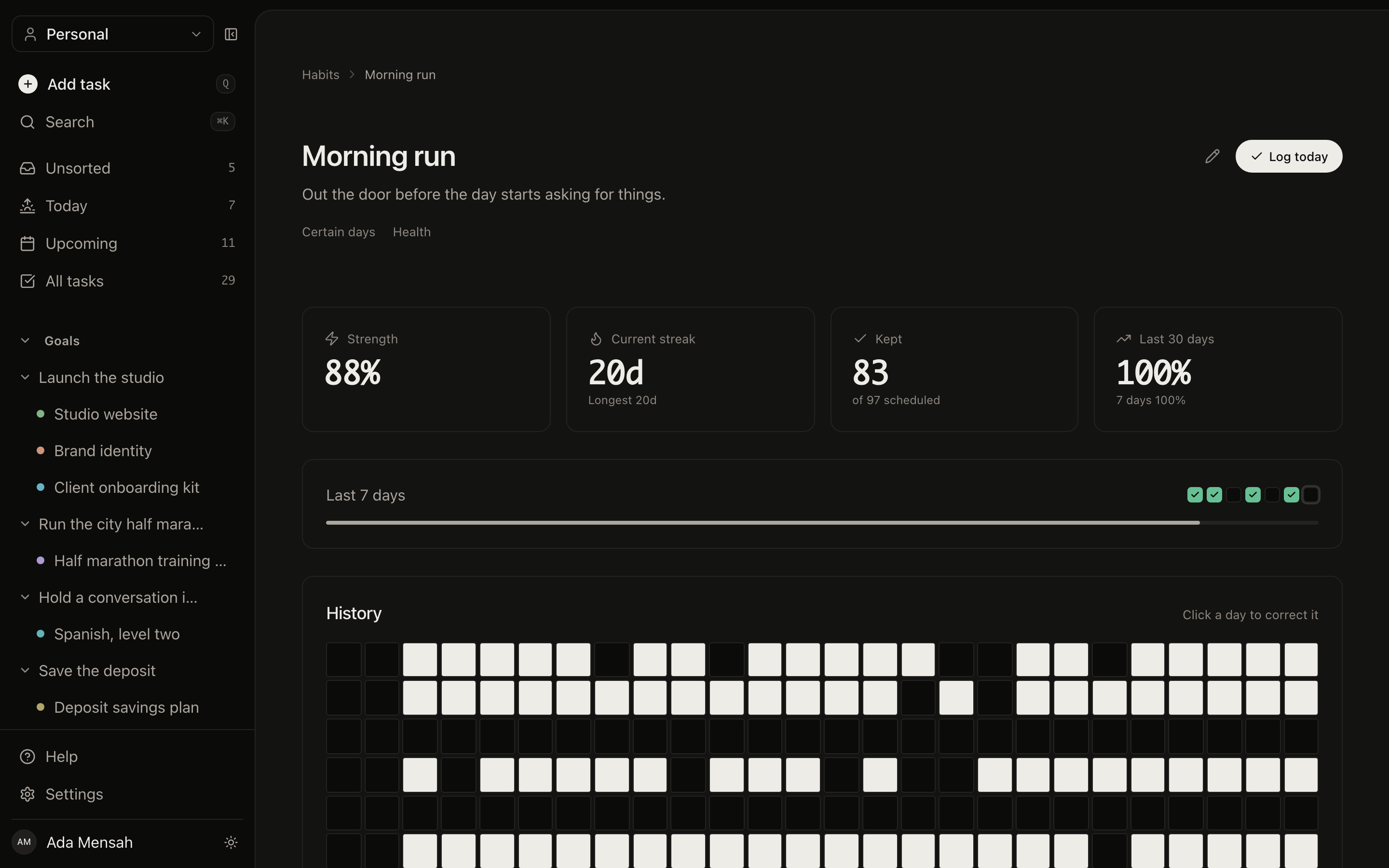
Nobody gets better because they tracked something. They get better because they practised on a Wednesday when they did not feel like it. So the habit sits in the same account as the skill: the habit carries the schedule and the streak, the skill carries the hours. One tells you whether you are still turning up, the other tells you what it has amounted to.
SchedulesStreaksYear heatmapOn your Today list
A habit open in EvyOS with its schedule, current streak, completion history and a heatmap of the year
A habit open in EvyOS with its schedule, current streak, completion history and a heatmap of the year, on a phone
How to track skill development

Three things, then repeat one of them.

1
Name the skill and set the target

Say what you are learning, what level you are at now, and what level you are aiming for. Add the course or the book as a resource while you are there.

2
Add the habit that produces the practice

A schedule you would actually keep, not the one you wish you kept. Four evenings beats seven, because the streak survives a bad week.

3
Log every session, including the short ones

Minutes and an activity type, and that is the whole ritual. The 15 minute sessions are the ones that decide what the total looks like in a year.

✦ What it is not

No flashcards. No decks to review.

Anki and the other spaced repetition tools are excellent at drilling recall, and EvyOS has nothing that competes with them. This tracks the practice around the drilling: the hours, the sessions, the resources and the level. If you use both, log the Anki session here as practice and let each tool do the job it is good at.

See the plans →
  • Free: 5 skills, plus 2 goals, 5 projects, 20 open tasks and 5 habits
  • Limits count only open items, so finishing something frees the slot
  • Pro: unlimited skills, habits and projects at $9.99 a month or $99 a year
  • Pro adds progress heatmaps, shared workspaces and the mobile app
  • Log practice from ChatGPT or Claude through the Pro connector
✦ Who keeps one

Different skills, one shape.

People teaching themselves

No syllabus, no term dates and nobody marking the work, so the log is the only thing standing between six months of study and six months of intending to study.

Skill tracking for autodidacts →

People with a craft

Typography, an instrument, a language, a lift. Progress arrives too slowly to feel, and the only reliable way to notice it is to have written down what you did while it was happening.

EvyOS for designers →

People with a deadline

A viva, a certification, a language exam in March. The target level is the exam, the hours are the only lever you control, and the graph tells you in week 3 rather than week 11.

EvyOS for grad students →

Questions

Frequently asked.

Open the skill and log a session. You give it a length in minutes and an activity type, so 40 minutes of drills and 40 minutes of reading are both counted and still tell apart. The hours accumulate on the skill and across every skill you keep, which is how you find out that the thing you say matters got 6 hours this quarter.
A habit is the commitment to show up: practise Spanish on weekdays, with a schedule and a streak. A skill is the record of having shown up, measured in hours rather than days. They work as a pair. Tick the habit to keep the streak, log the session to keep the total, and after a few months the two together tell you whether the routine is producing anything.
It has the parts deliberate practice needs written down: what you did, for how long, and which kind of work it was, so drills, performance and reading do not blur into one number. It does not grade the quality of a session for you. What it gives you is an honest log to look back at, and a target level to compare where you are against where you said you were going.
No, and it is not trying to. Anki and its relatives are very good at drilling recall, and EvyOS has nothing that competes with them. What it tracks is the practice around the drilling: the hours, the sessions, the resources you are working through and the level you are aiming at. Plenty of people run both, with the Anki session logged here as practice.
Set the level you are at now and the level you want to reach, then log every session honestly, including the short ones. For the first few weeks the total is the only signal you have, and it is enough. Once there are a couple of months behind you, the activity graph shows the weeks you skipped, which is usually the more useful thing to know.
5, alongside 2 active goals, 5 active projects, 20 open tasks and 5 habits. Limits count only what is still open, so archiving a skill you have stopped practising frees the slot. Pro removes the ceiling on skills, projects and habits at $9.99 per month or $99 per year.
On Pro you can connect EvyOS to ChatGPT or Claude and tell the assistant you did 45 minutes of scales. It logs the session against the right skill through the same API the app uses, so nothing about the record differs because it arrived from a chat.

You will not remember the hours.
Write them down instead.

Create a skill, set the level you are aiming at, and log the first session tonight, however short it is.

Start for free