A goal tracking app where the percentage is earned. Goals hold projects, projects hold tasks, and progress is calculated from what you have actually finished, so nothing sits at 60% because you felt like 60% in March.
Free for 2 active goals. Finishing one frees the slot.
Most goal setting apps are a place to write the goal down. The writing was never the hard part. The hard part is the distance between a sentence about next December and what you do on a Tuesday.
The goal is in a January note. The work is in a task app. They never meet, so the goal is a document rather than something that moves.
A slider you drag to 40% tells you what you hoped last time you looked. It cannot tell you whether the last month counted.
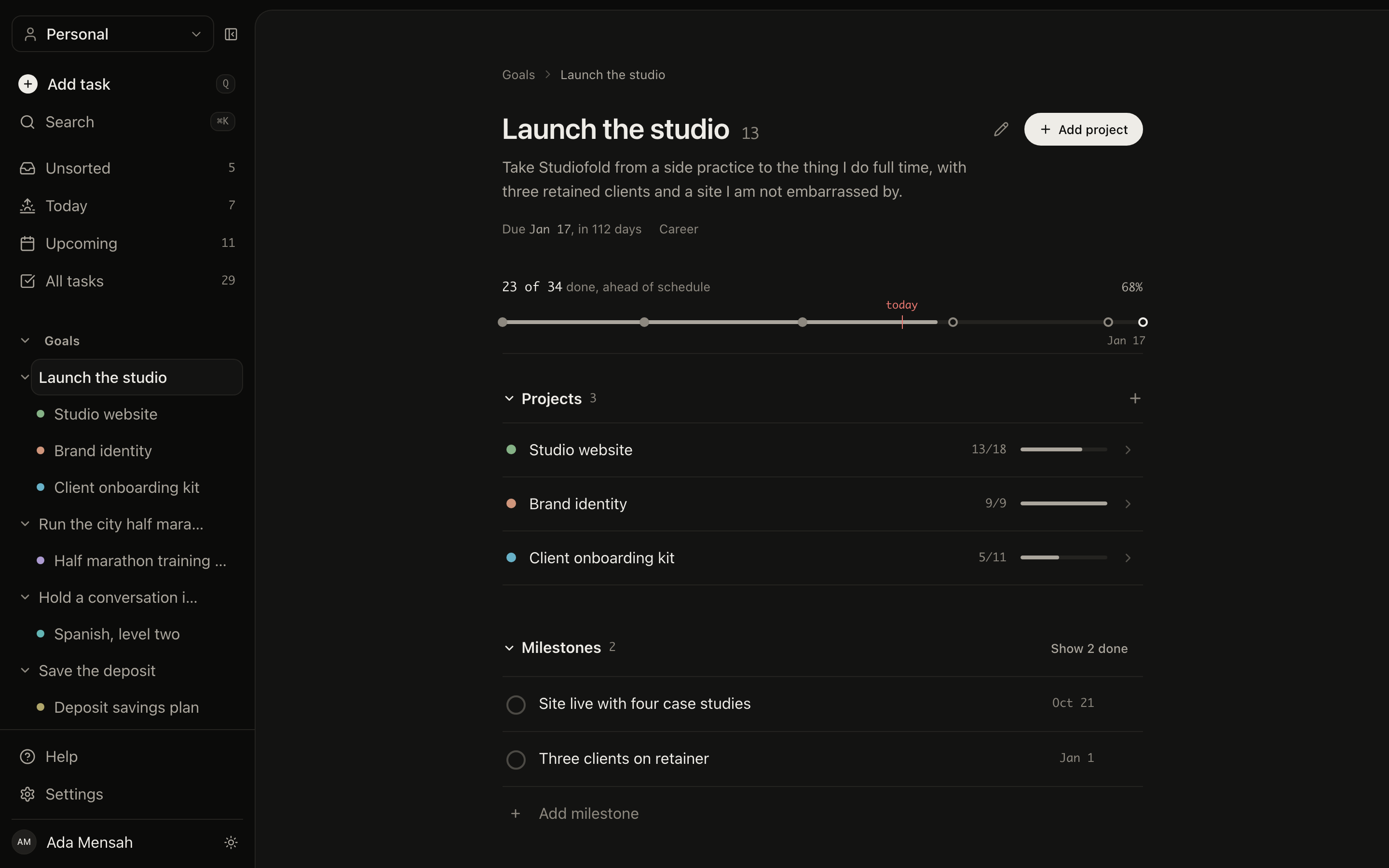
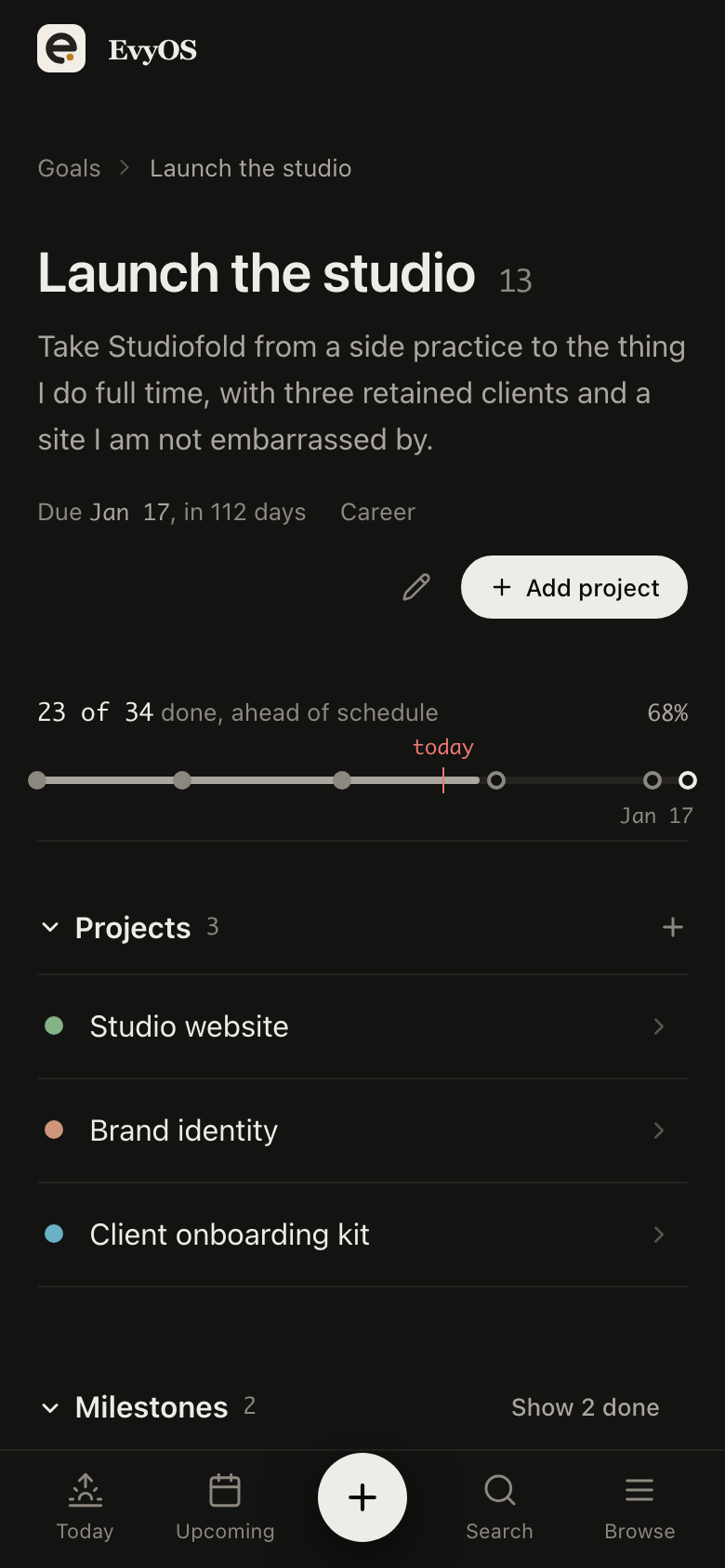
One deadline 11 months out gives you nothing to be behind on until it is too late to catch up. Checkpoints are what make a long goal steerable.
Half of most goals is a behaviour you repeat. Keeping that somewhere else means nothing ever adds up in one view.
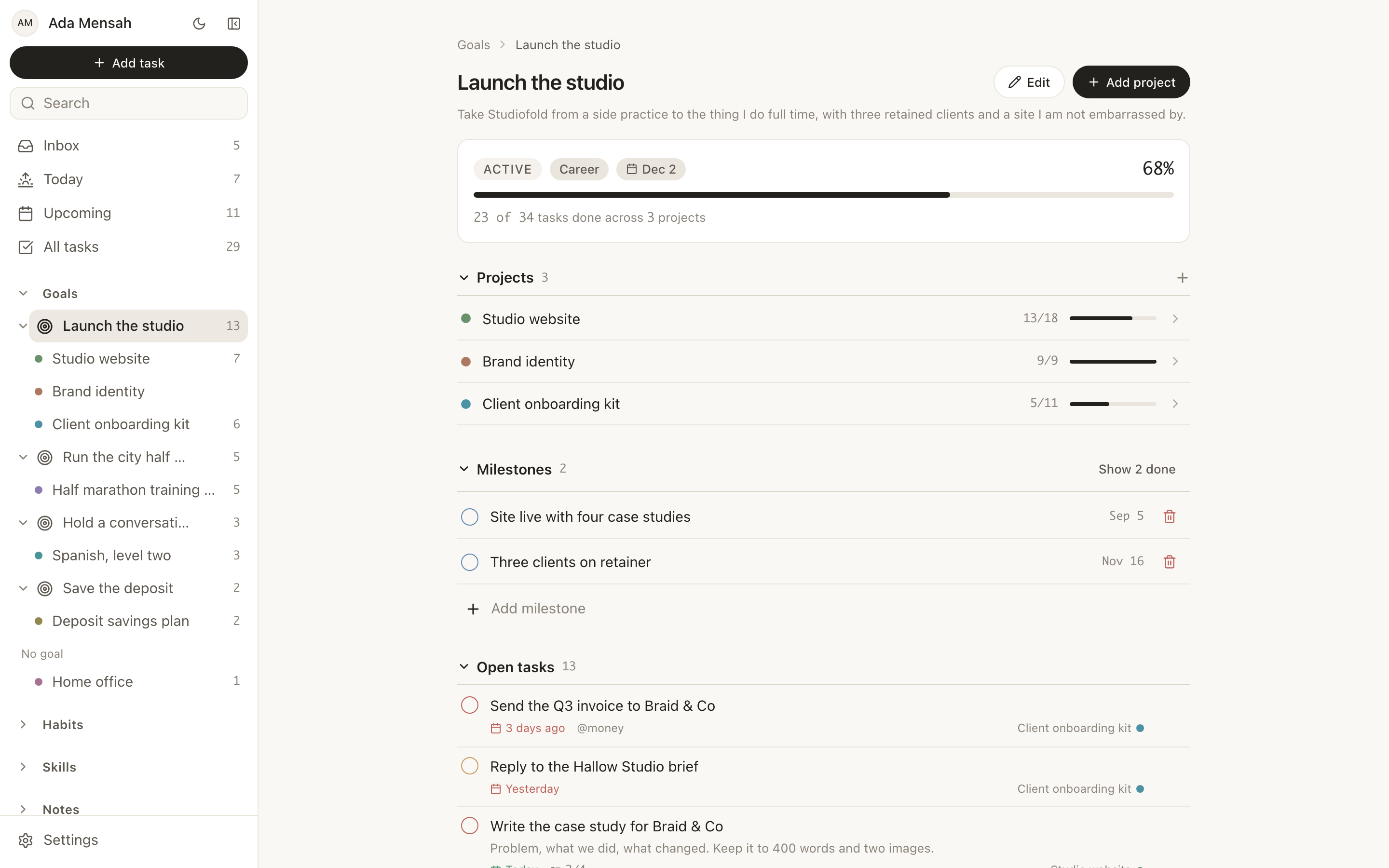
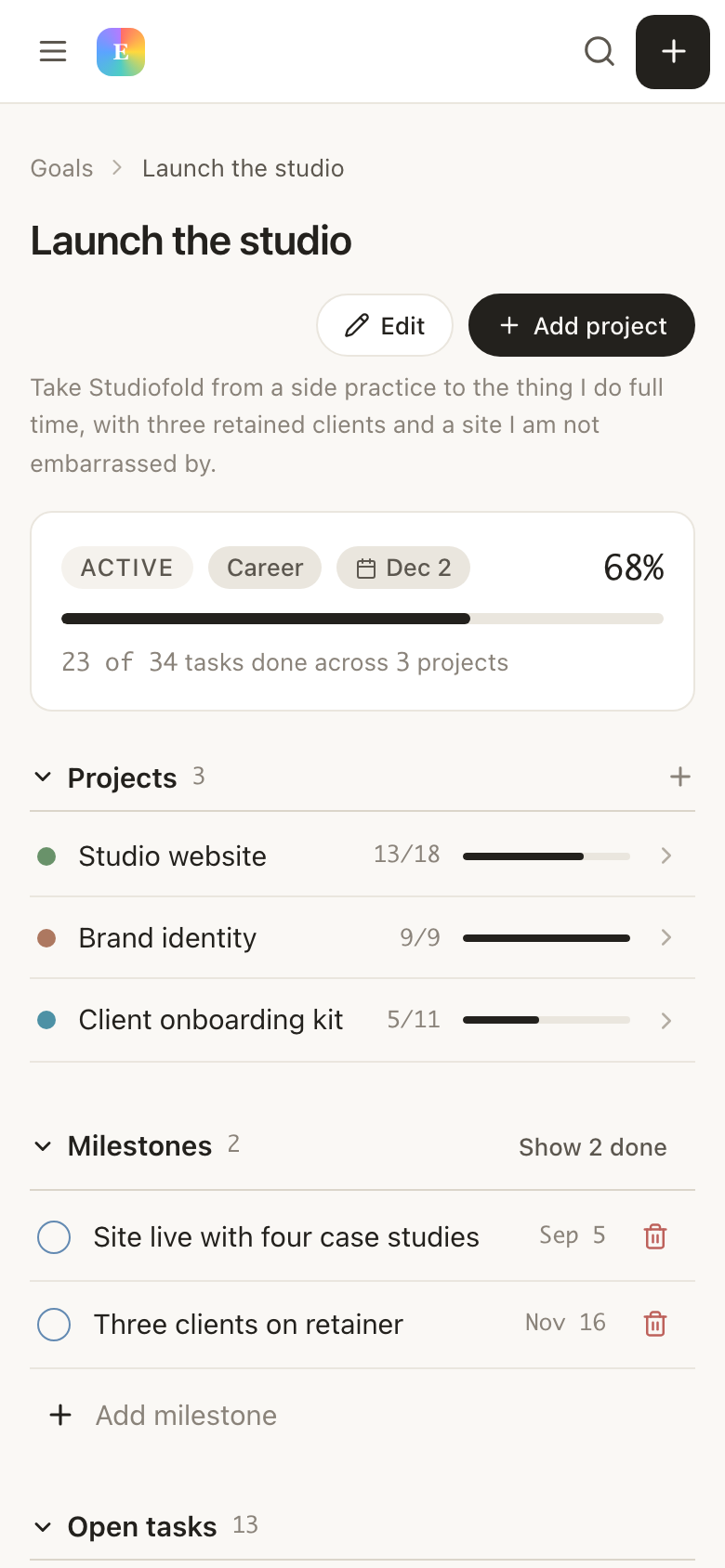
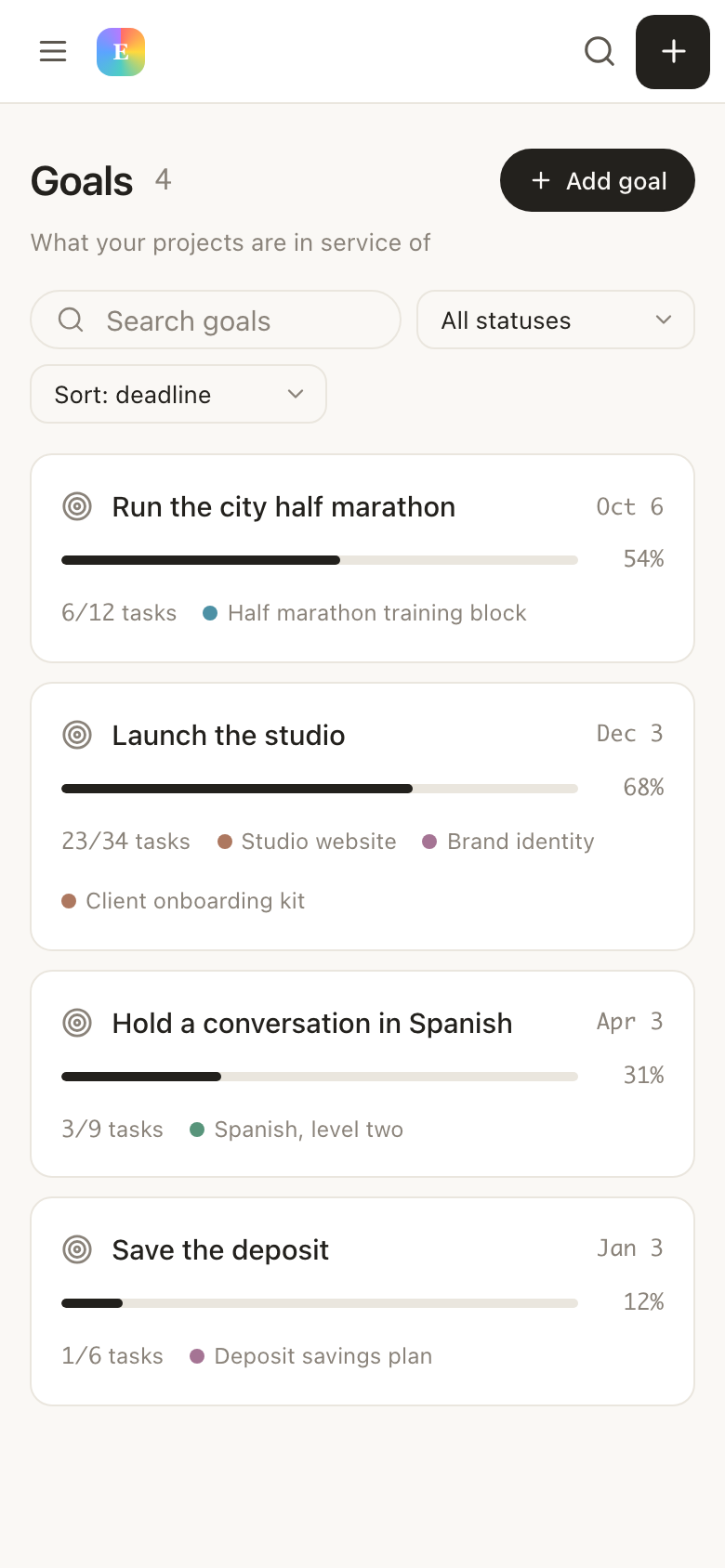
A goal's progress comes from the projects and tasks underneath it. Tick something off and it moves; do nothing for a fortnight and it stays exactly where it was. There is no field to nudge, which means the number is worth looking at. A goal carries a name, description, category, priority and target date, and as many milestones as the year needs, each with a date of its own.
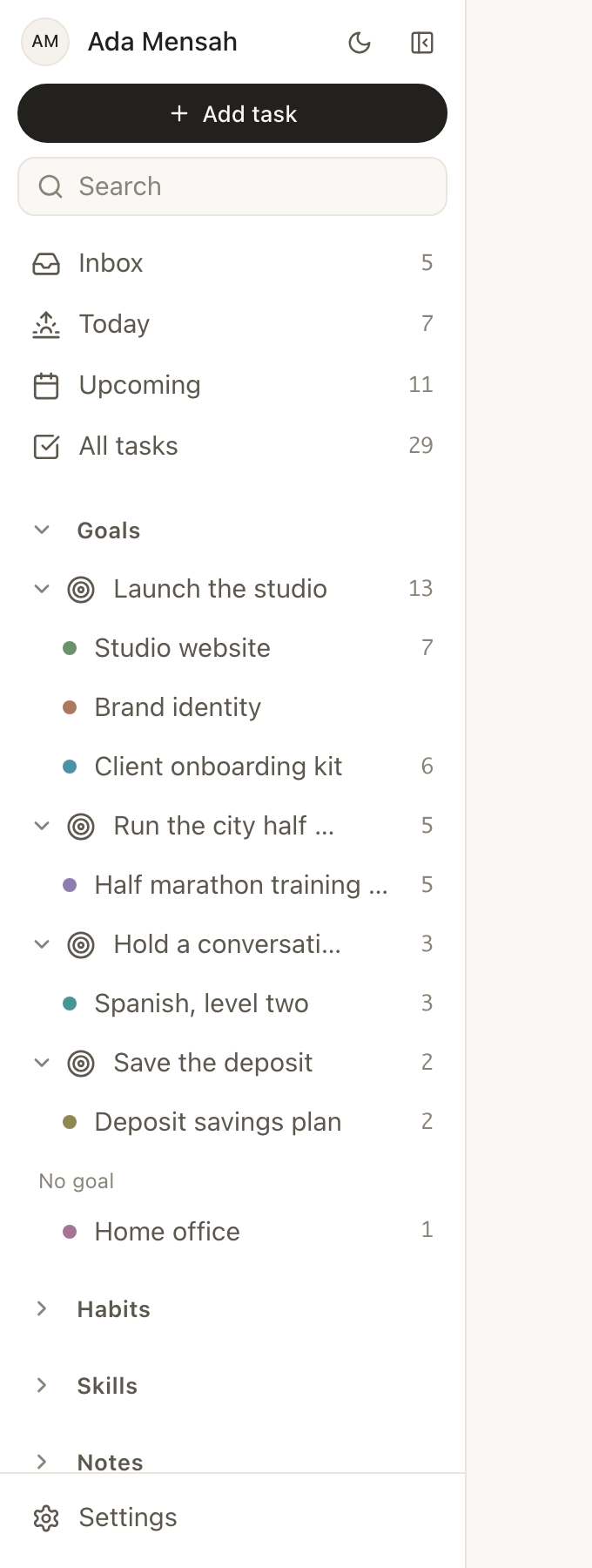
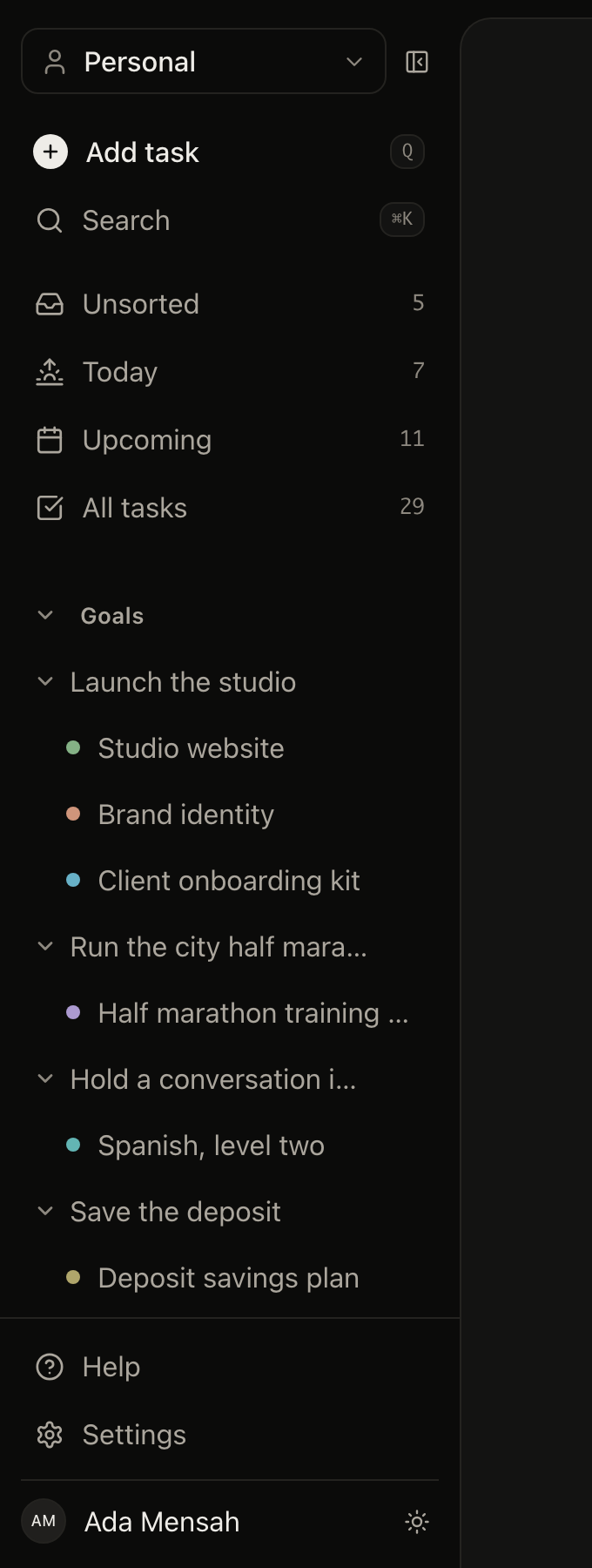
Goals sit at the top. Projects hang off a goal, tasks hang off a project, and the sidebar shows the whole tree with live counts, so you can read down from an outcome to the 3 things it needs this week. Anything that does not belong to a project waits in an unsorted inbox until it does.
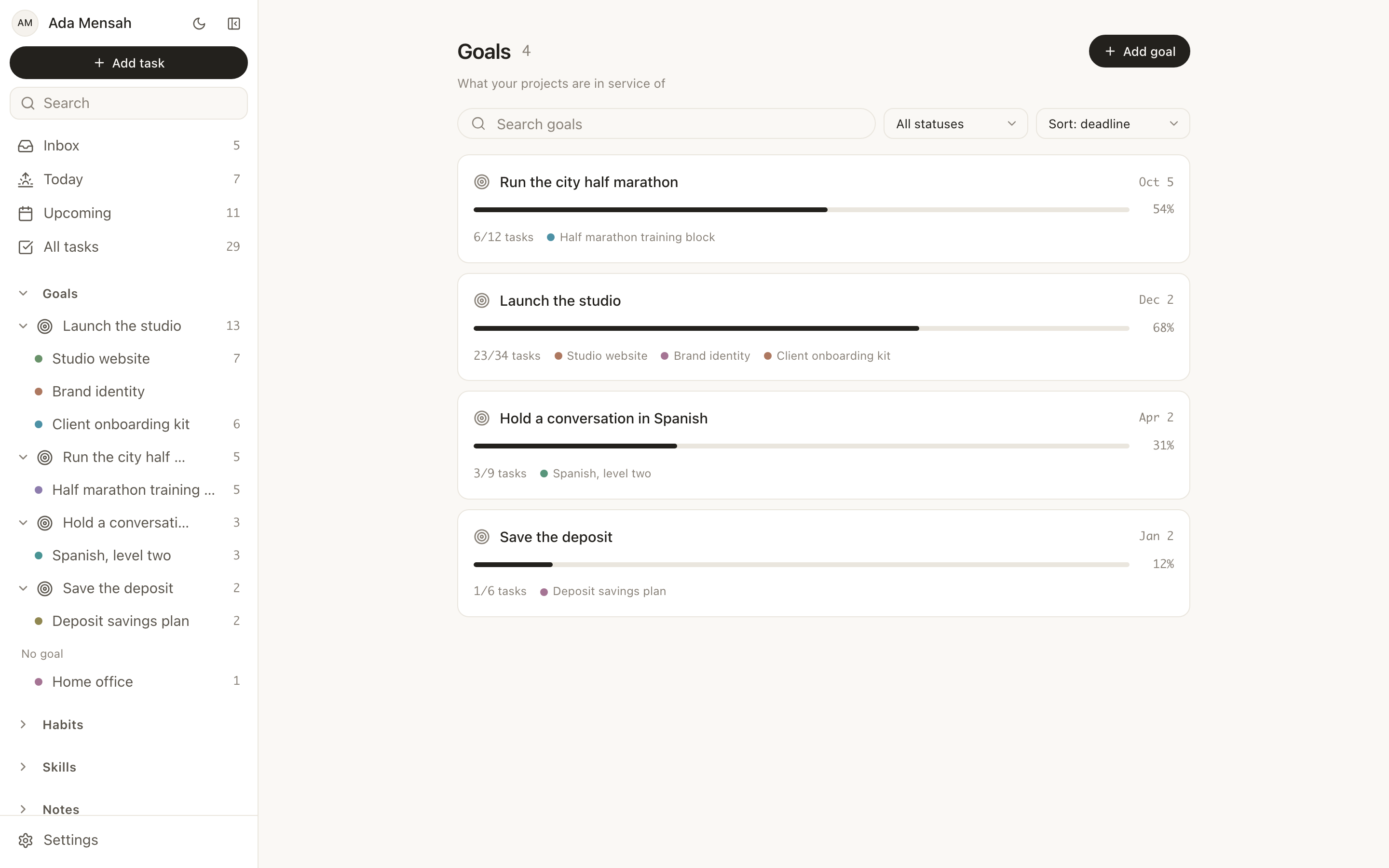
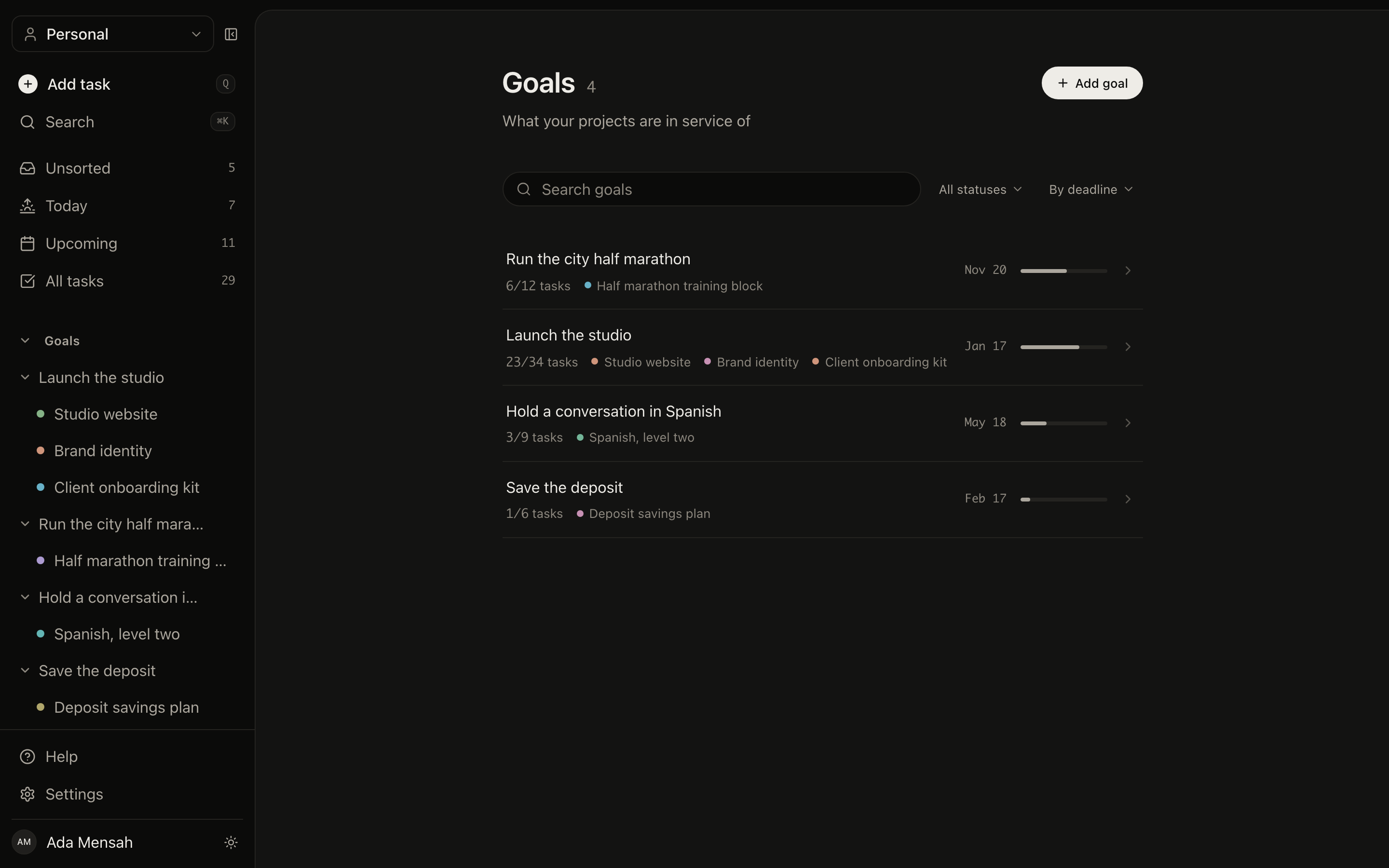
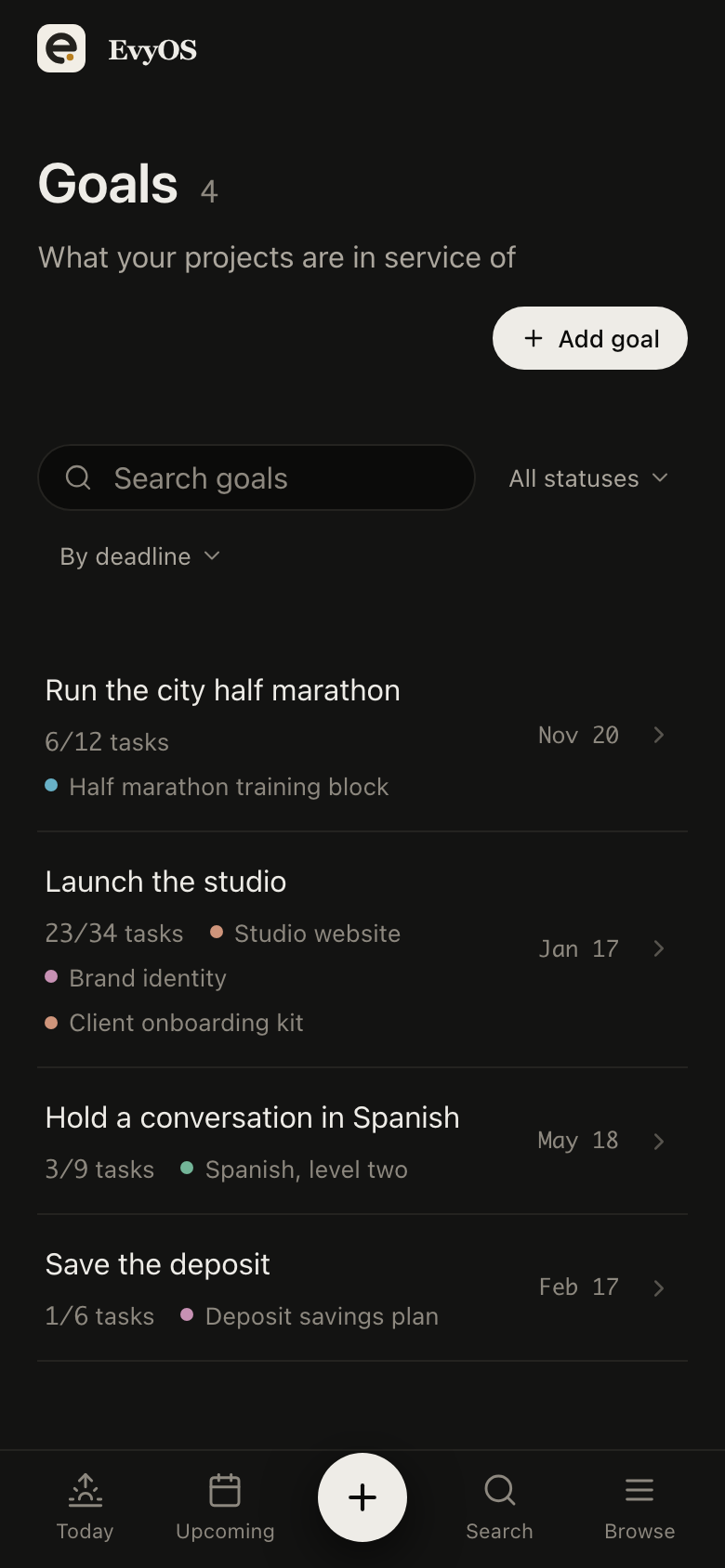
Every goal in one list, with its category, its target date and the progress it has actually made. Long-range outcomes stay legible at a distance while the tasks under them churn week to week, which is what a yearly goal list normally cannot survive. Priority is there for the honest admission that 2 of the 5 matter more.
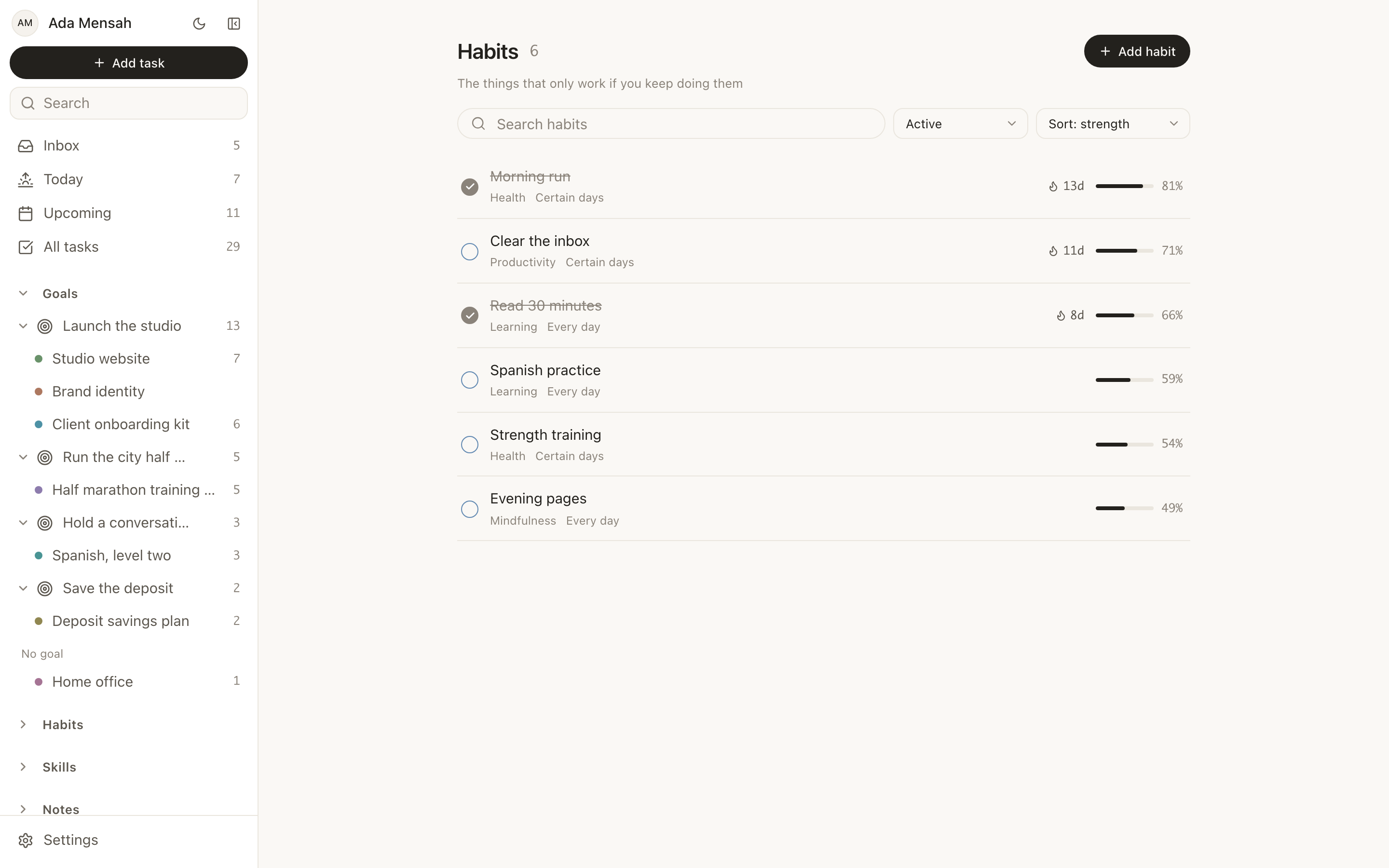
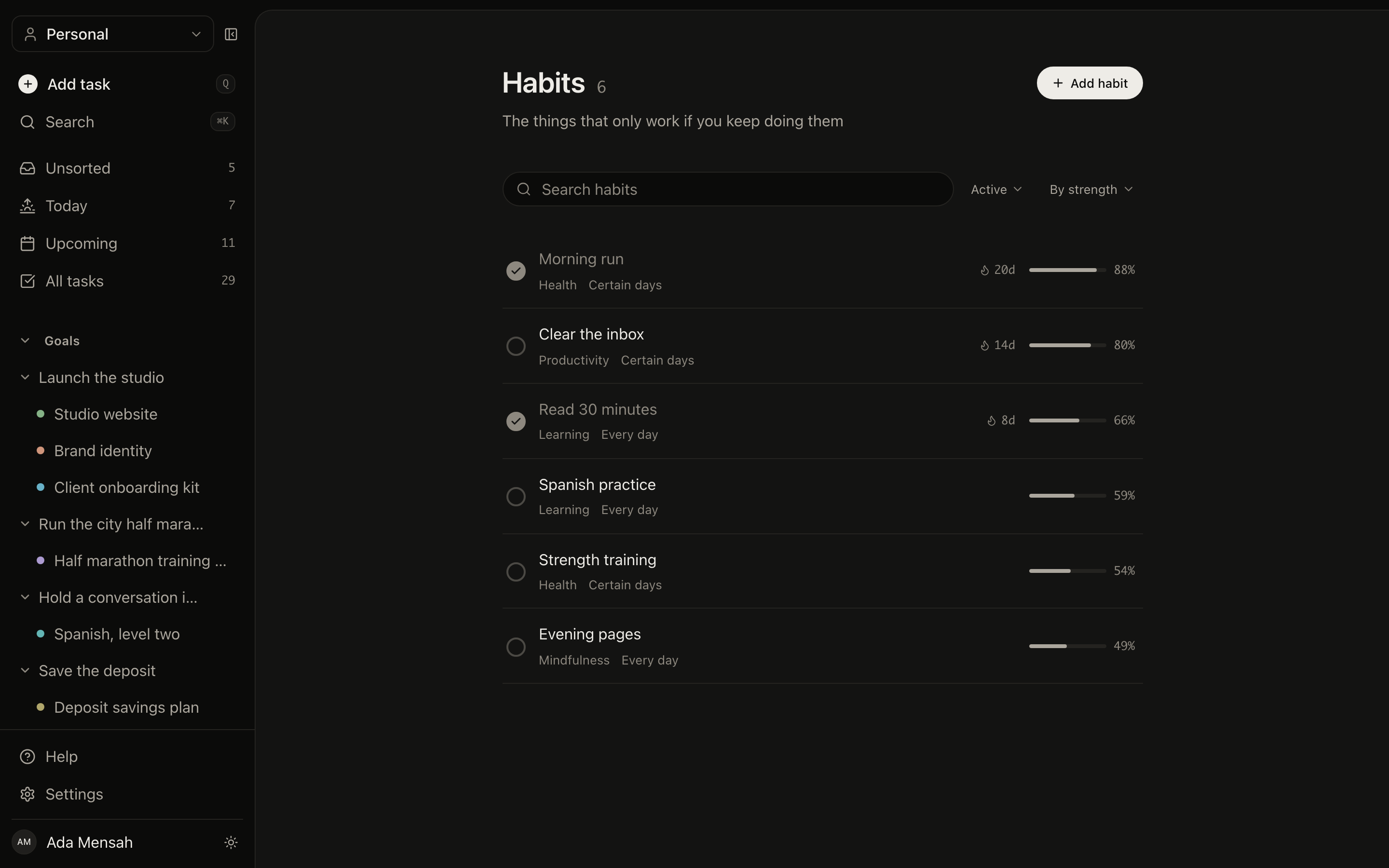
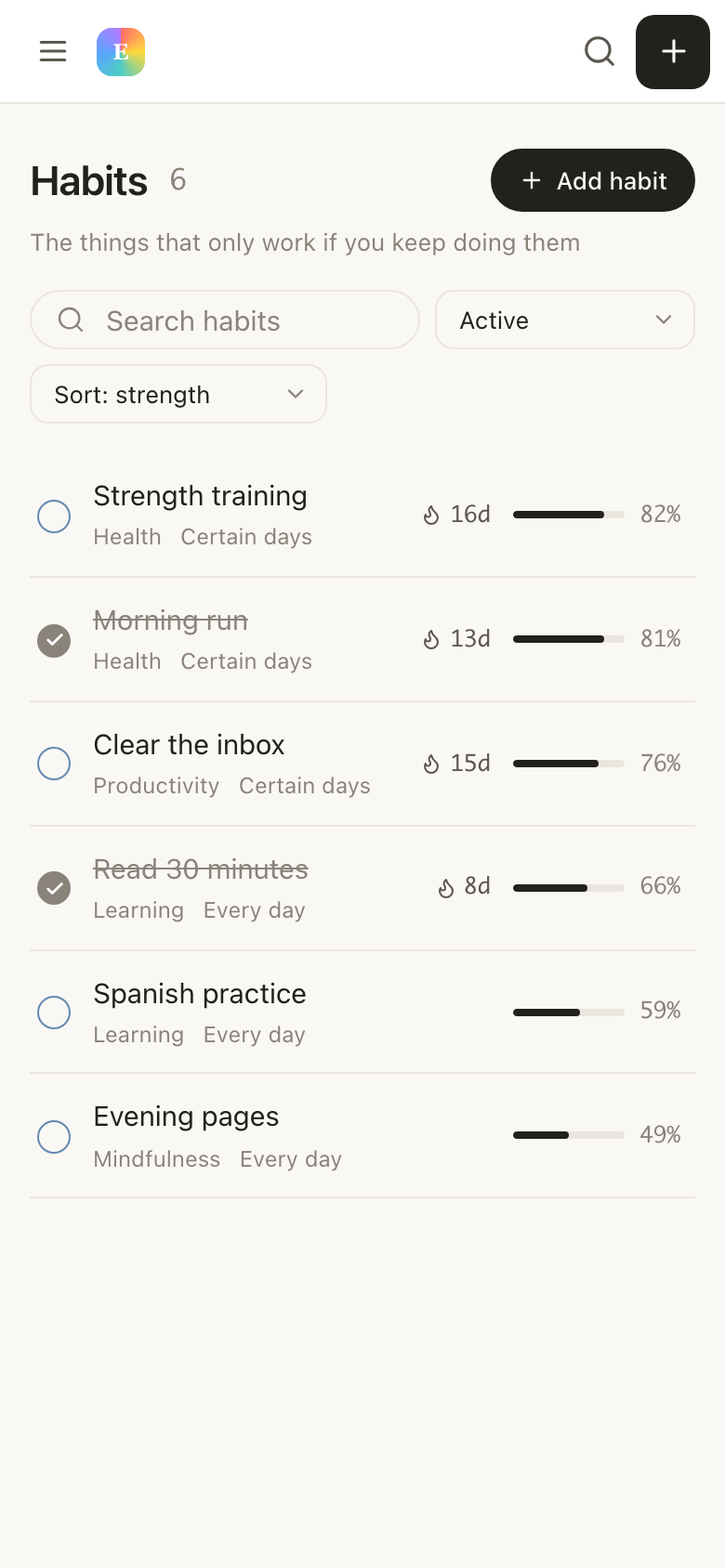
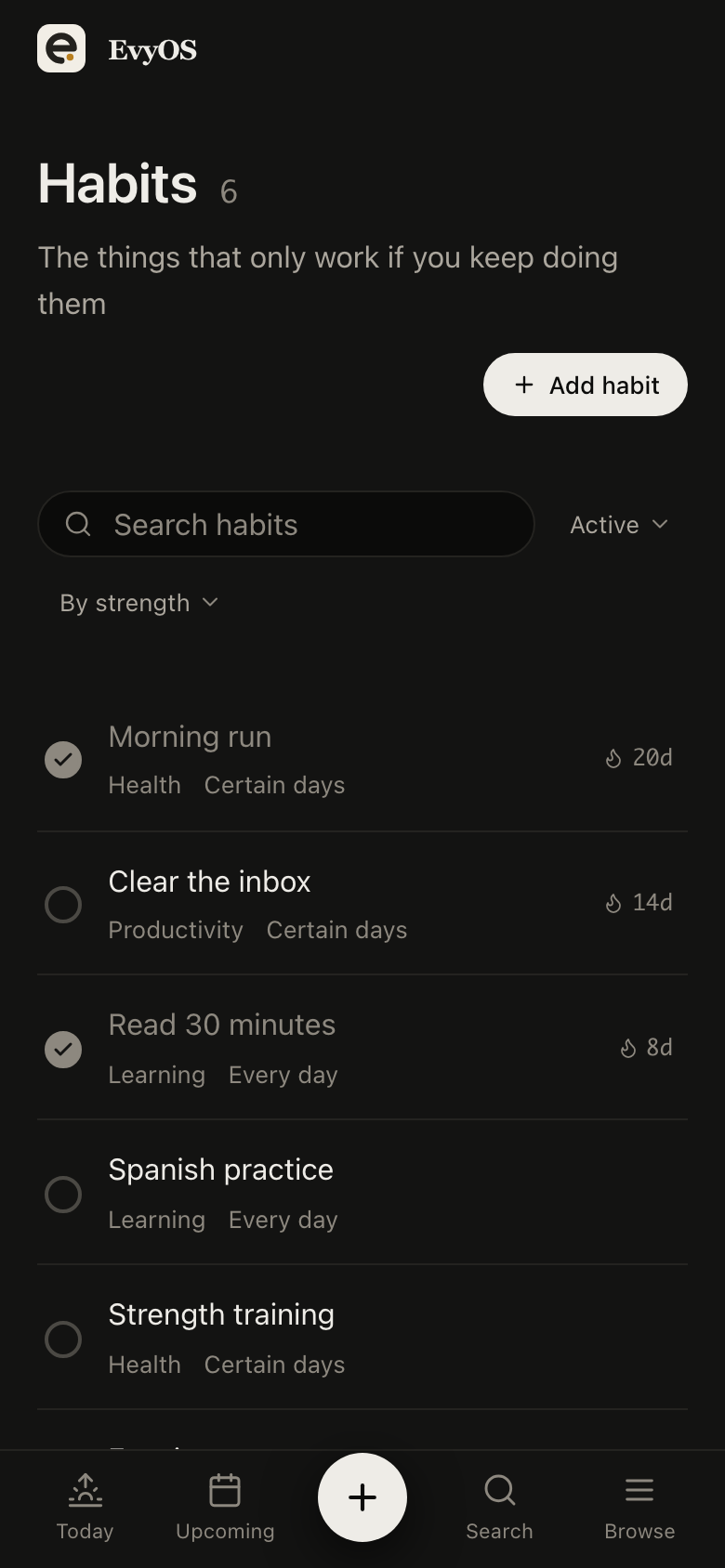
Most goals are half outcome and half behaviour. Run a half marathon is a target date, a training plan and 4 runs a week for five months. Habits live in the same account as the goals they serve, with their own schedules and streaks, and both show up in the same Today view instead of two apps you check separately.
One sentence for what is true when it is done, and a target date you believe. Add a category and a priority if you are tracking more than a couple.
Milestones for the 4 or 5 moments that prove it is on track, then a project for each block of work that gets you there. Tasks go under the projects.
Day to day you look at Today and Upcoming. Progress on the goal takes care of itself, so the monthly check-in is reading a number rather than reconstructing one.
Two active goals is enough for most people, and the limits count open items only, so finishing one hands the slot straight back. Pro is for when the projects and habits under those goals outgrow the free ceiling.
See the plans →Each one fills in on the page, prints as a real form and can be sent across to the app in a click. The quickest way to find out whether this shape of goal tracking suits you.
One goal, its milestones and the work under each. The template version of this page.
A quarter is long enough to finish something and short enough to still believe in it on week 6.
Twelve months on one sheet, so a goal set in January is still visible in July.
Write the outcome, hang the projects off it, and let the progress come from work you have actually done.
Start for free →