A habit tracker for language learning should do more than count your streak. It should show you how daily practice connects to measurable progress in the language you are learning. Most habit trackers, Habitica, Streaks, even Duolingo's built-in tracker, treat your language habit as an isolated checkbox. You did it or you did not. But that is not enough information to know if your study is actually working.
What generic habit trackers miss
Streaks and Habitica are excellent general-purpose habit trackers. They gamify the check-in. They show your streak. They keep you accountable to daily practice. For many habits, that is sufficient.
For language learning, it is not. Here is why:
No connection to skill progress. You have a 90-day study streak. Great. But are you actually better at French? A generic habit tracker cannot answer that because it does not track your skill level, total hours invested, or learning milestones.
No practice type visibility. Language learning involves different activities: vocabulary review, grammar study, speaking practice, listening immersion, reading. A single habit checkbox treats a 10-minute Duolingo session the same as a 60-minute tutor conversation. The data is useless for understanding what kind of practice you are actually doing.
No connection to goals. You are studying Japanese to pass JLPT N3. Your daily habit should connect to that goal. In a generic tracker, your study habit and your JLPT goal exist in completely different systems, or the goal does not exist at all.
What a connected habit tracker looks like
A language learning habit tracker should integrate three layers:
The habit layer. Track your daily study as a habit with streaks, heatmaps, and completion rates. This maintains consistency.
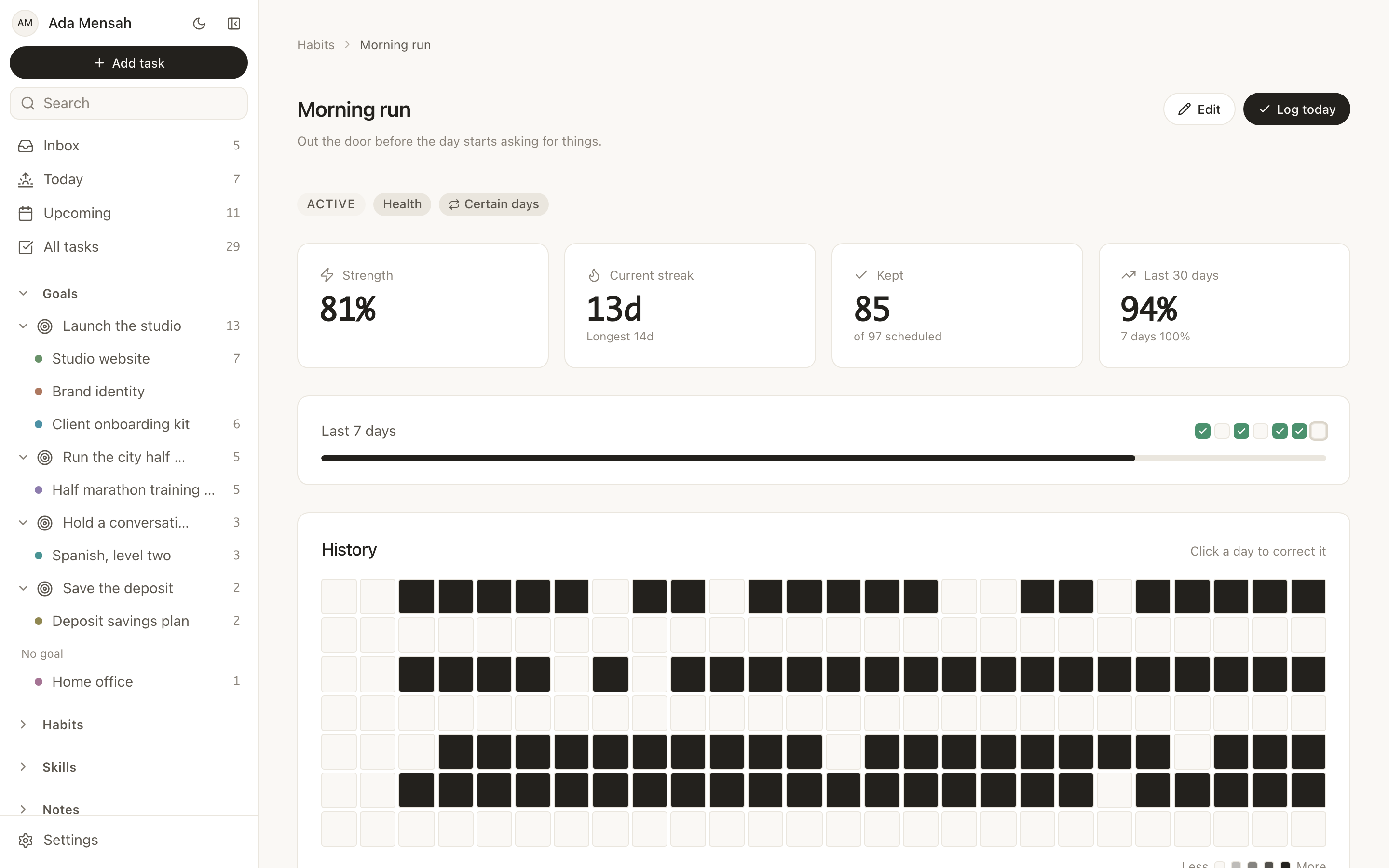
The year-long heatmap matters more than the streak number. A streak tells you about today; the heatmap tells you which month you quietly stopped, which is the thing you would otherwise only notice when the tutor asks.
The skill layer. Track your language as a skill with logged practice sessions, total hours invested, and progression levels. Each session records its minutes and an activity type, so 40 hours of reading and 3 of speaking stops being invisible. This shows whether consistency is producing results.
The goal layer. Track your learning target as a project with milestones. This gives your daily habit a direction.
When these three layers exist in the same system, your daily habit check-in is not just "did I study today." It is "did I study today, and how does that connect to my 180 total hours invested, and how close am I to my B2 milestone?"
Comparing approaches
Duolingo's built-in tracker tracks streaks and XP within its own system. It is motivating but limited to Duolingo activities. It does not track your tutor sessions, your reading practice, or your immersion time.
Habitica gamifies habit tracking with RPG mechanics. It is fun for maintaining streaks but has no concept of skill levels, practice hours, or learning goals.
Streaks is a clean, minimal iOS habit tracker. It does one thing well, daily habit streaks. But it has no skill tracking, no project goals, and no practice logging.
EvyOS connects all three layers. Your daily language habit is tracked with streaks and heatmaps. Your language is tracked as a skill with logged hours and progression levels. Your fluency goal is tracked as a project with milestones. All three appear on the same dashboard. When you check in your daily habit, you see it in context of your total investment and your goal progress.
Getting started
If you are currently using a generic habit tracker for language study, you do not need to abandon it immediately. Start by adding your language as a skill in EvyOS and logging your practice sessions for two weeks. See the difference between "I have a streak" and "I have invested 24 hours this month, with 60% speaking practice and 40% grammar study, toward my B2 goal that is 35% complete."
The streak matters. But what the streak produces matters more.
For a deeper look at tracking language learning progress across multiple tools and methods, see how to track language learning progress in one place. For the complete framework on connecting habits to your larger goals, explore the guide to building a personal operating system.
Try the pieces before you commit to a system
Two of these run in the browser with no account, which is the cheapest way to see whether the shape suits you:
- 90-day goal tracker — put a fluency target 90 days out and see what the weekly cadence would have to be.
- Life dashboard — one page holding the study habit next to everything else competing with it.
If it does suit you, EvyOS for language learners is the longer version of this argument, and habit tracking is the feature page for the layer this post is mostly about.
Frequently asked questions
What is the best habit tracker for language learning?
The best tracker connects your daily study habit to your overall skill progress and learning goals. EvyOS does this by tracking your language as a skill with logged hours, your daily study as a habit with streaks, and your fluency target as a project with milestones, all in one system.
Should I use a habit tracker to learn a language?
Yes. Language learning depends on consistency more than intensity. A habit tracker maintains daily accountability. But choose one that connects your daily habit to visible progress, total hours invested, skill level, and goal milestones, not just a streak count.
Why don't generic habit trackers work for language learning?
Generic trackers treat language study as a binary checkbox, done or not done. They cannot distinguish between ten minutes of Duolingo and an hour of conversation practice. They do not track total hours, skill progression, or learning goals. For language learning, you need a tracker that shows whether consistency is producing actual progress.
How do I connect language habits to my learning goals?
Use a system that tracks your daily study habit, your language skill with logged practice hours, and your learning target as a project with milestones. When all three are in the same dashboard, your daily habit is visibly connected to your larger goal.