Built for language learnersEight hundred days on the app.Still cannot hold a conversation.
Hours logged by what you were actually doing — reading, listening, speaking, review — so the imbalance that keeps people at intermediate finally shows up somewhere you can see it.
Free for as long as you like, no card required. Pro is $15 a month.
Goals
Projects
Tasks
Habits
Skills
Notes
Calendar
✦ The problem
A streak measures whether you opened an app, not whether you can speak.
Most learners have exactly one number and it is the wrong one. A daily streak says you showed up; it says nothing about the balance of what you did while you were there. That is how people reach year two with comfortable reading, decent listening and almost no experience of forming a sentence out loud while someone waits.
🗣
Speaking is the hour nobody logs
Reading and review can be done alone, at any hour, in any mood. Speaking needs another person and a fixed time, so it loses every scheduling contest, and the gap widens for years without anyone deciding it should.
🧩
Four apps, four separate records
The flashcard app knows its own numbers. The podcast app knows minutes. The tutor is in a calendar. Nothing tells you what a whole month of learning actually consisted of.
📅
The intermediate plateau has no readout
Beginner progress is obvious week to week. Intermediate progress is slow accumulation you cannot feel. With nothing counting the hours, the middle years feel like standing still, which is exactly when people stop.
🔁
One missed day erases a year
A counter that resets to zero punishes a week of flu harder than a lazy month. What a long learner needs is a record that survives an interruption and still shows the shape of the year behind it.
📋
Task manager
For daily to-dos
$4/mo
📁
Project tracker
For goals and timelines
$8/mo
🔄
Habit tracker
For daily rituals
$5/mo
⚡
Learning journal
For skill tracking
$6/mo
+
Monthly total
4 apps, no integration
$23/mo
vs $15 with EvyOS
✦ Four pillars, one system
Everything you're building. In one place.
01 - Projects
The exam, the trip, the season that ends.
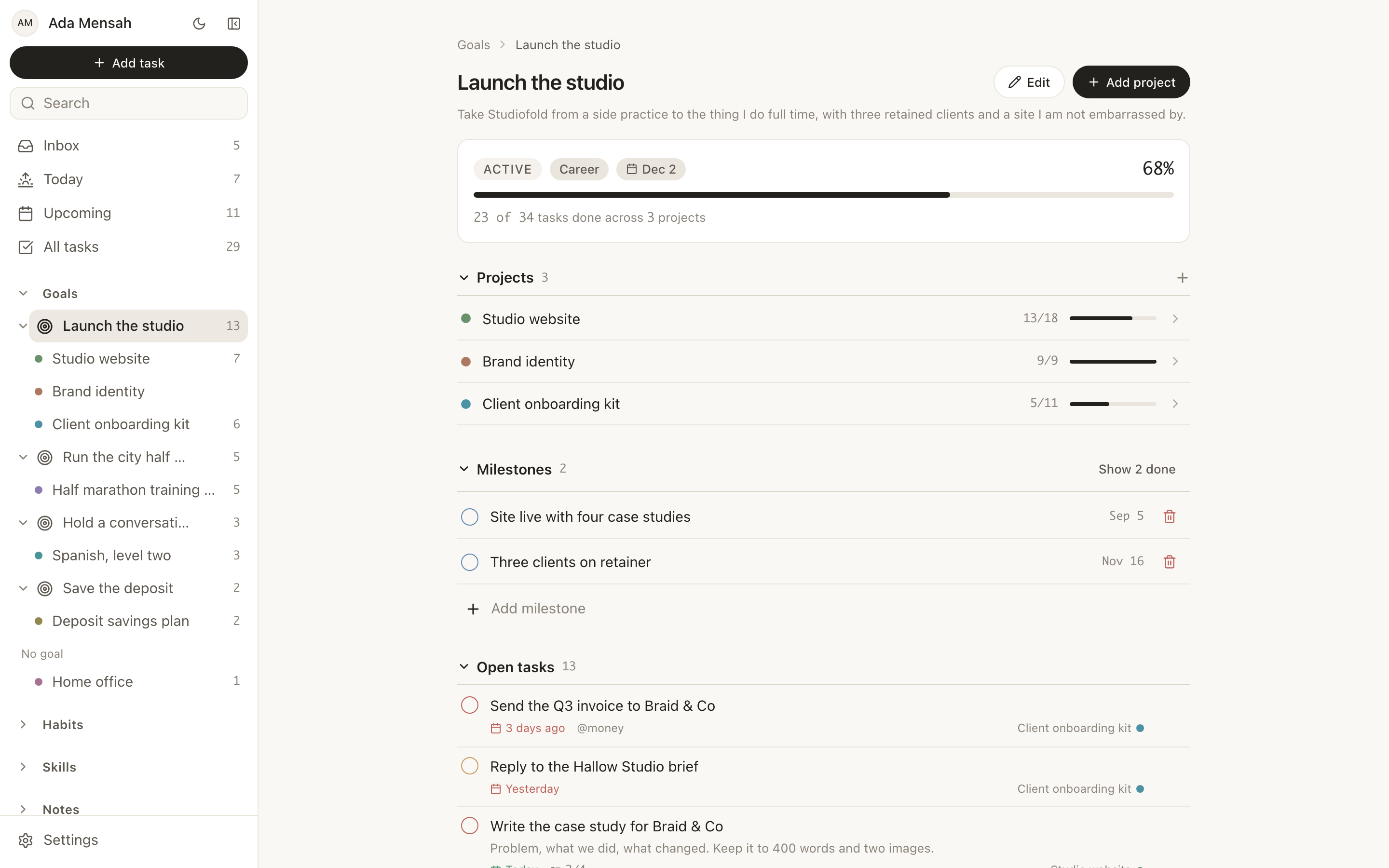
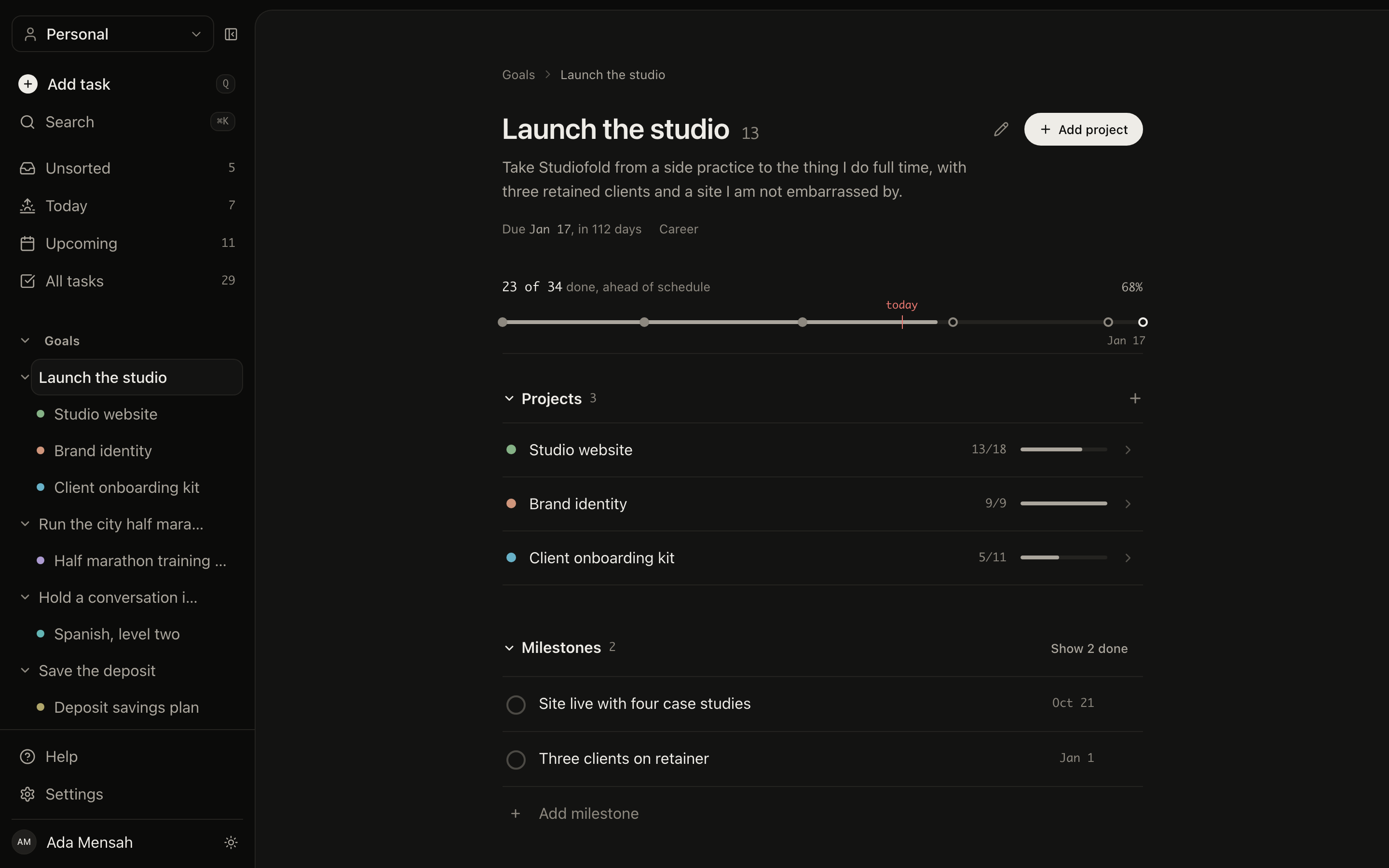
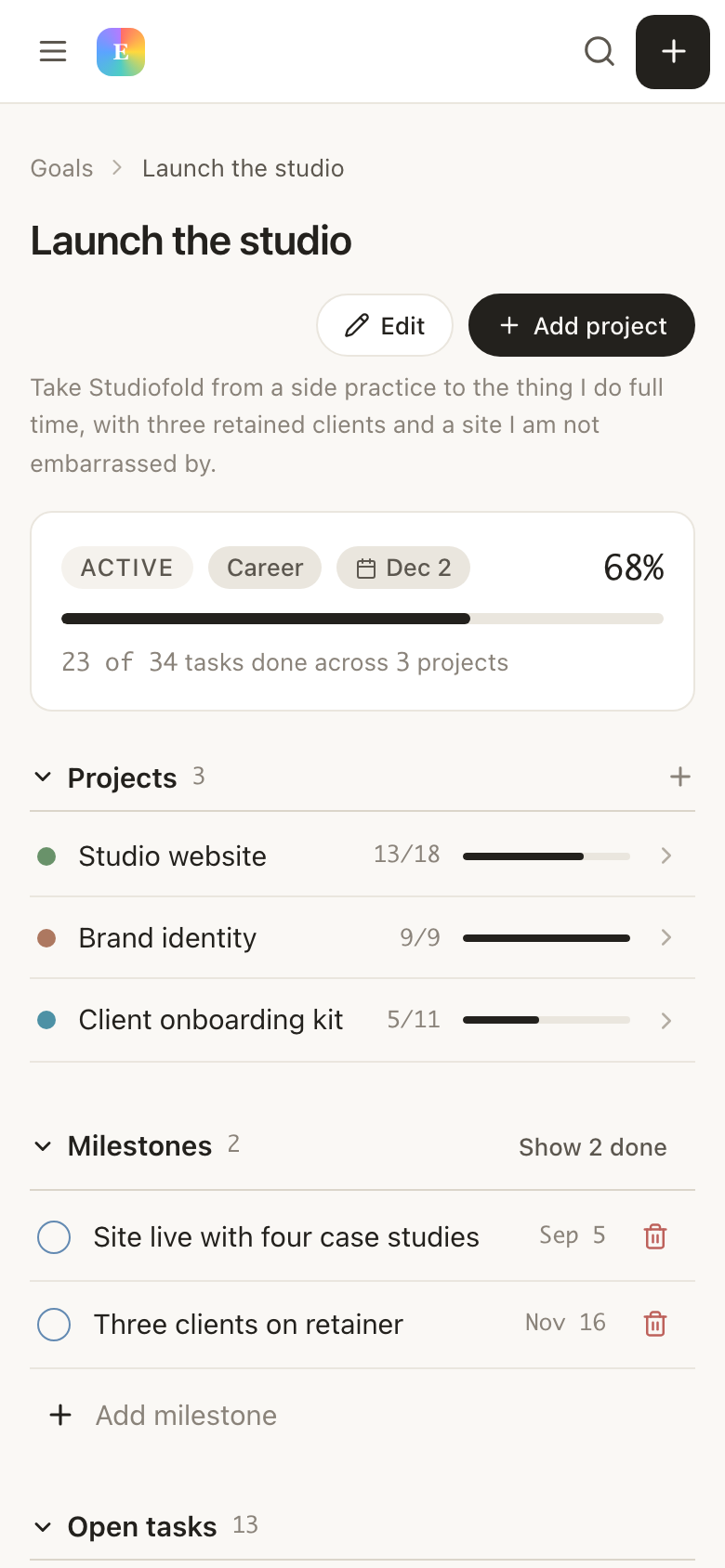
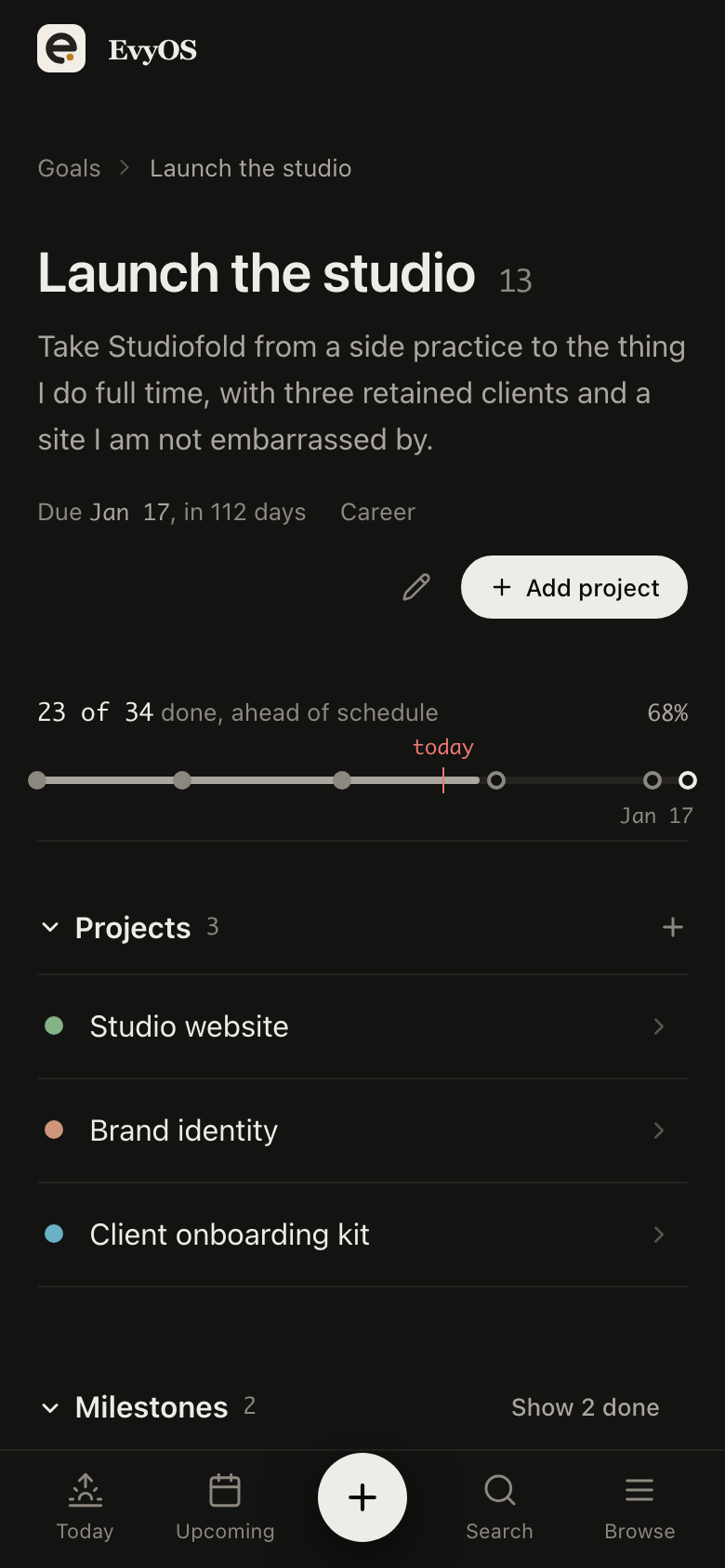
B2 by the exam in May is a goal with a date on it. The six-week grammar push, the novel you are reading through and the block of ten tutor sessions become projects underneath, each with a finish. It gives open-ended years a shape, which is the one thing daily practice on its own never provides.
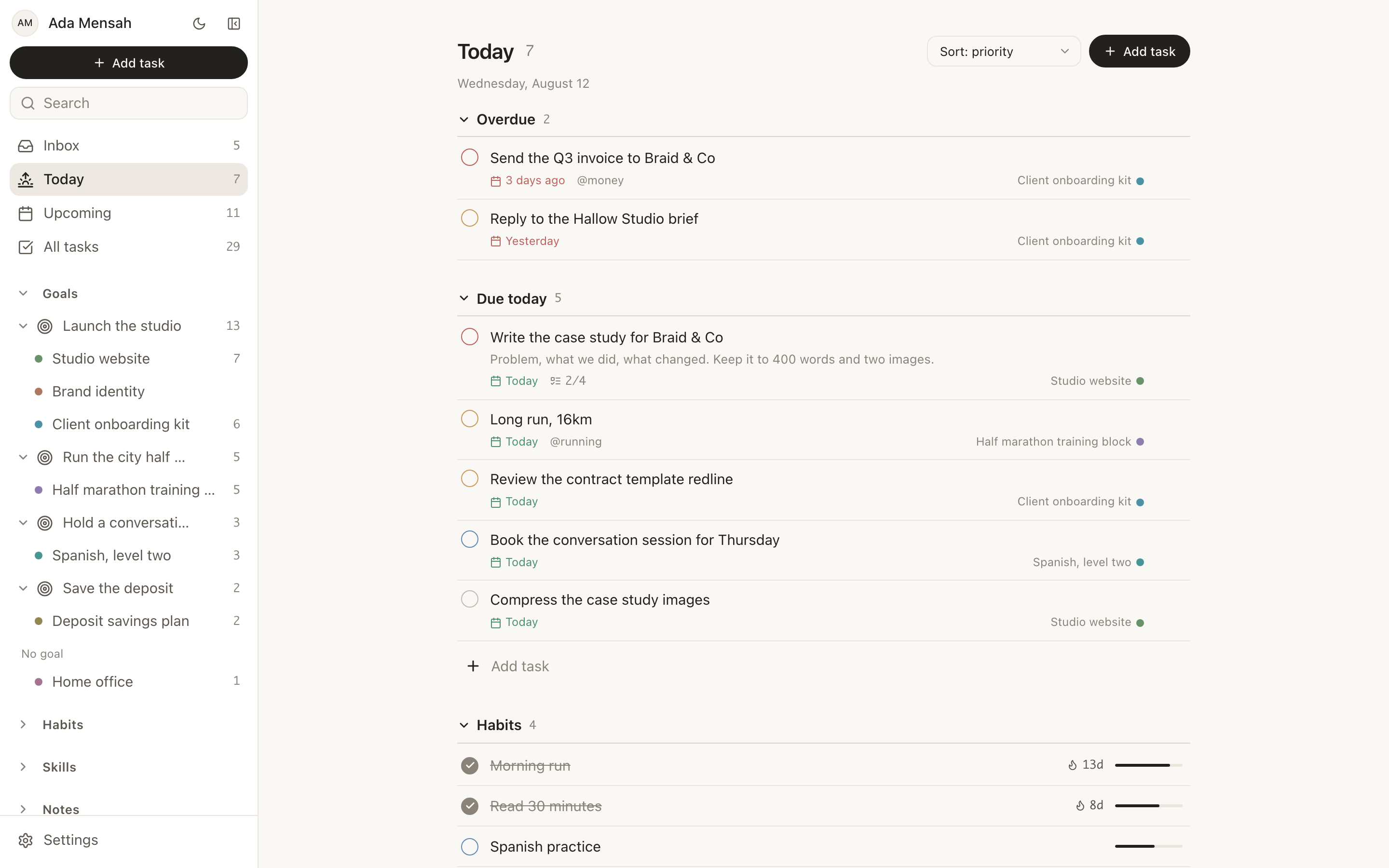
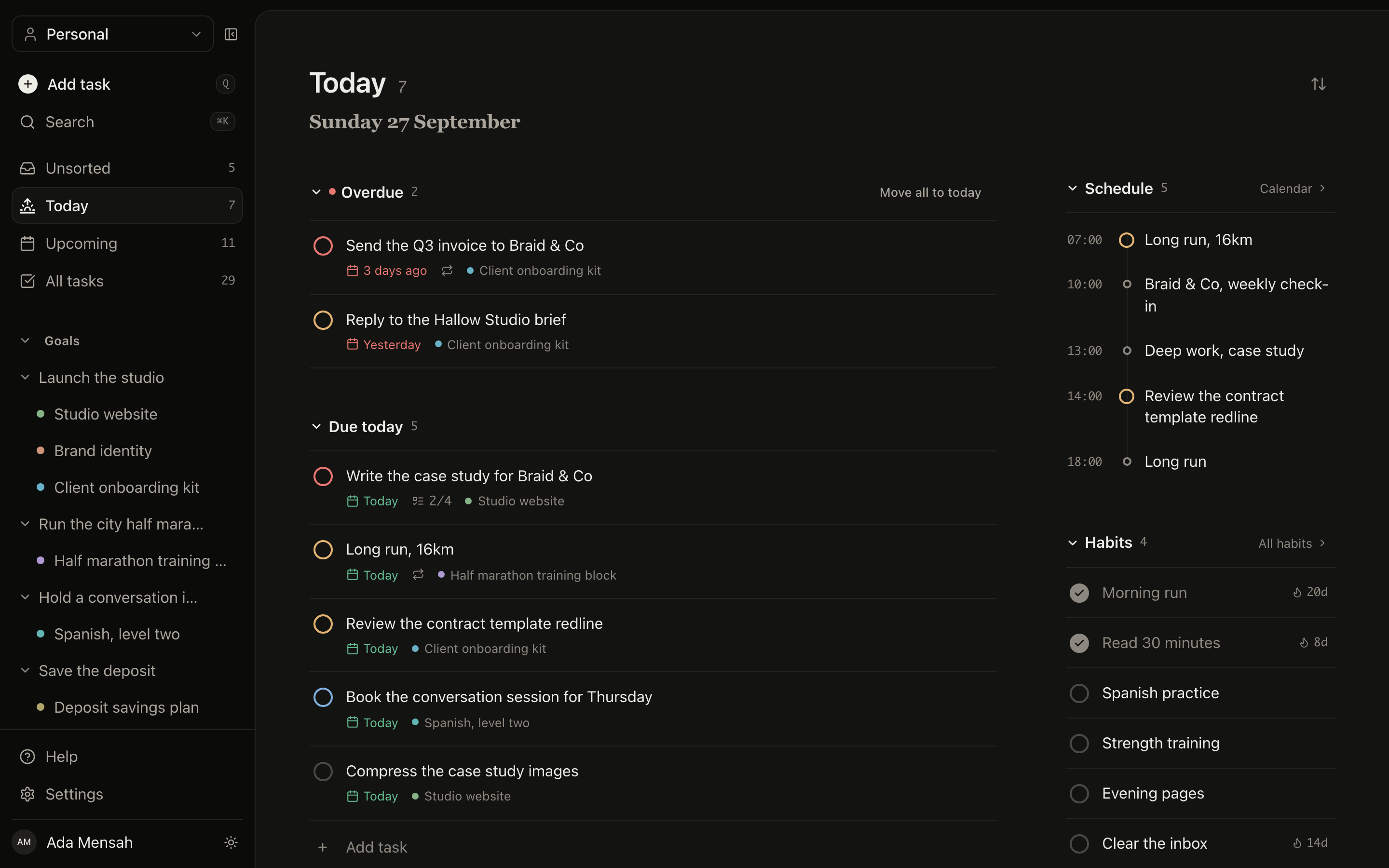
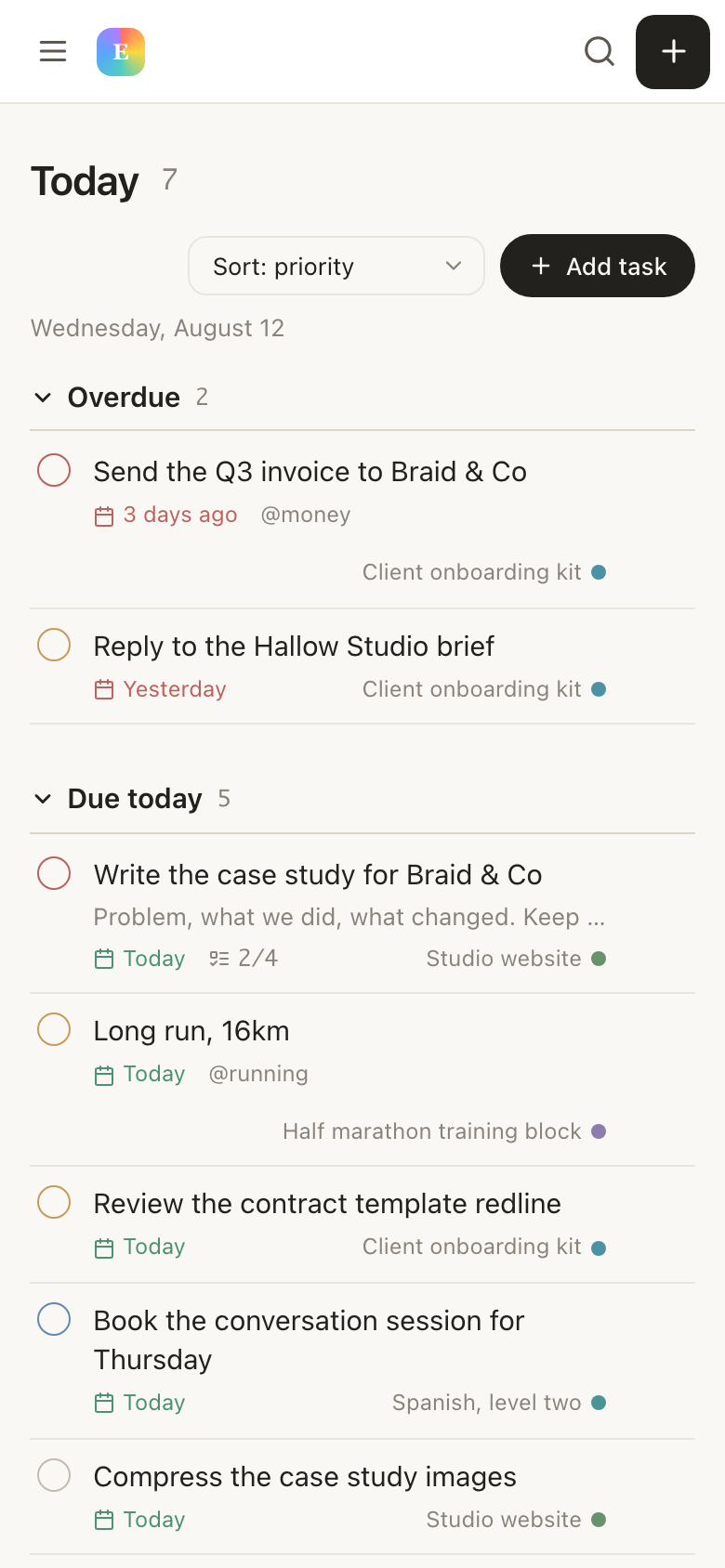
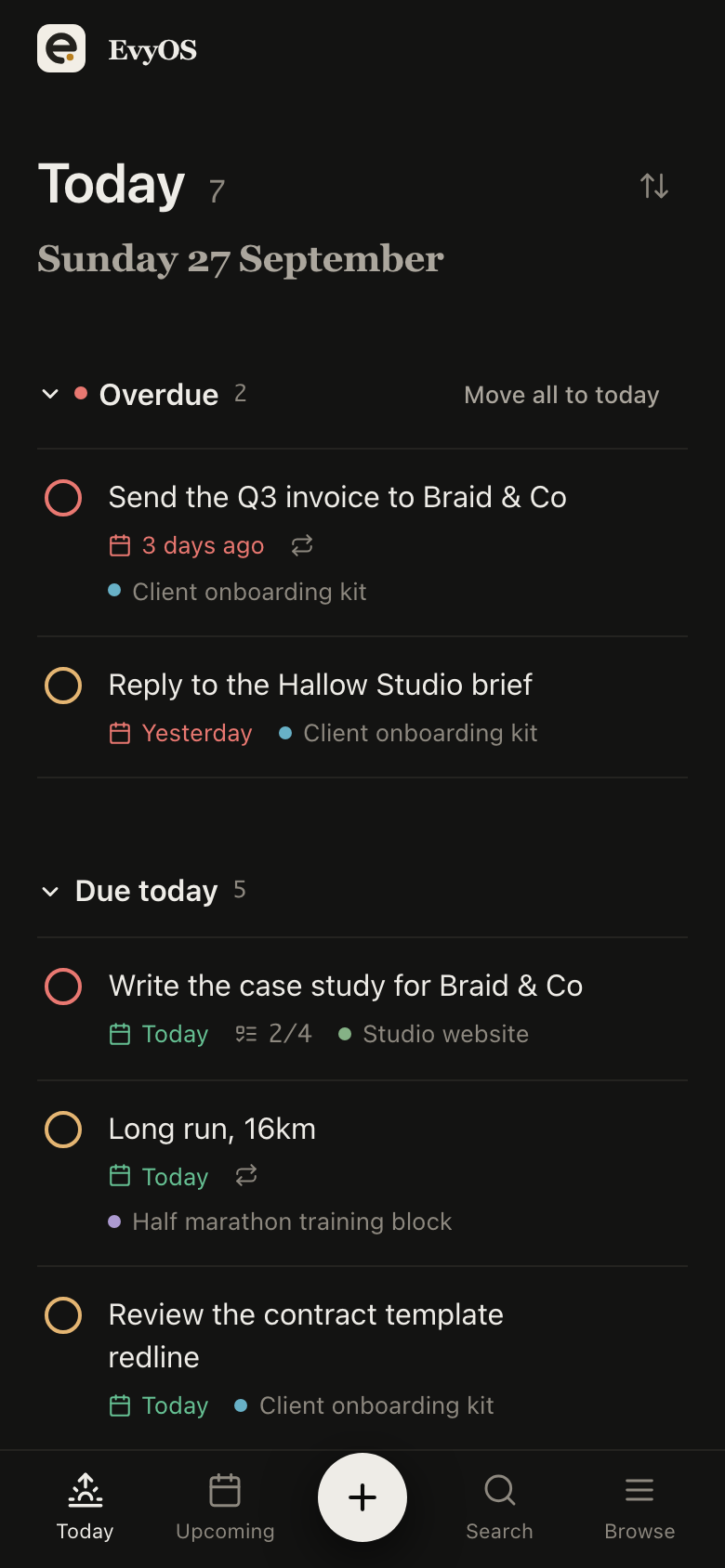
Book the next four tutor sessions. Order the graded reader. Write the self-introduction you keep improvising badly. Re-listen to episode 12 with the transcript. These get forgotten because they sit outside the routine — give each one a due date, set the repeating ones to recur, and Today puts them in front of you on the right morning.
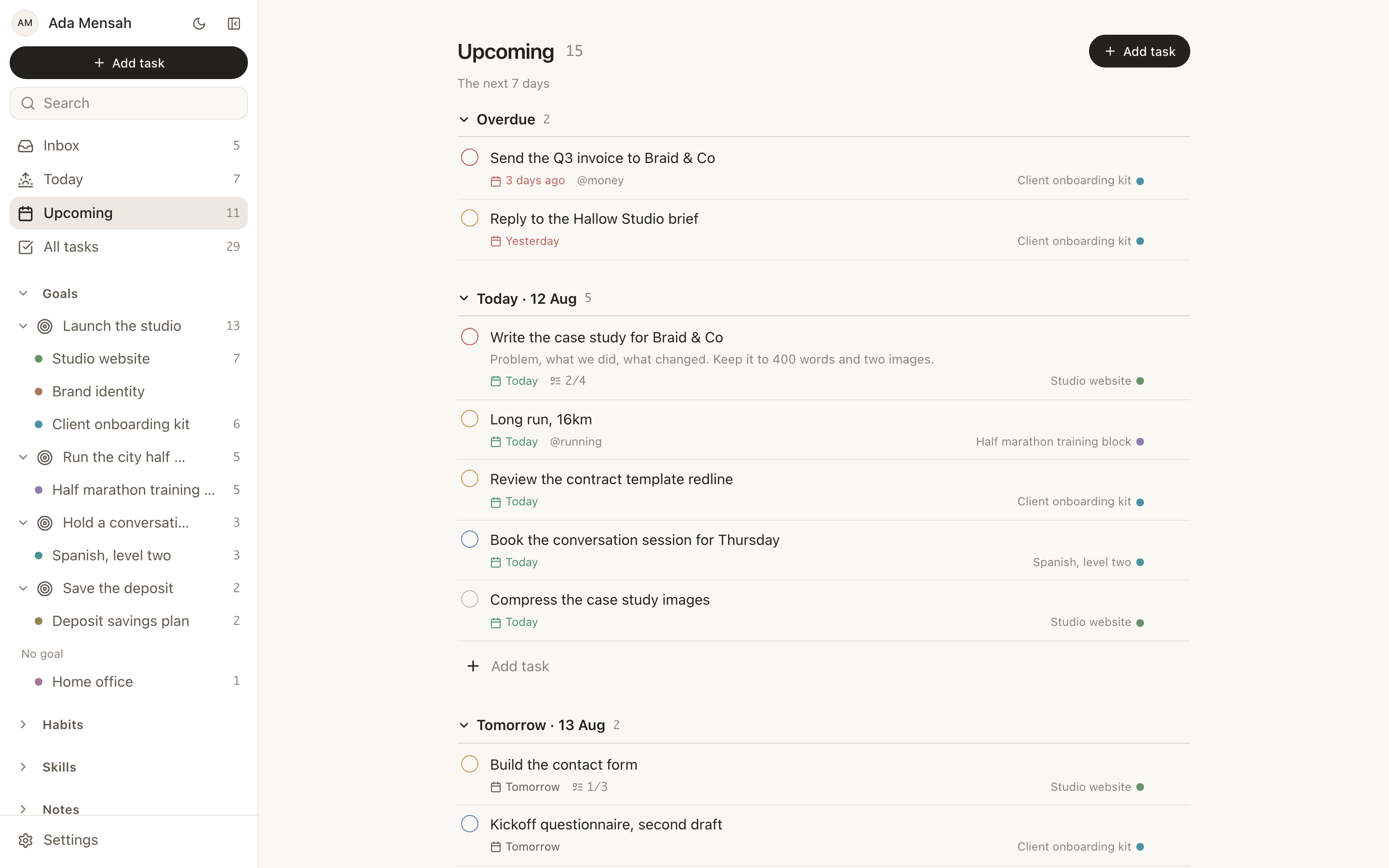
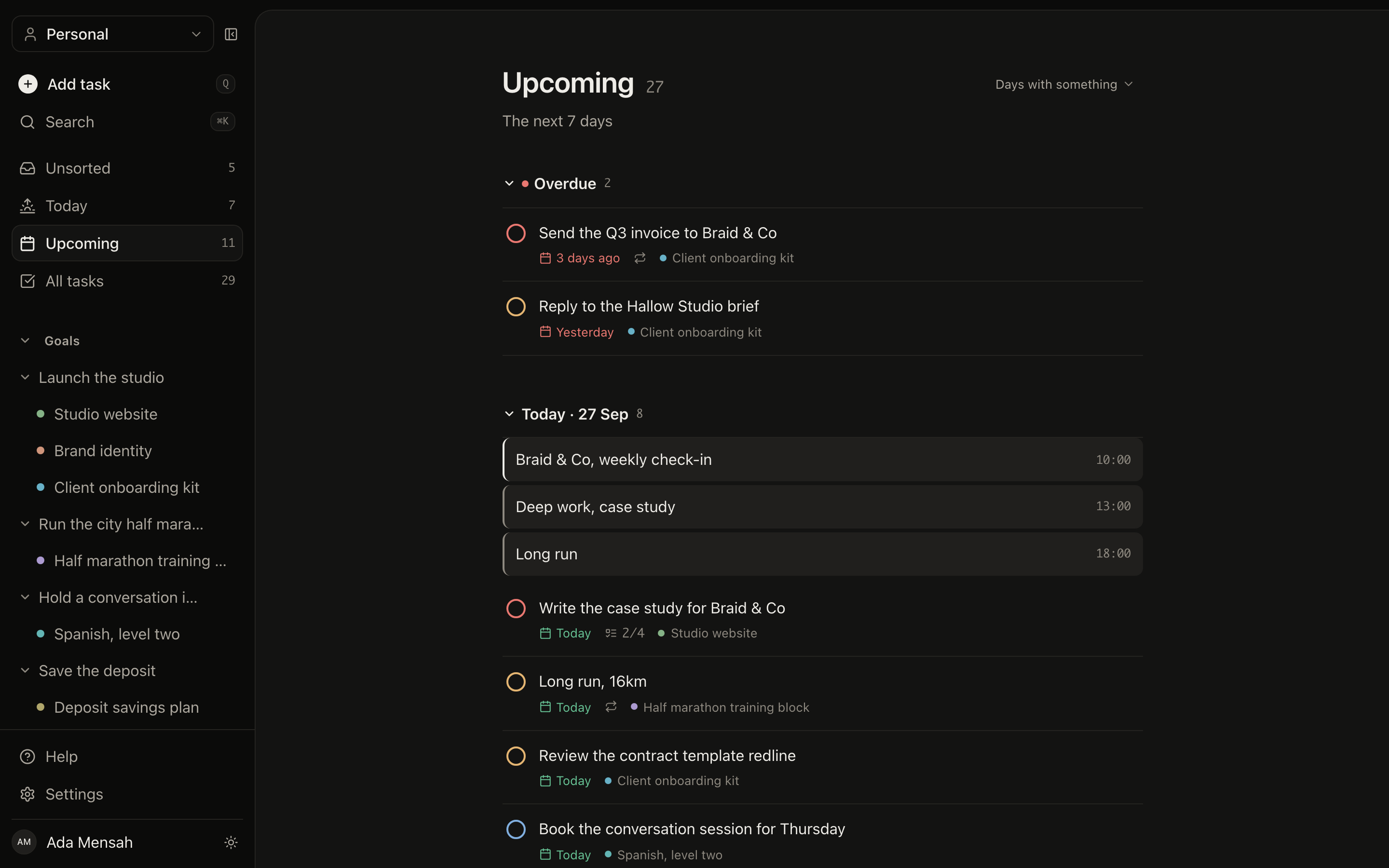
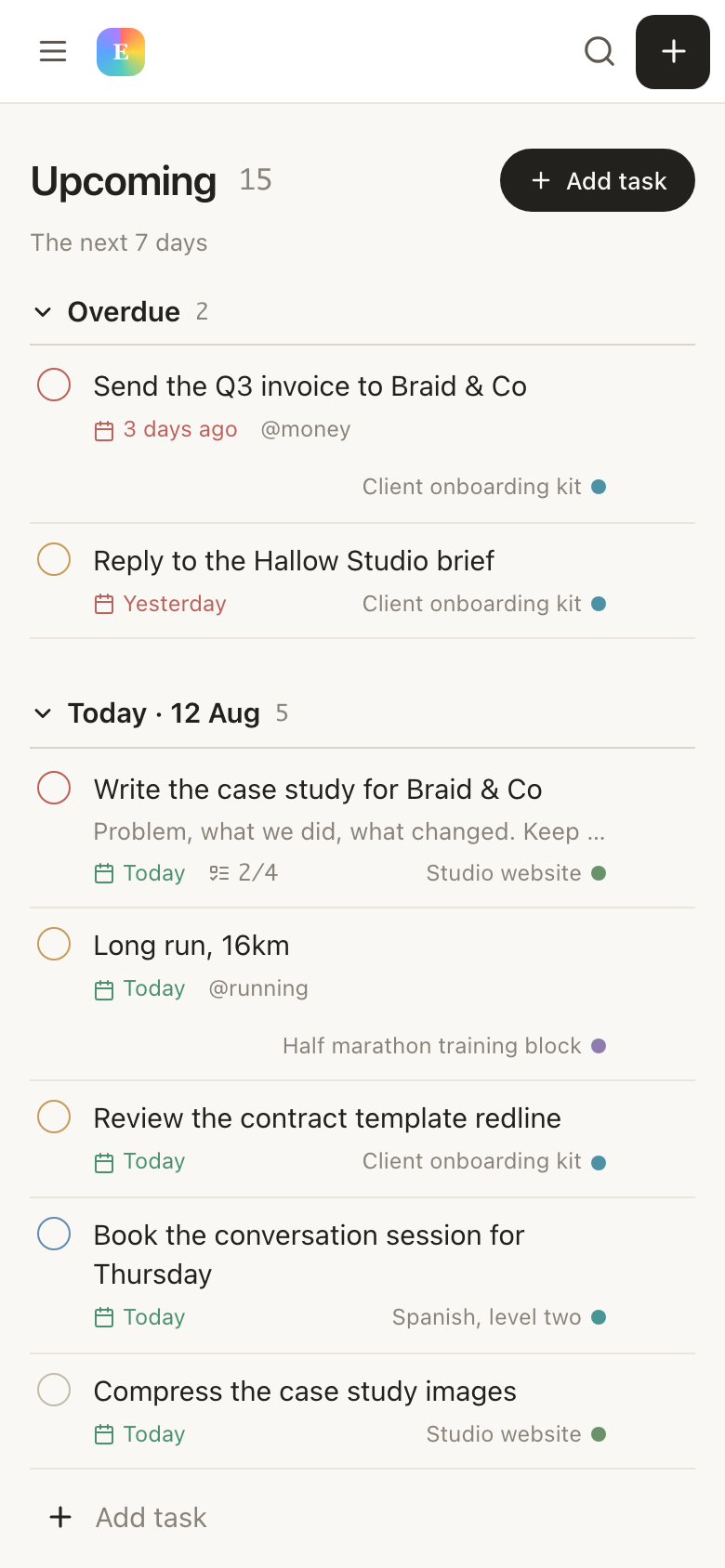
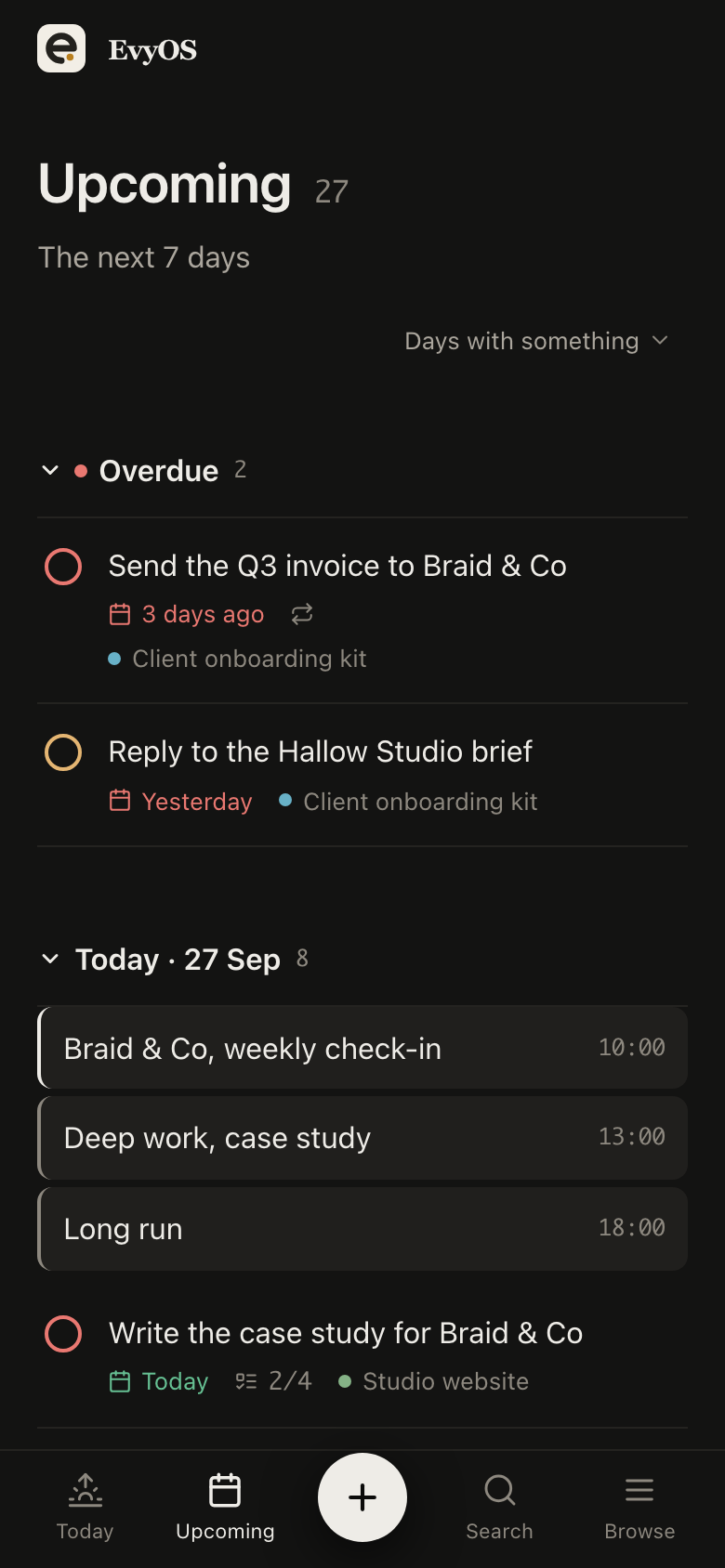
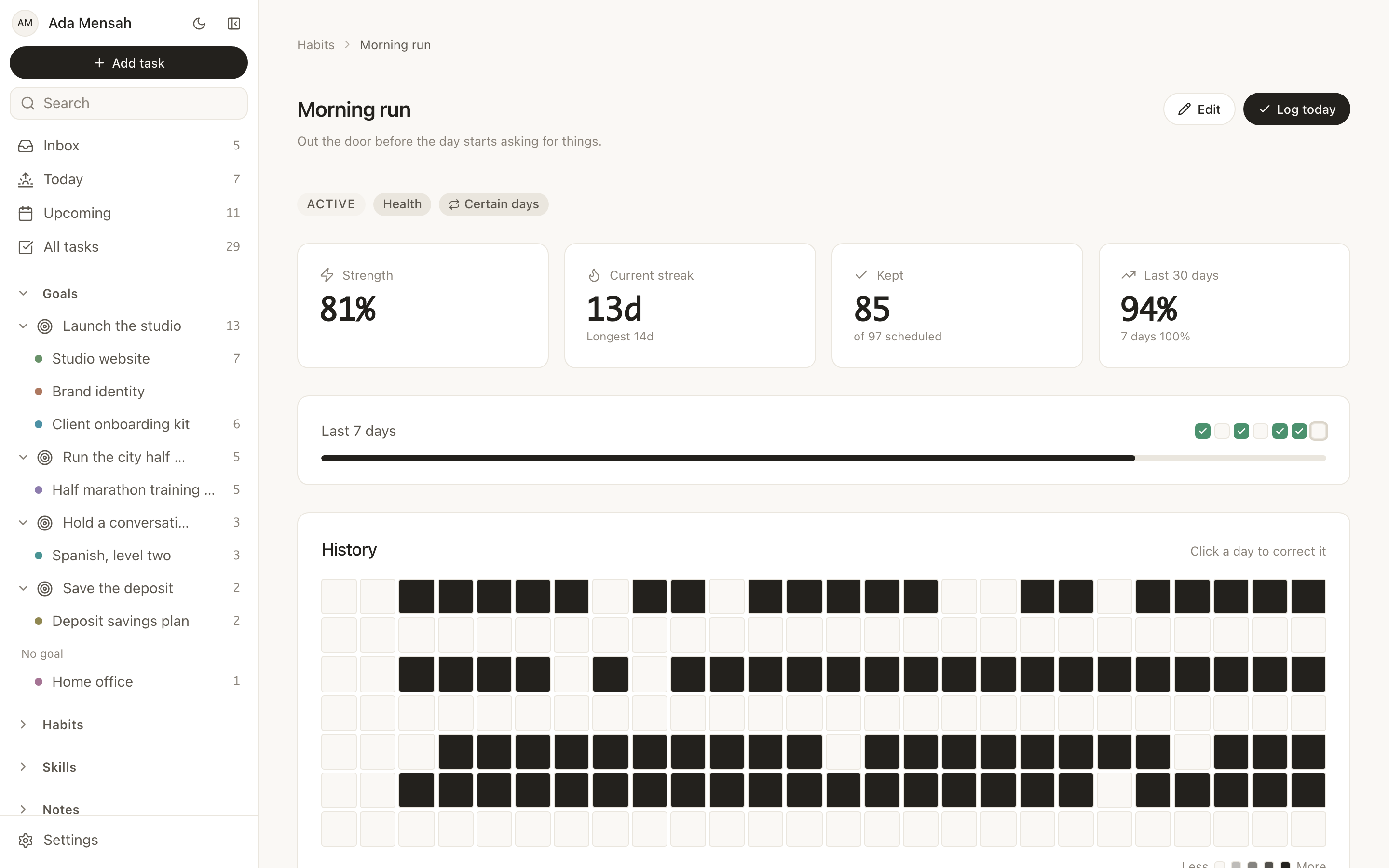
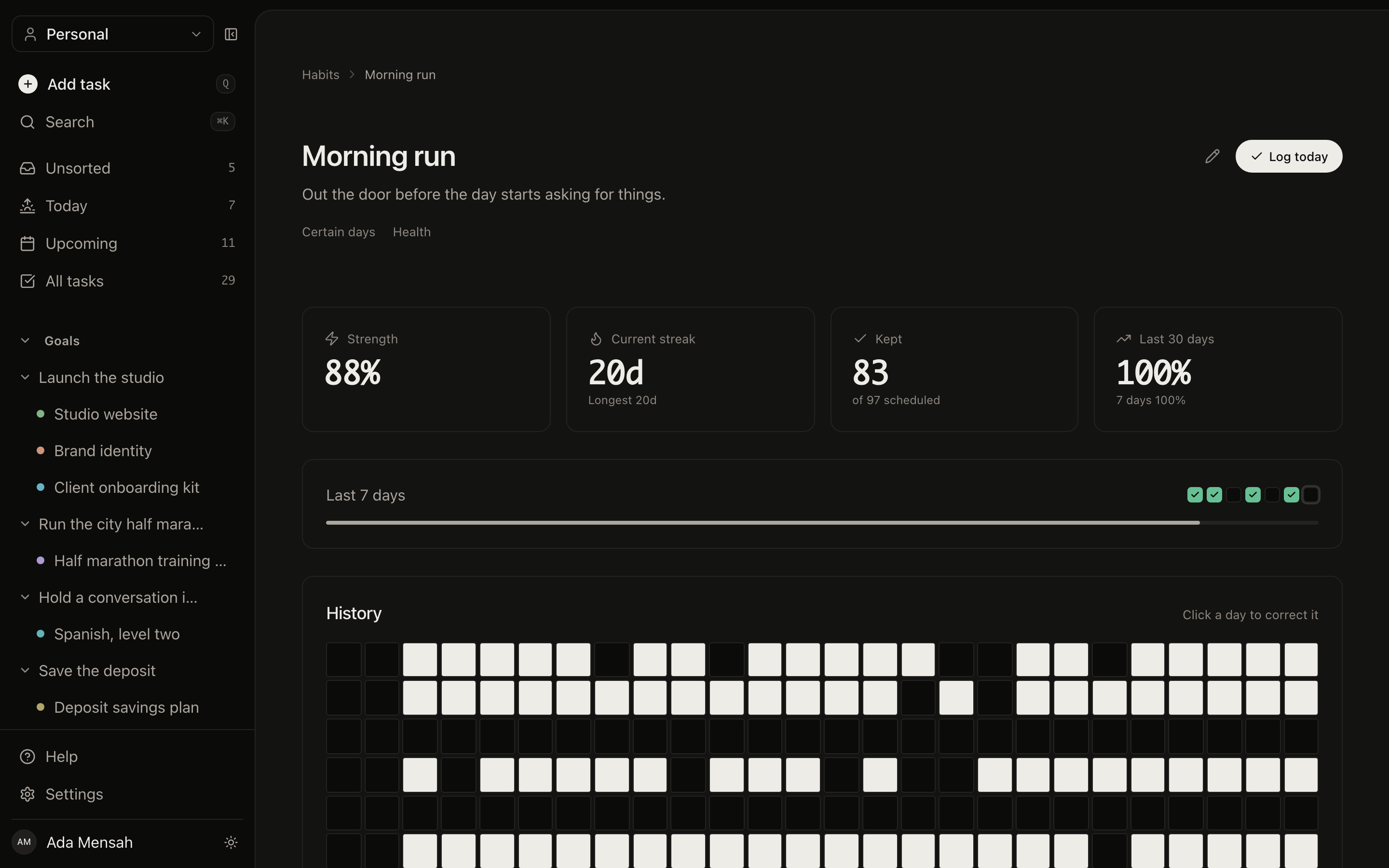
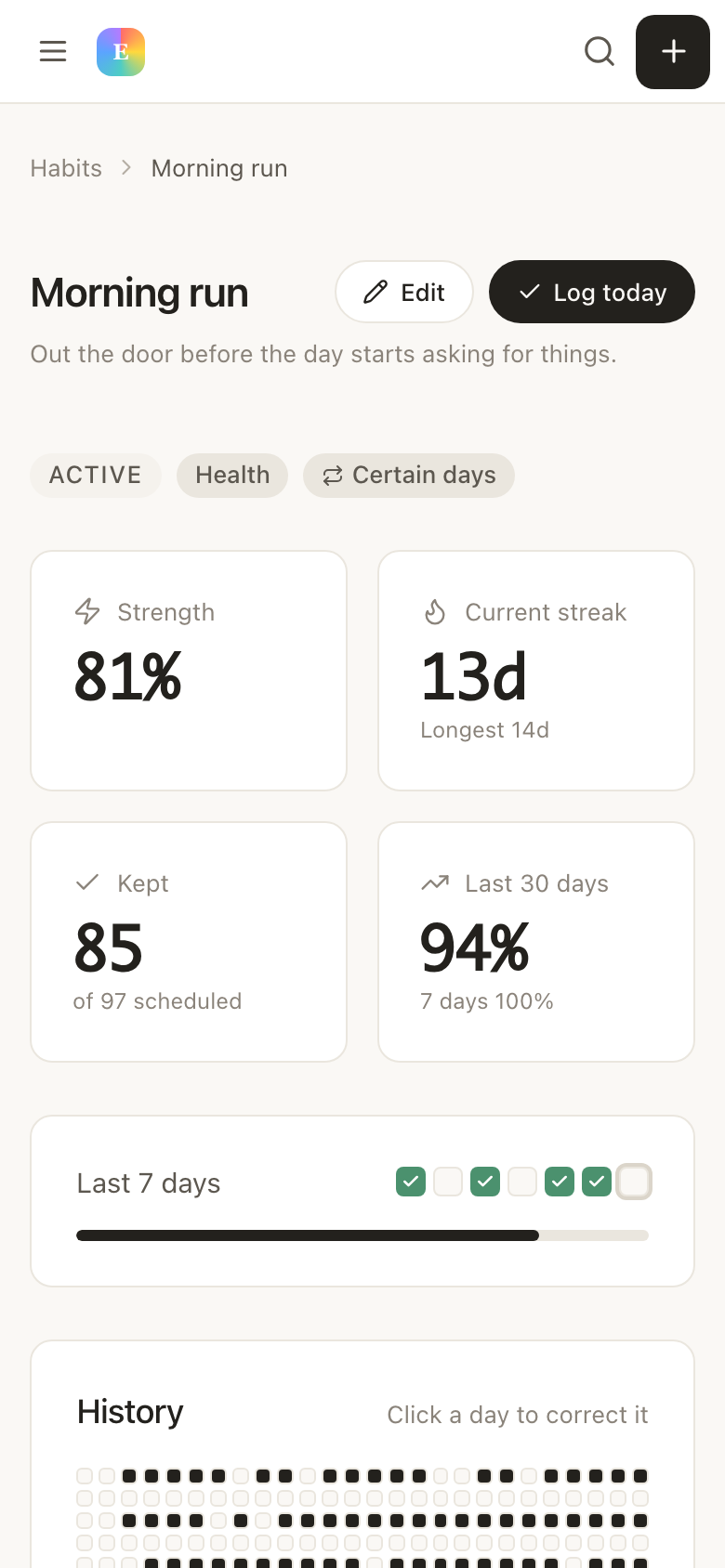
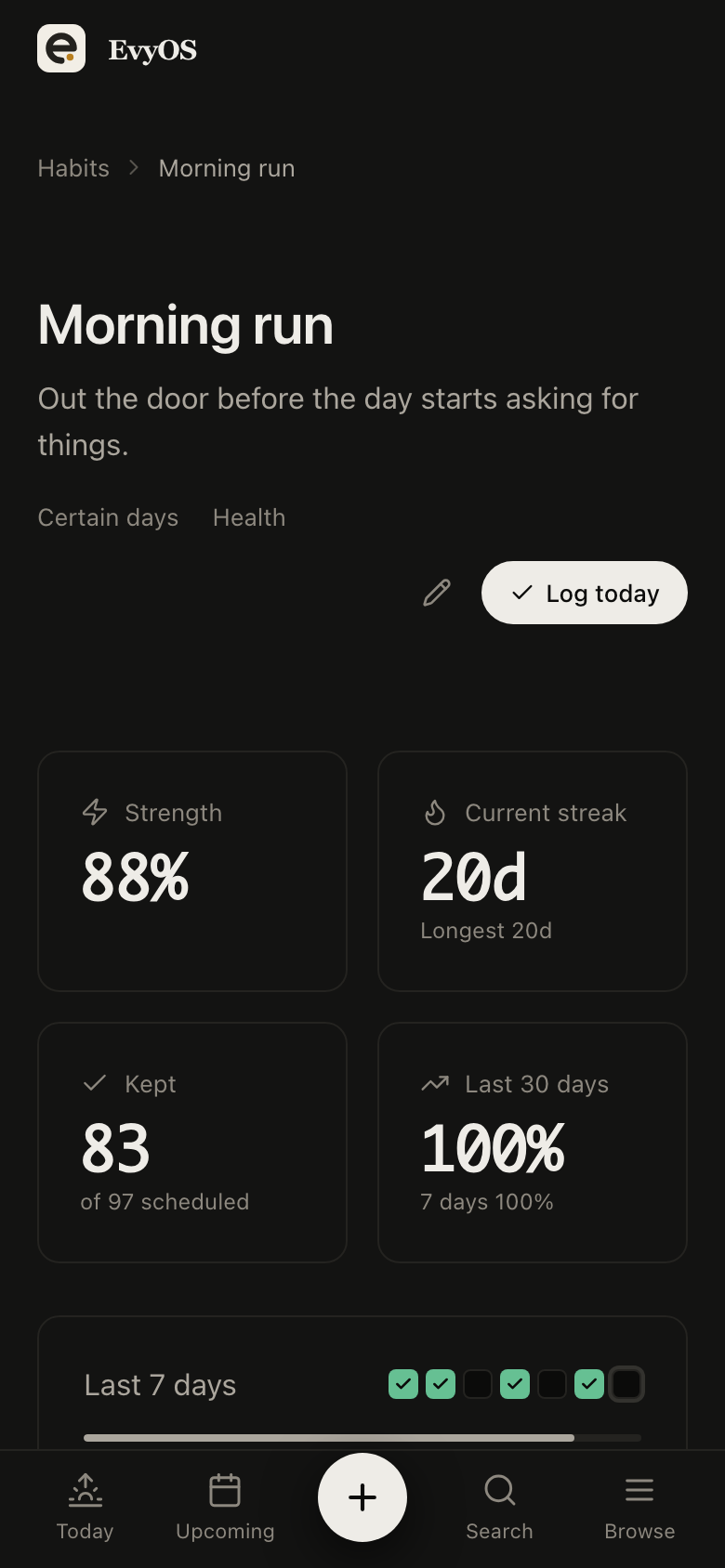
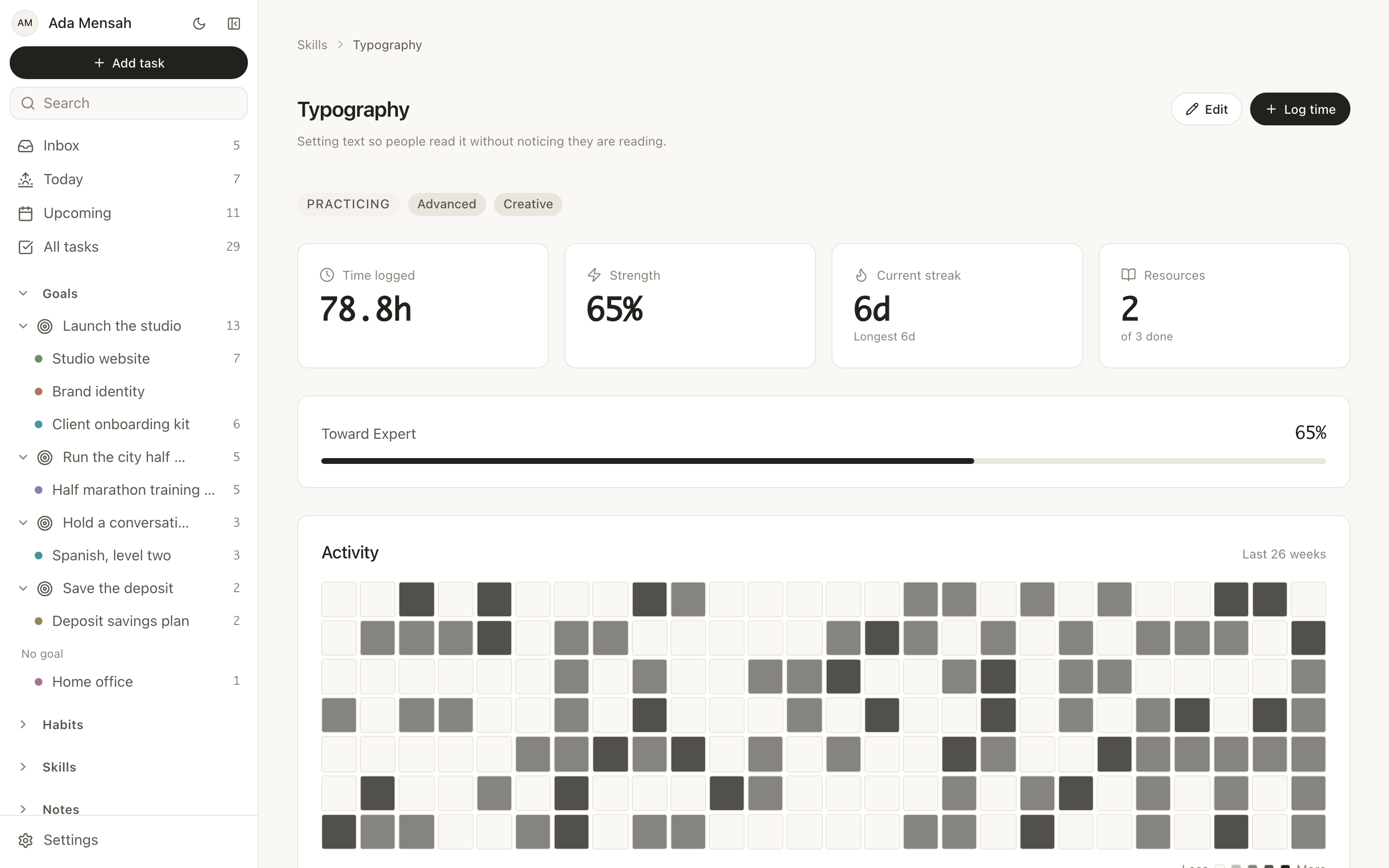
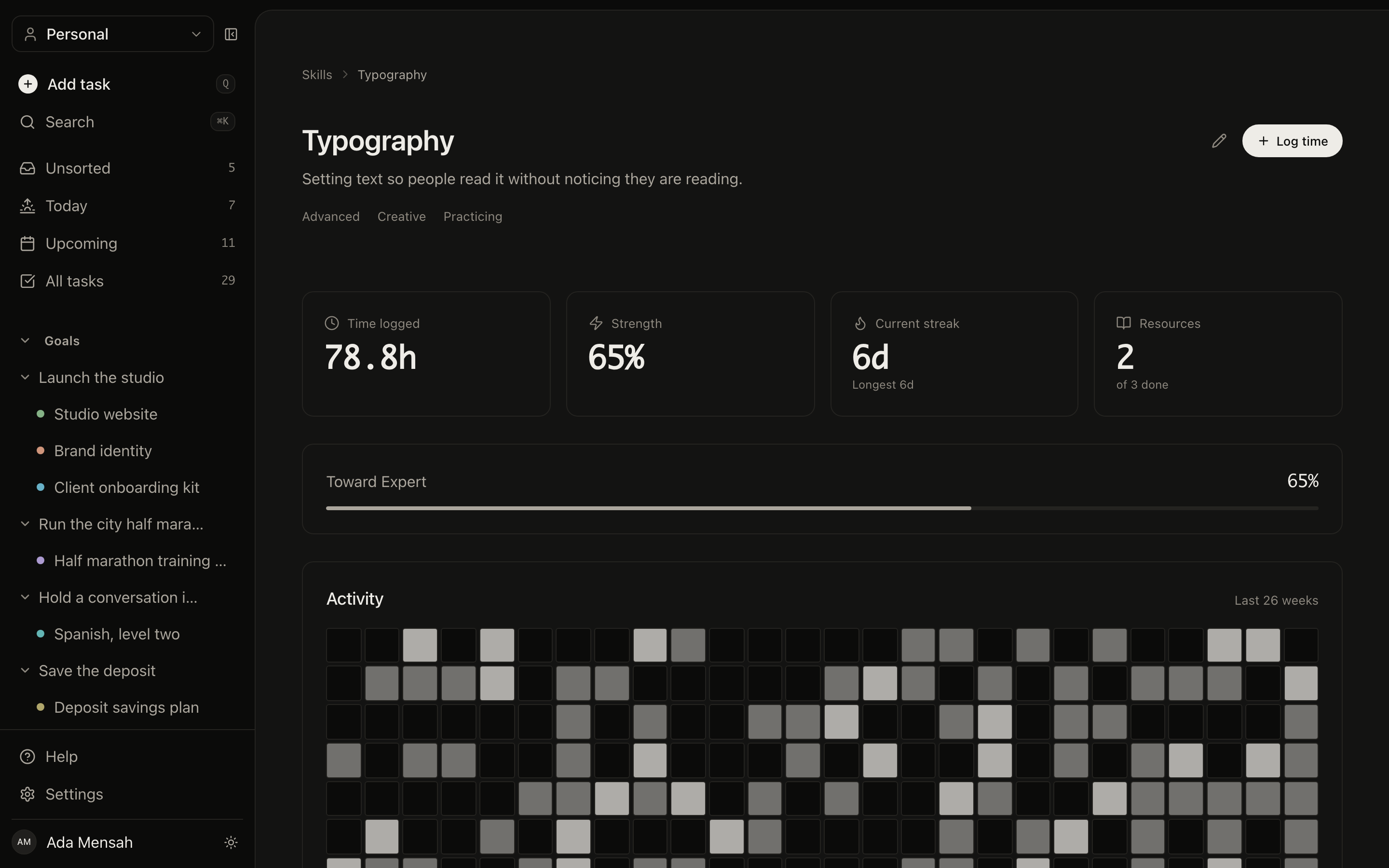
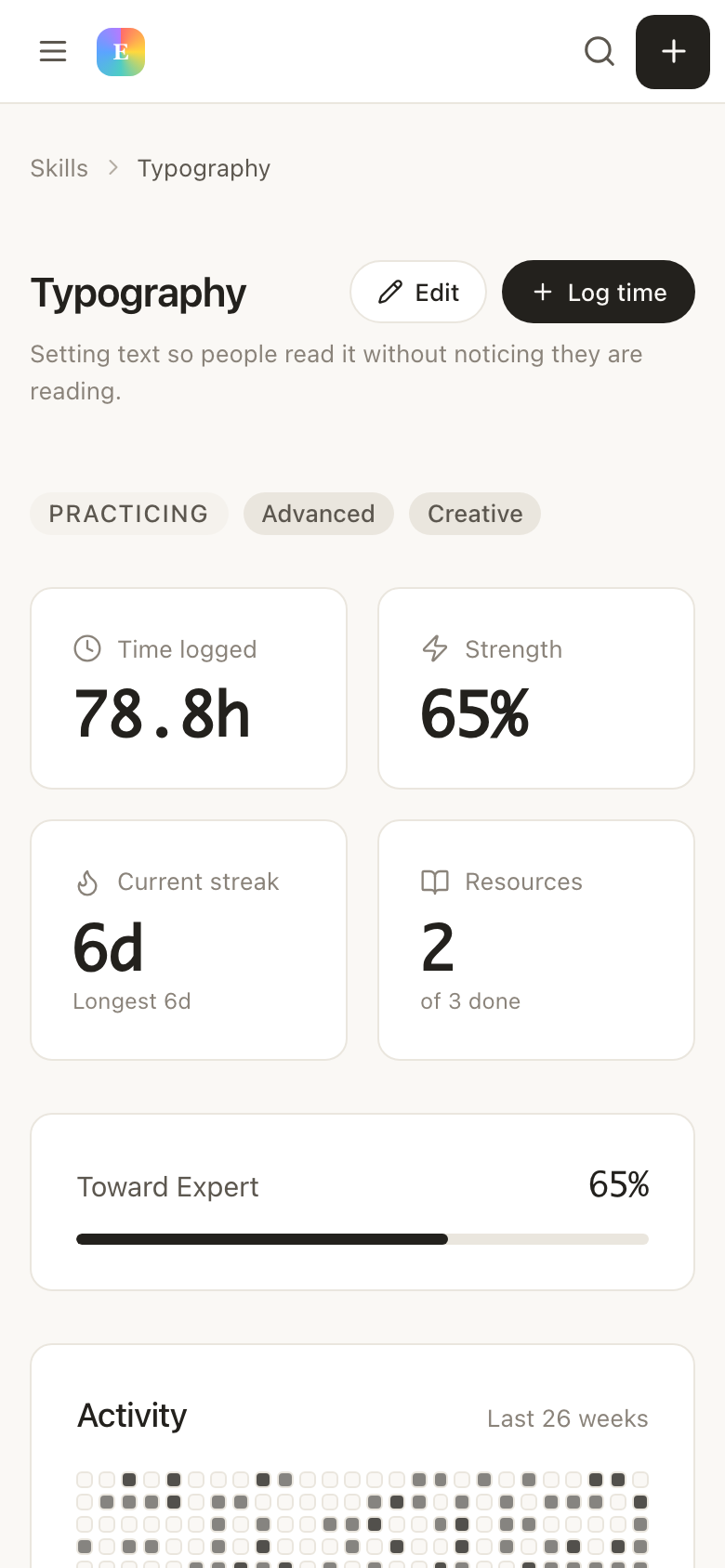
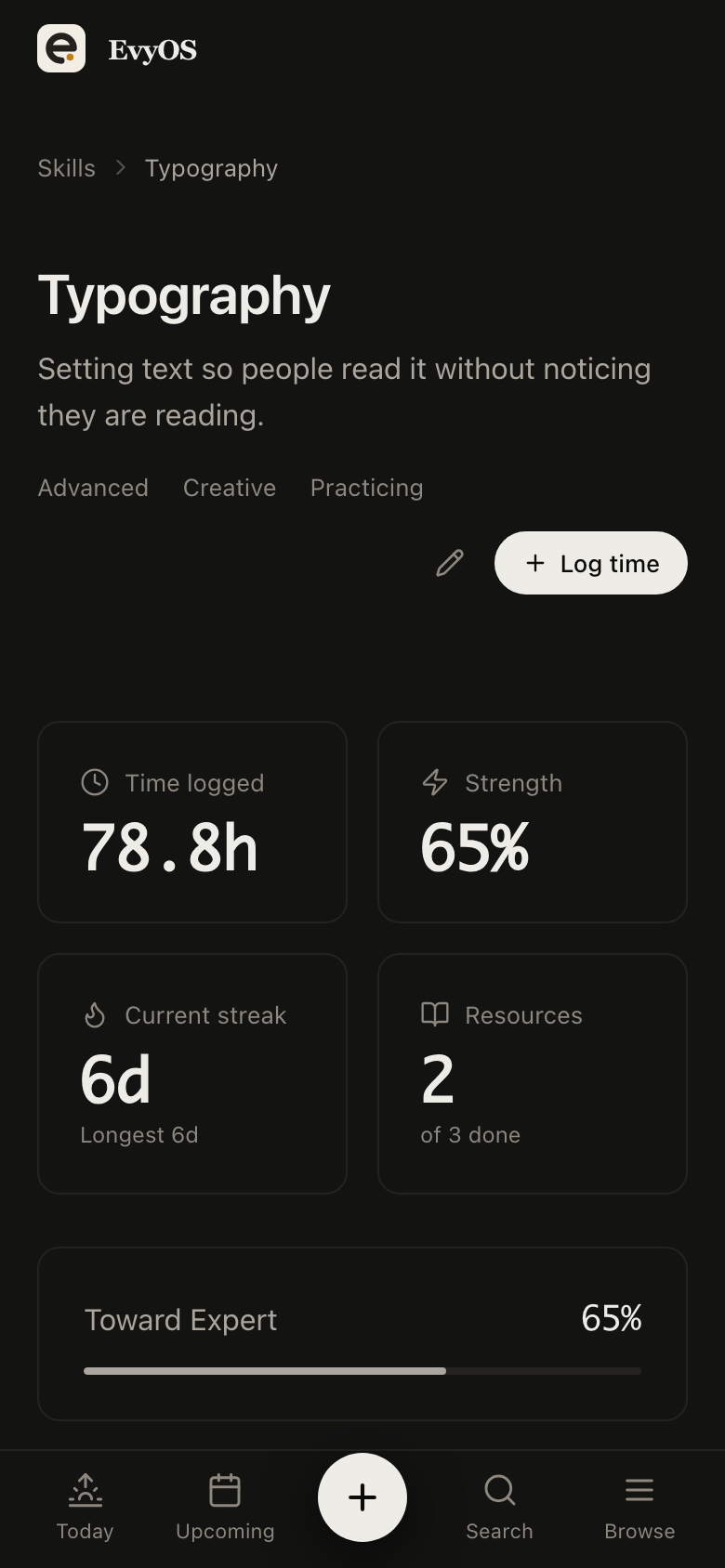
Daily review on one schedule, three speaking sessions a week on another, each with its own streak and strength score. The year-long graph keeps the whole picture, so a fortnight away shows as a fortnight rather than wiping out the eleven months in front of it. Link a habit to the goal and the daily thing is visibly attached to May.
Hours by activity, which is where the imbalance shows.
Log each session with its minutes and what kind of practice it was. After three months the totals are usually uncomfortable reading: eighty hours of reading, forty of listening, three of speaking. That one comparison is the most useful number in language learning and almost nobody has it. Next month gets planned against it.
Minutes per sessionActivity typesHours per skillActivity graph
✦ Getting started
Up and running in under 5 minutes.
1
Set the season
Create the goal with the date that actually matters — the exam, the trip, the conversation you want to be able to have. Add the projects that end, and the two habits you will genuinely hold.
2
Log the minutes, not the mood
Thirty seconds after each session: how long, and which kind of practice. Keep Anki, your app and your tutor exactly as they are. This is the layer that records what all of it added up to.
3
Correct the balance
Once a month, look at the split by activity. Whichever number is embarrassing becomes next month’s plan. Plateaus break by moving hours between activities, not by trying harder at the same one.
✦ Pricing
Simple. No surprises.
Start free. Upgrade when you're ready to go deeper.
Yes, and that is the intended shape. EvyOS has no flashcards and no spaced repetition, so it is not competing with your deck or your app — it sits above them. The review stays where it is; what lands here is the streak, the minutes and the activity type, so the app you use for one skill stops being the only thing you can measure.
Log a practice session when you finish, with its length in minutes and its activity type, against the skill for that language. The hours accumulate on the skill and fill in an activity graph. The value is not the total, which is only ever vaguely motivating — it is the breakdown, because the split between reading, listening and speaking is what predicts whether you can use the language.
Published estimates vary enormously, and they depend on how close the language is to ones you already speak and on what you count as fluent. The number that helps you is your own: hours logged, split by activity, over months you can see. Someone with 300 well-balanced hours is often more usable in conversation than someone with 900 spent almost entirely on reading.
Frequency matters more than session length, so a streak is a reasonable thing to track — but a raw counter that resets to zero teaches you to protect the number rather than the practice. The strength score weighs consistency and recency together, and the year-long graph keeps the full history, so a week off costs you a week rather than everything you built before it.