Built for side hustlersYou get 6 hours a week.Spend them building.
The problem was never motivation. It is that every session starts by working out where you were, and by the time you remember, the window has closed. A side hustle planner that keeps the thread warm between Tuesday night and Sunday morning.
Free for as long as you like, no card required. Pro is $15 a month.
Goals
Projects
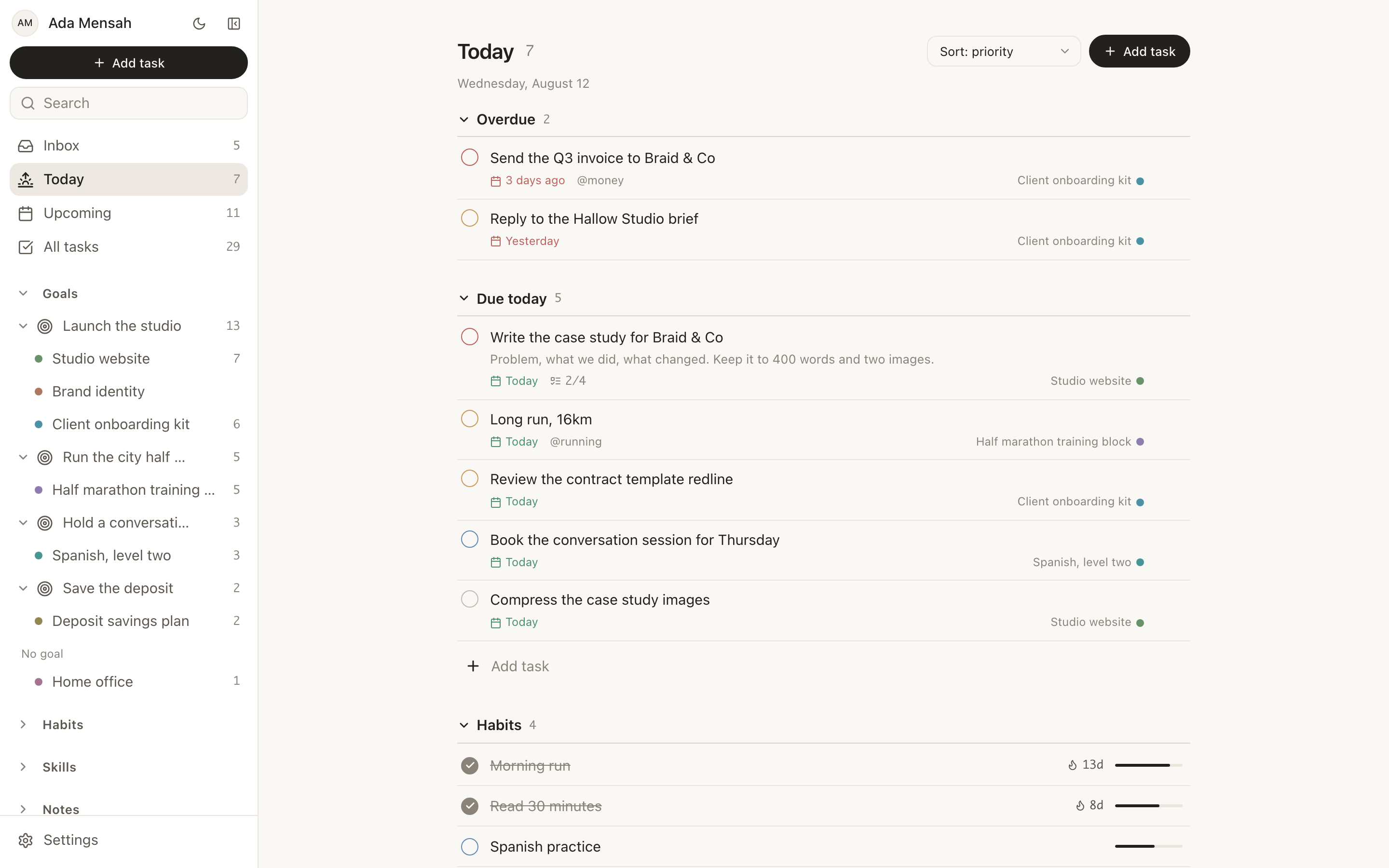
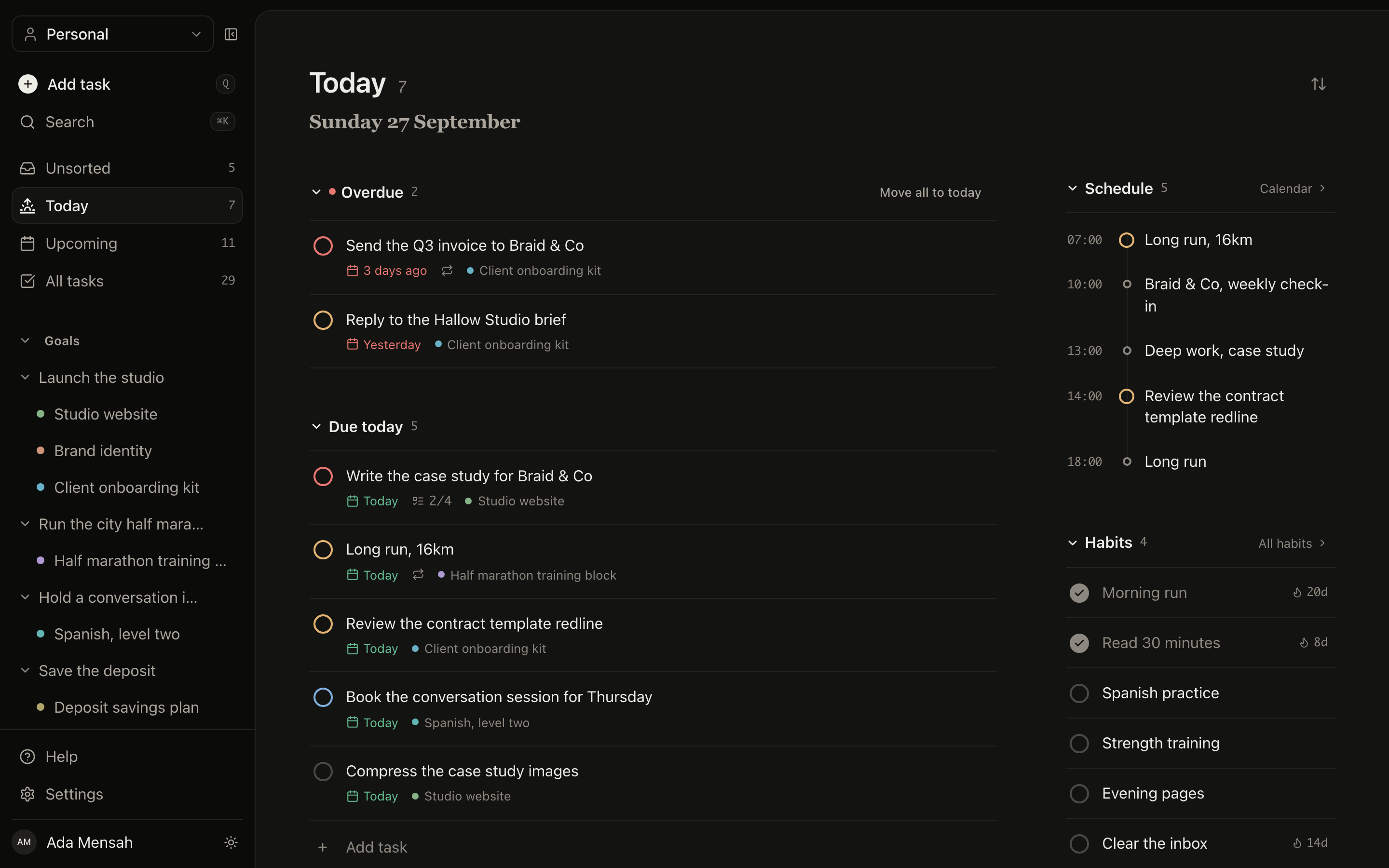
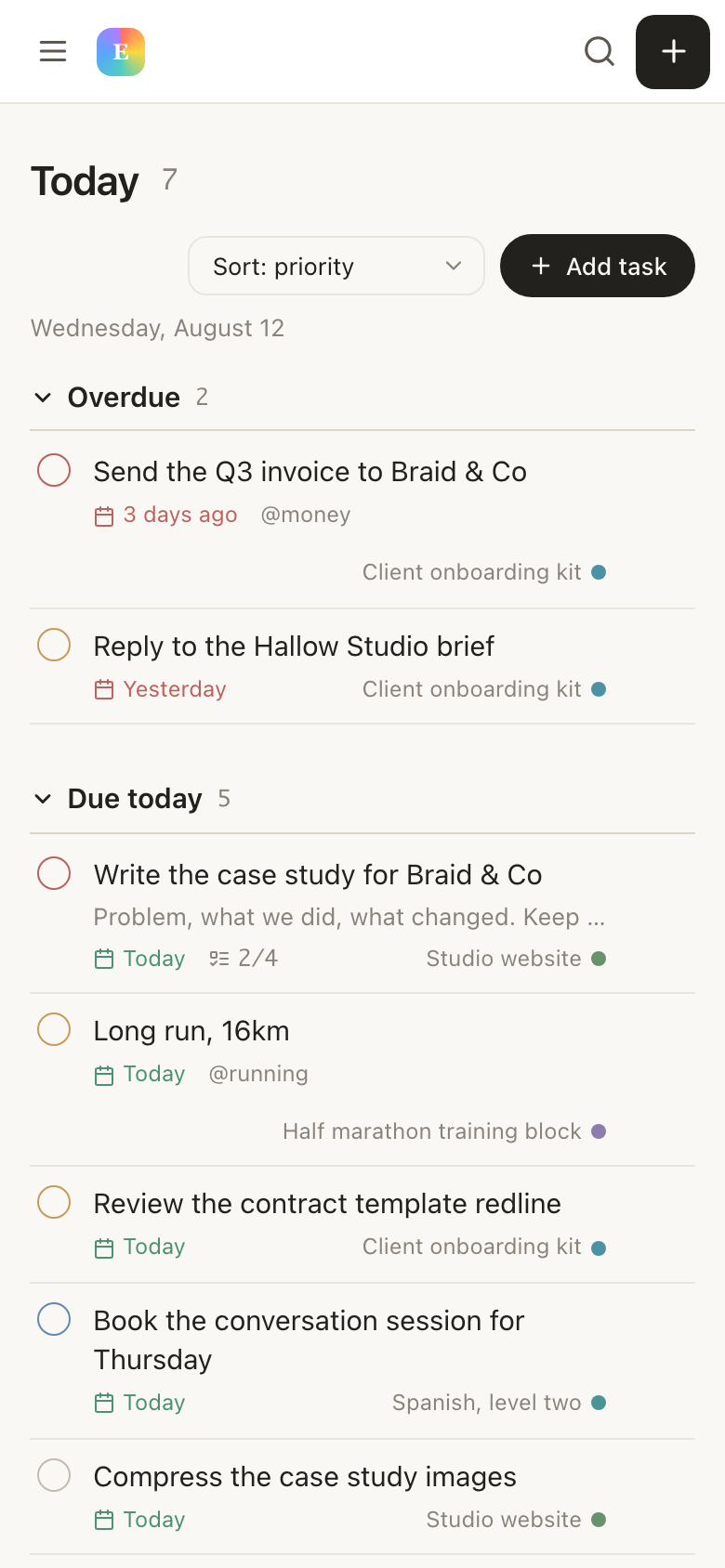
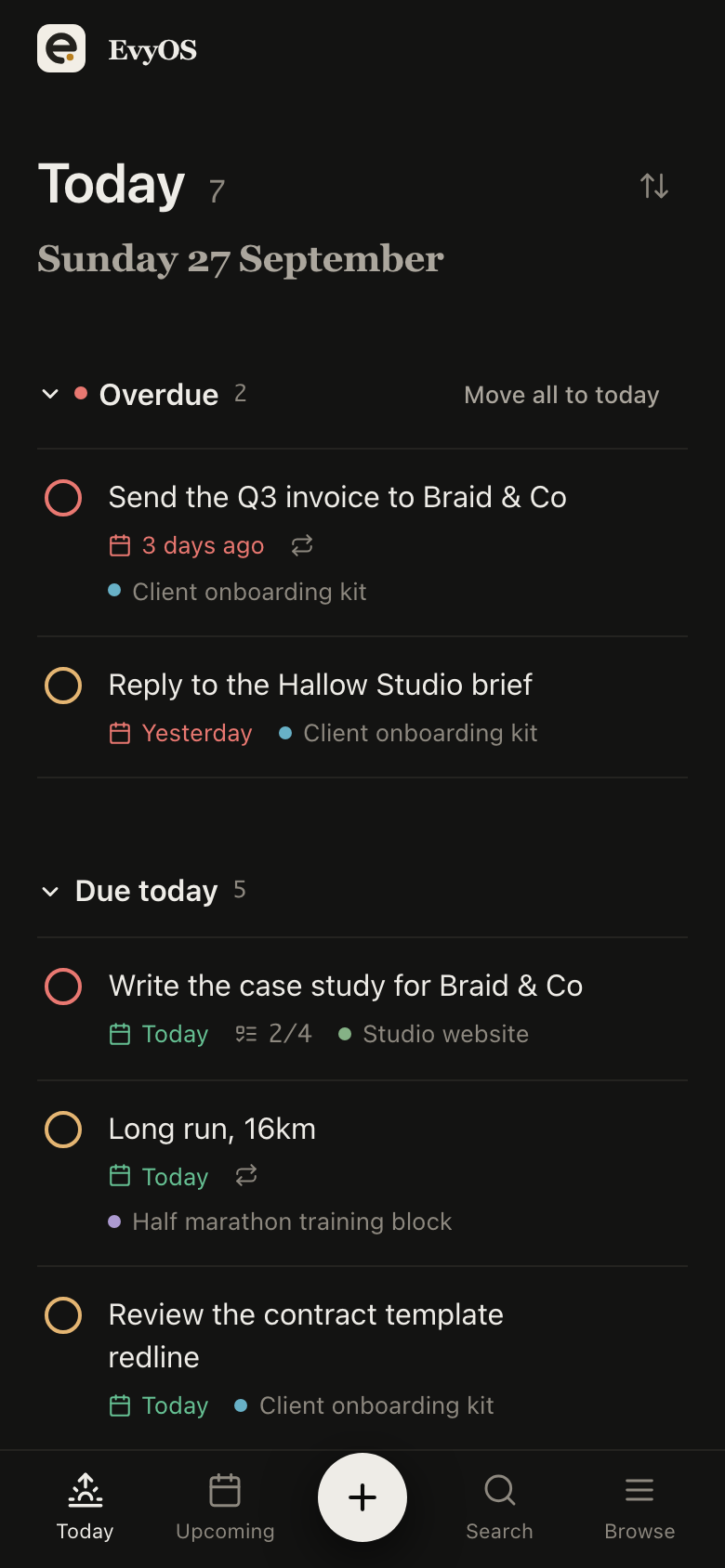
Tasks
Habits
Skills
Notes
Calendar
✦ The problem
The hours are not the constraint. The cold start is.
Between last session and this one, 5 days passed and a full job happened. You open the laptop at 9pm, spend 40 minutes reconstructing what you had decided and why, and then it is 10 and you are tired. That is not a discipline problem. It is a system that makes you pay for context every single time.
⏳
Five to eight usable hours, and no more
Two evenings and part of a weekend. Whatever the plan is, it has to fit that, and a plan built for full-time hours will quietly fail for months before you admit it.
🧵
Most of the session is reloading the last one
What was I doing, why did I choose that, what did I decide about the pricing. The thinking is done, it just is not written anywhere, so you do it again at 30 percent quality.
🚪
The day job takes the good hours
You get the tired end of the day. Anything requiring a decision gets postponed to a weekend that is already full, and the easy work expands to fill the evenings instead.
📉
Progress is real but invisible
Nine weeks in, it feels like nothing happened, because there is no record of what actually moved. That feeling is what ends most side projects, not a lack of time.
📋
Task manager
For daily to-dos
$4/mo
📁
Project tracker
For goals and timelines
$8/mo
🔄
Habit tracker
For daily rituals
$5/mo
⚡
Learning journal
For skill tracking
$6/mo
+
Monthly total
4 apps, no integration
$23/mo
vs $15 with EvyOS
✦ Four pillars, one system
Everything you're building. In one place.
01 - Projects
A scope that fits the hours you have.
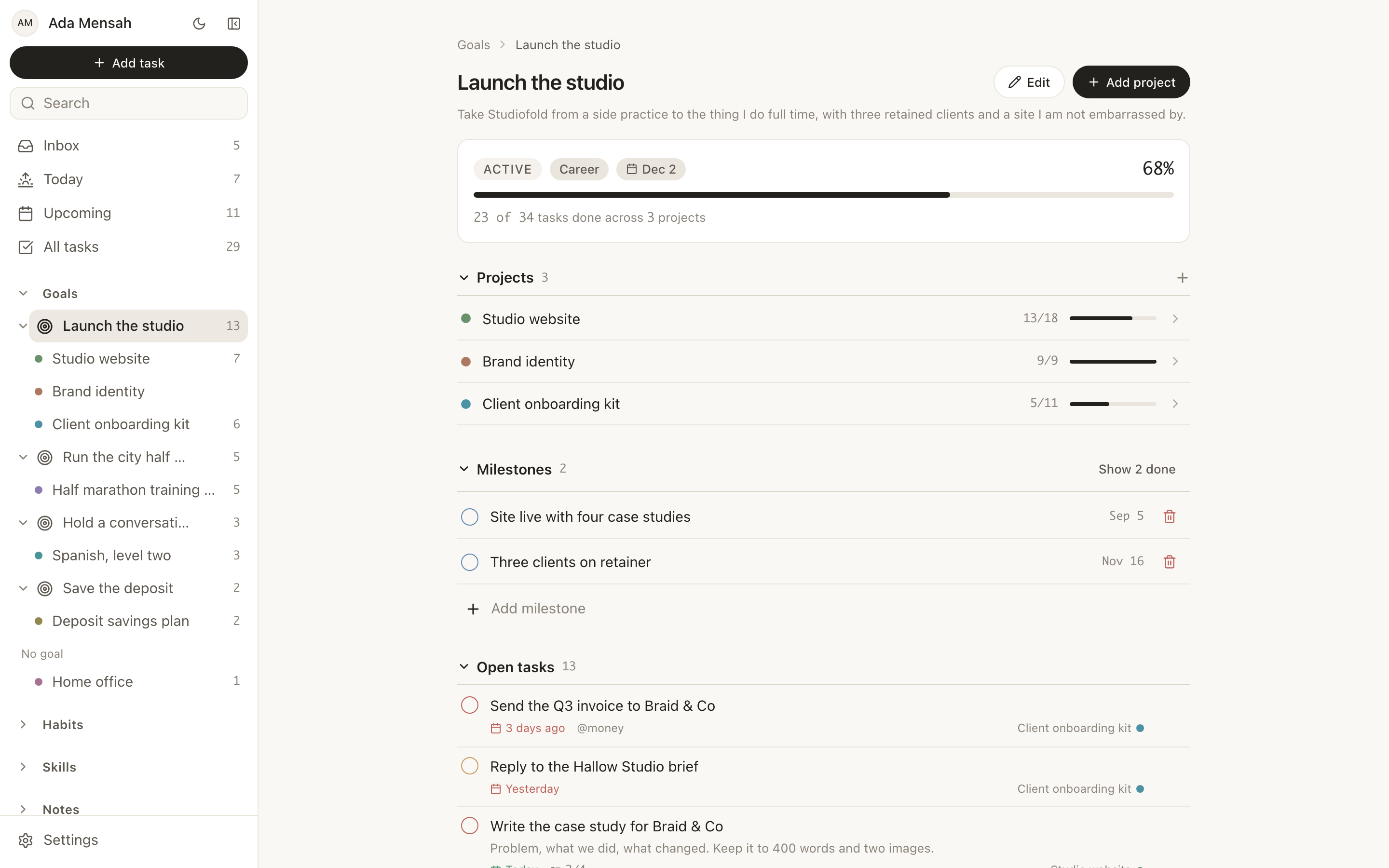
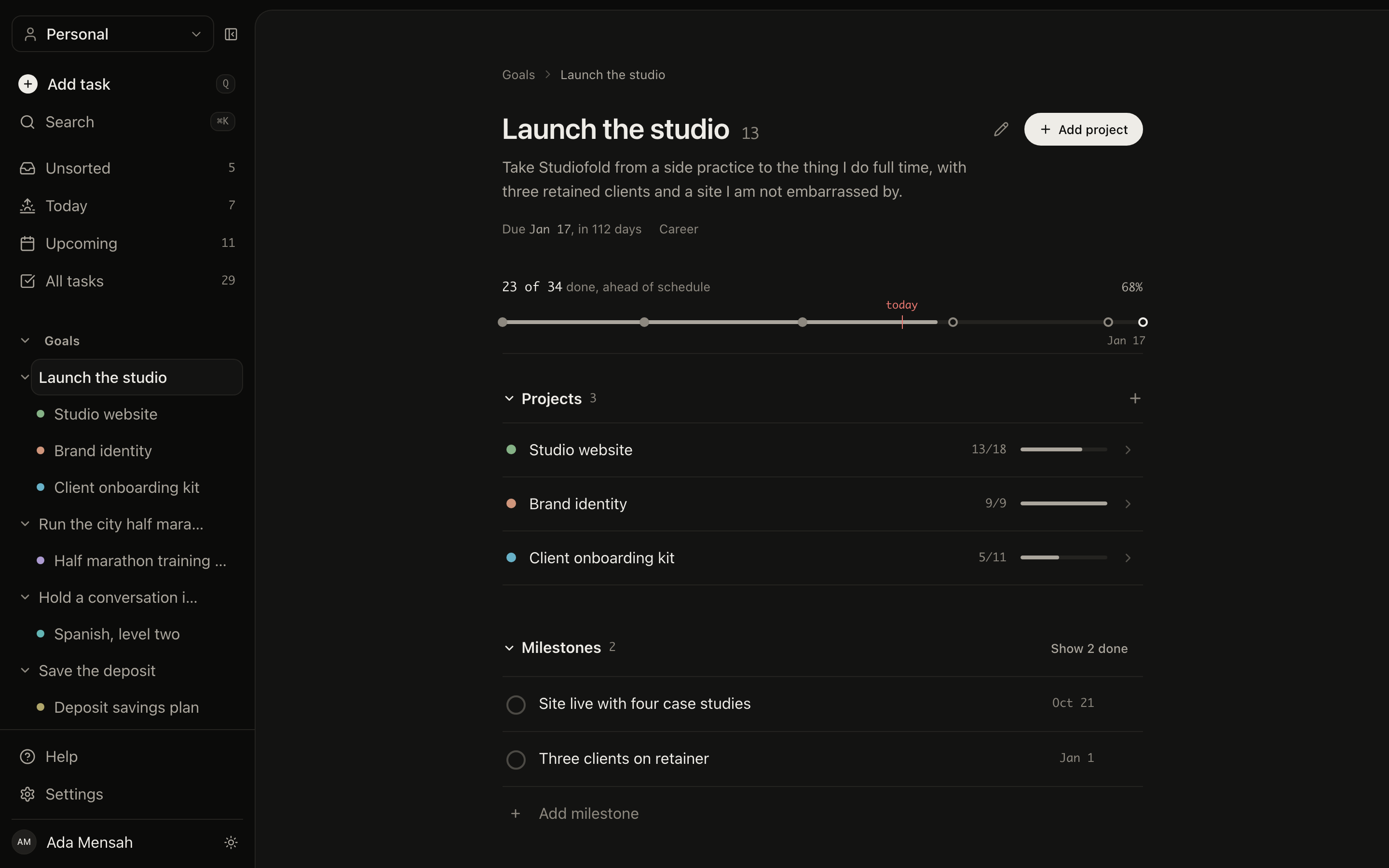
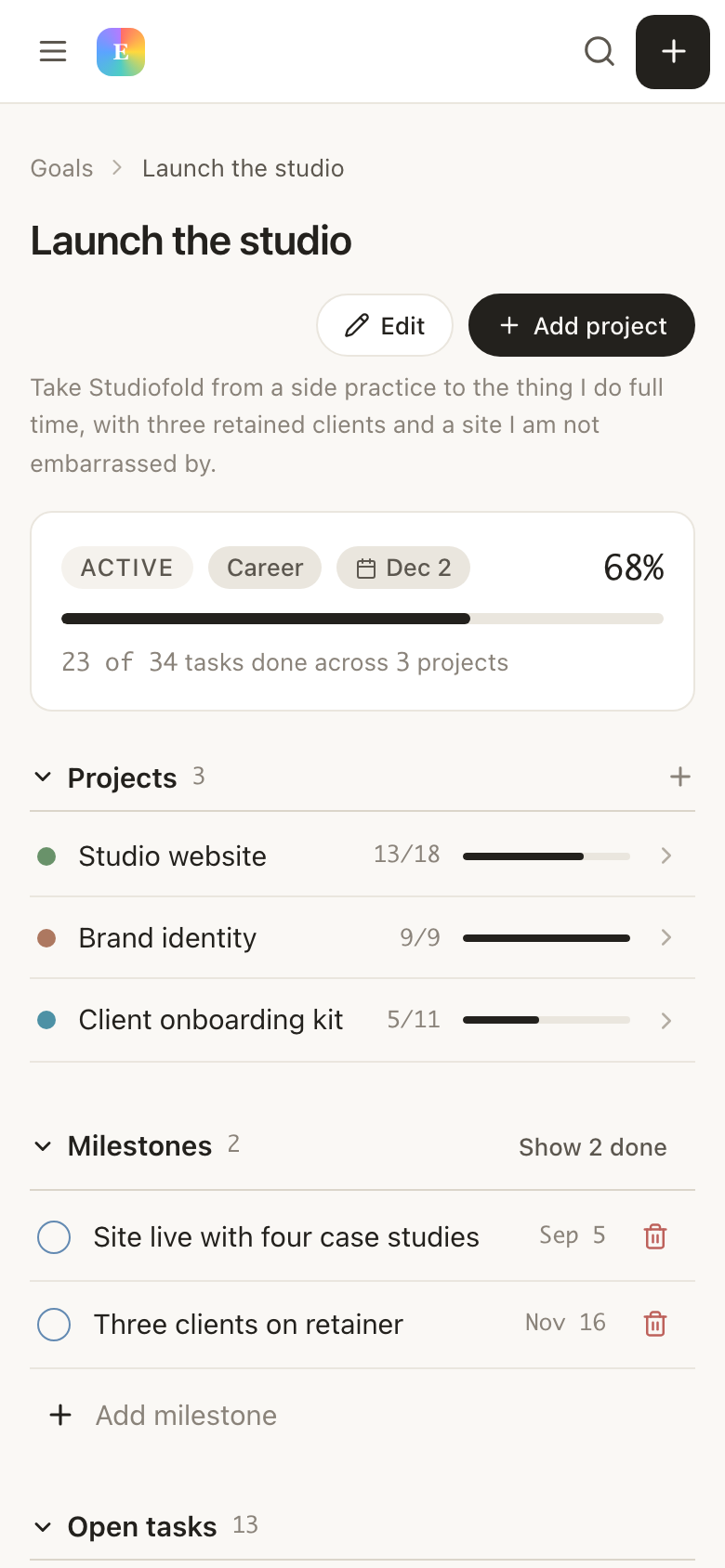
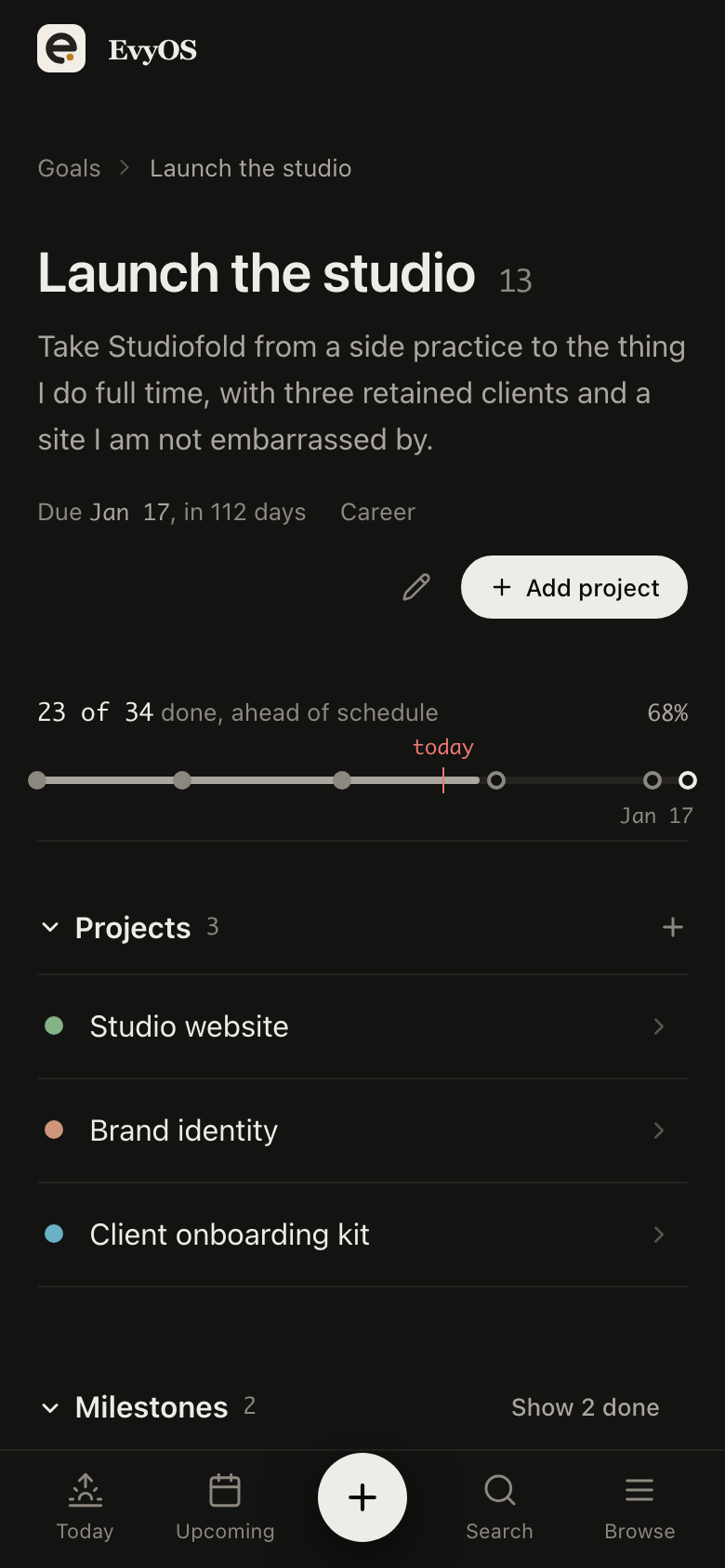
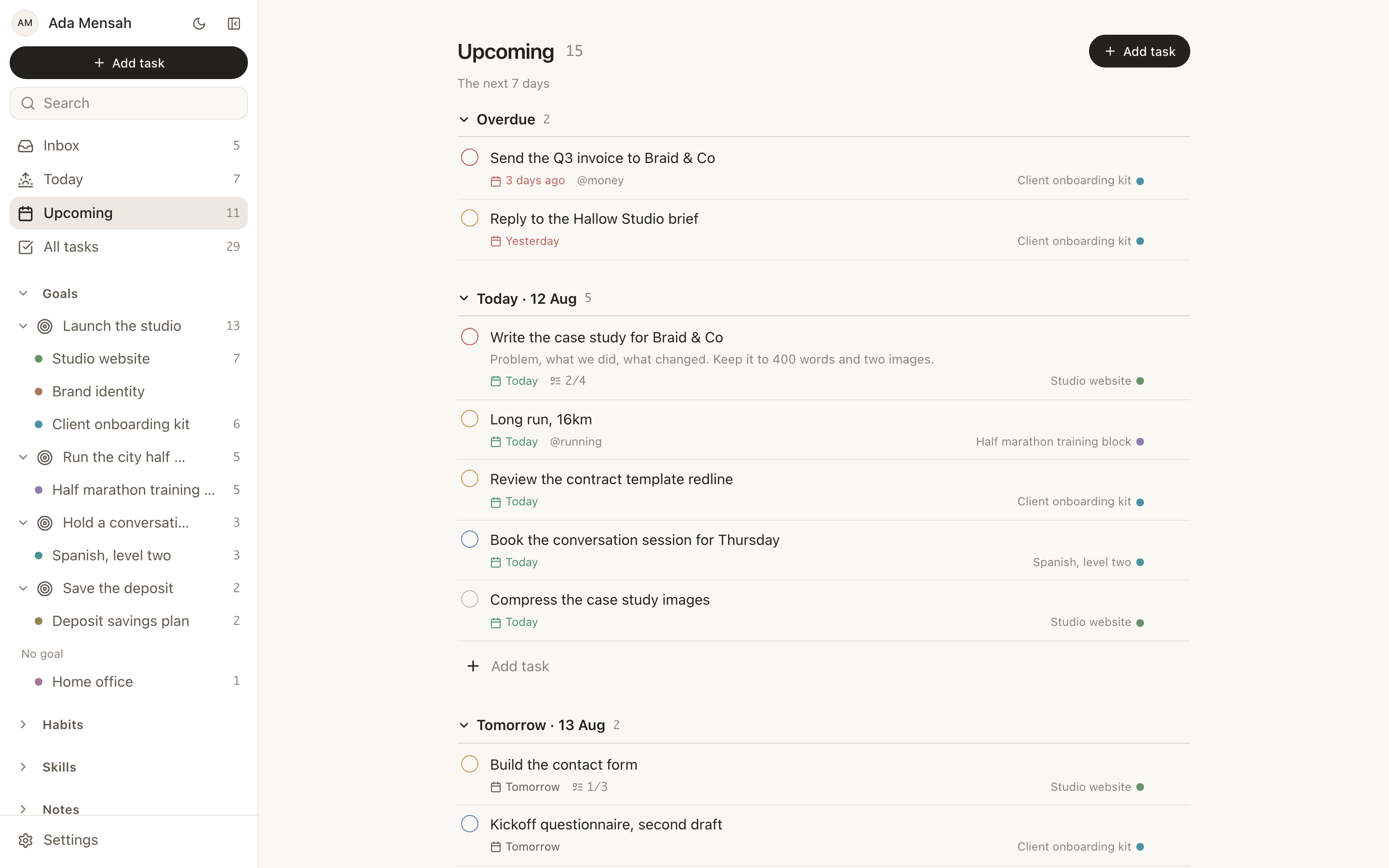
Give the thing a goal with a real date, then break it into projects with milestones sized to a fortnight, not a quarter. When the whole plan is visible you can see the version that fits 6 hours a week, which is usually a much smaller launch than the one in your head. Progress on the goal is calculated from what is finished underneath it.
Decide the next session before you close the laptop.
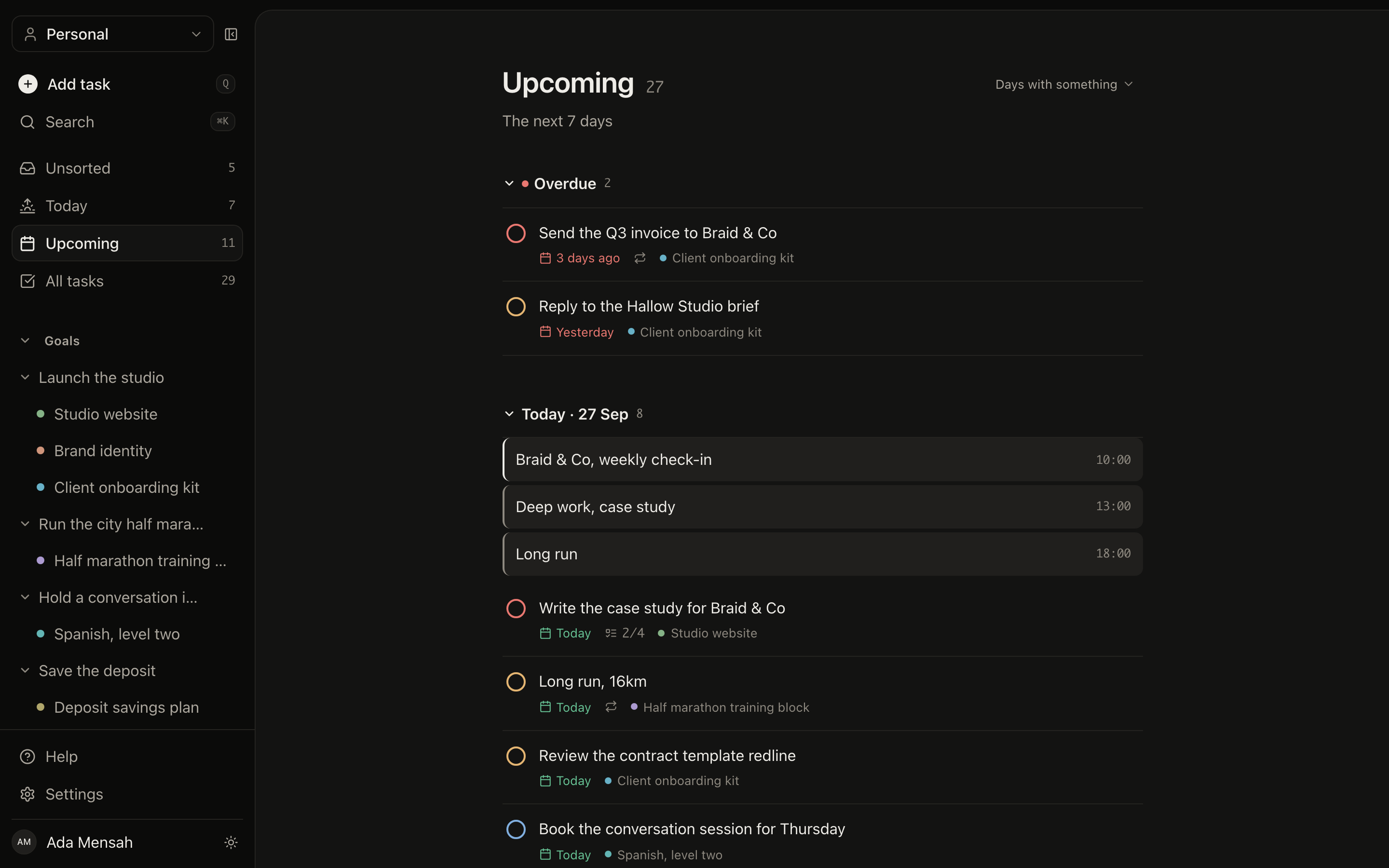
Leave the next 2 tasks queued with estimated minutes on them, so Tuesday night starts with a decision already made. Estimated against actual minutes tells you within a month what an evening is genuinely worth, and the number is usually not what you assumed. Subtasks break a 3-hour job into pieces an evening can finish.
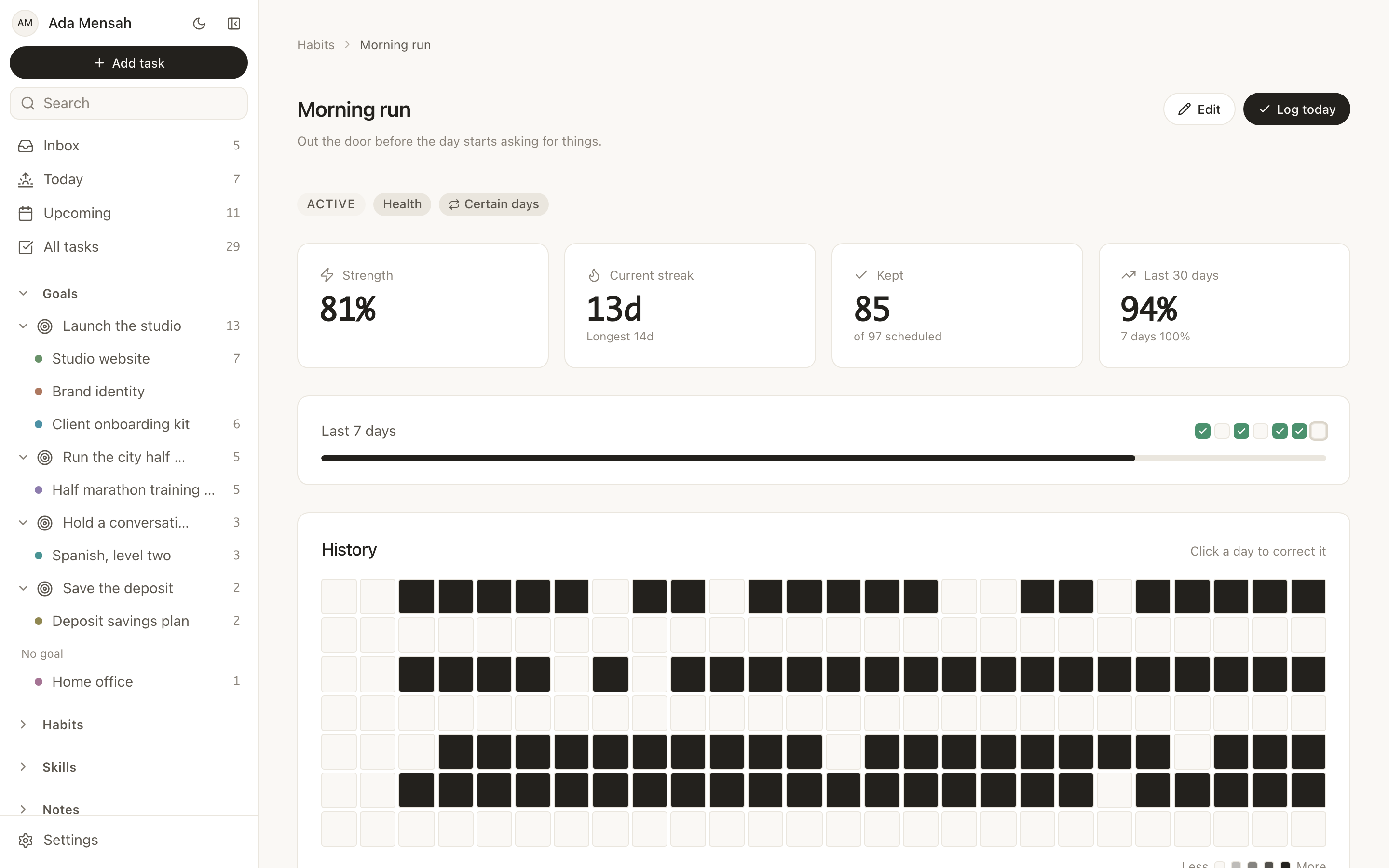
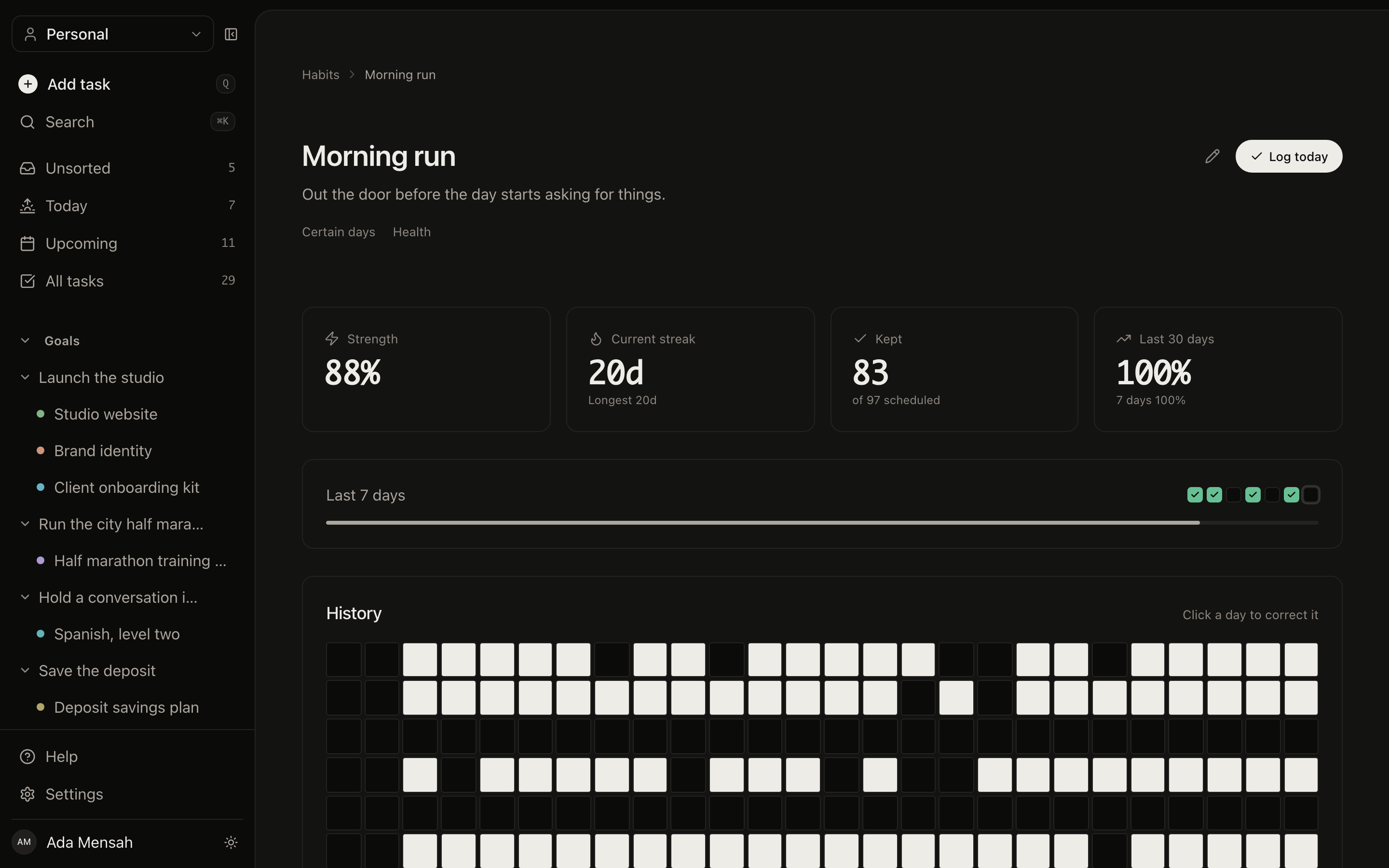
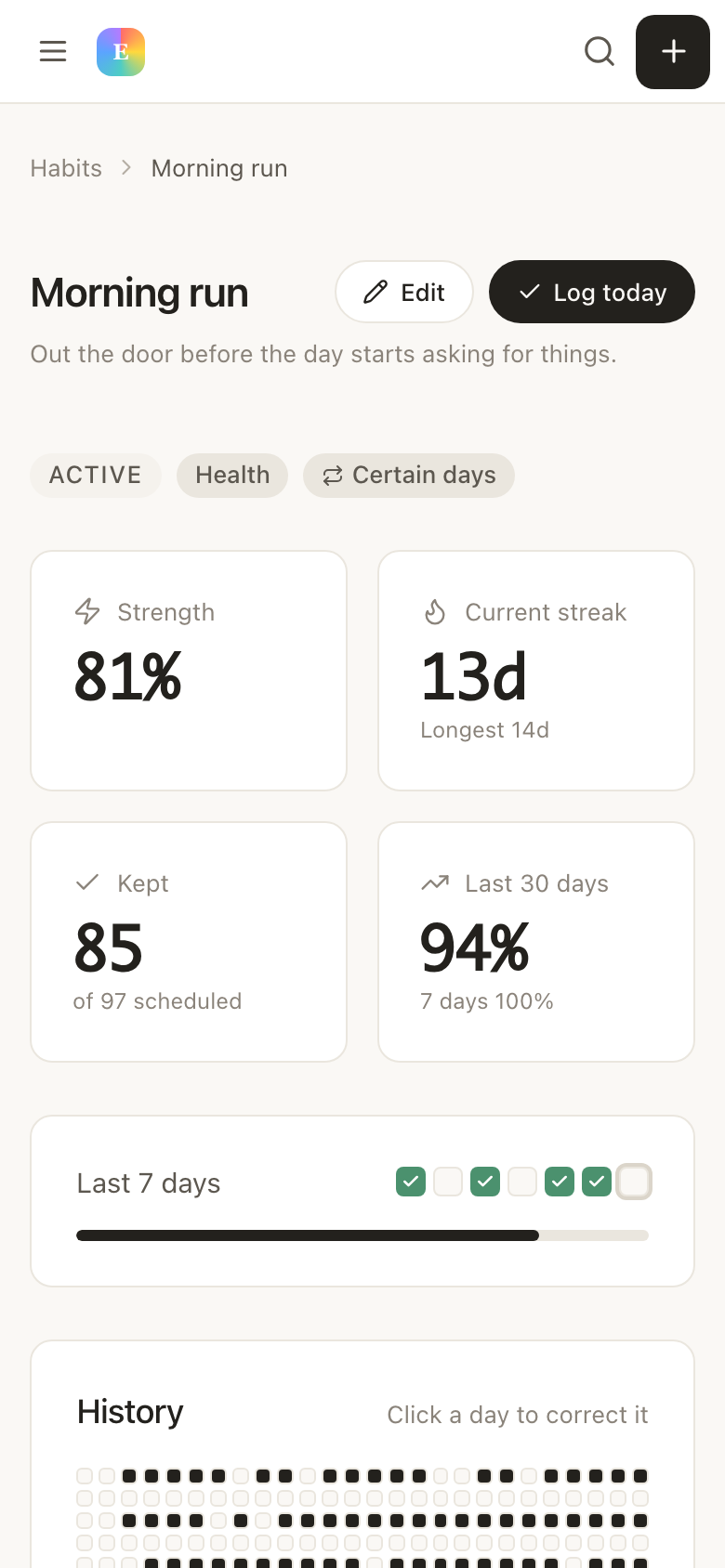
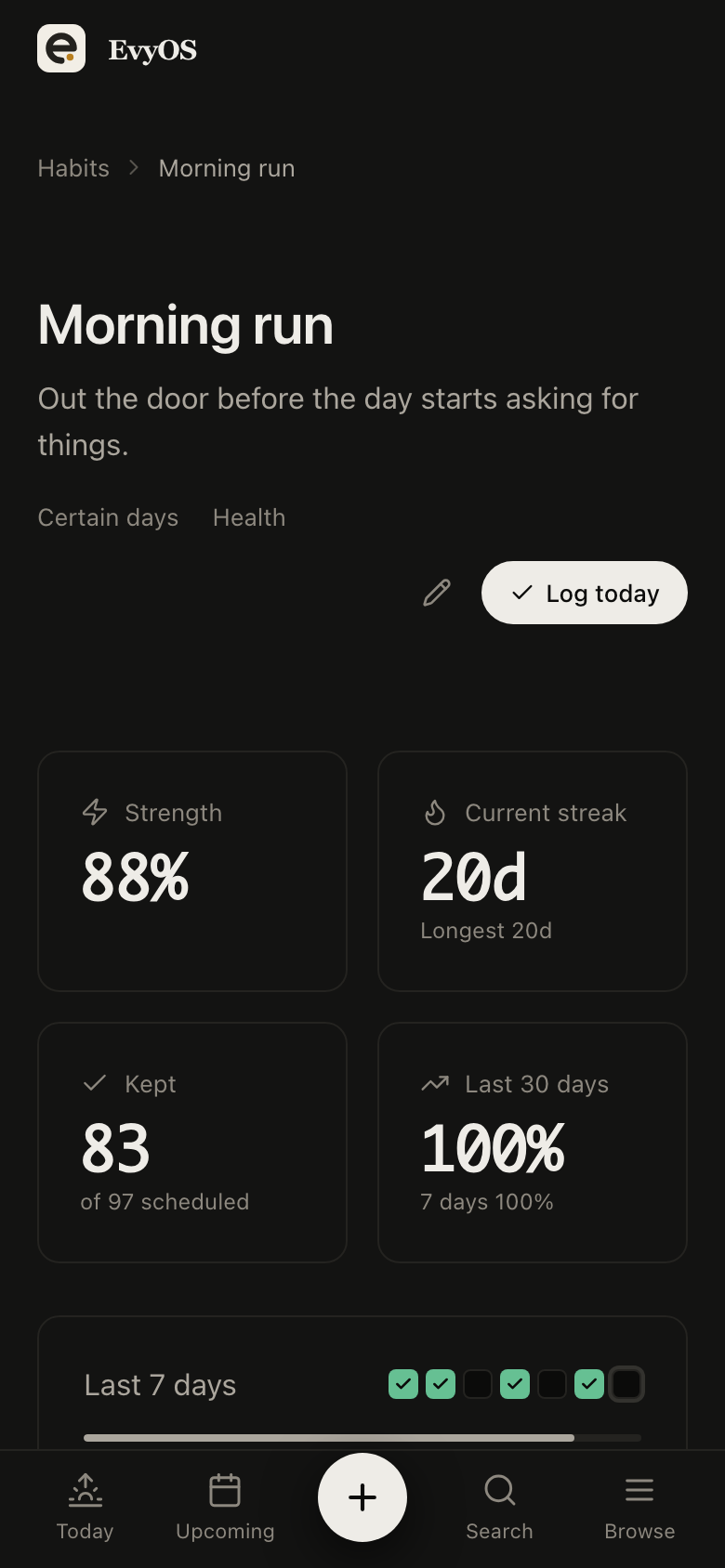
Set the habit on the specific days that are actually yours — Tuesday, Thursday, Sunday morning — rather than a daily target you will break in week 2. The year-long graph is the thing worth looking at: a side project is won by 40 unremarkable evenings, and that is the only view that shows them.
Specific daysStreaksStrength scoreYear-long graph
04 - Skills
Notes that end the cold start, and hours that prove it moved.
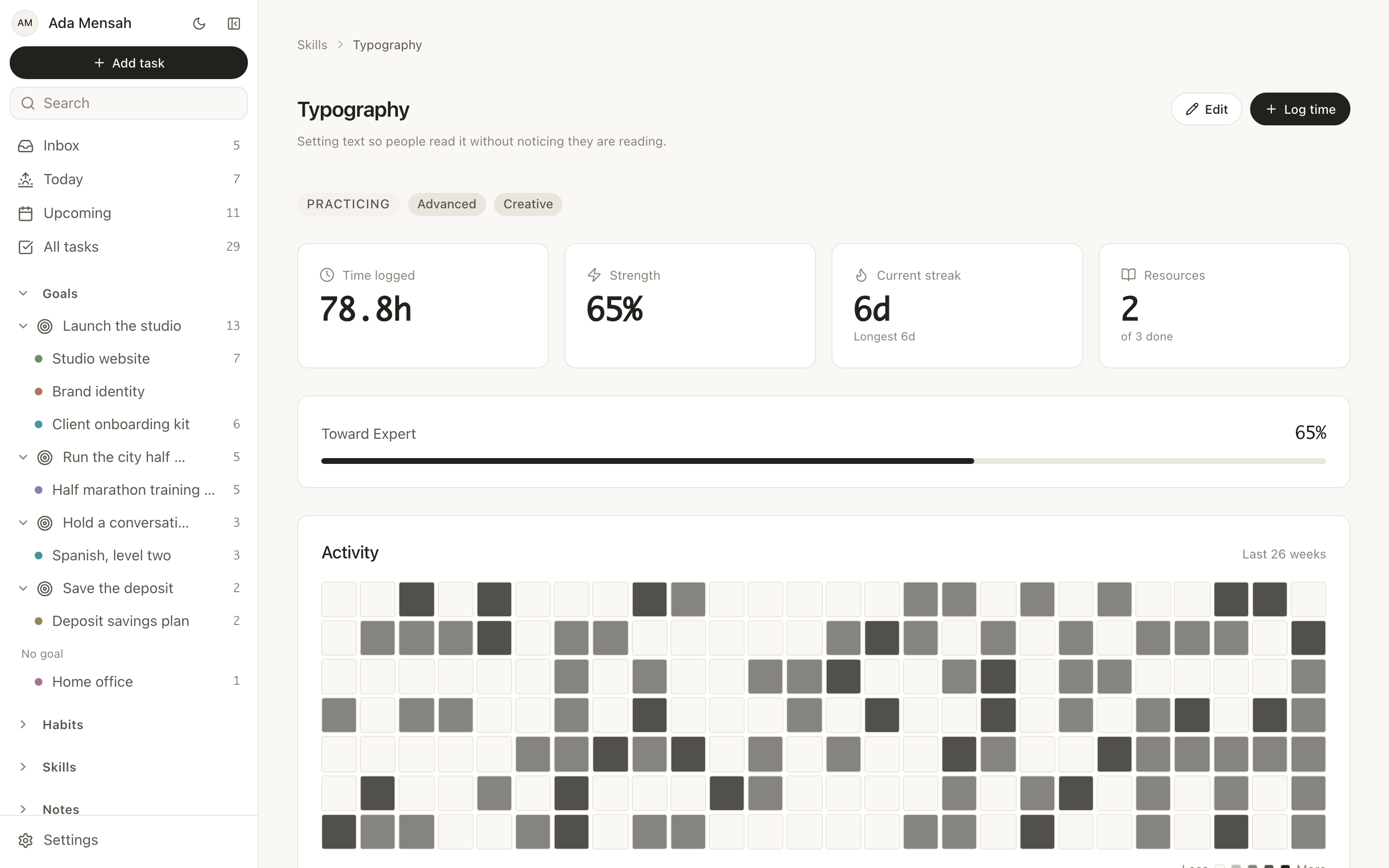
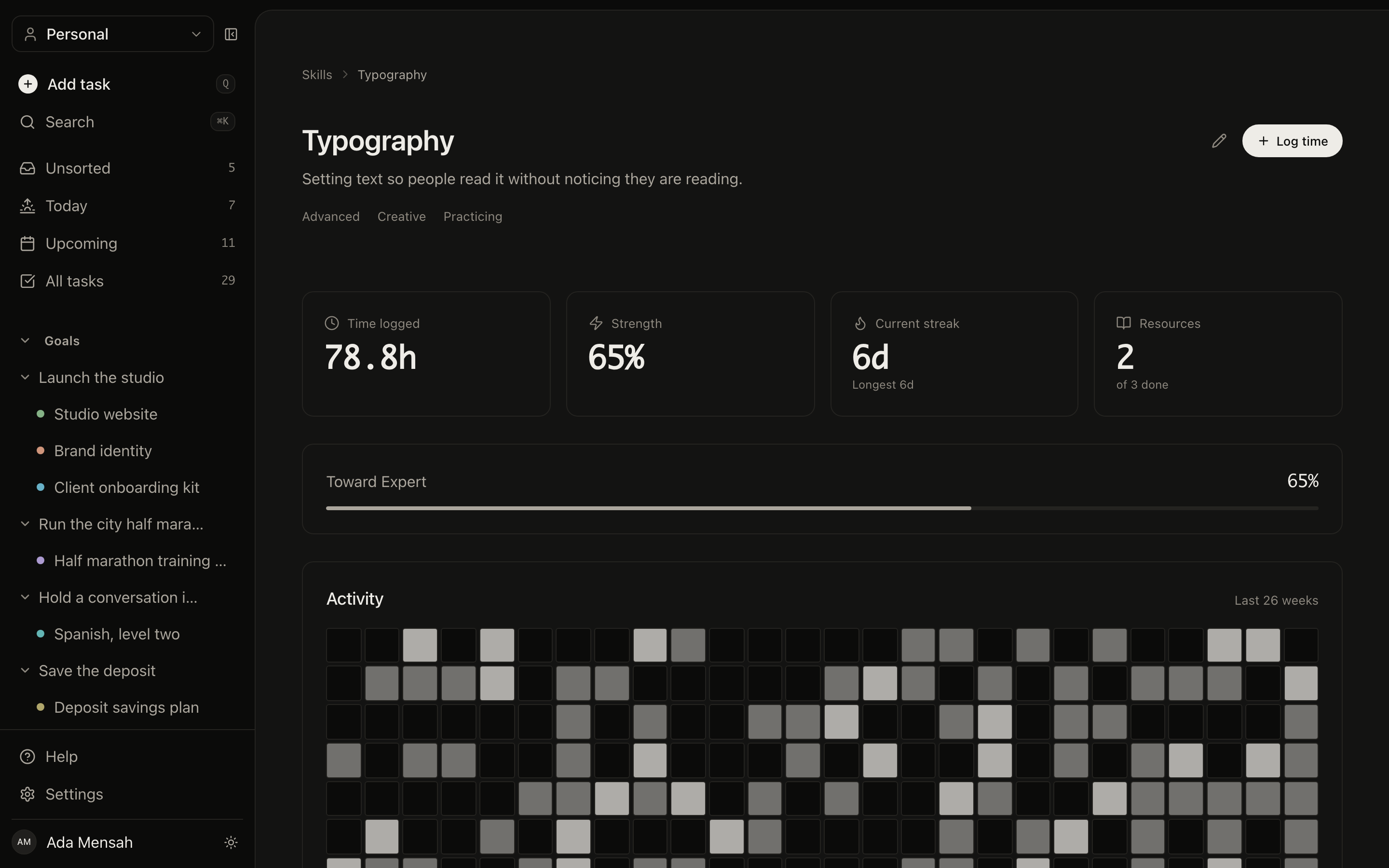
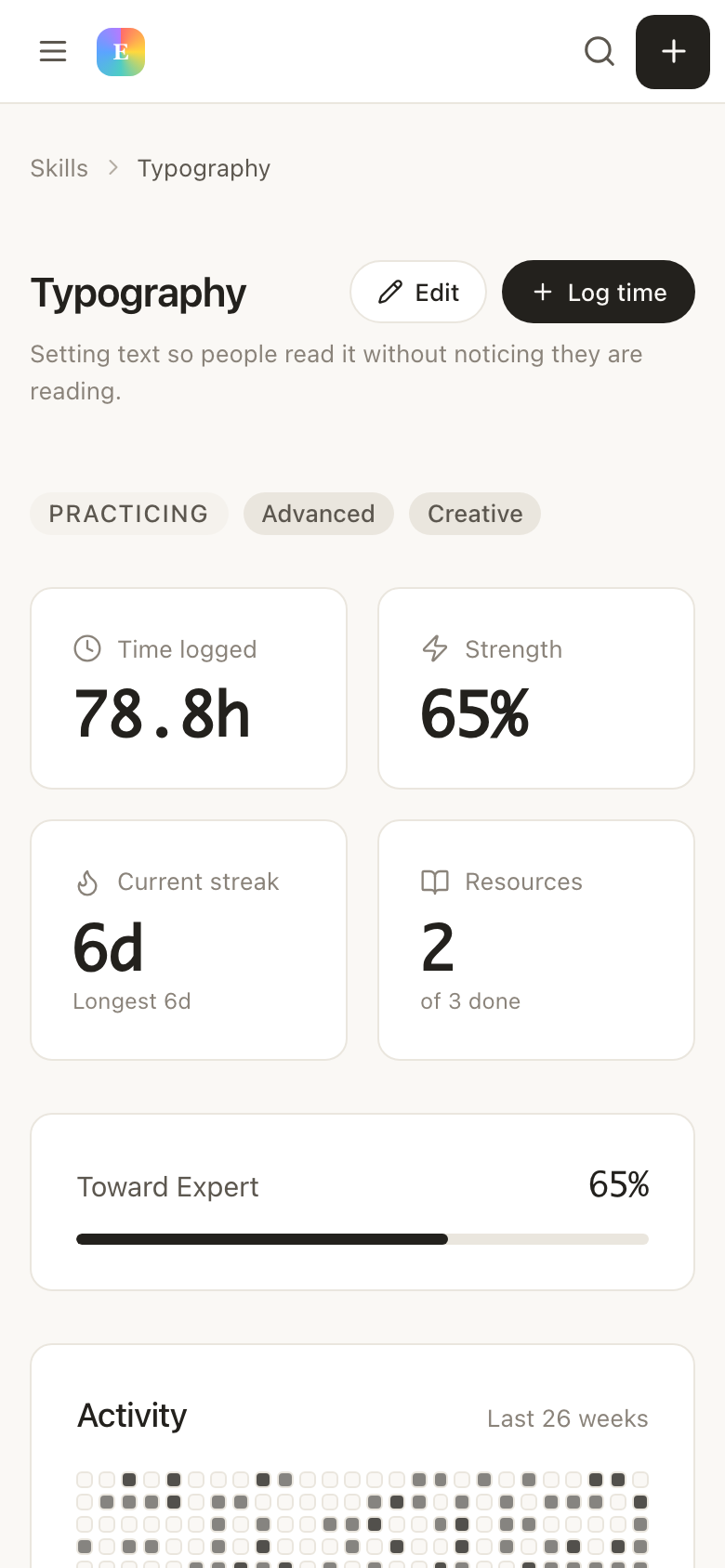
Close each session with 5 lines in a note: where you got to, what you decided, what is next. Markdown, folders, full-text search, so Sunday opens the thread instead of rebuilding it. Alongside it, log the practice against the skill you are building and the minutes accumulate into evidence on the weeks it feels like nothing is happening.
Write down the hours you will actually get, then cut the plan until it fits them. Make it a goal with a date and 3 or 4 milestones. Most side projects fail at this step, months before they look like they are failing.
2
End every session by setting up the next
Five lines in a note, the next 2 tasks queued with estimates. It costs 3 minutes and buys back the 40 you were spending on re-entry.
3
Judge it monthly, not nightly
The weekly summary and the habit graph show the evenings you actually held and the milestones that moved. One bad week stops being evidence that it is not working.
✦ Pricing
Simple. No surprises.
Start free. Upgrade when you're ready to go deeper.
Scope it to the hours you genuinely have, which is usually 5 to 8 a week, then protect the transition rather than the time. The expensive part is not the work, it is reloading context after 5 days away. Ending each session with a short note of where you got to and what is next reclaims most of an evening, every evening.
Break work into pieces an evening can actually finish, and put an estimate on each one. Subtasks turn a 3-hour job into three that fit. Comparing estimated to actual minutes over a month tells you how much a tired evening is really worth, which is the number your plan should be built on rather than an optimistic guess.
The difference is that a to-do list holds the next action and nothing else. Here the goal, the milestones, the evenings you kept and the notes explaining what you decided all sit in the same account. The list tells you what to do tonight; the rest tells you whether 9 weeks of Tuesdays added up to anything.
Usually yes. The free plan allows 2 active goals, 5 active projects, 20 open tasks, 5 habits and 5 skills, and the limits only count open items, so finished work never counts against you. One side project alongside a job fits inside that comfortably. Pro at $15 a month removes the limits if you end up running several.