Built for self-taught developersForty hours of tutorials.Two unfinished projects.
Hours logged against the language you are actually learning, builds with an end date instead of an open tab, and a streak that stays honest about the week the day job took over.
Free for as long as you like, no card required. Pro is $15 a month.
Goals
Projects
Tasks
Habits
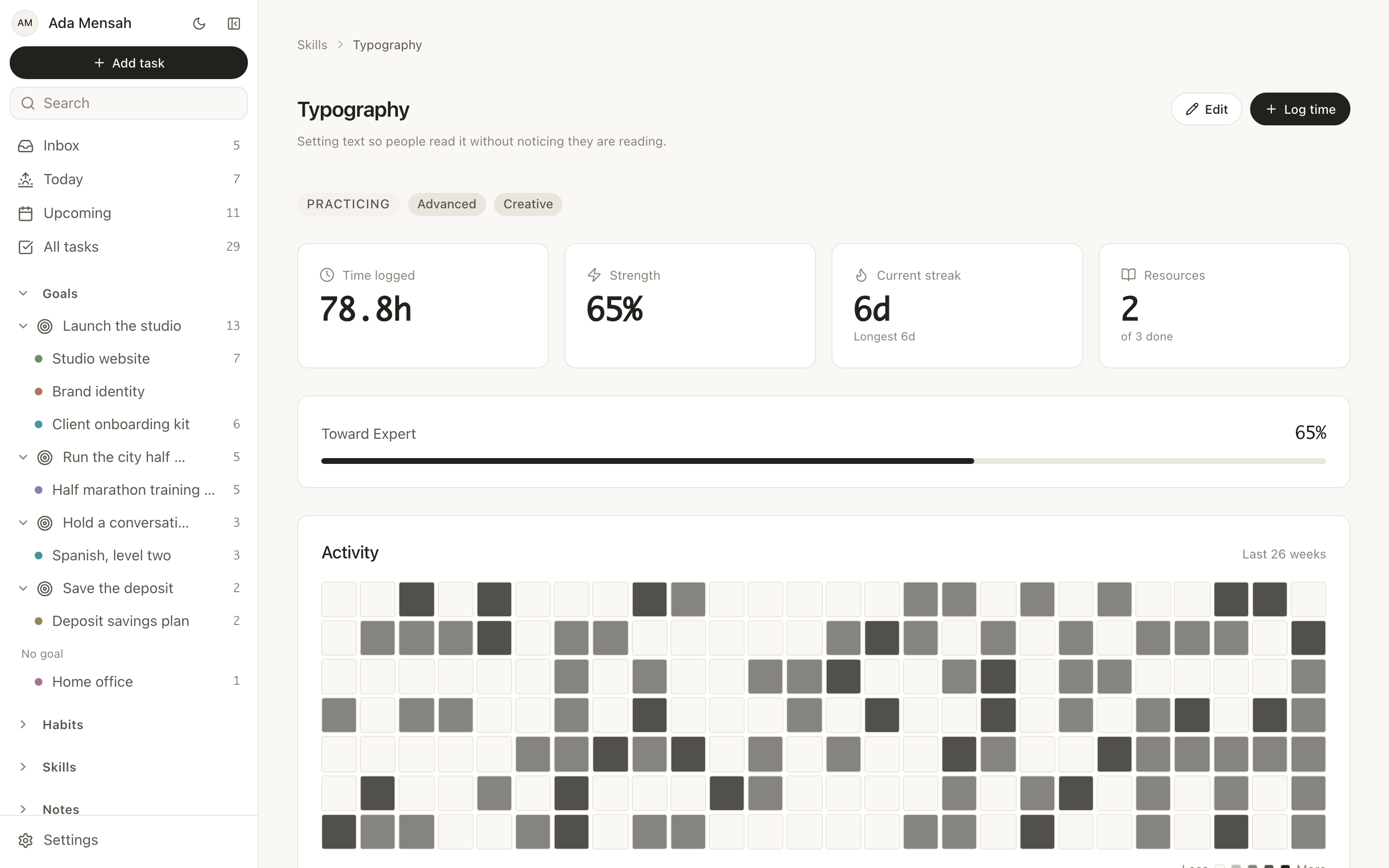
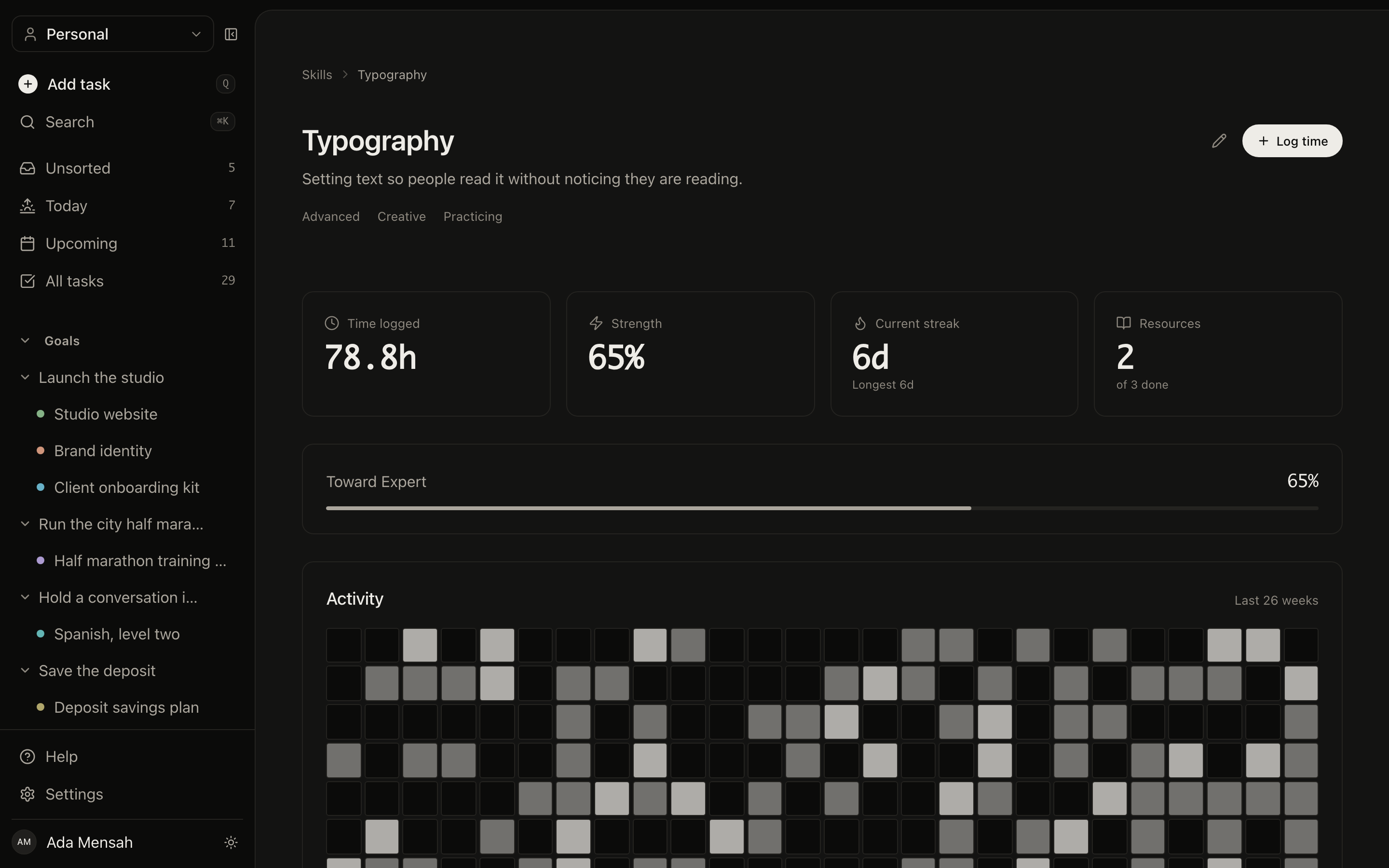
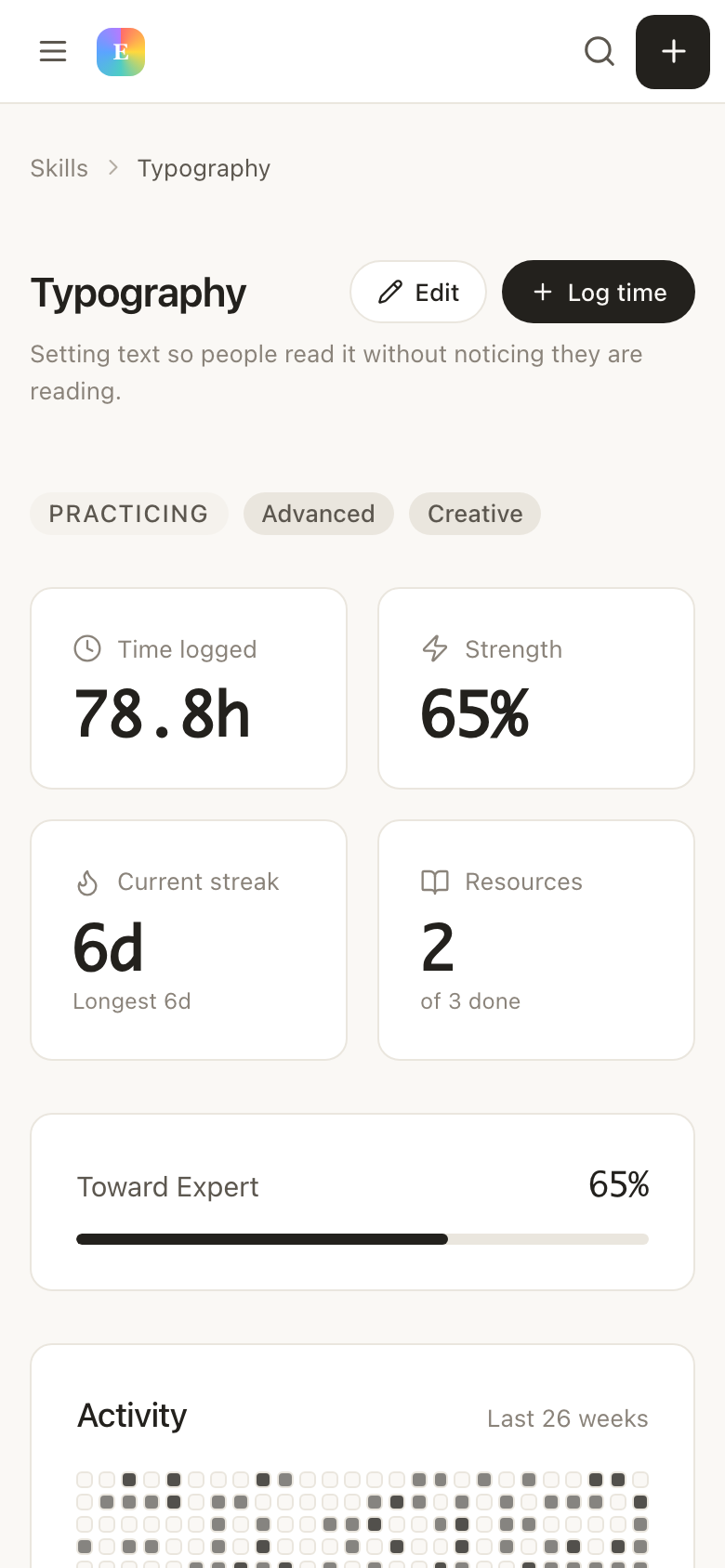
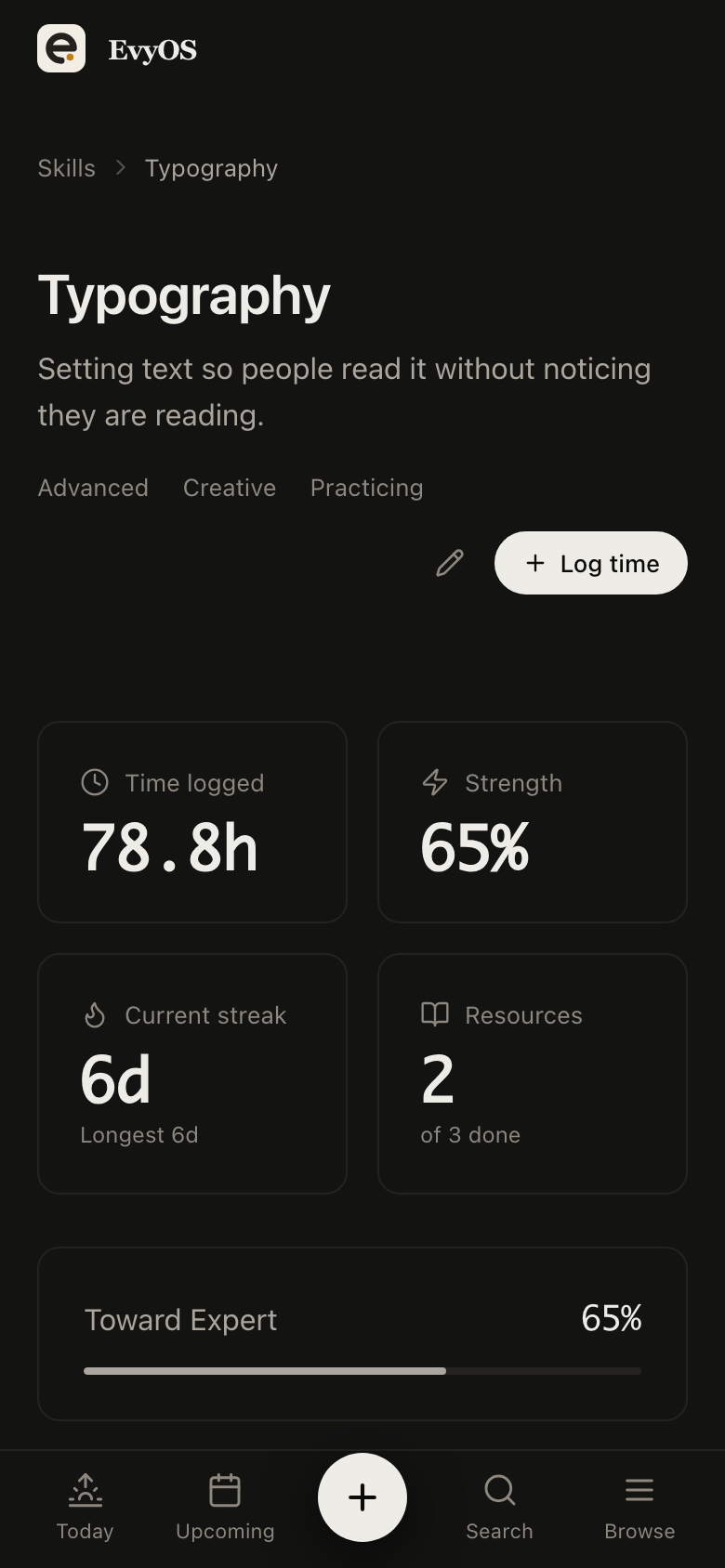
Skills
Notes
Calendar
✦ The problem
Tutorial hell is not a motivation problem. It is a record problem.
Consumption feels like progress while it is happening and leaves nothing behind when it stops. Six months of videos, three half-built apps and a roadmap last opened in March, with no way to answer the only question that matters: what can you do now that you could not do in the spring?
📺
Watching counts as studying until it doesn’t
A four-hour course played at 1.5x feels like a full day of work. Nothing in your setup measures whether you typed anything, so the comfortable input quietly keeps beating the uncomfortable one.
🚧
Projects stall at eighty percent
The interesting part is the first weekend. Auth, deployment, error states and a README are the part that makes it a portfolio piece, and none of that is on a list with a date, so it stays a repo nobody sees.
🗺
A public roadmap has no memory
It tells you what to learn and records nothing about what you did. Ticking boxes on somebody else’s list is not the same as knowing where your own hours went.
📉
Consistency dies without anyone noticing
Two missed evenings become two weeks. With no streak in front of you, the cost of restarting keeps growing until picking it up again feels like starting from scratch.
📋
Task manager
For daily to-dos
$4/mo
📁
Project tracker
For goals and timelines
$8/mo
🔄
Habit tracker
For daily rituals
$5/mo
⚡
Learning journal
For skill tracking
$6/mo
+
Monthly total
4 apps, no integration
$23/mo
vs $15 with EvyOS
✦ Four pillars, one system
Everything you're building. In one place.
01 - Projects
The portfolio piece has to actually finish.
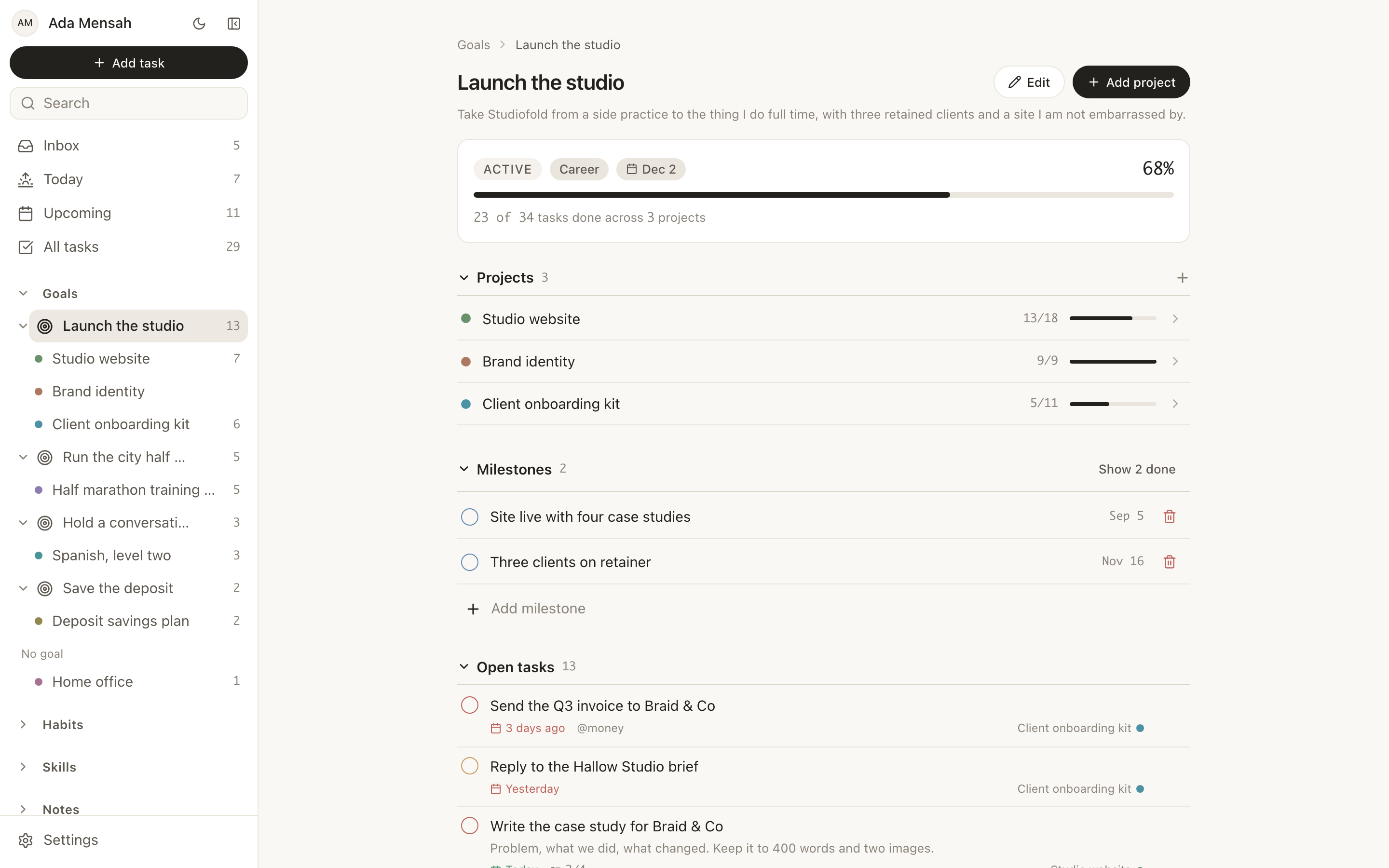
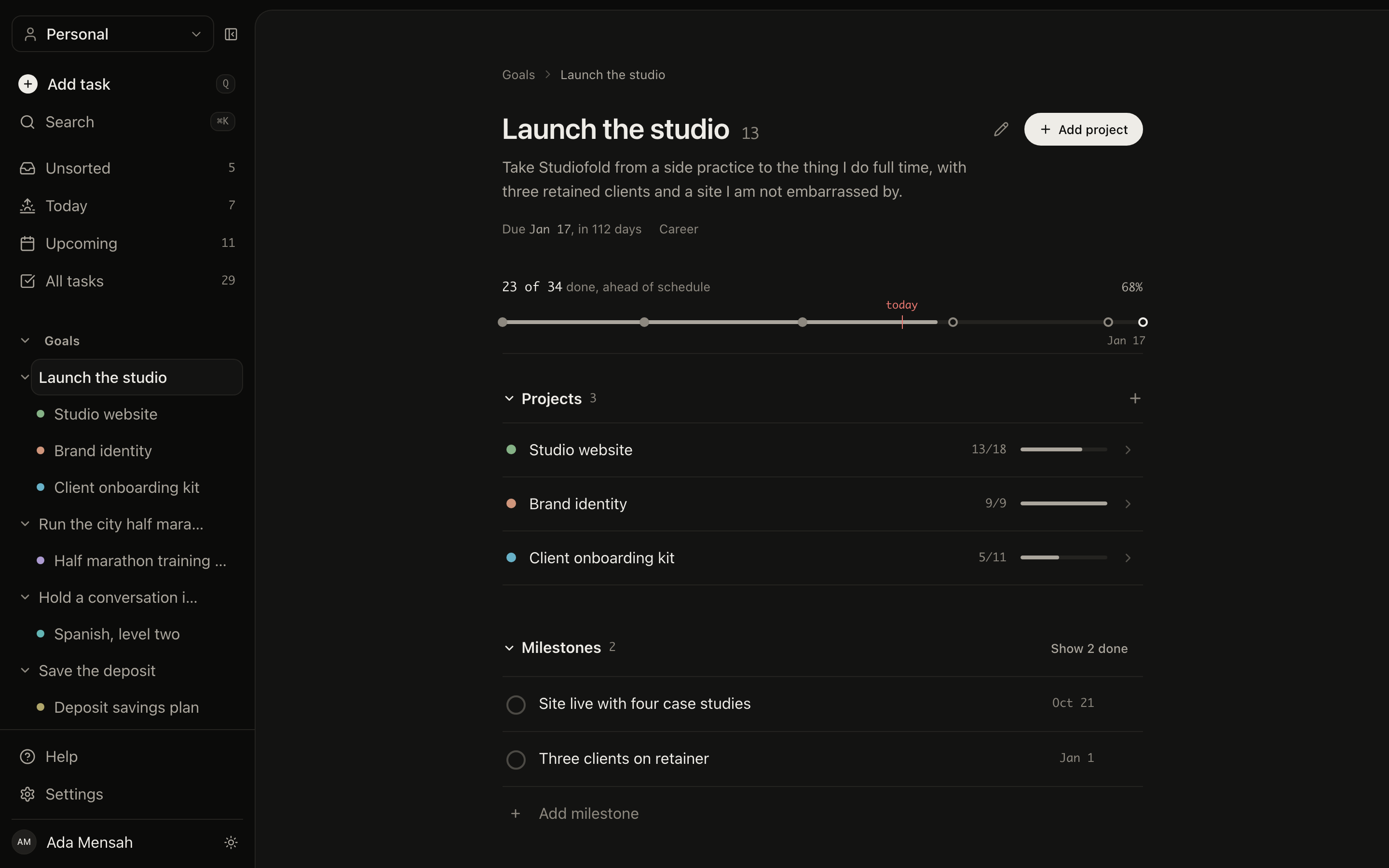
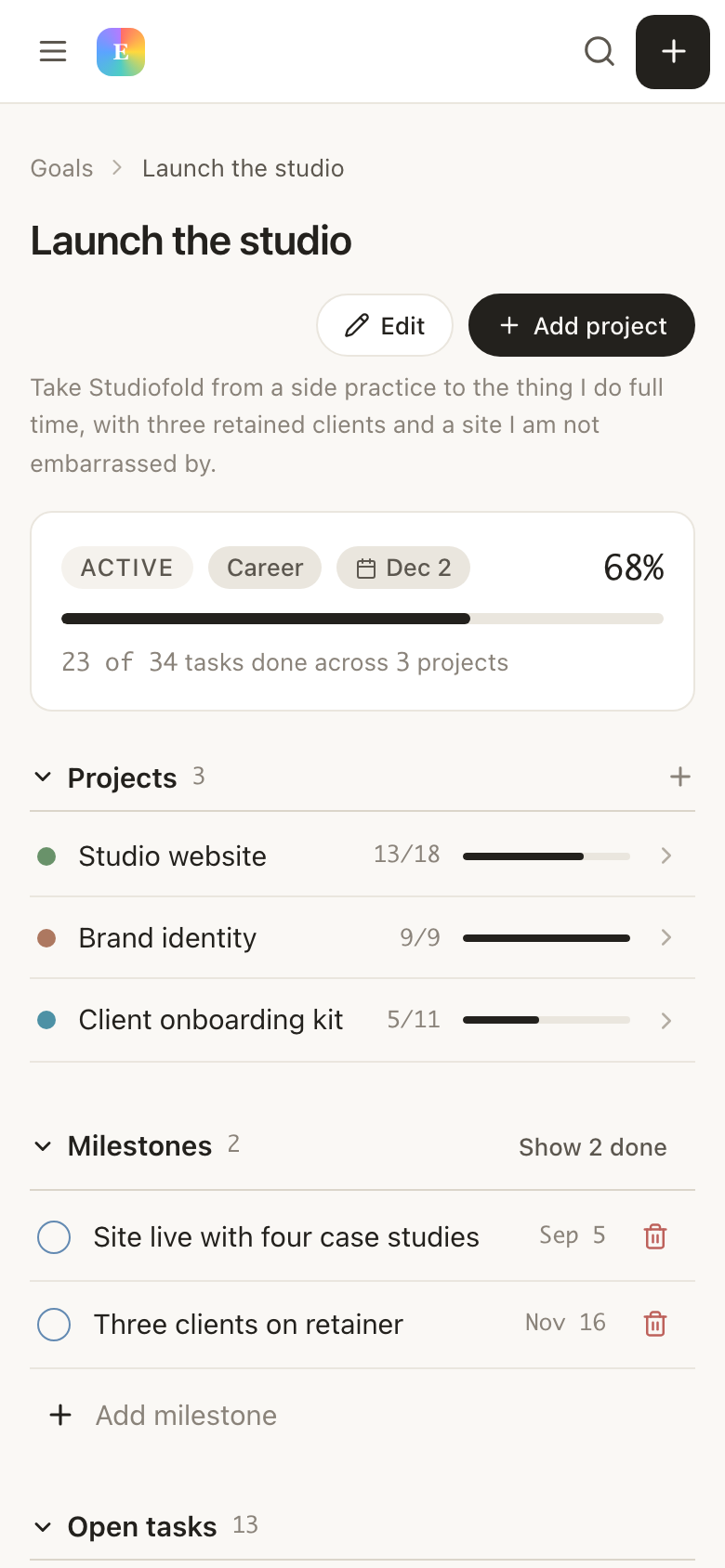
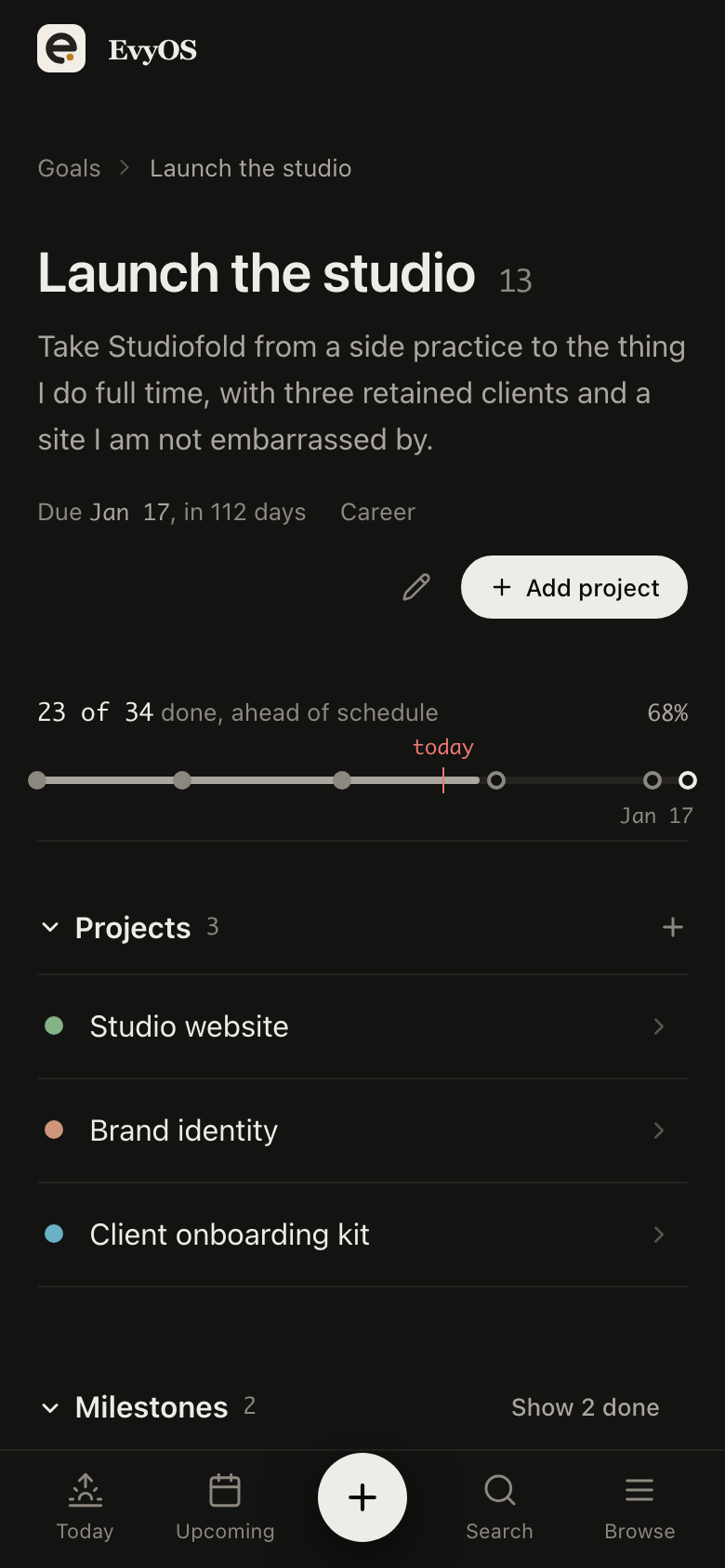
Give each build a project with a deadline and milestones that include the unglamorous ones — deployed, README written, errors handled. Finishing frees the slot, which is the point: three things live beats nine repos at seventy percent. Put a goal above them, employable as a backend developer by June, and every project shows what it is feeding.
DeadlinesMilestonesPortfolio piecesParent goal
02 - Tasks
Tonight’s commit, not the entire roadmap.
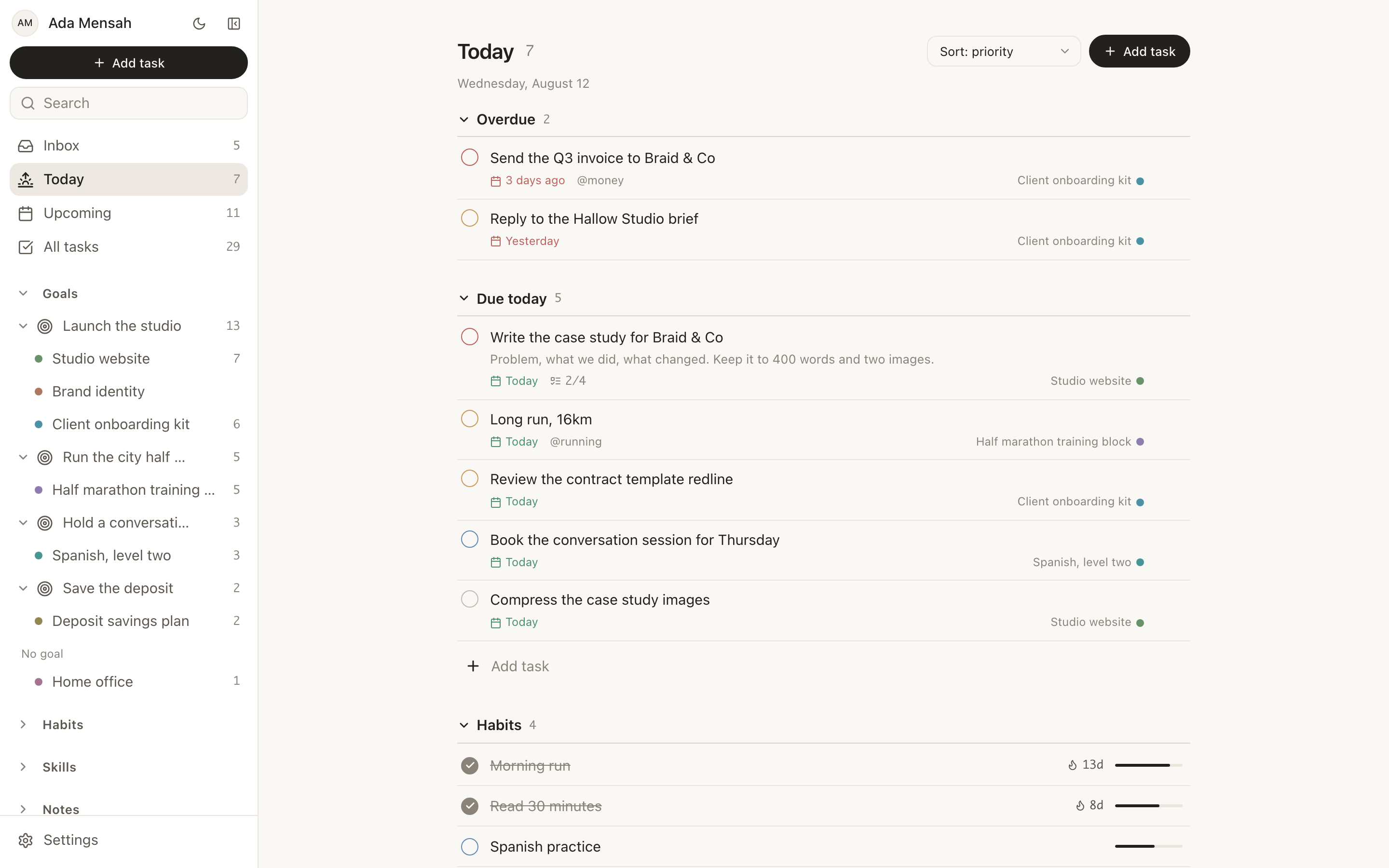
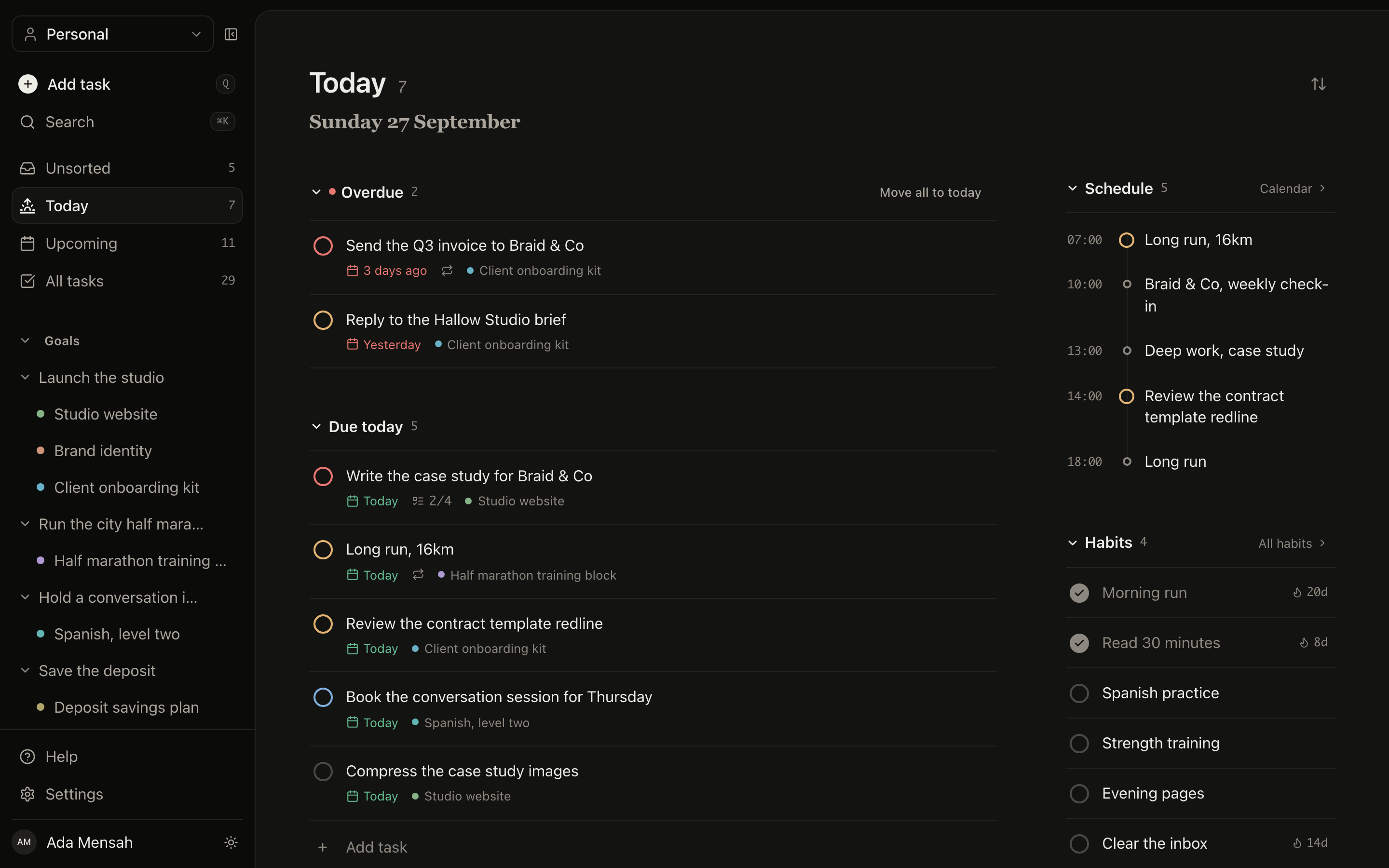
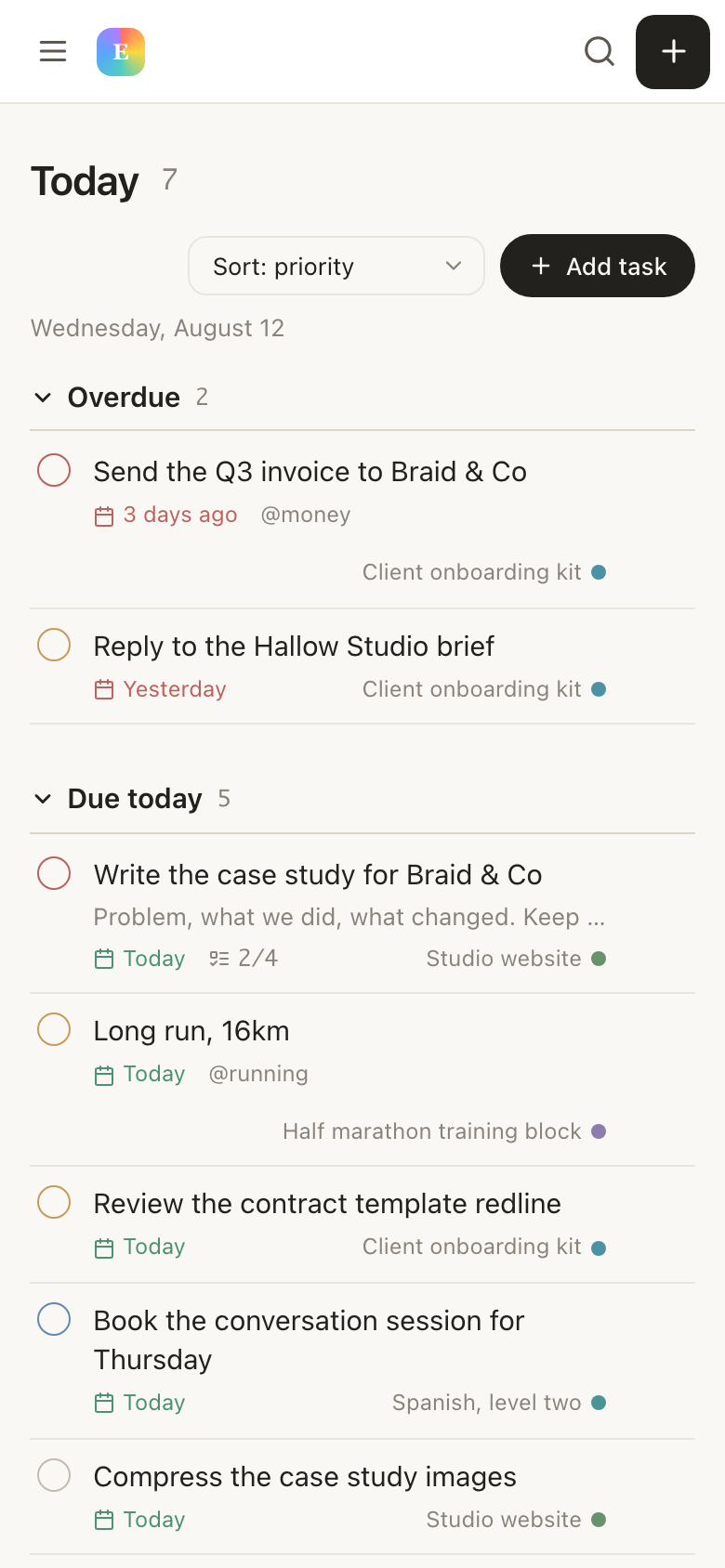
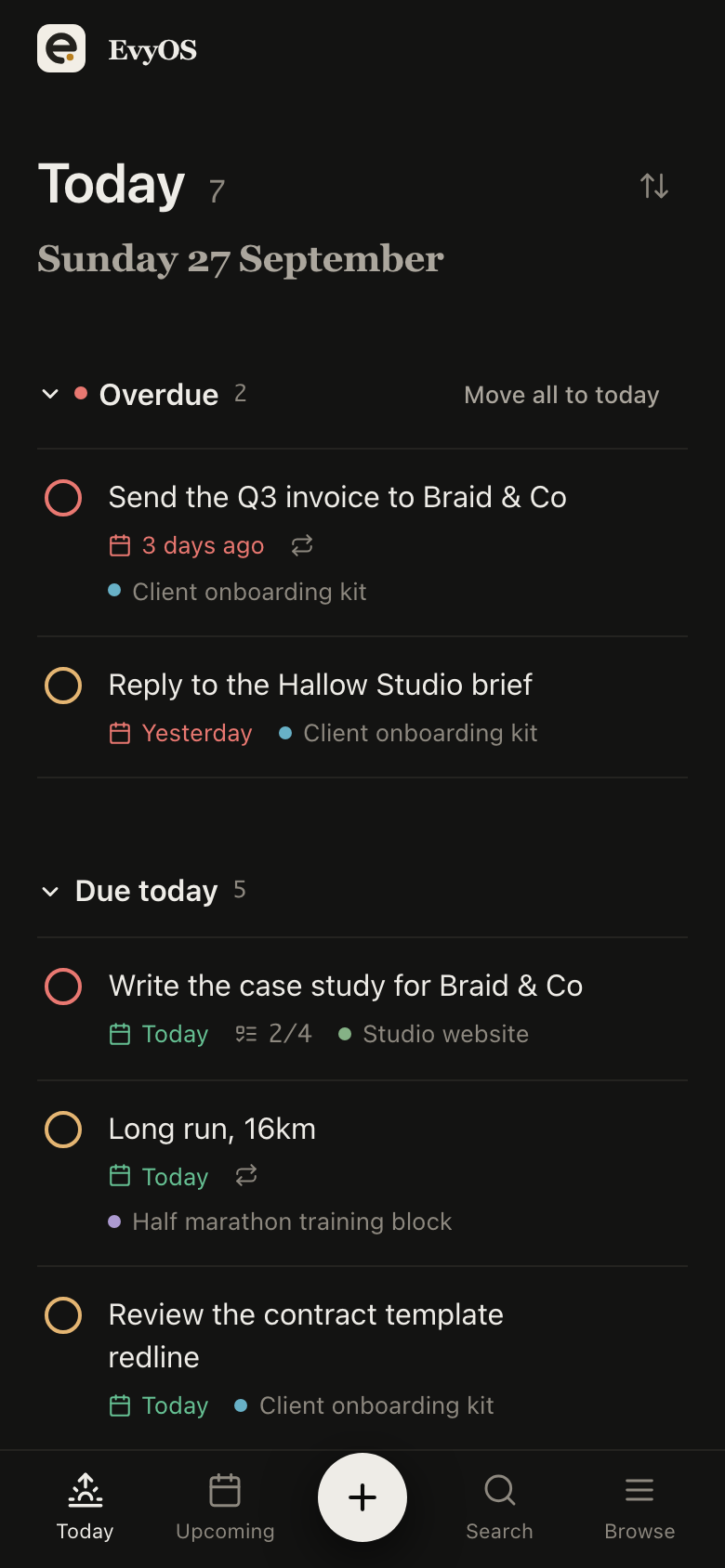
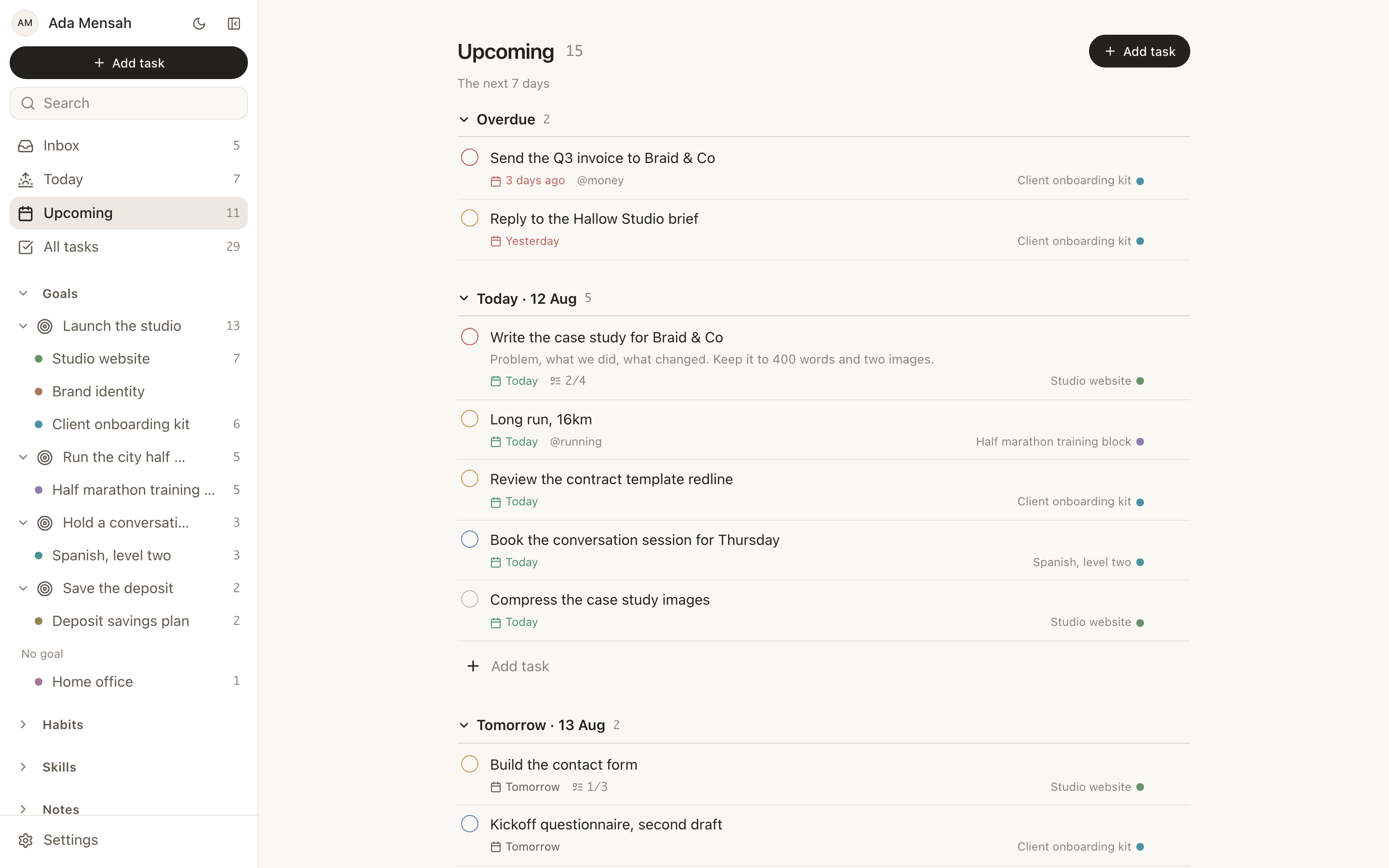
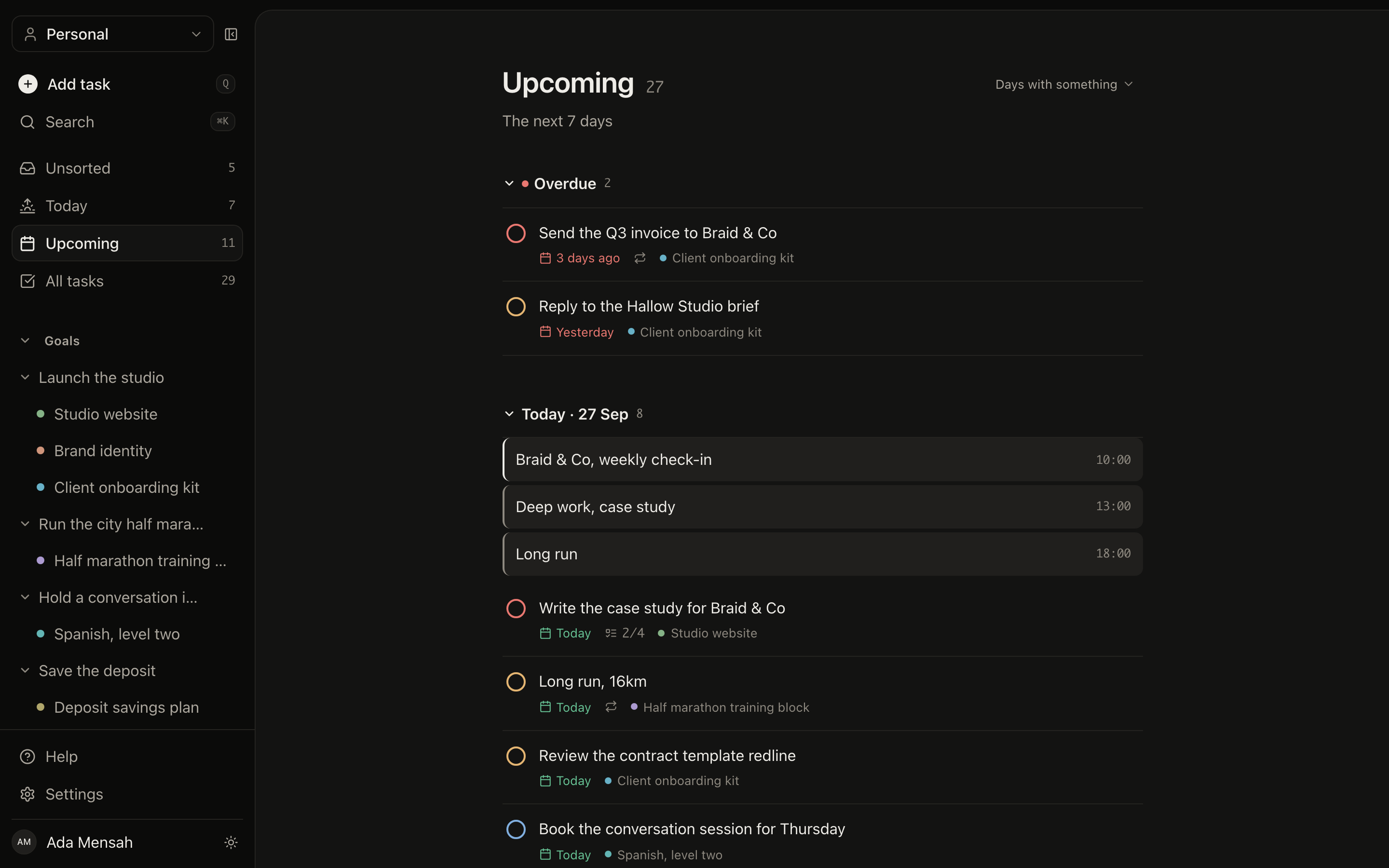
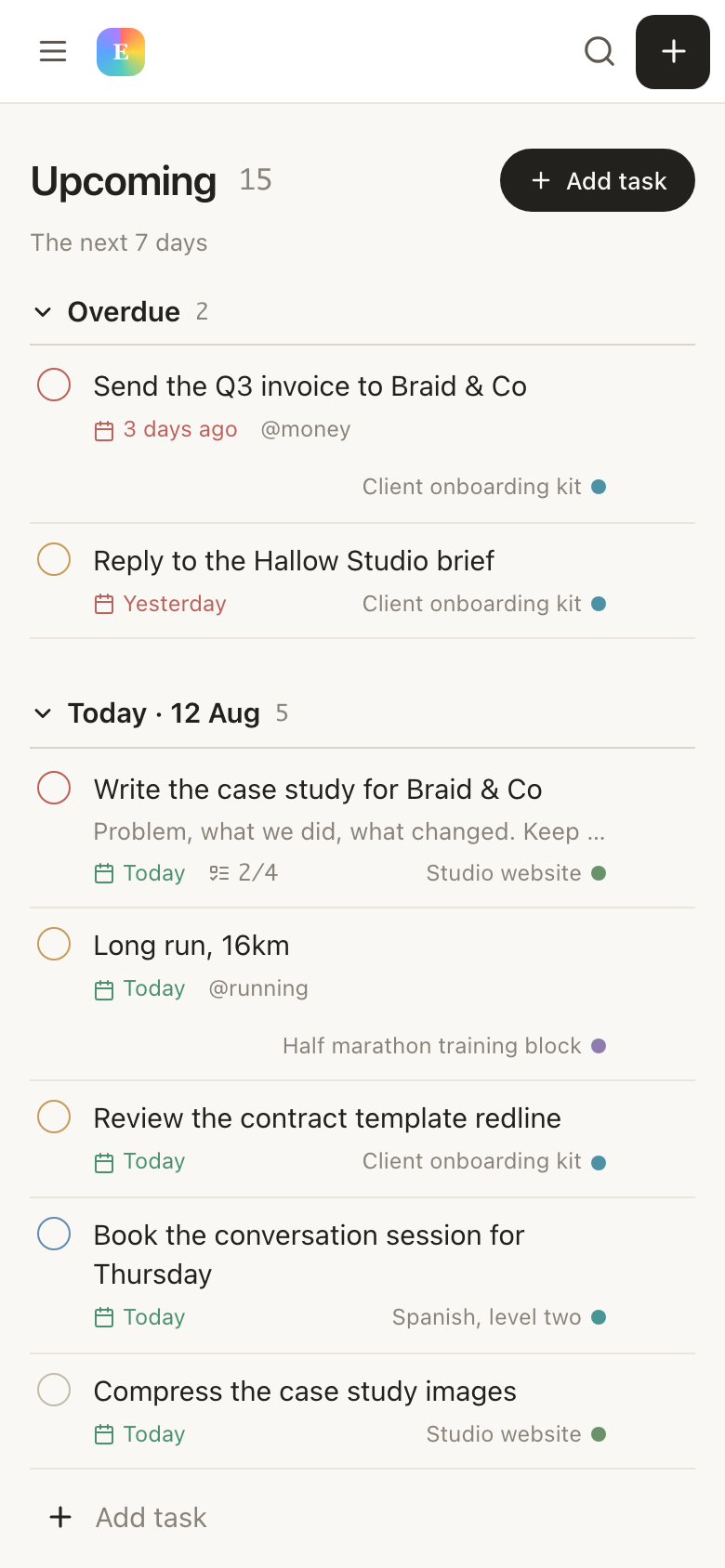
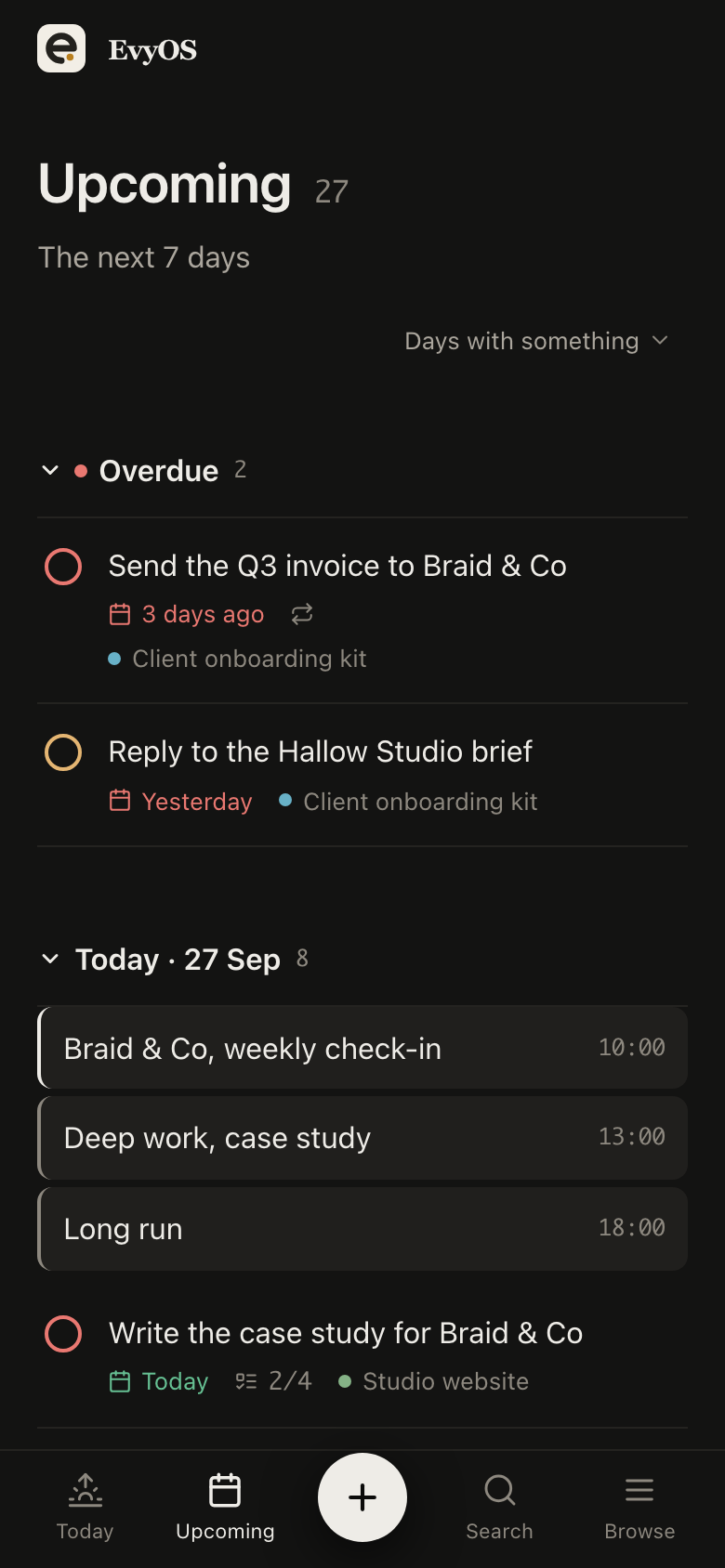
Break the build into tasks with subtasks and estimated minutes, and write the boring finishing work down while you still care about the project. Today shows the one thing to do this evening. Anything you capture without a project lands in the unsorted inbox, so an idea at midnight does not need a filing decision to be saved.
SubtasksMinute estimatesUnsorted inboxRecurring practice
03 - Habits
An hour a night, recorded as an hour a night.
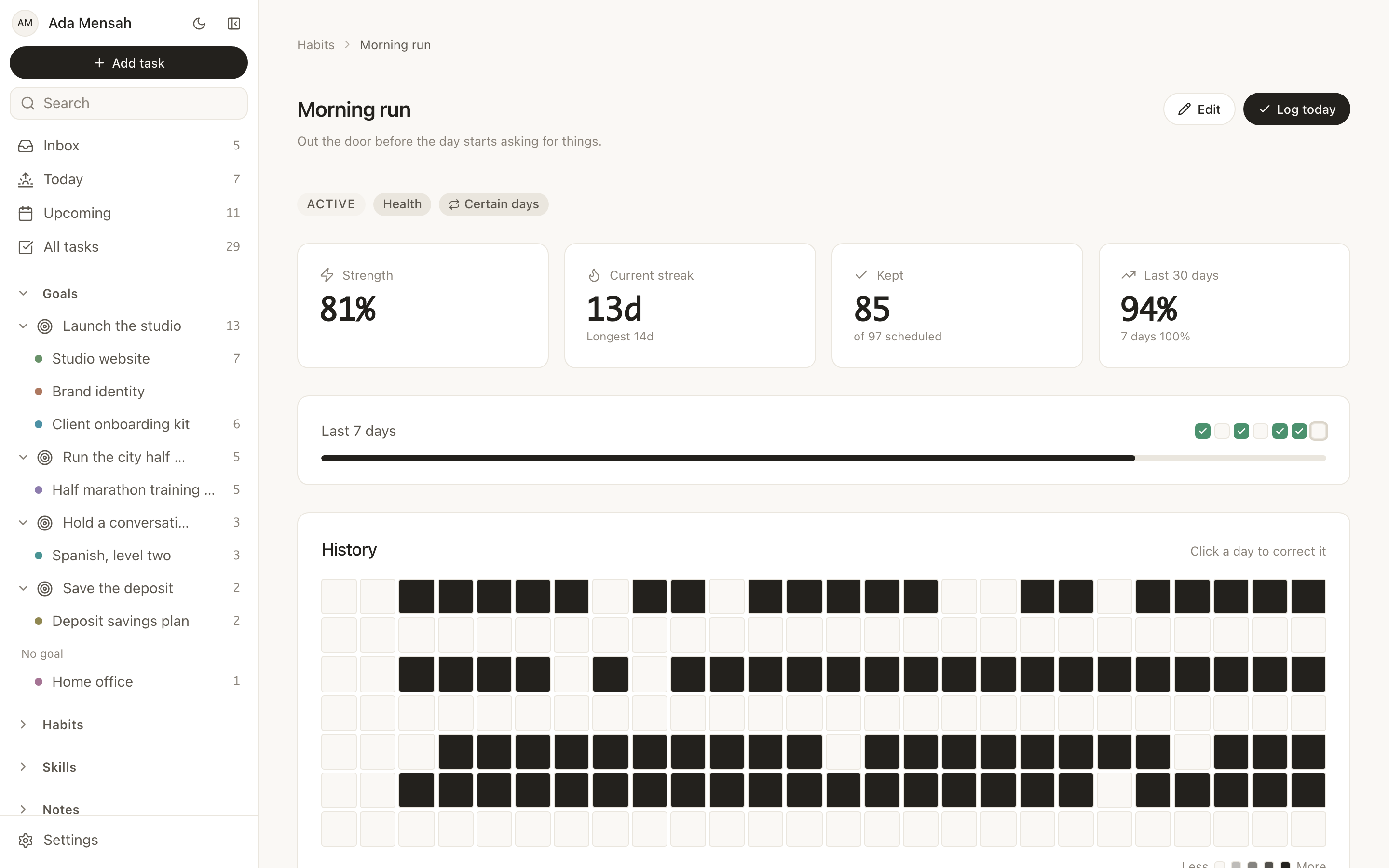
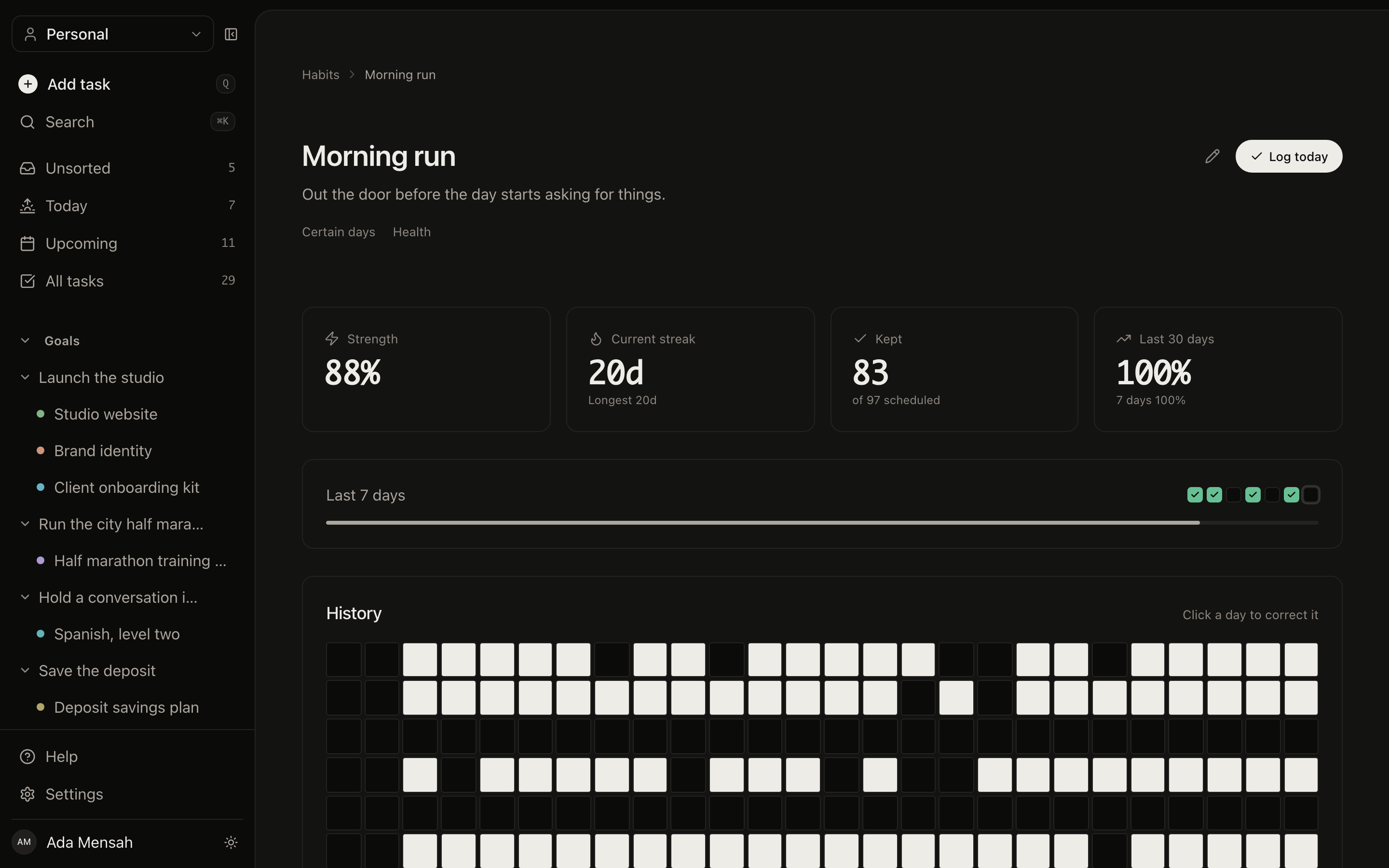
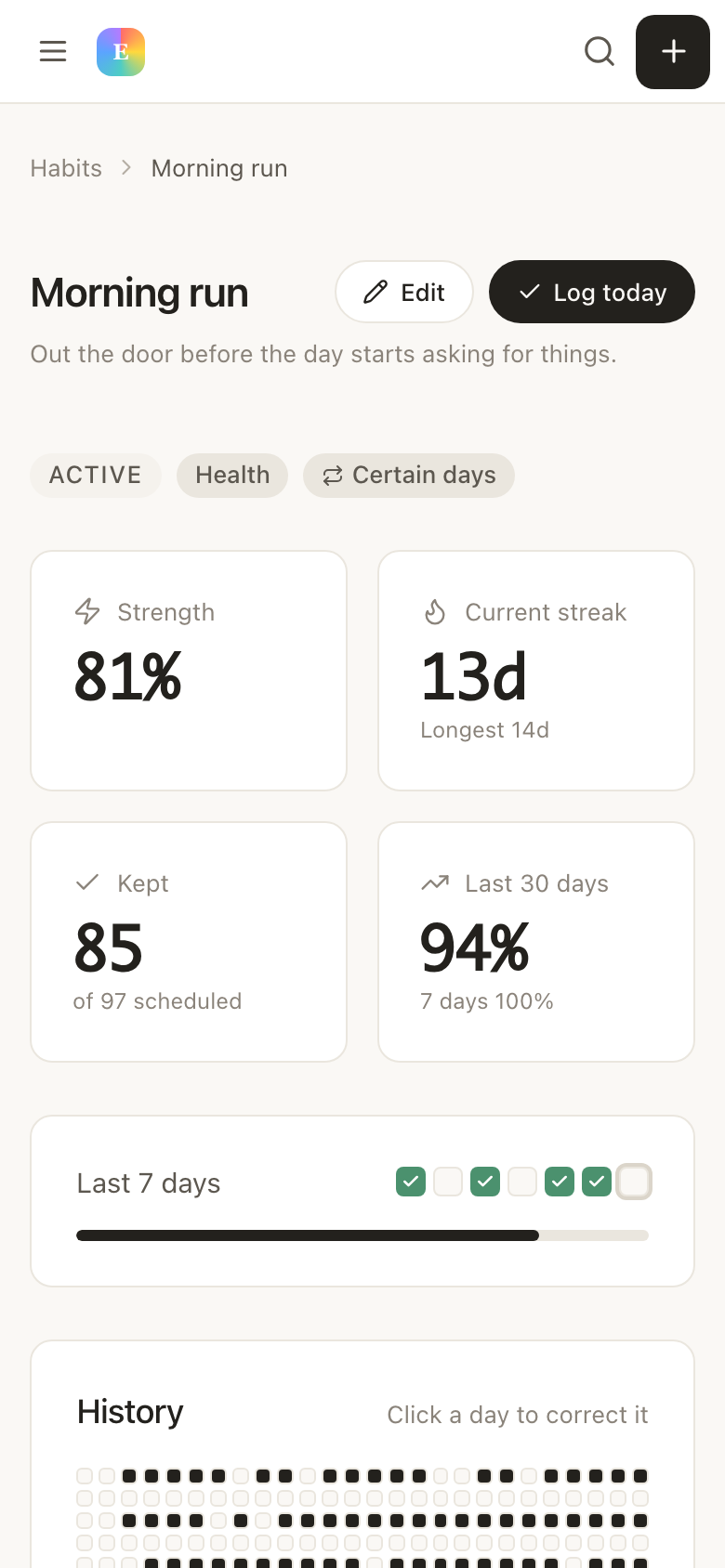
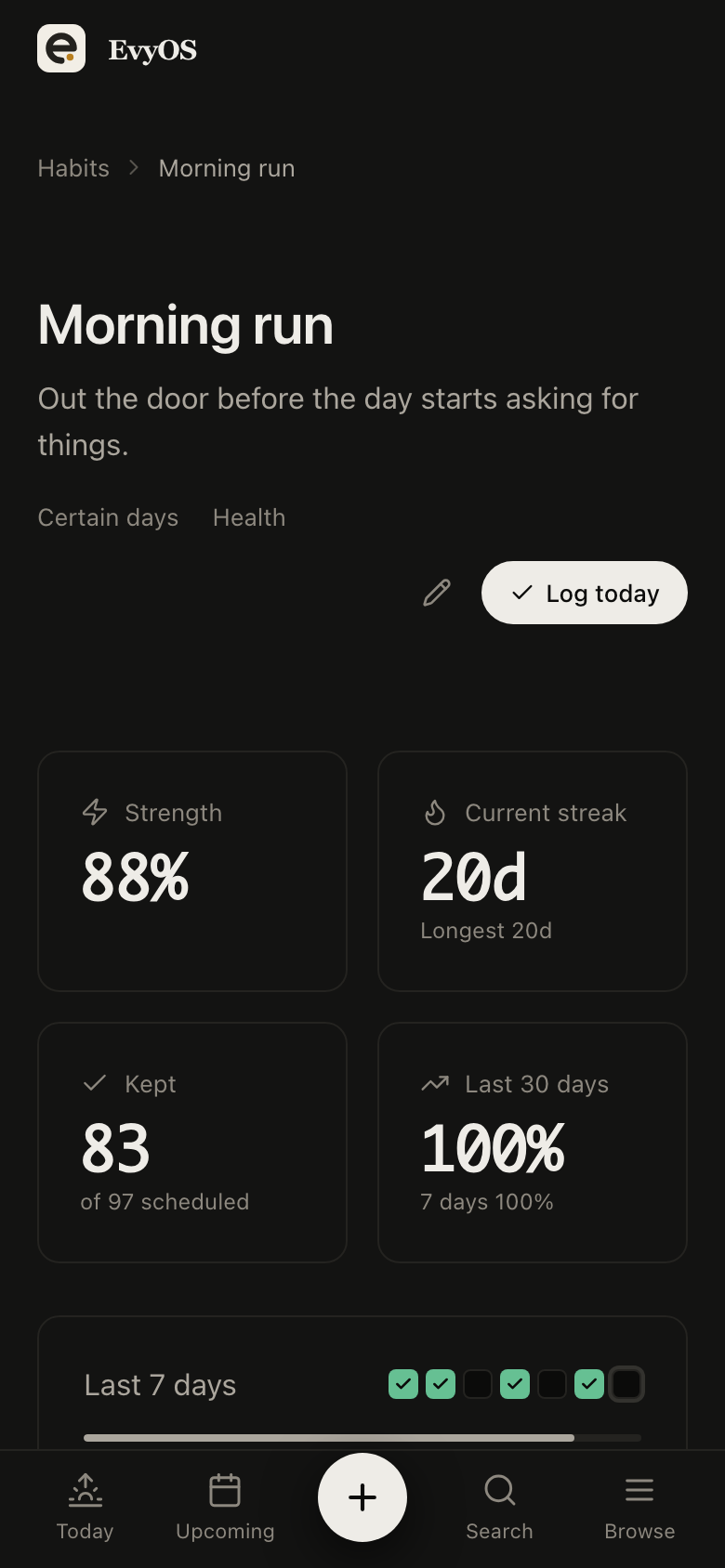
One habit — write code, rather than read about code — on the days you can genuinely hold. The strength score weighs consistency and recency together, so a strong month followed by a quiet fortnight reads honestly instead of flattering you. The year-long graph ends up being the picture of how you actually learned.
Hours per language, so you know what you have really done.
TypeScript, Postgres, testing, system design — each a skill with a level, a target level and logged sessions in minutes. Twelve weeks in, the split is usually a surprise: sixty hours of frontend and four of anything touching data. Keep the courses and books in that skill’s resource library, so the material sits with the hours it produced.
Hours per languageLevel and targetPractice logResource library
✦ Getting started
Up and running in under 5 minutes.
1
Stop letting the roadmap be the plan
Pick one build that has to be finished and one skill you are genuinely trying to raise. Put a deadline on the project, a target level on the skill, and set the nightly habit on real days.
2
Log what you actually did
After each session, log the minutes against the skill and tick the habit. Two minutes of admin a day is the whole price of making the next three months legible instead of a blur.
3
Read the evidence, then choose
The hours show where the time really went, the graph shows the weeks you held, and the finished projects are the thing you send to people. Learning stops being a feeling and becomes a record.
✦ Pricing
Simple. No surprises.
Start free. Upgrade when you're ready to go deeper.
By measuring output instead of input. Put one project on a deadline with milestones that include deploying it, and log practice sessions in minutes against the skill you are building. Once you can see a month with eighteen hours of watching and two of writing code, the fix stops being a mystery. The tracking does not make you build — it removes the ambiguity that let you avoid it.
There is no honest single number, and the ones people quote ignore how the hours were spent. What is knowable is your own ratio: how many hours went into building versus consuming, and how they split across languages and topics. Logging sessions for three months gives you a real answer about your own pace, which is more useful than an average from someone else’s path.
No. There is no editor or IDE integration and no commit history import — sessions are logged by you, in a few seconds, after you finish. The one connection that exists is the MCP connector, on any plan, which lets ChatGPT or Claude create tasks, close them and log practice against a skill in your account.
Set the habit on specific days rather than every day, so a Wednesday you were never going to code does not break anything. Keep estimated minutes on tasks so you can pick something that fits a tired evening, and let Today show you one thing rather than the whole backlog. The strength score, which accounts for recency as well as streak length, is a fairer read on a working adult’s month than a raw streak count.