Built for independent podcastersNobody quits a podcast on purpose.They miss one week, then three.
Every episode is a project carrying the same production checklist, the release rhythm is a habit with a streak, and the guests you are chasing are tasks with dates — so a bad fortnight does not quietly become the end of the show.
Free for as long as you like, no card required. Pro is $15 a month.
Goals
Projects
Tasks
Habits
Skills
Notes
Calendar
✦ The problem
The show is fifteen jobs wearing one name.
Book the guest. Send the brief. Confirm the time. Record. Back up the files. Edit. Write the notes. Cut the clips. Schedule the post. Tell the guest it is live. It is the same list every episode and you rebuild it from memory each time, which is why episode 9 somehow takes twice as long as episode 2.
🎙
The production checklist lives in your head
You know the eleven steps. You do not reliably remember step 7 at eleven at night, and the one you forget is the one that pushes publishing back a day.
📆
Guest booking has no dates attached to it
An invitation sent three weeks ago and never followed up is the most common reason a week has no episode. Nothing is chasing it, so nothing gets chased.
📉
A missed week never feels like a decision
It feels like a busy fortnight. Then the gap is a month, the audience has drifted, and restarting costs more attention than the episode ever would have.
🎚
Editing expands into whatever is left
Nobody plans 4 hours for a 2 hour edit, so the edit takes the evening before release and the show notes get written in a hurry that listeners can hear.
📋
Task manager
For daily to-dos
$4/mo
📁
Project tracker
For goals and timelines
$8/mo
🔄
Habit tracker
For daily rituals
$5/mo
⚡
Learning journal
For skill tracking
$6/mo
+
Monthly total
4 apps, no integration
$23/mo
vs $15 with EvyOS
✦ Four pillars, one system
Everything you're building. In one place.
01 - Projects
One episode, one project, the same shape every time.
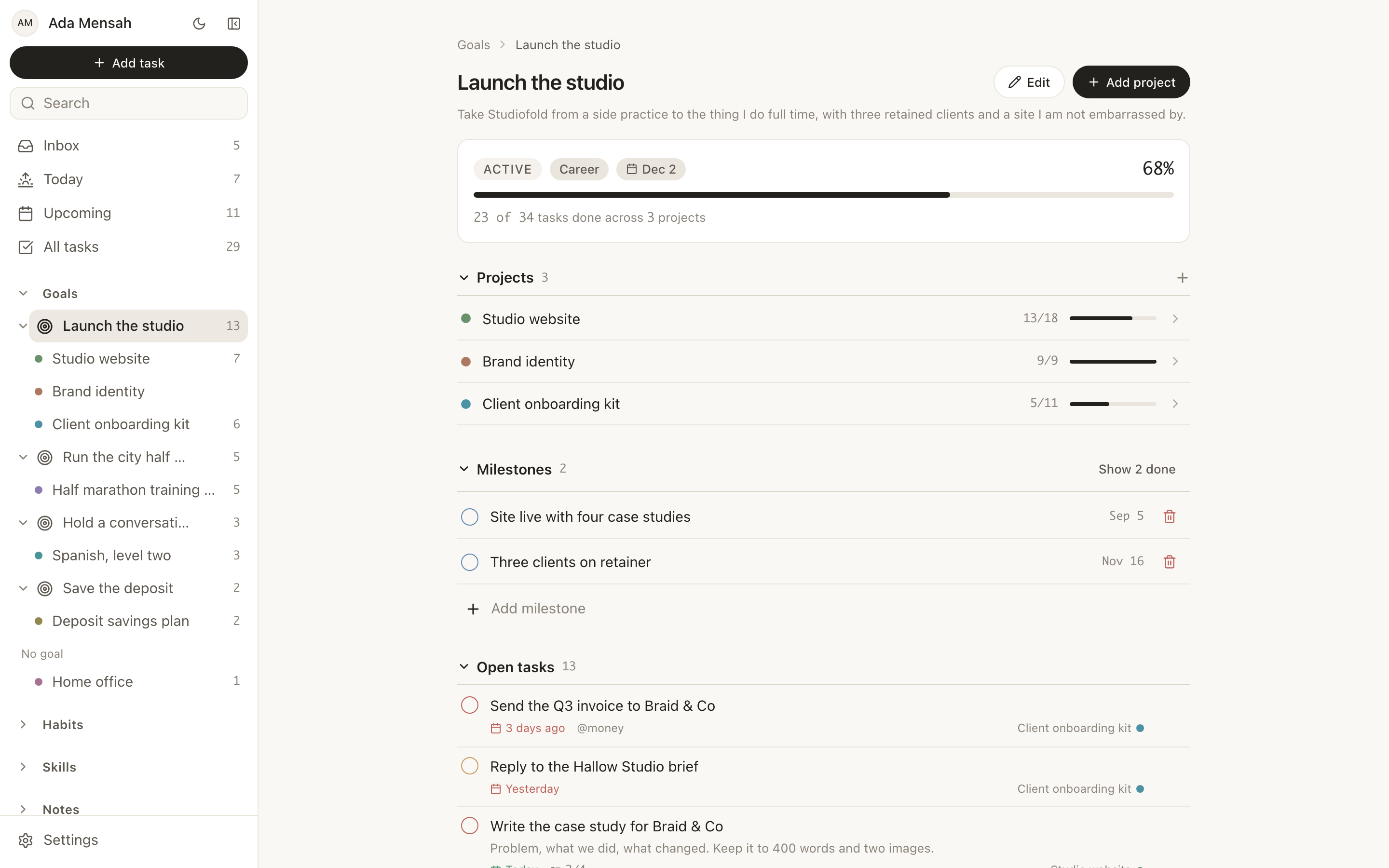
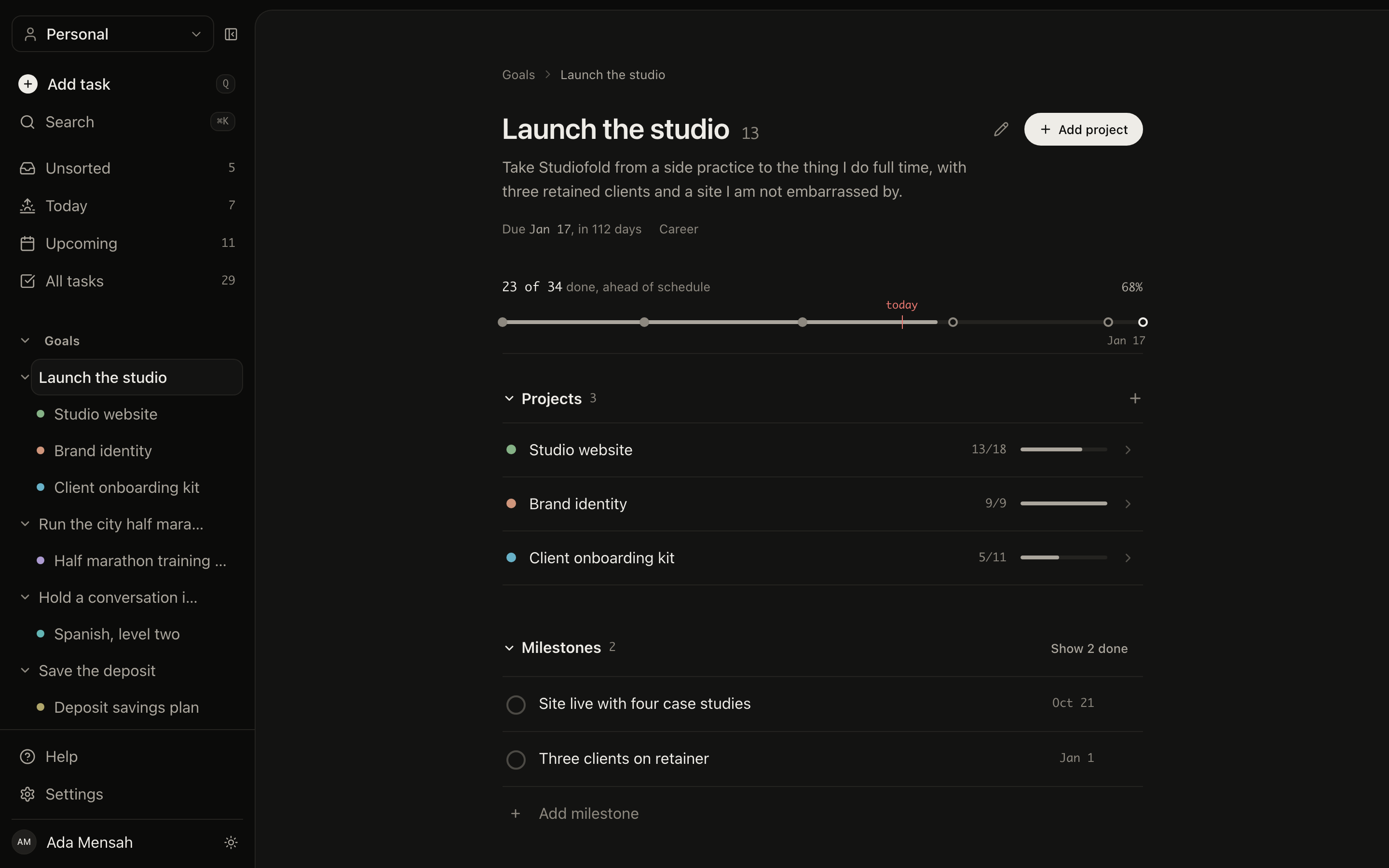
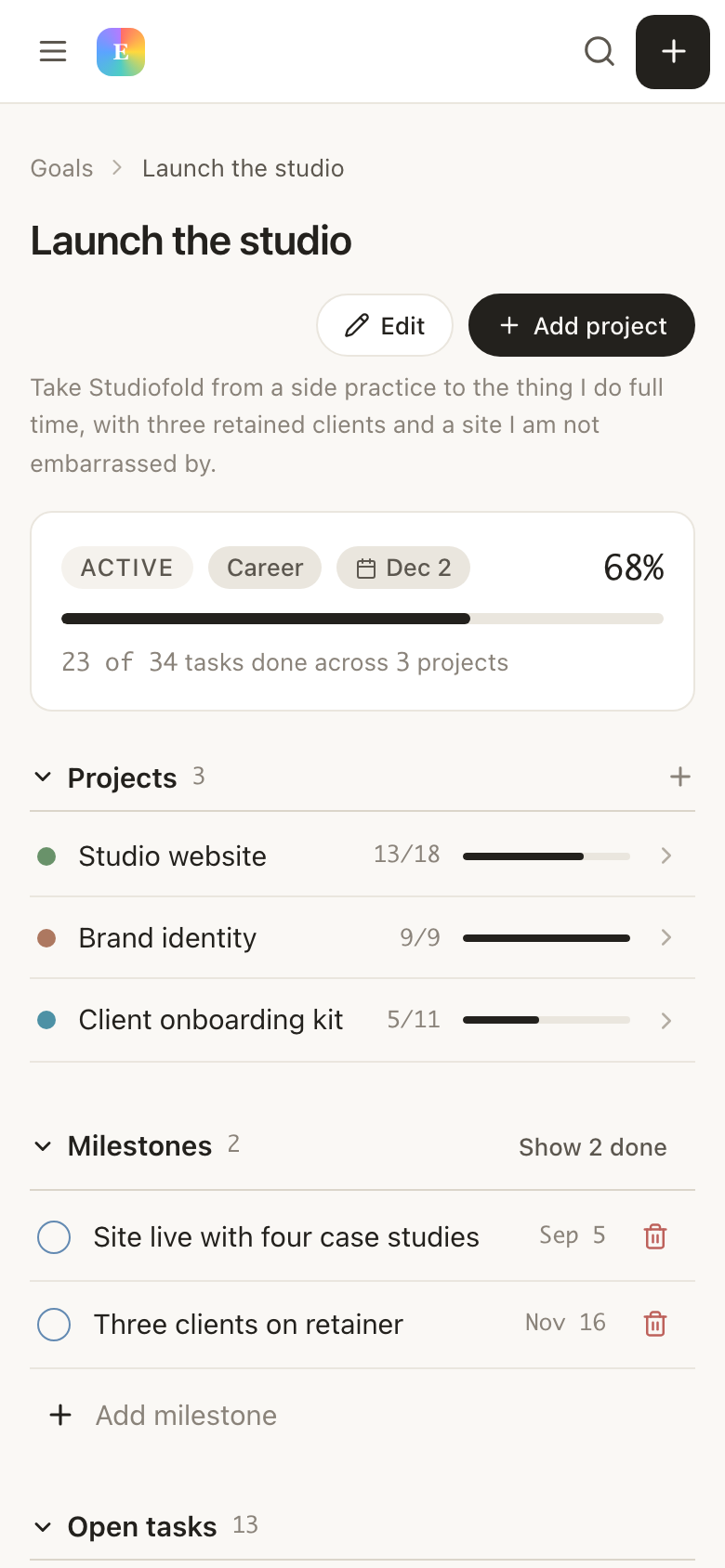
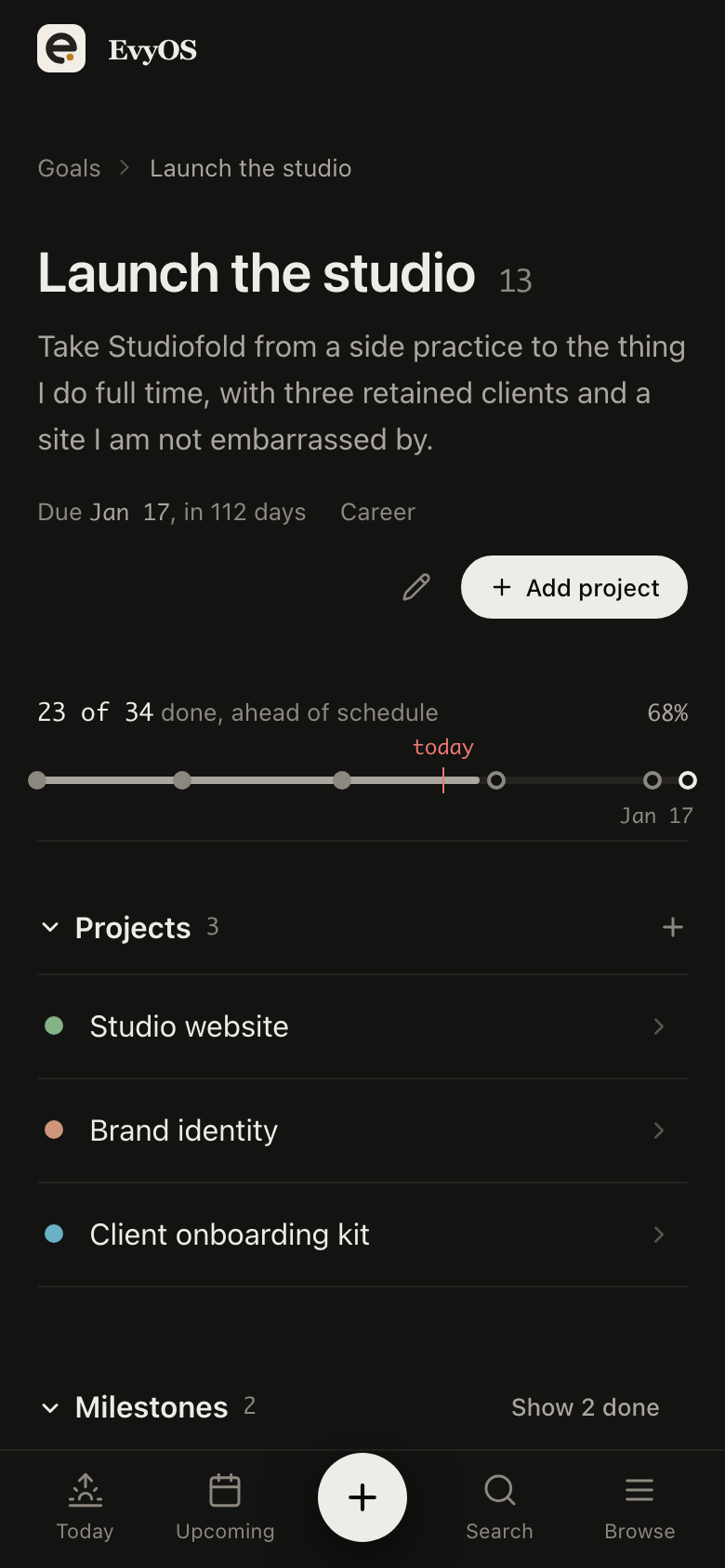
An episode is a project with milestones for booked, recorded, edited and published, and a release date that does not move on its own. The season sits above it as a goal, so you can see how many episodes are genuinely in the pipe rather than how many you feel are coming.
One project per episodeProduction milestonesSeason goalsRelease dates
02 - Tasks
The eleven steps, dated and out of your head.
Send the brief, confirm the time, back up the audio, cut 3 clips, write the notes. Each a task with a due date, an estimate and subtasks where it needs them. In a shared workspace an editor or producer takes their half by assignment, and the notes on a step live on the task instead of in a chat you have to search.
Production checklistSubtasksAssigneesDue dates
03 - Habits
Ship on a rhythm, and be able to see the rhythm.
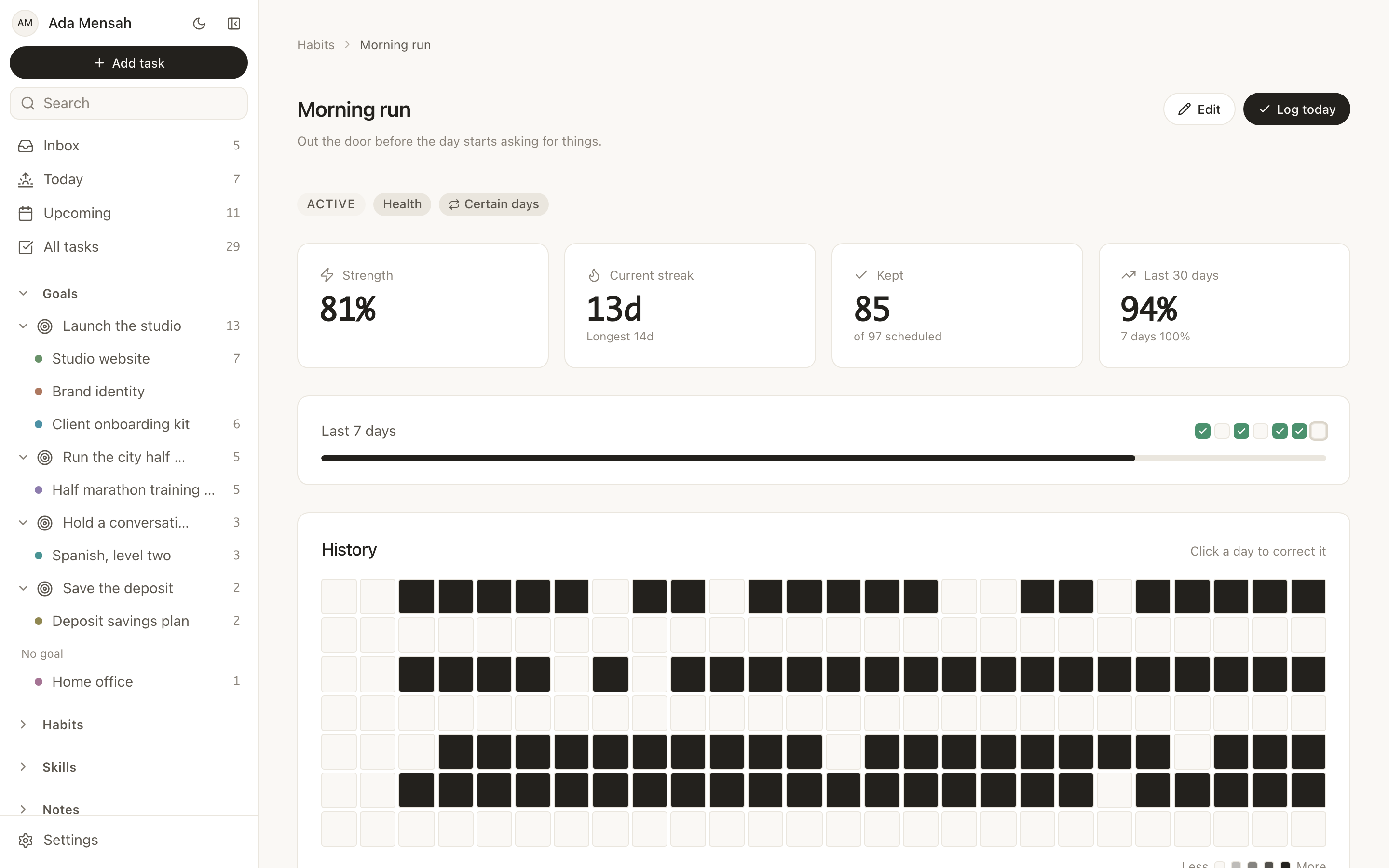
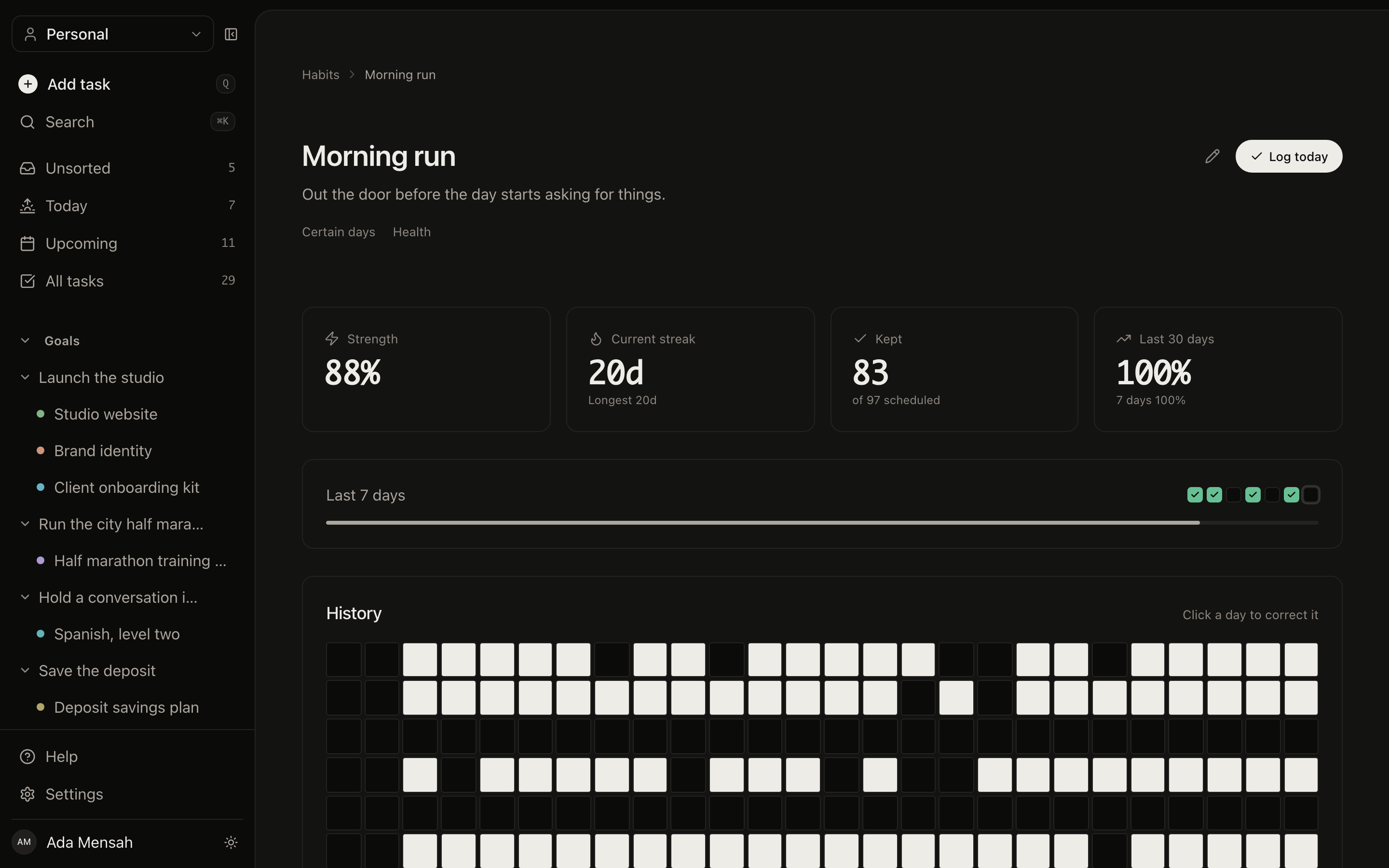
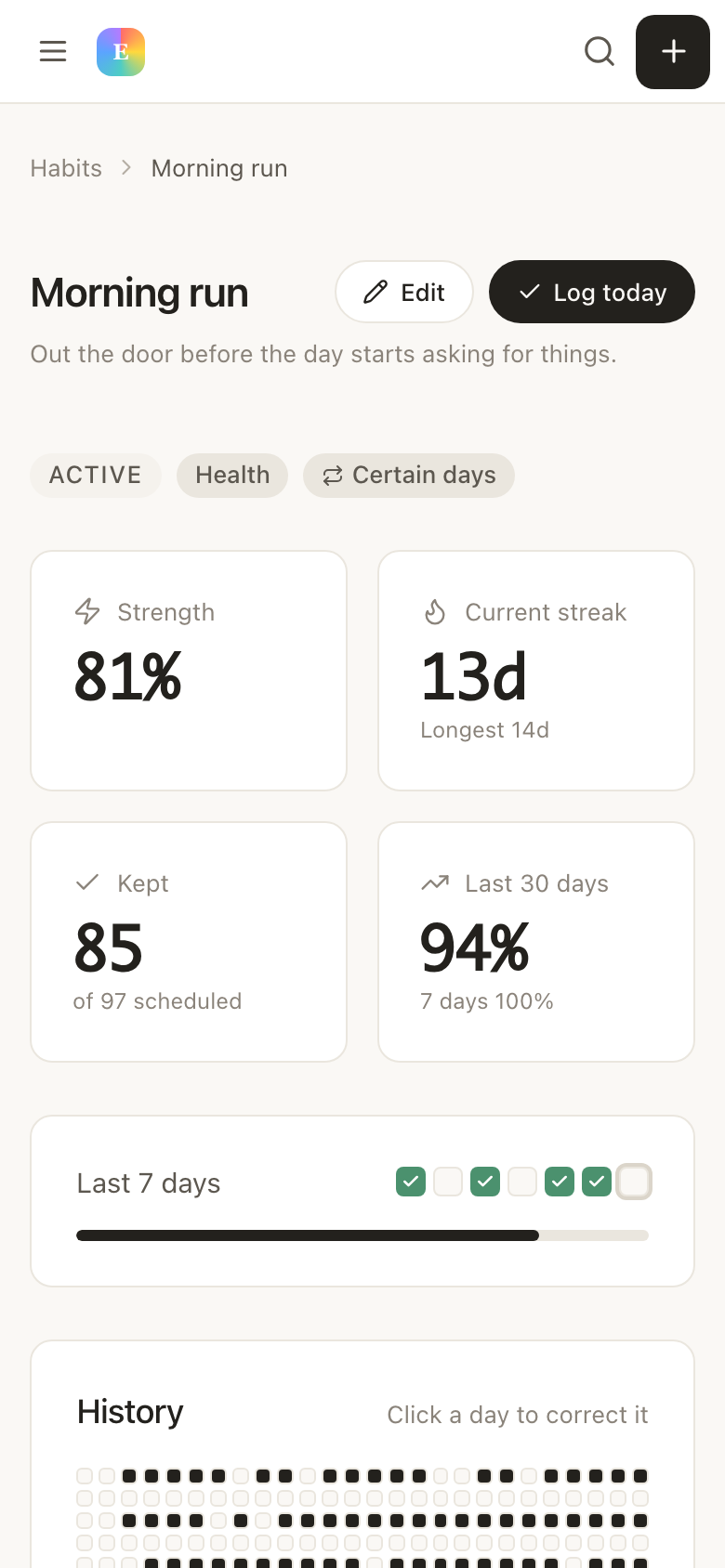
Publish every Tuesday. Record two on a Sunday. Batch the clips on a Friday. Each is a habit on the schedule you actually keep, with a streak and a year-long graph, so a drift shows up as one missed week rather than as a show you notice has been gone since March.
Weekly releaseBatch recordingStreaksYear graph
04 - Skills
Interviewing is a skill, not a personality.
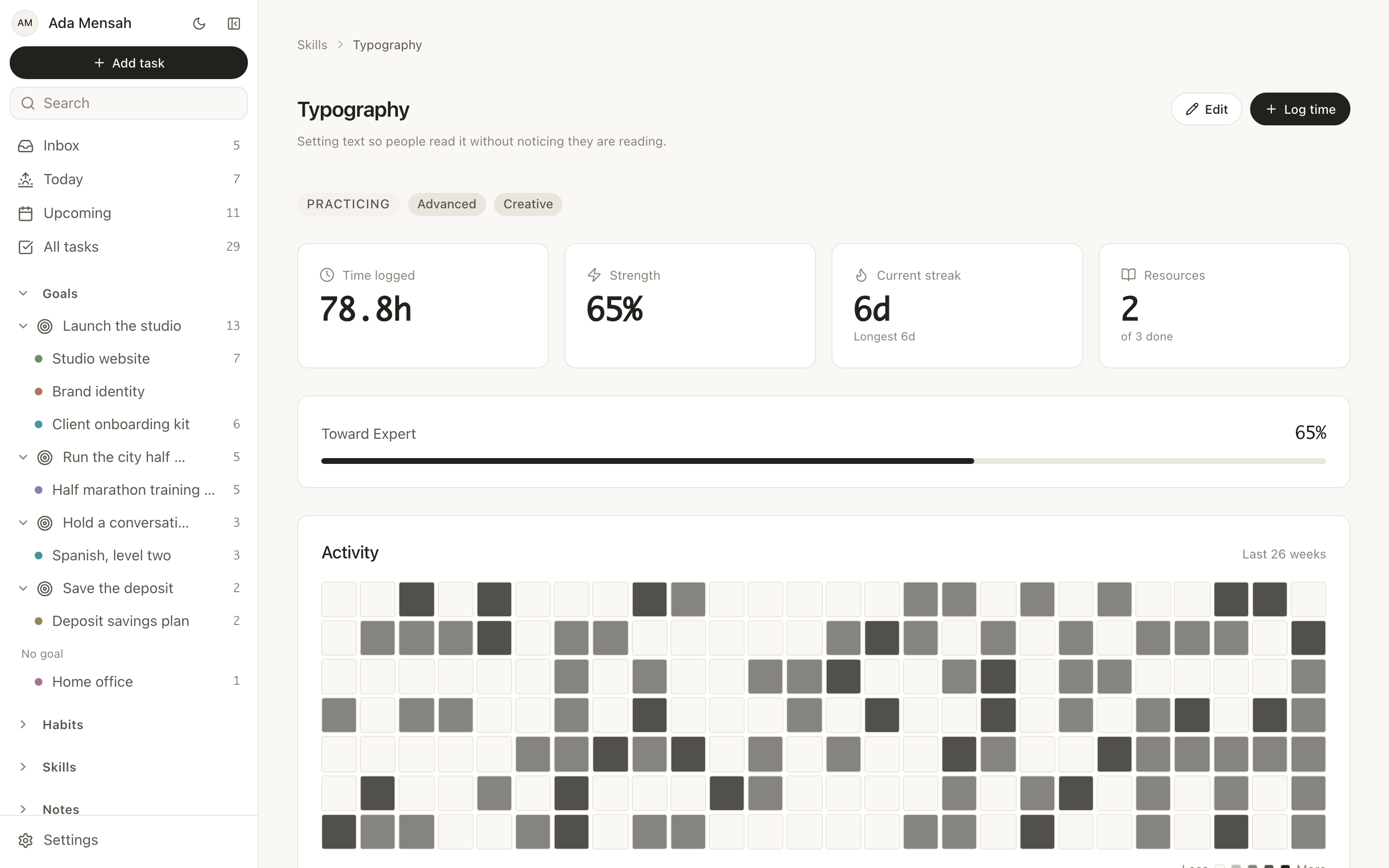
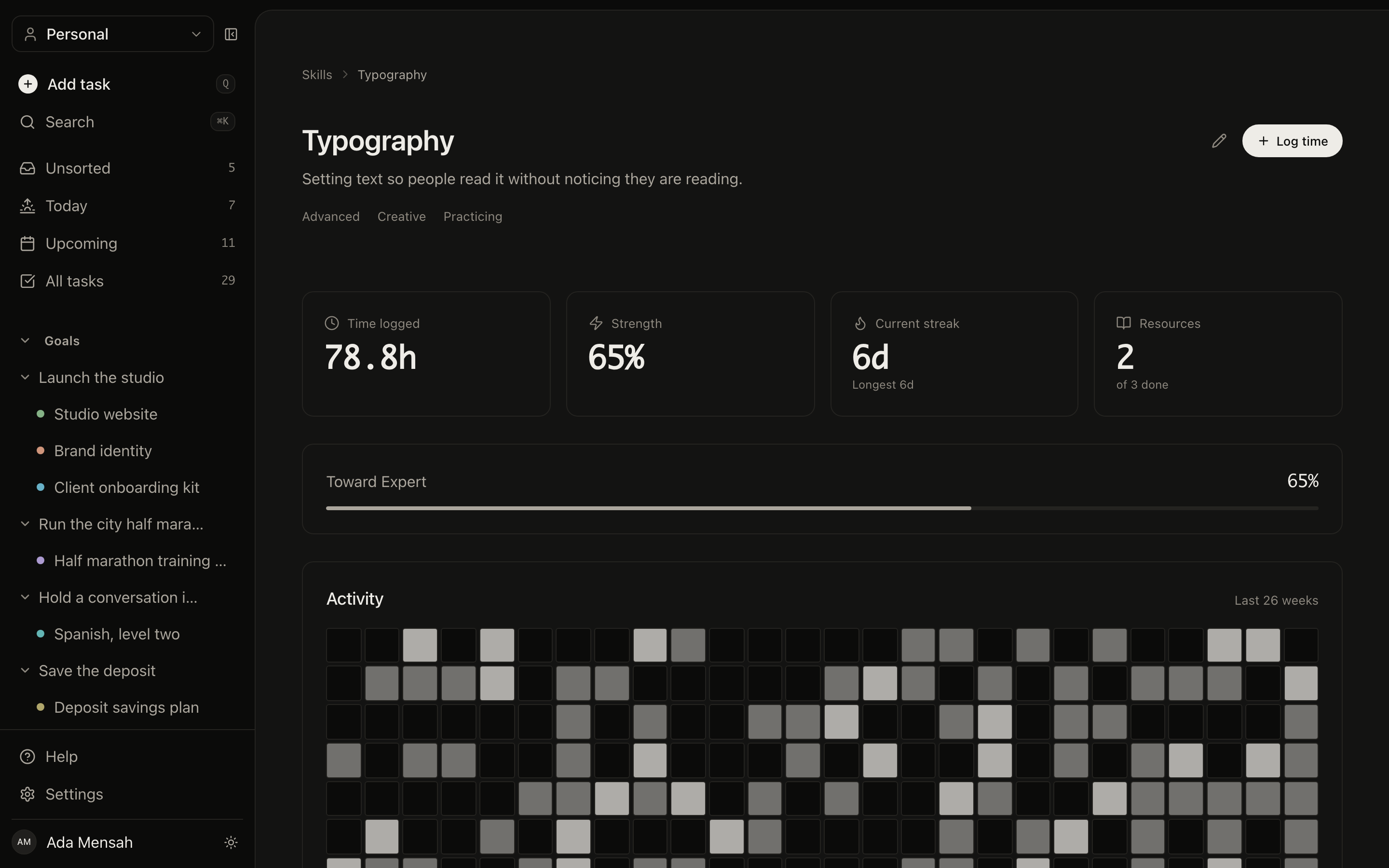
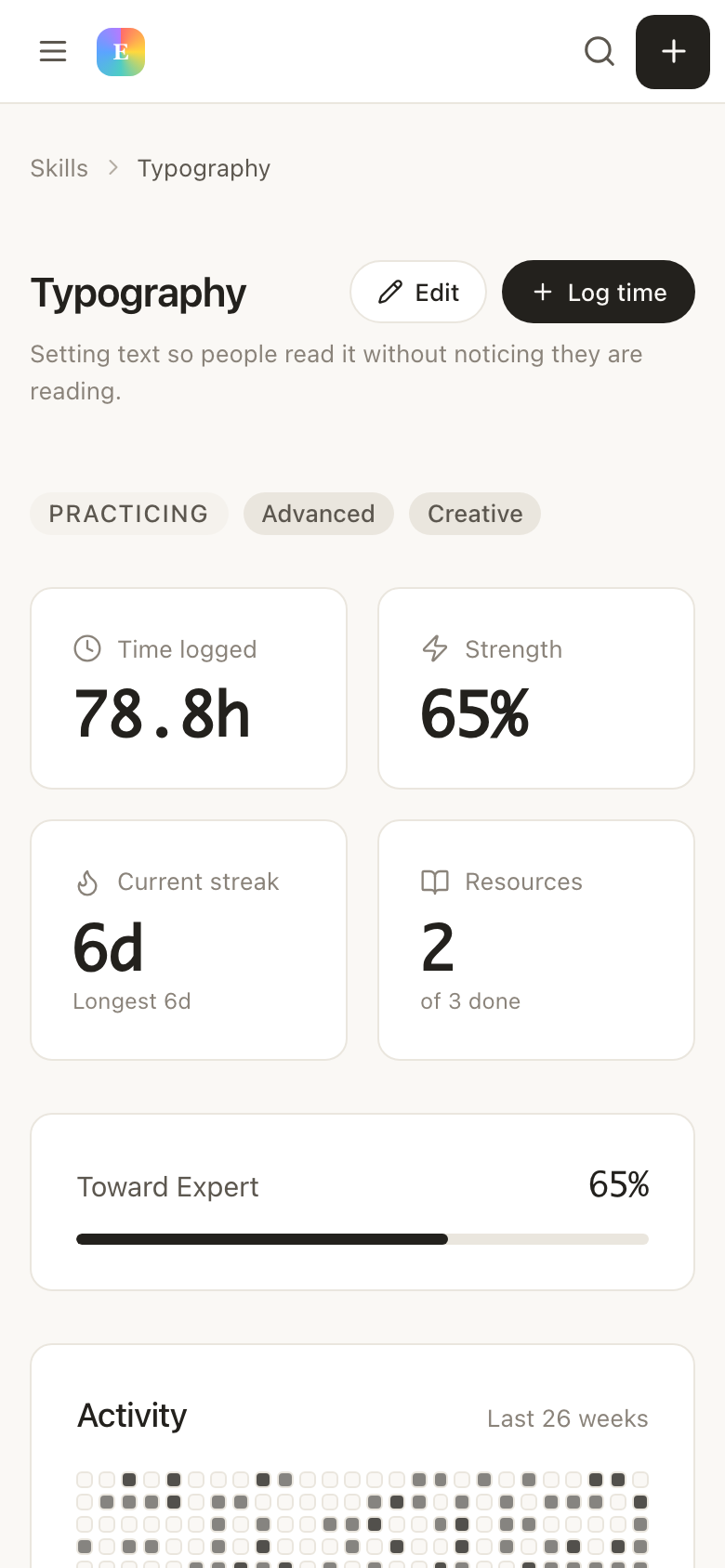
Log the time you put into interview technique, editing or audio repair with the minutes and the activity type, and keep the courses and reference episodes in the skill’s resource list. Fifty logged hours of editing is the reason episode 40 takes half as long as episode 4 did.
Interview practiceEditing hoursLogged sessionsResource list
✦ Getting started
Up and running in under 5 minutes.
1
Write the show down once
The season as a goal, an episode as a project, the production steps as tasks with due dates counted back from the release date. One evening, and you stop rebuilding it from memory.
2
Work one episode at a time
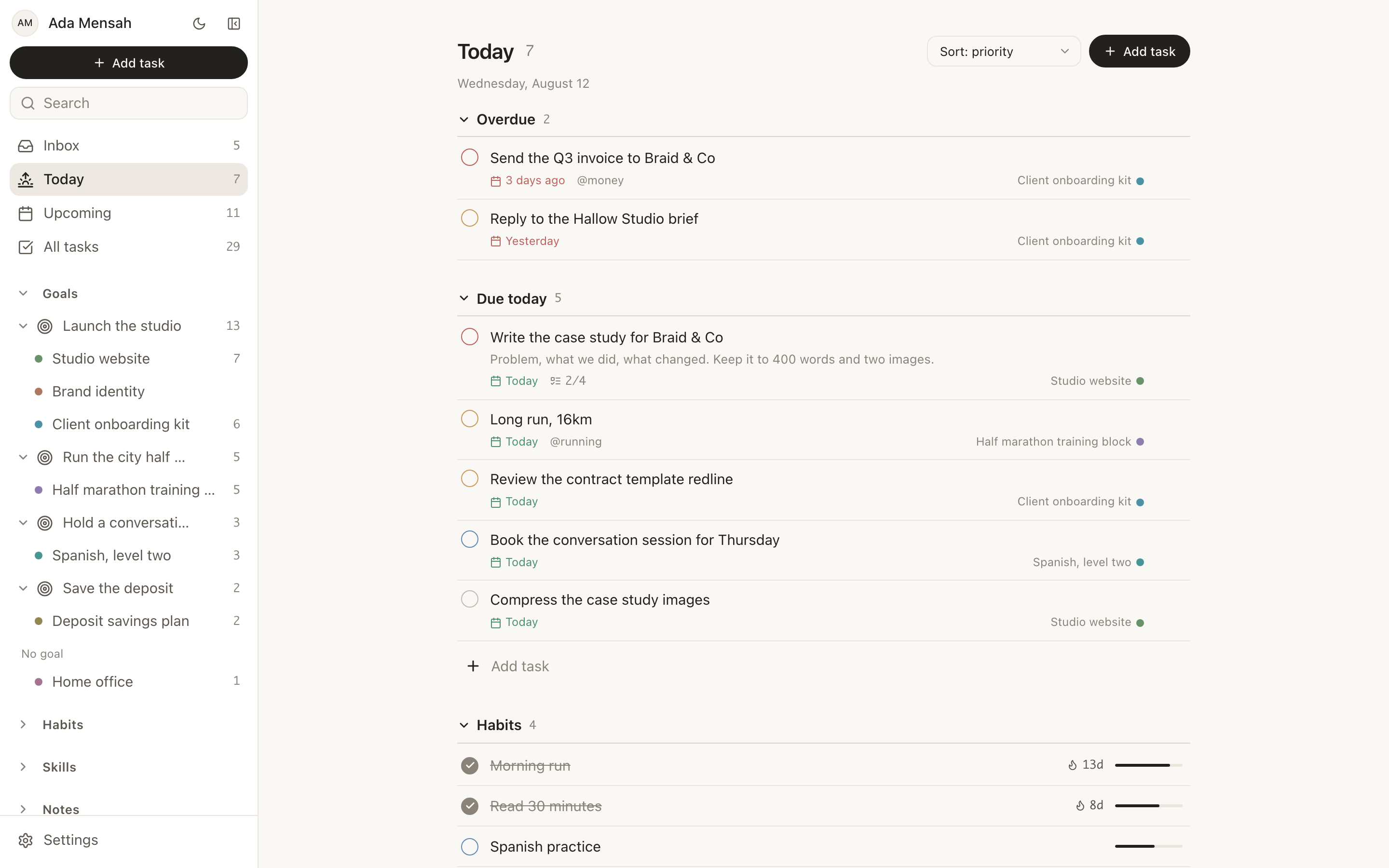
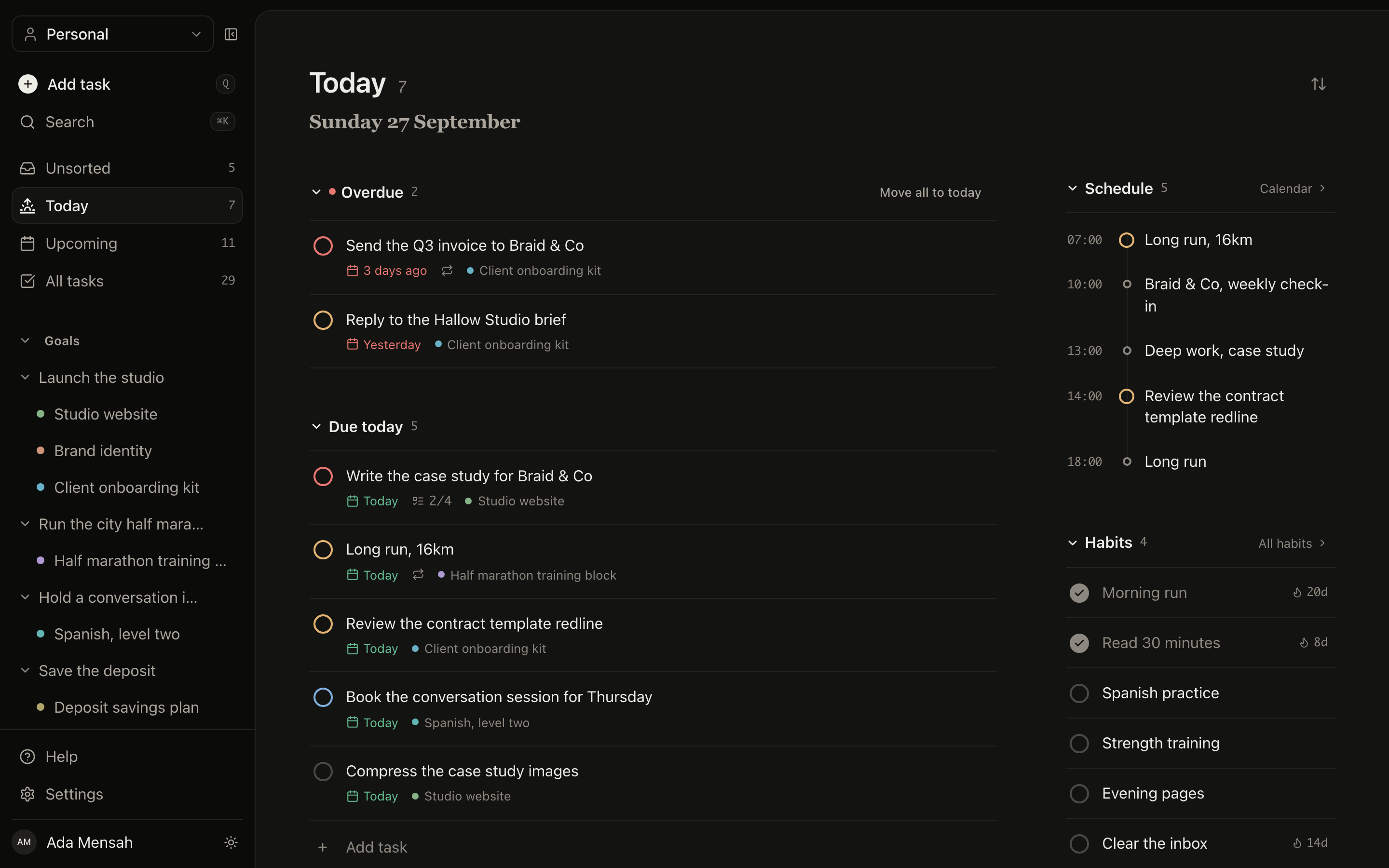
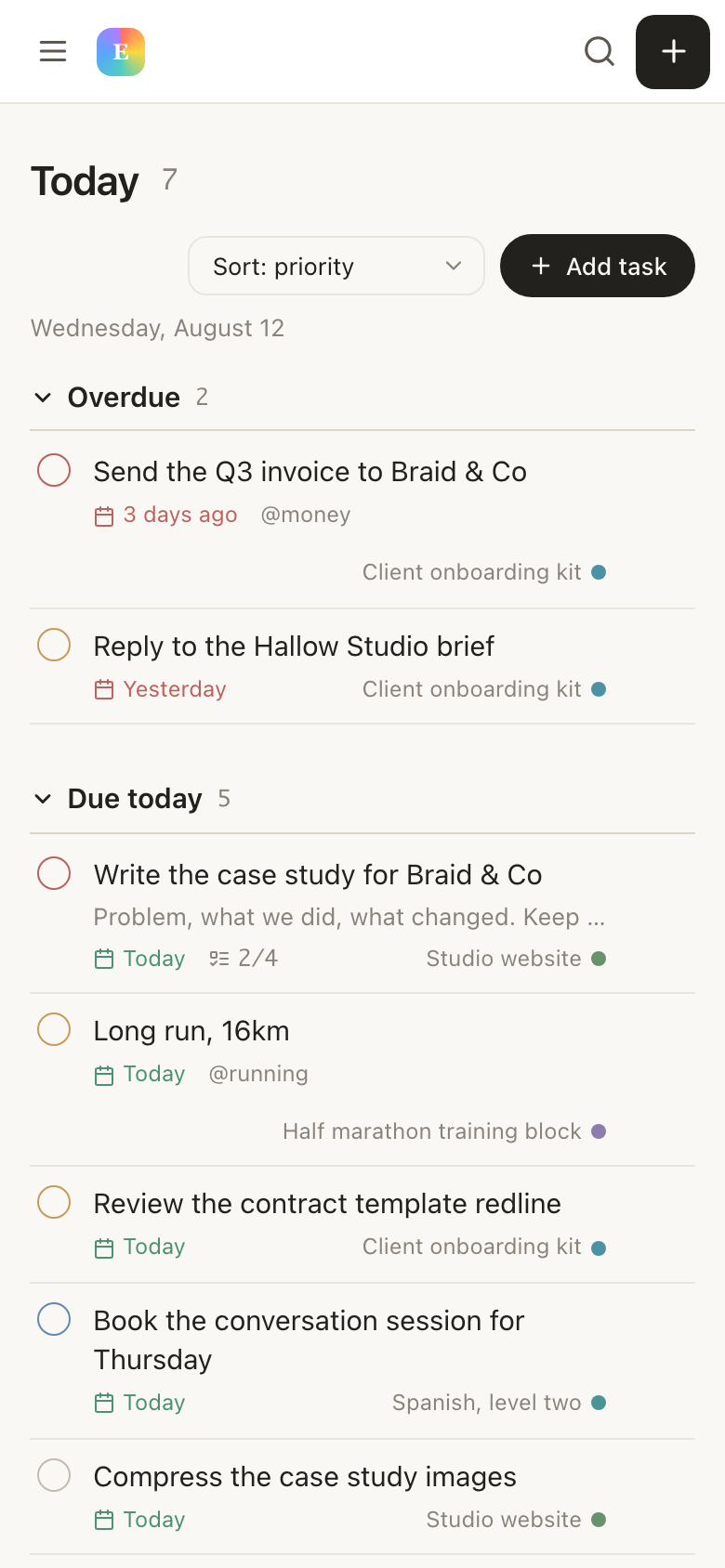
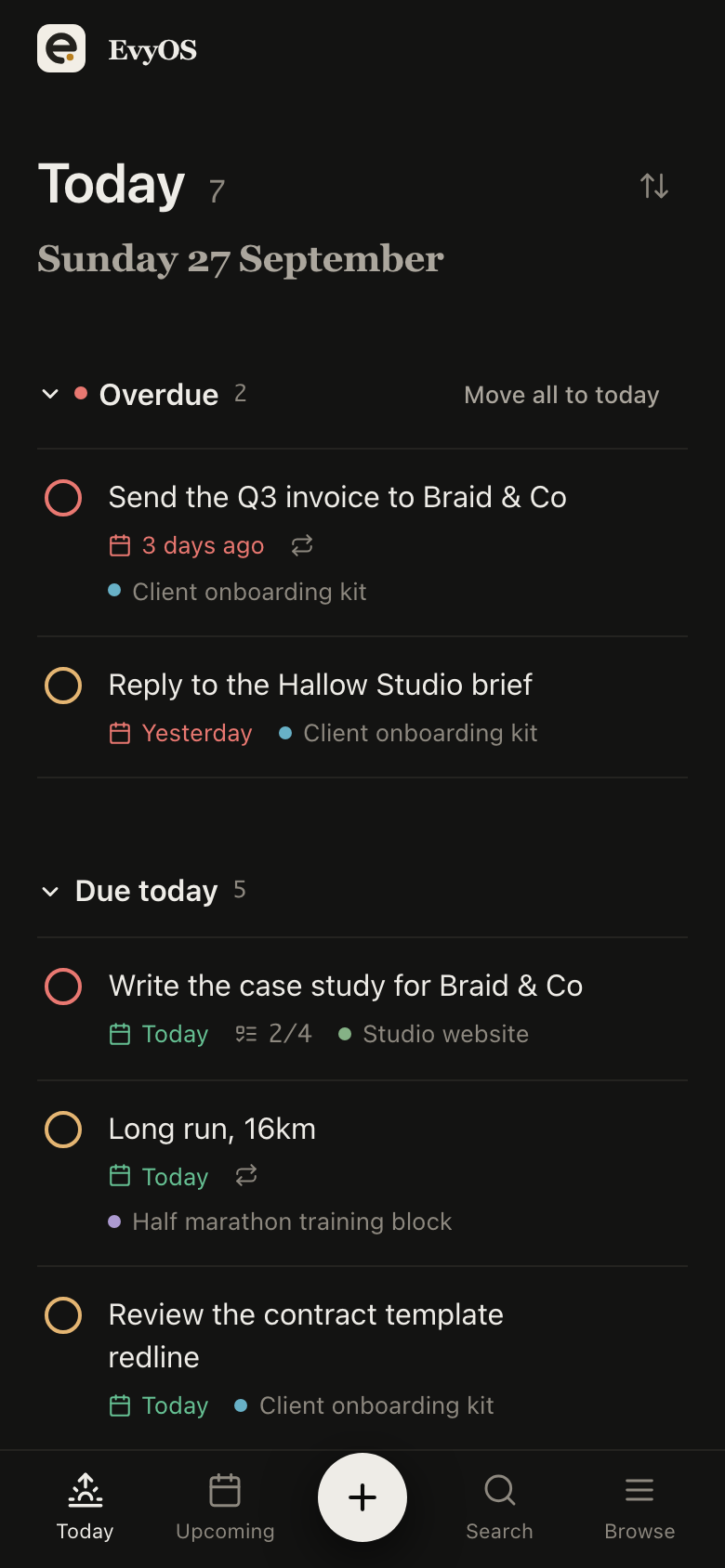
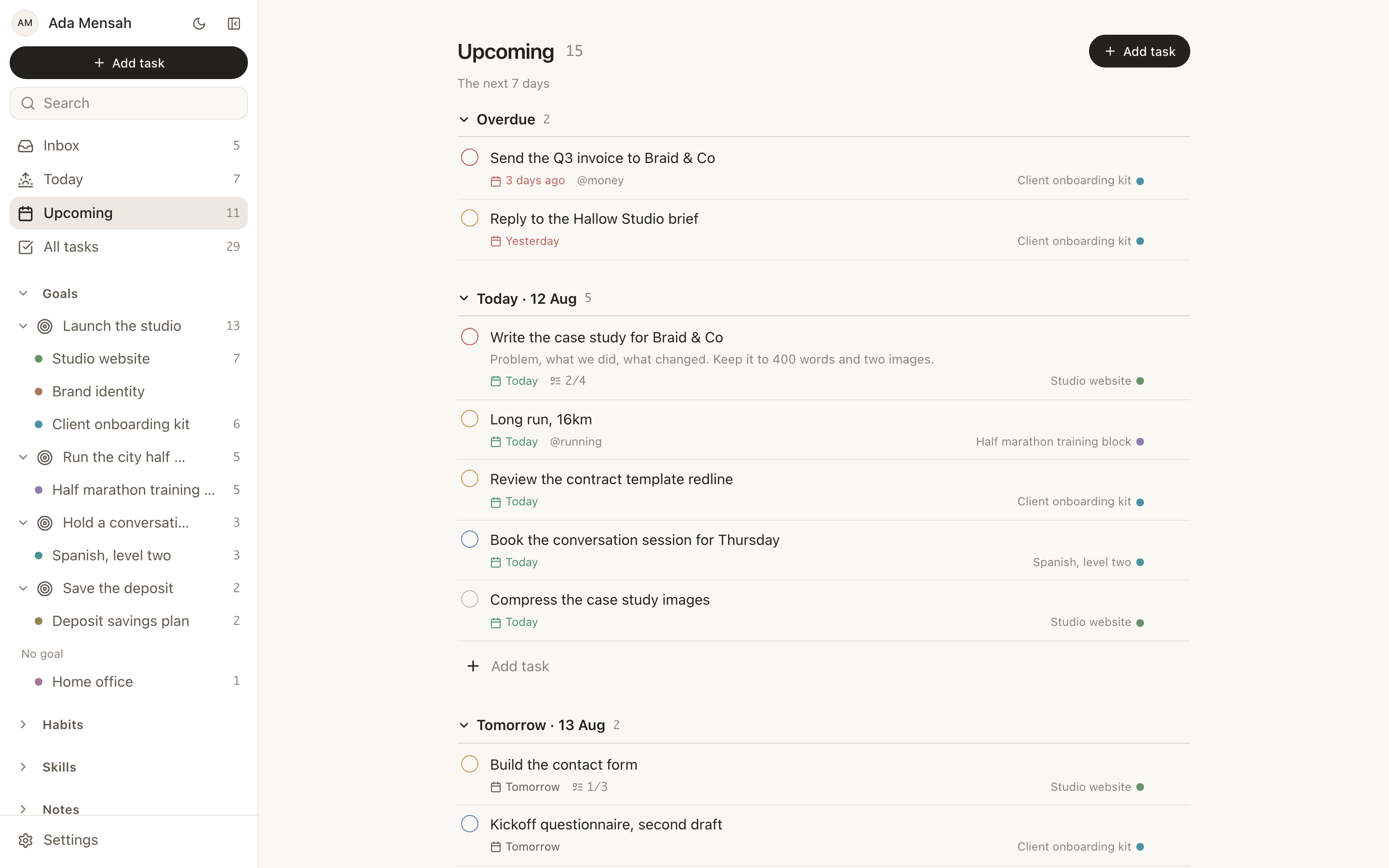
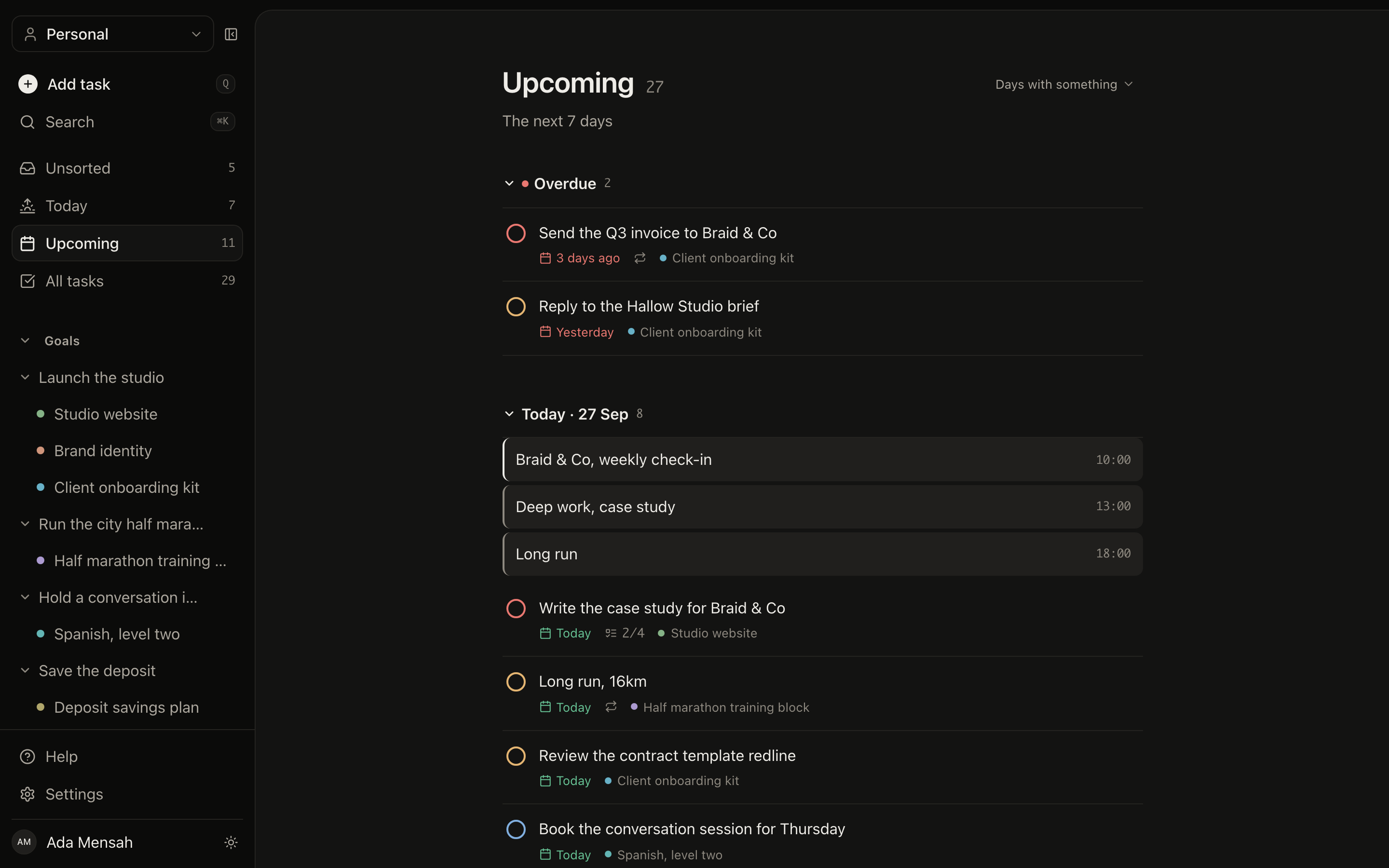
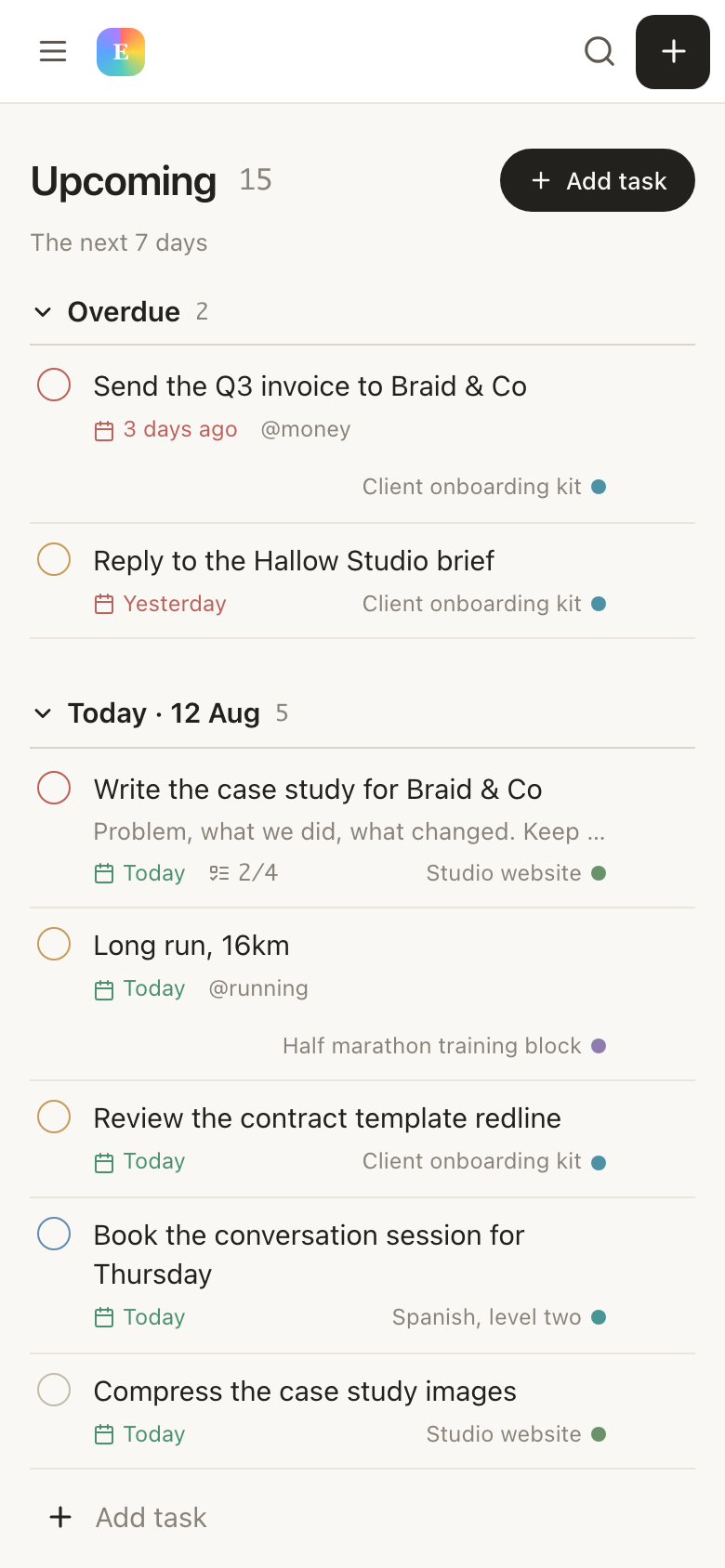
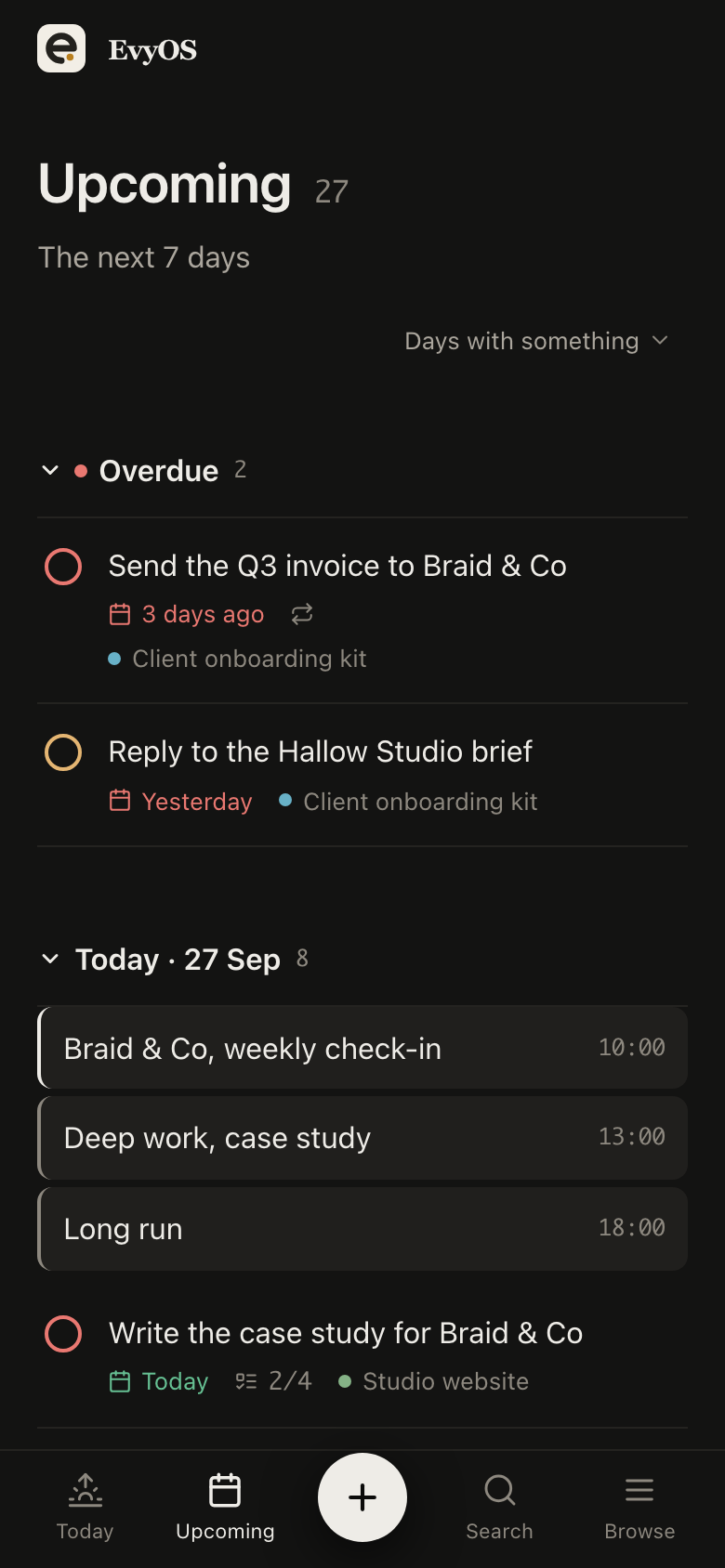
Today shows what this episode needs today — a brief to send, an edit to finish, clips to cut — with overdue steps split out at the top, so a slipped guest is visible on Tuesday rather than on Friday.
3
Keep the rhythm in view
The publishing habit keeps its own graph. A year in you can see the runs you held and what was going on around the weeks you did not, which is the only honest basis for planning the next season.
✦ Pricing
Simple. No surprises.
Start free. Upgrade when you're ready to go deeper.
Two things carry a show: a checklist that is written down rather than remembered, and a publishing habit with a schedule you can keep. Batch recording helps most — record two or three in one sitting and the weeks you cannot record still have an episode. The year graph is what shows a drift while it is still one missed week.
No. There is no audio hosting and no publishing to any feed or platform, so your host and your editor stay exactly as they are. EvyOS holds the plan around them: the episodes, the deadlines, the checklist and the rhythm. A task can carry an attachment if you want the brief sitting next to the work.
The steps that get forgotten, not the ones you could never miss. Usually: brief and confirm the guest, back up the recording the same day, first edit, show notes, chapter markers, clips, schedule the post, and tell the guest it is live. Put them on the episode project with due dates counted backwards from release.
Yes, through a shared workspace. Episode projects and their tasks are visible to everyone in it, each task can have an assignee, and comments and attachments sit on the task rather than in a message thread. Your own projects stay in a personal space that nobody in the workspace can see.