Built for musiciansYou put in the hour.Nothing recorded what was in it.
Every session logged with its minutes and what you worked on, the daily practice habit sitting beside it, and the hours behind each piece — so progress stops being a feeling about how the last run went.
Free for as long as you like, no card required. Pro is $15 a month.
Goals
Projects
Tasks
Habits
Skills
Notes
Calendar
✦ The problem
You have been playing for years and cannot say how much.
The paper practice diary lasted three weeks. The metronome counts beats, not weeks. So the only record of a session is how it felt at the end, and how it felt at the end is mostly a report on the last five minutes. Scales, sight-reading and the two bars that keep collapsing all get whatever attention is left over.
🎸
Every session becomes the same session in memory
An hour spent on one difficult passage and an hour spent playing what you already know both end up remembered as ‘practised today’. Nothing separates them, so nothing changes.
🎼
You always warm up and never reach the hard bar
Scales and the pieces you enjoy fill the time from the front. The passage that actually needs work sits at the end of a list that never gets to the end.
📅
Three weeks on, two weeks off, forever
Consistency decides almost everything and it is the one thing you cannot see. A missed fortnight looks identical in memory to a good one, so the cycle repeats without ever being noticed.
🎤
The recital gets close before the pieces do
An audition, a grade exam, a gig in April. The date is fixed and the preparation is not, so the last 3 weeks absorb work that had 4 months to happen.
📋
Task manager
For daily to-dos
$4/mo
📁
Project tracker
For goals and timelines
$8/mo
🔄
Habit tracker
For daily rituals
$5/mo
⚡
Learning journal
For skill tracking
$6/mo
+
Monthly total
4 apps, no integration
$23/mo
vs $15 with EvyOS
✦ Four pillars, one system
Everything you're building. In one place.
01 - Projects
The recital, the grade, the set list.
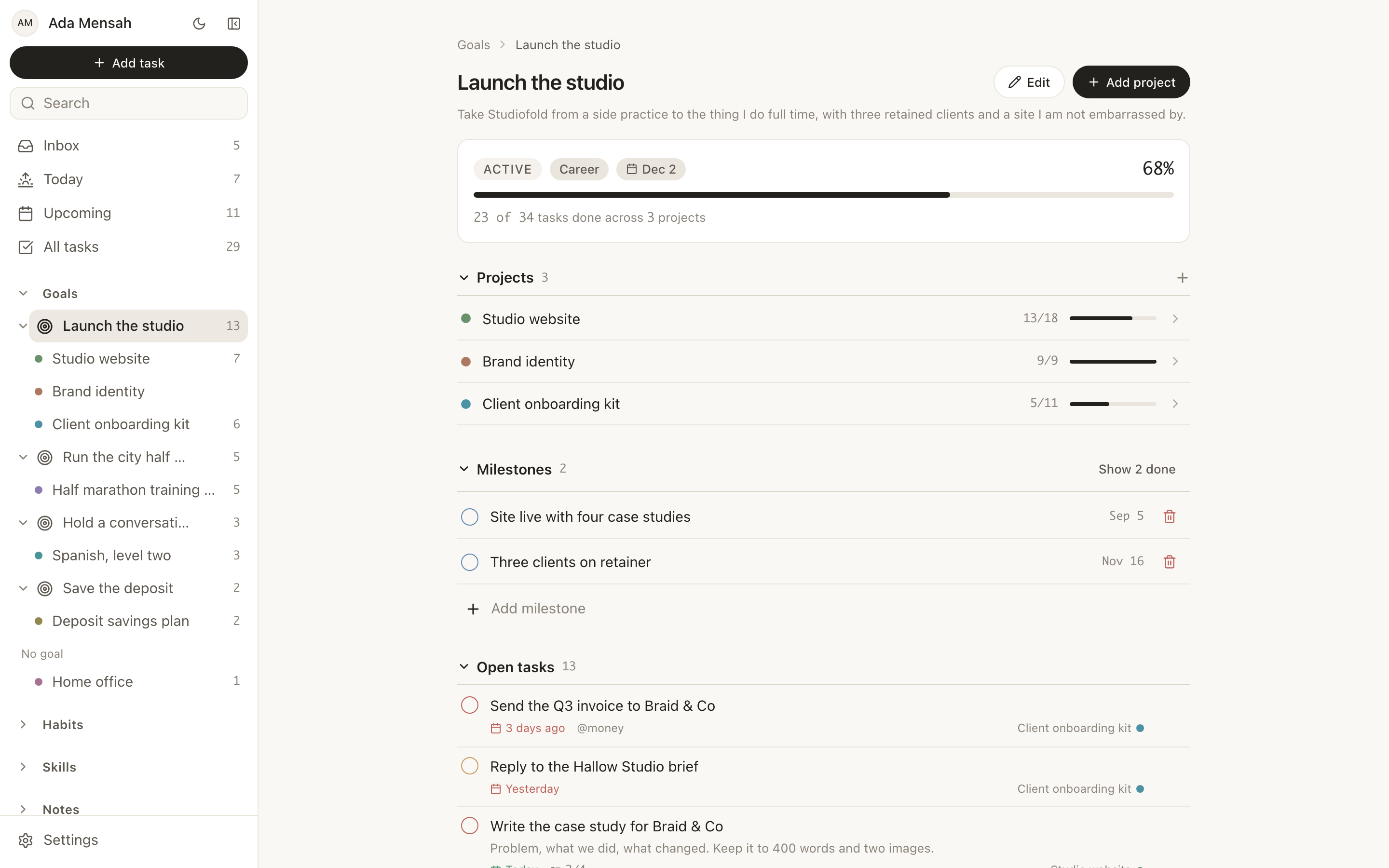
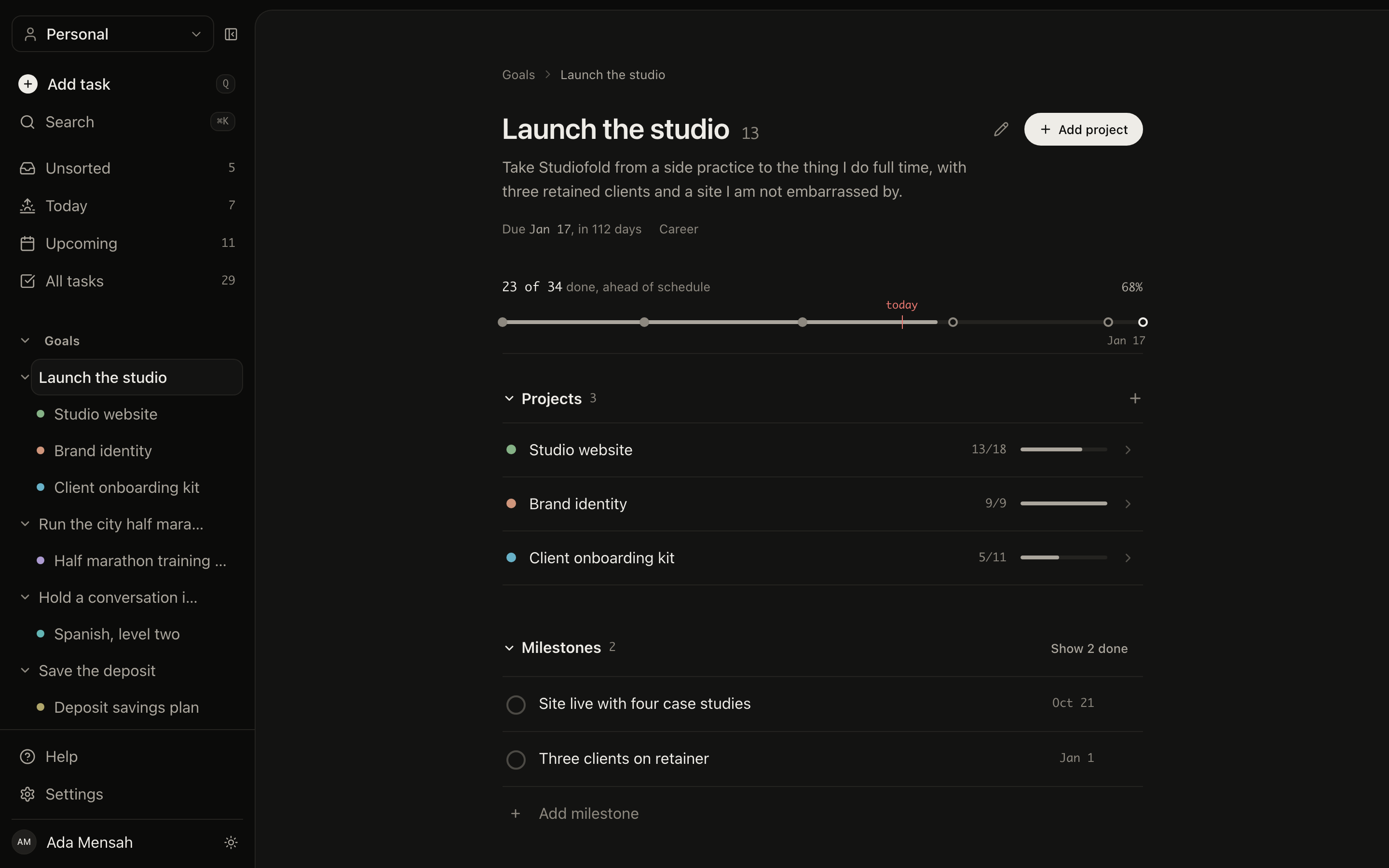
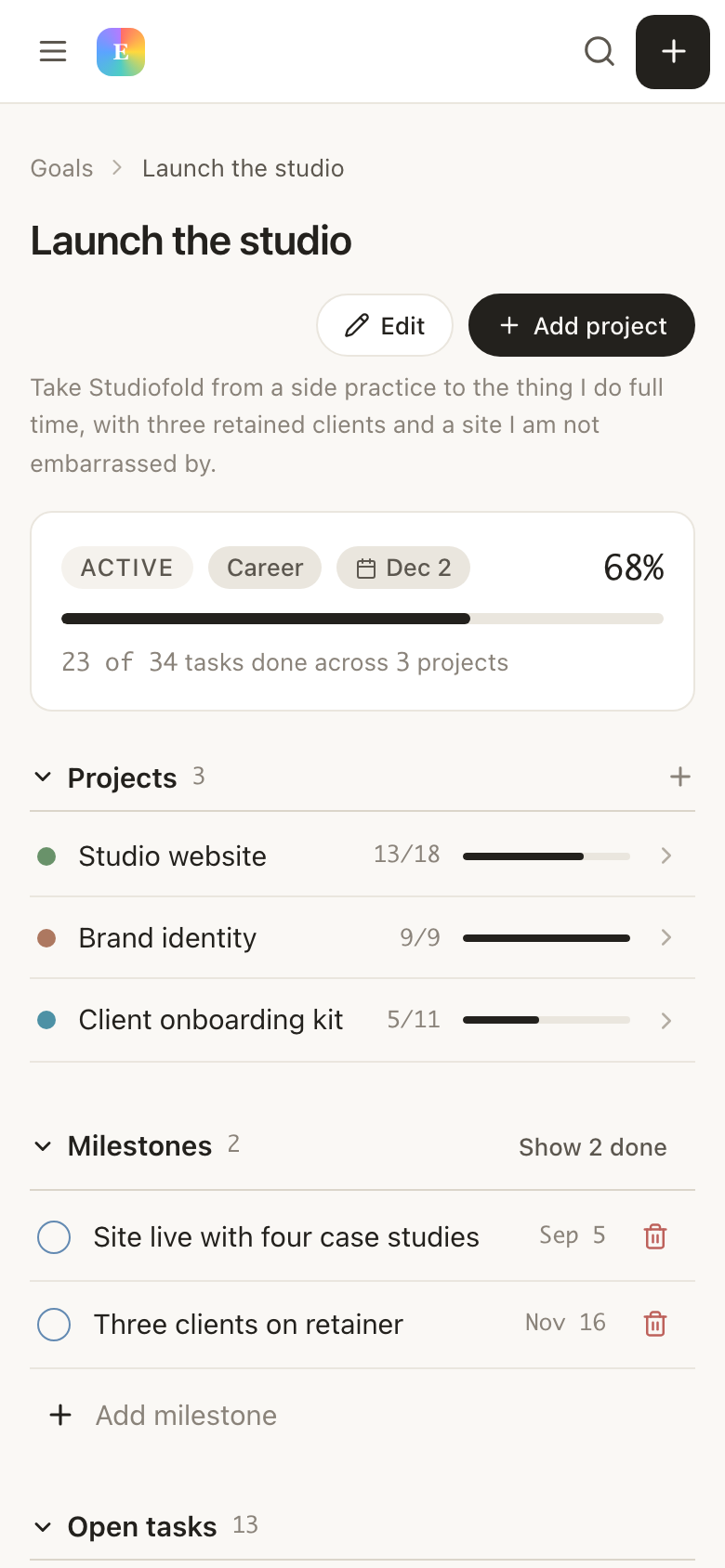
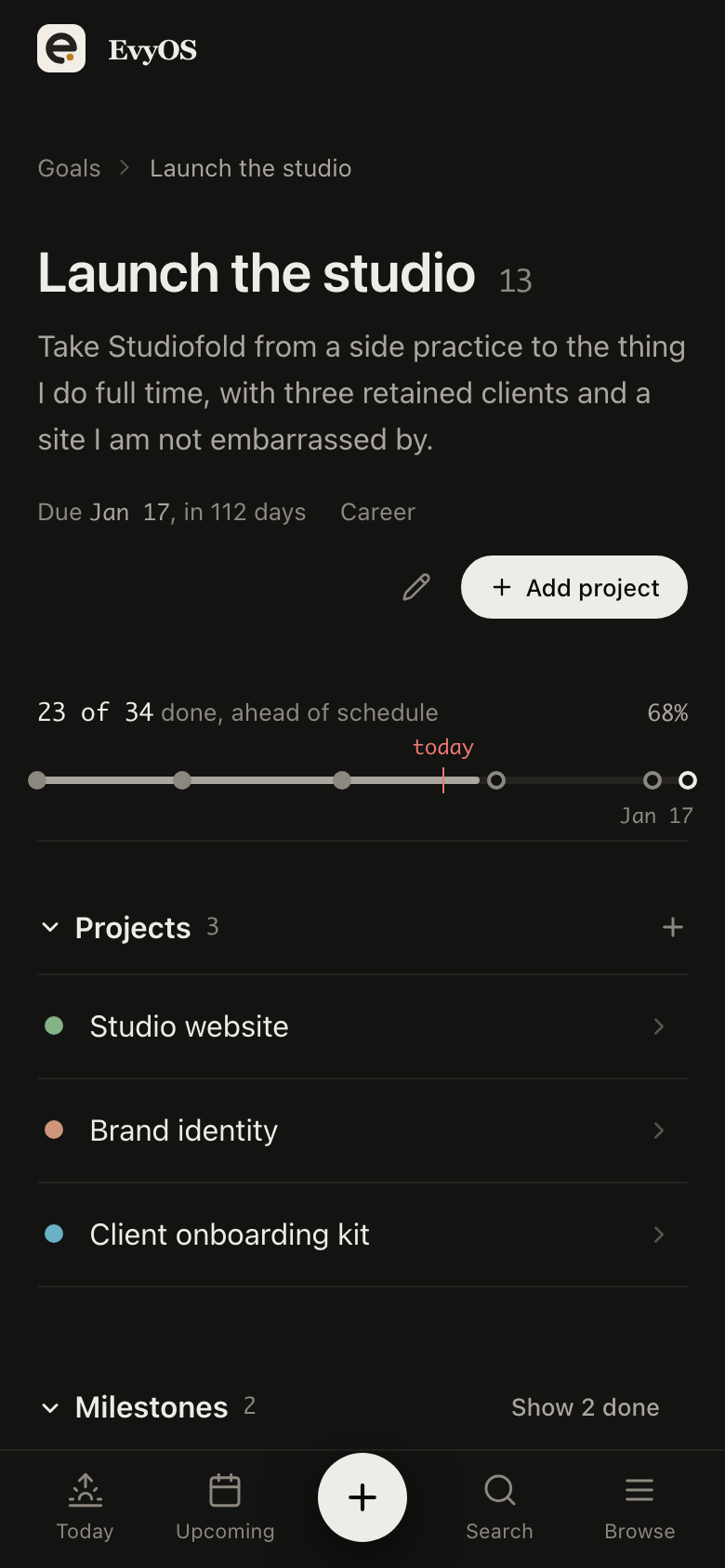
A grade exam in June, the four pieces for a wedding gig, an EP you are tracking — each a project with a real date. Learned, up to tempo, played from memory: those are milestones, and they turn four vague months into a sequence you can actually be behind or ahead of.
What today’s session is, decided before the case is open.
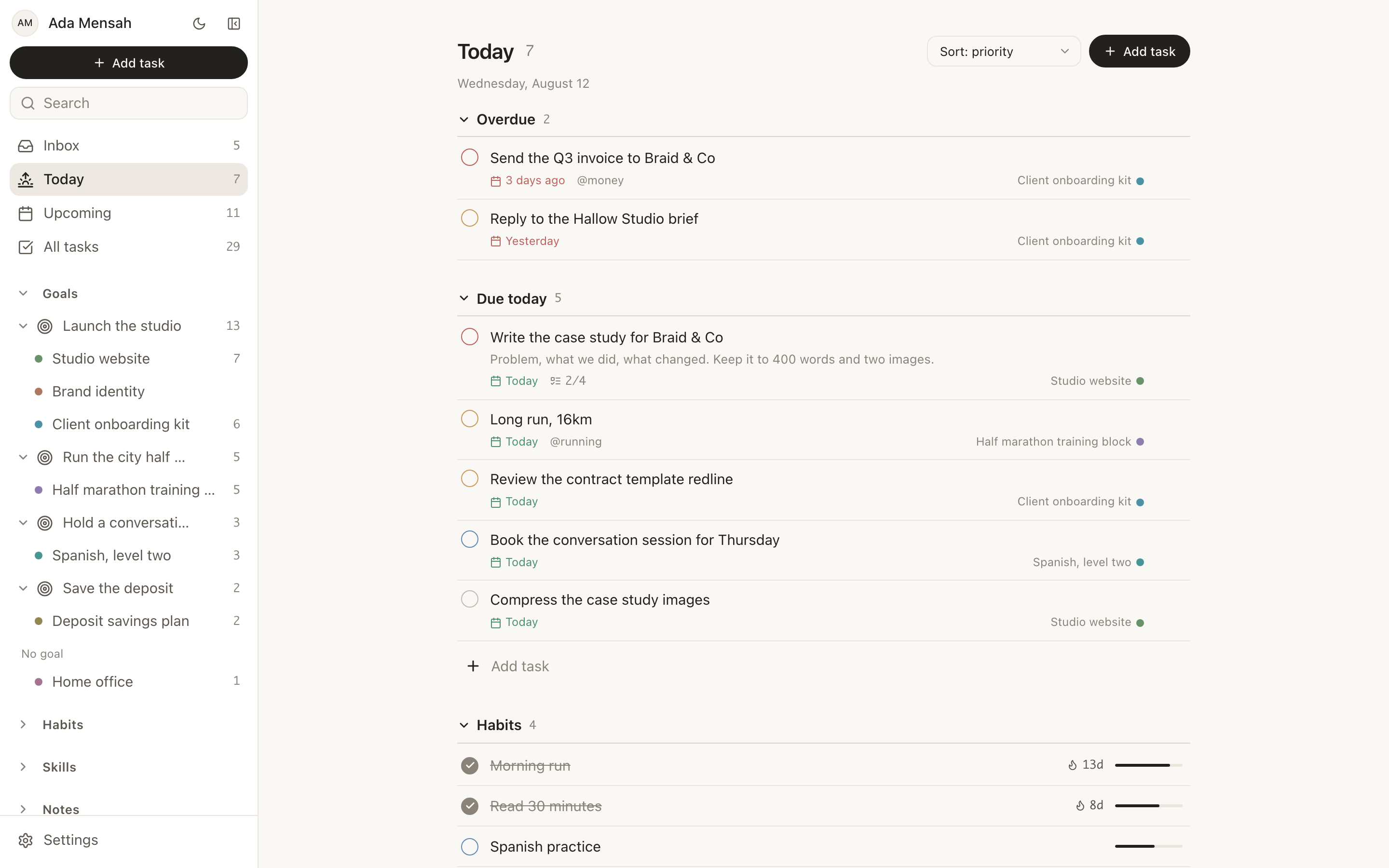
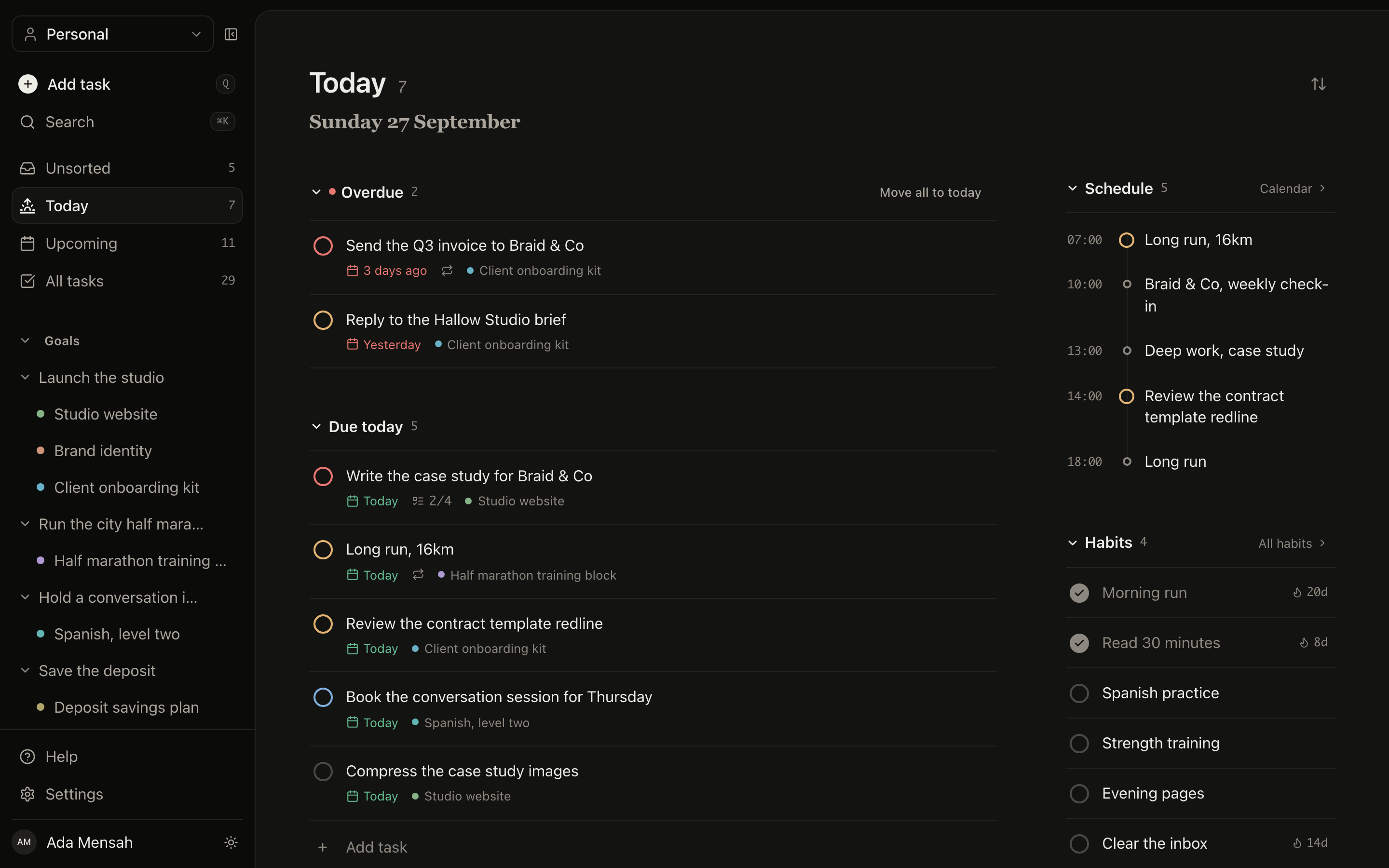
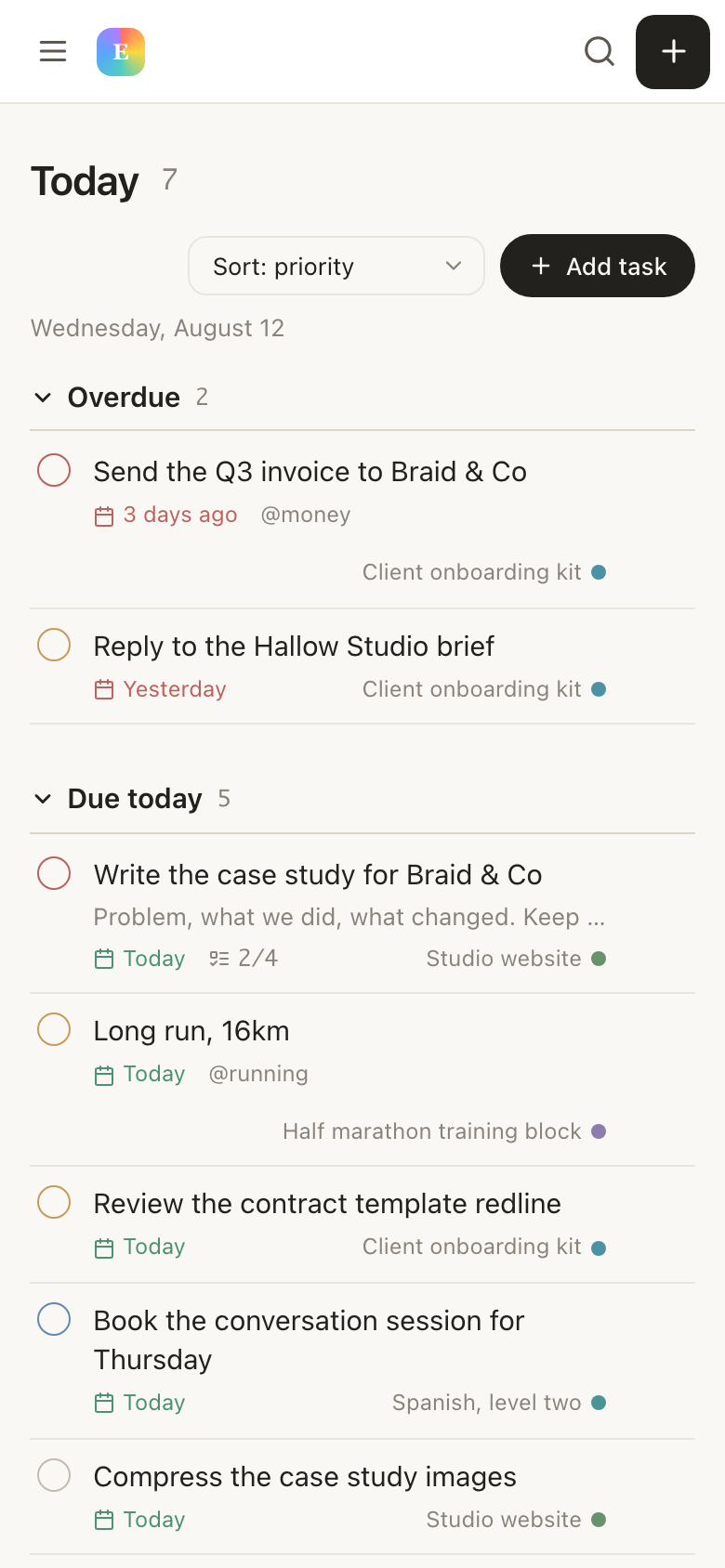
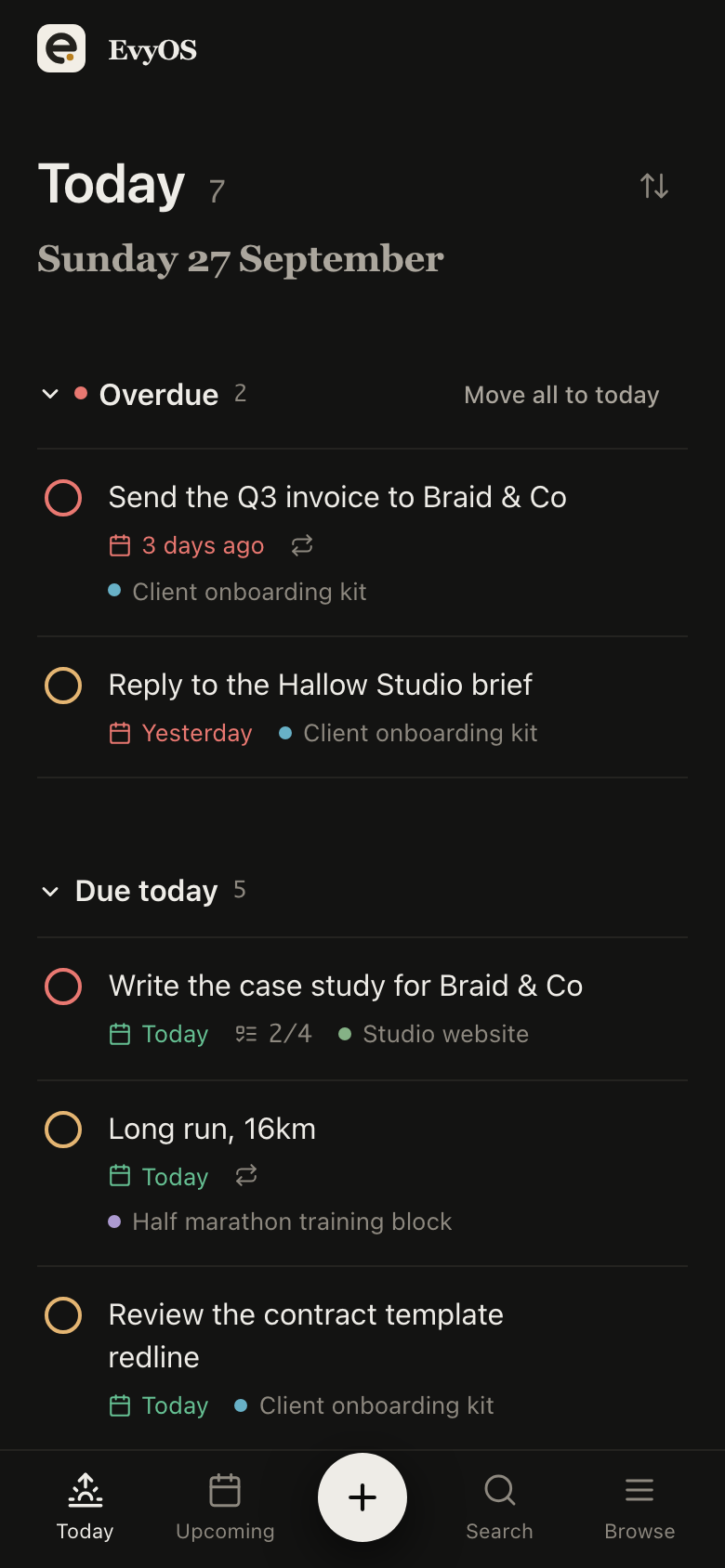
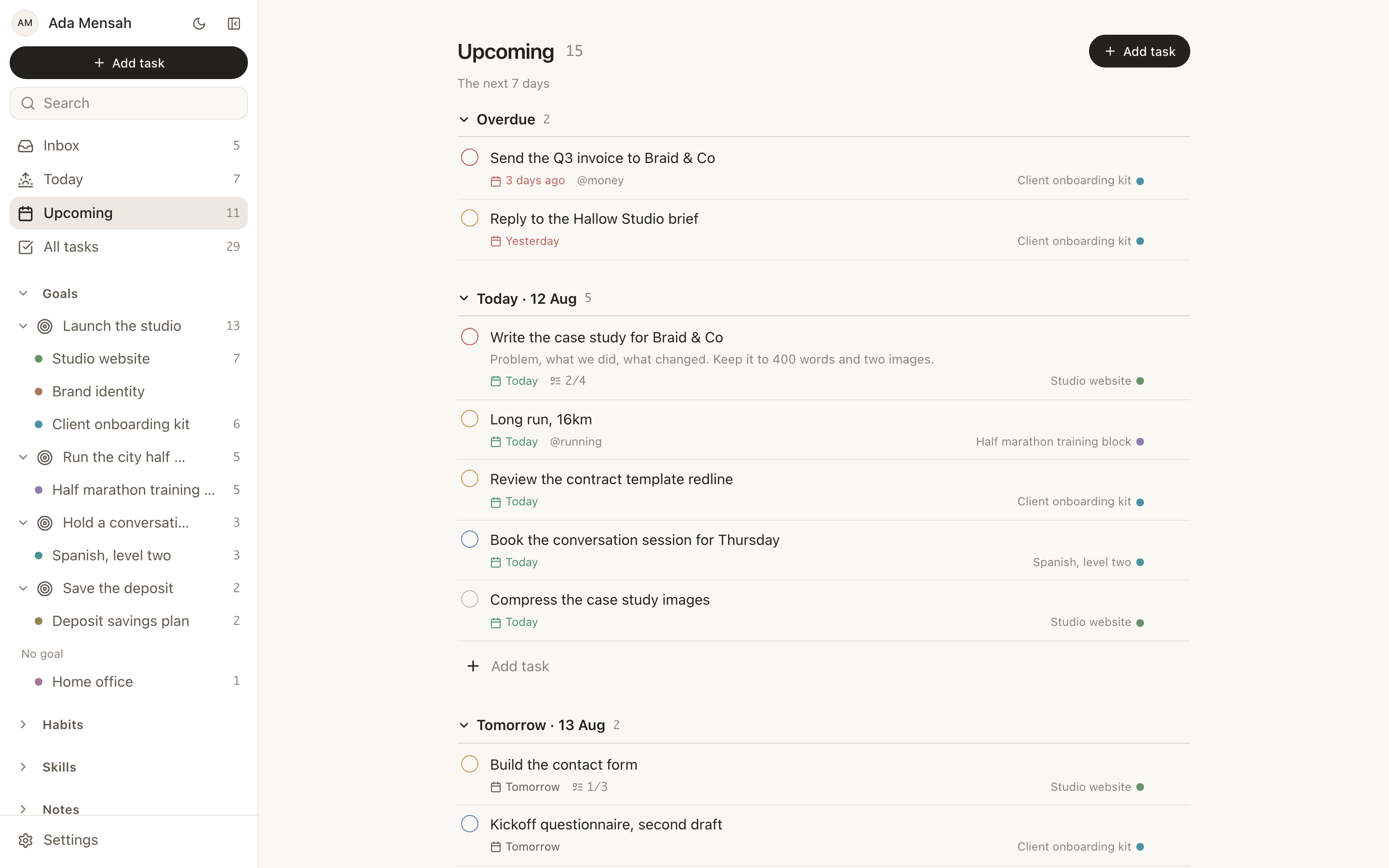
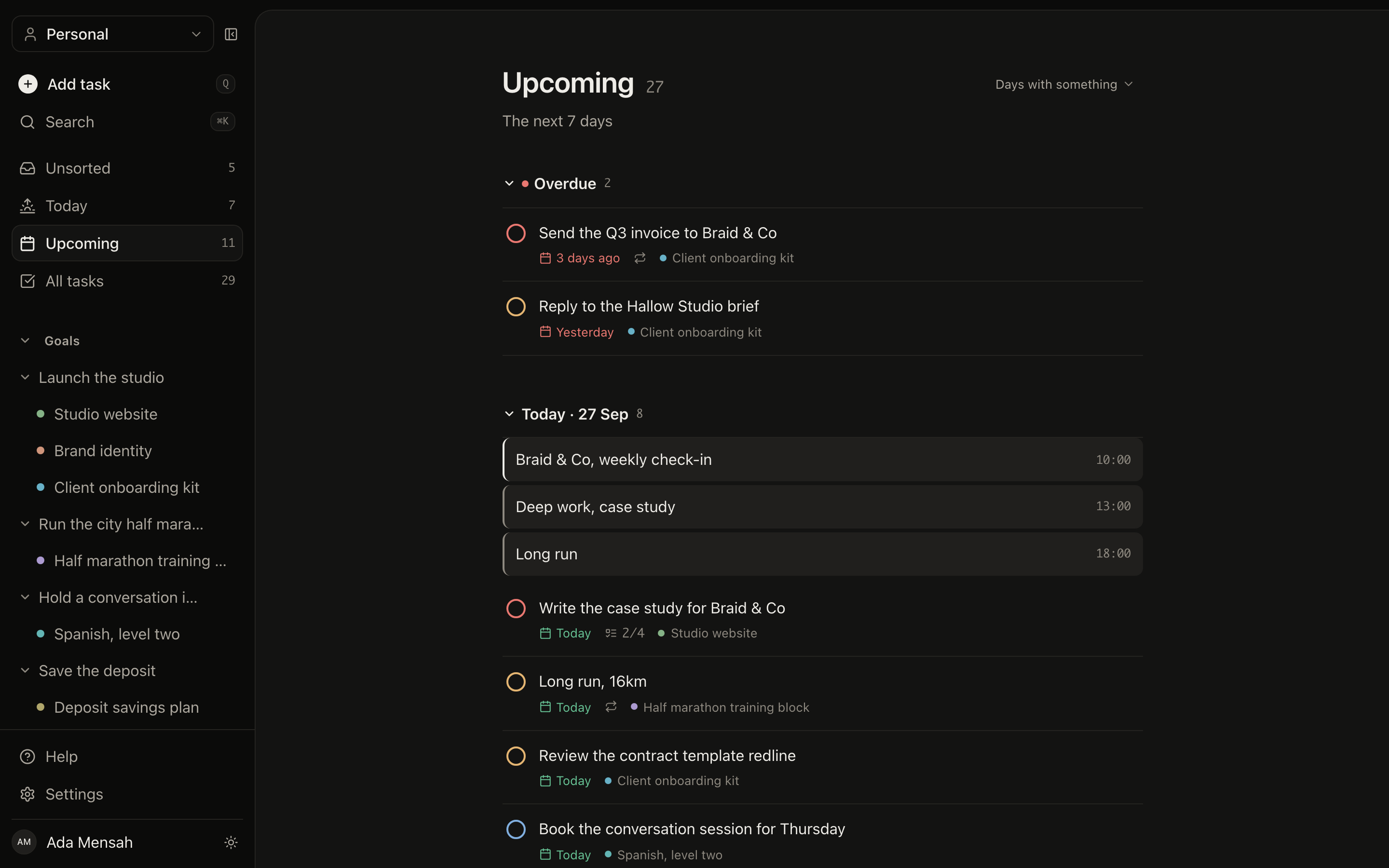
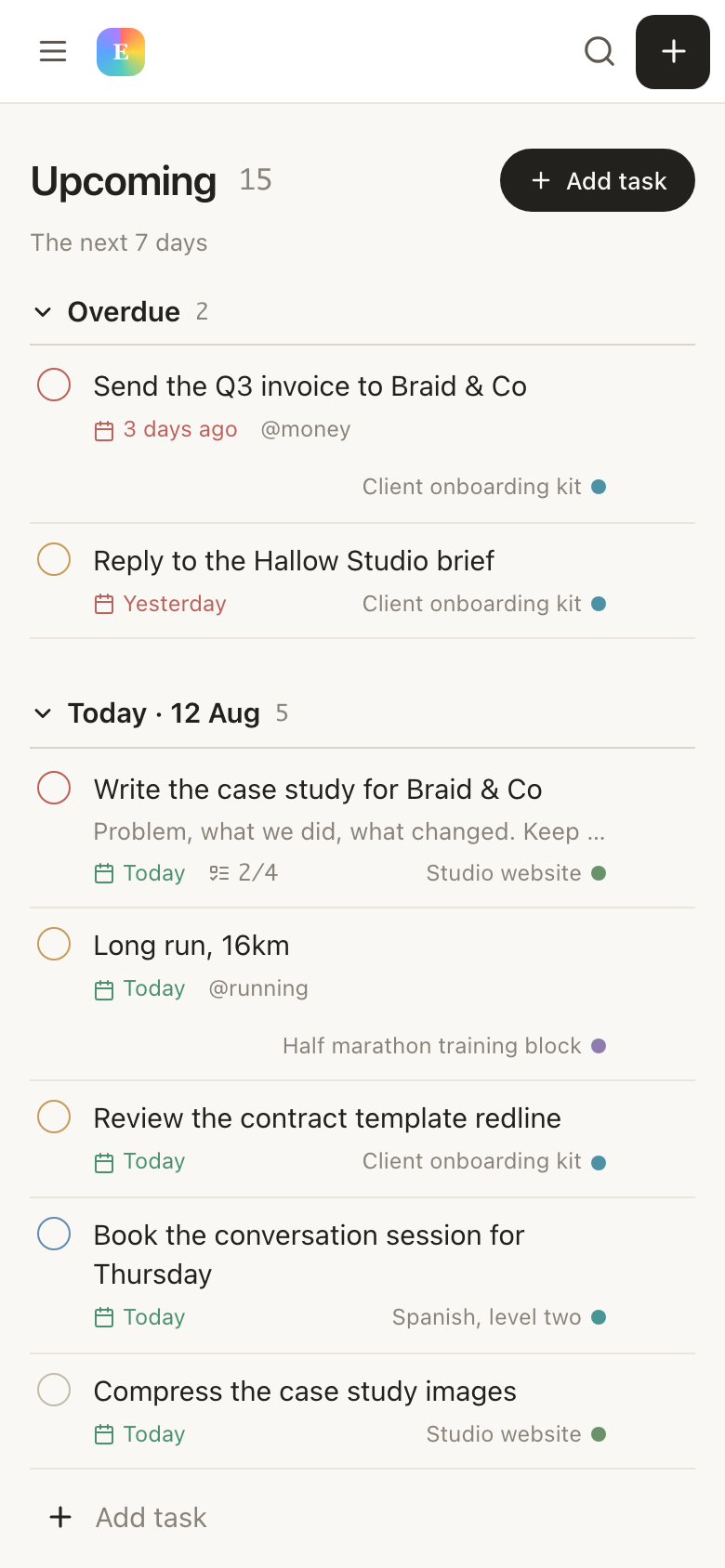
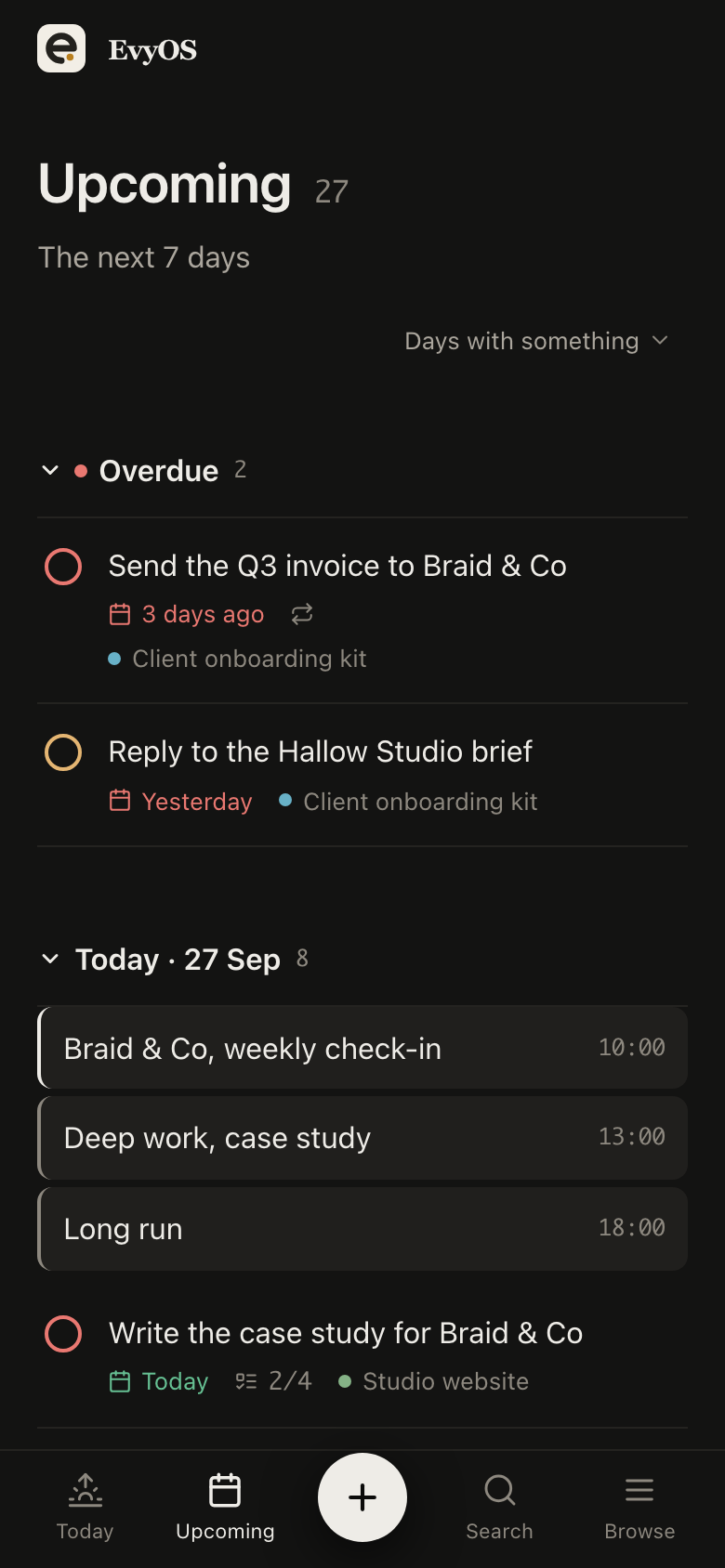
Bars 40 to 56 at 60bpm. Twenty minutes of sight-reading. Restring before Thursday. Each with an estimate in minutes and a due date, recurring where it should recur. Today shows the session as a short list, so the hard bar has a slot in it rather than a good intention behind it.
Daily practice, measured the way it actually behaves.
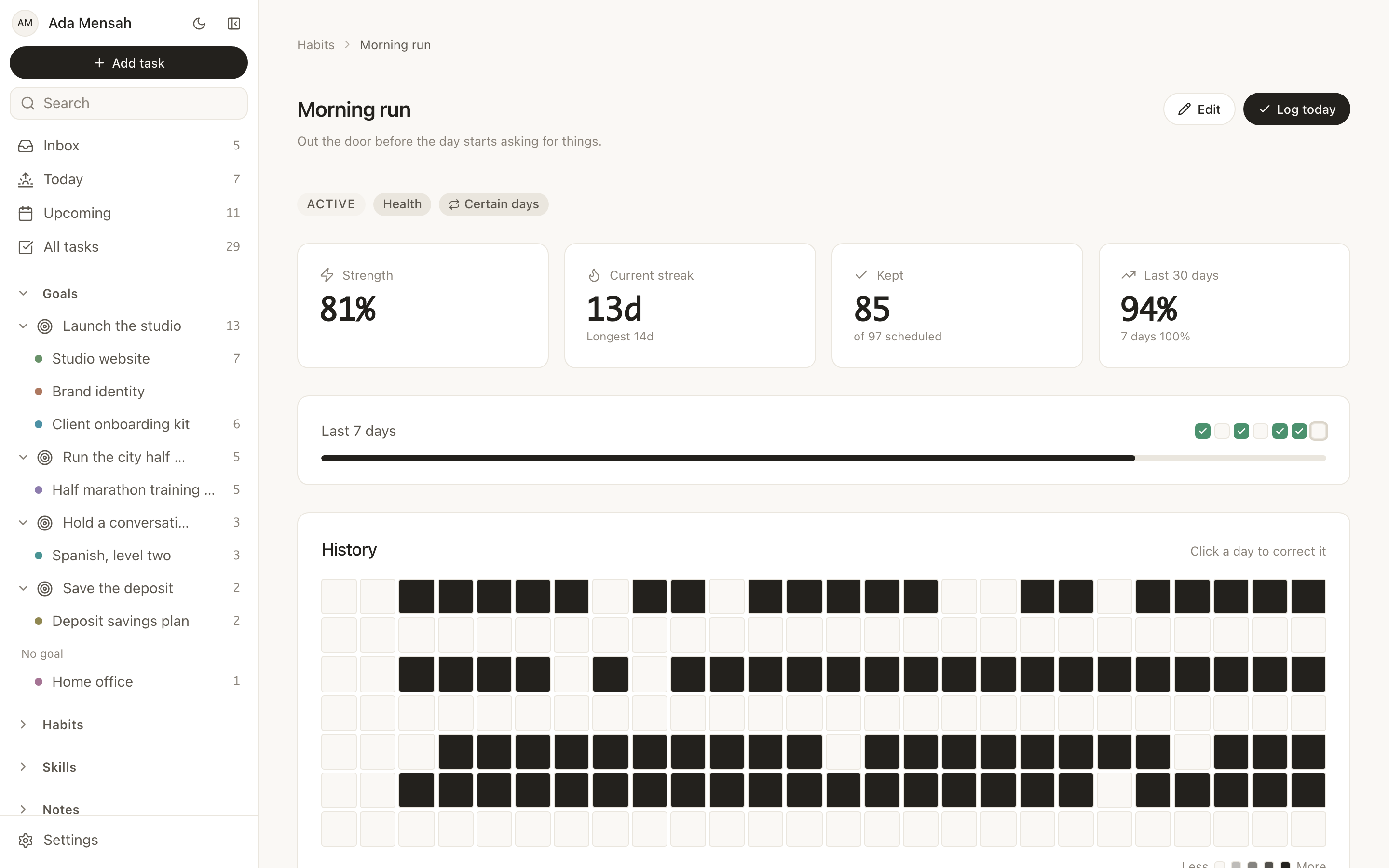
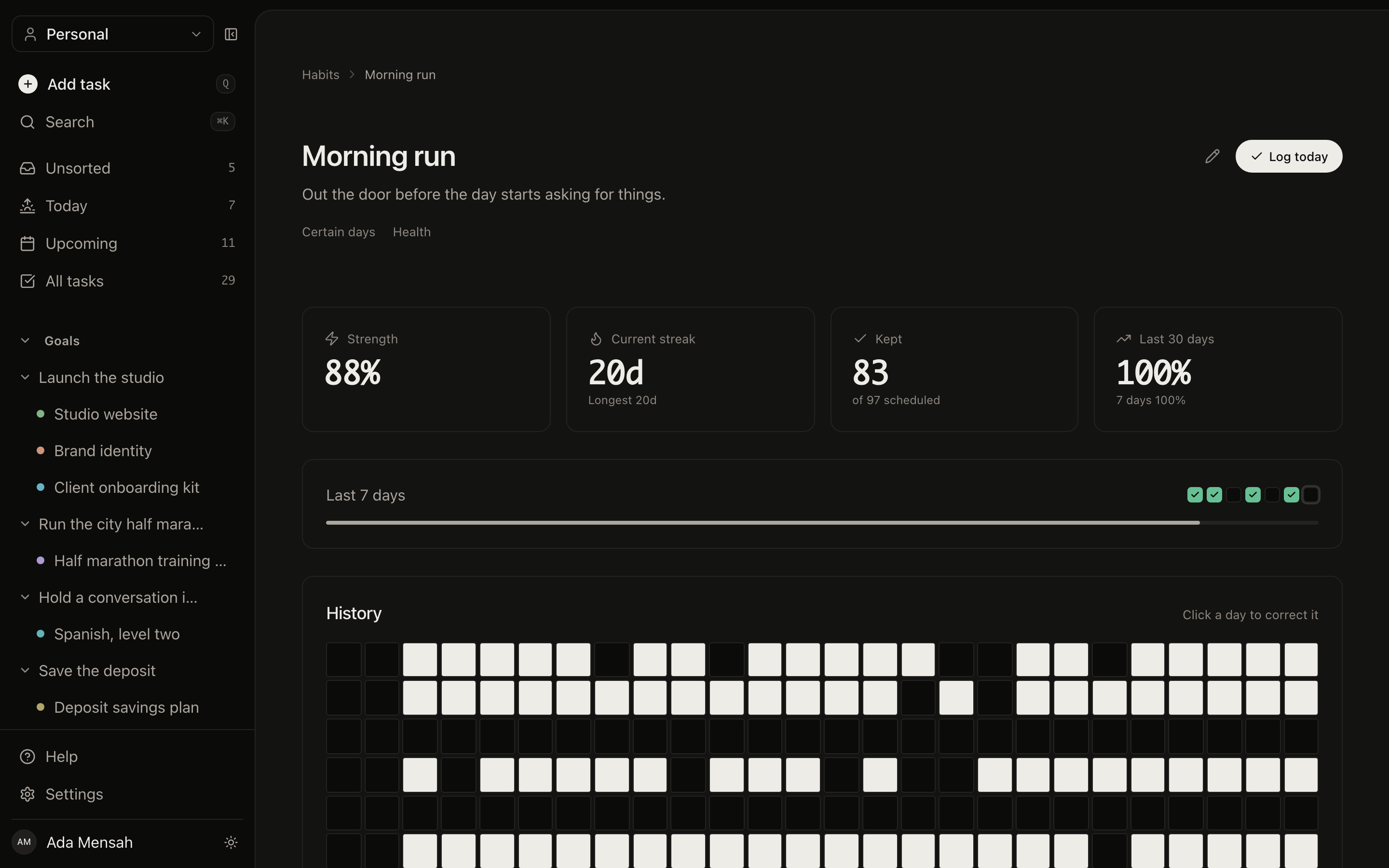
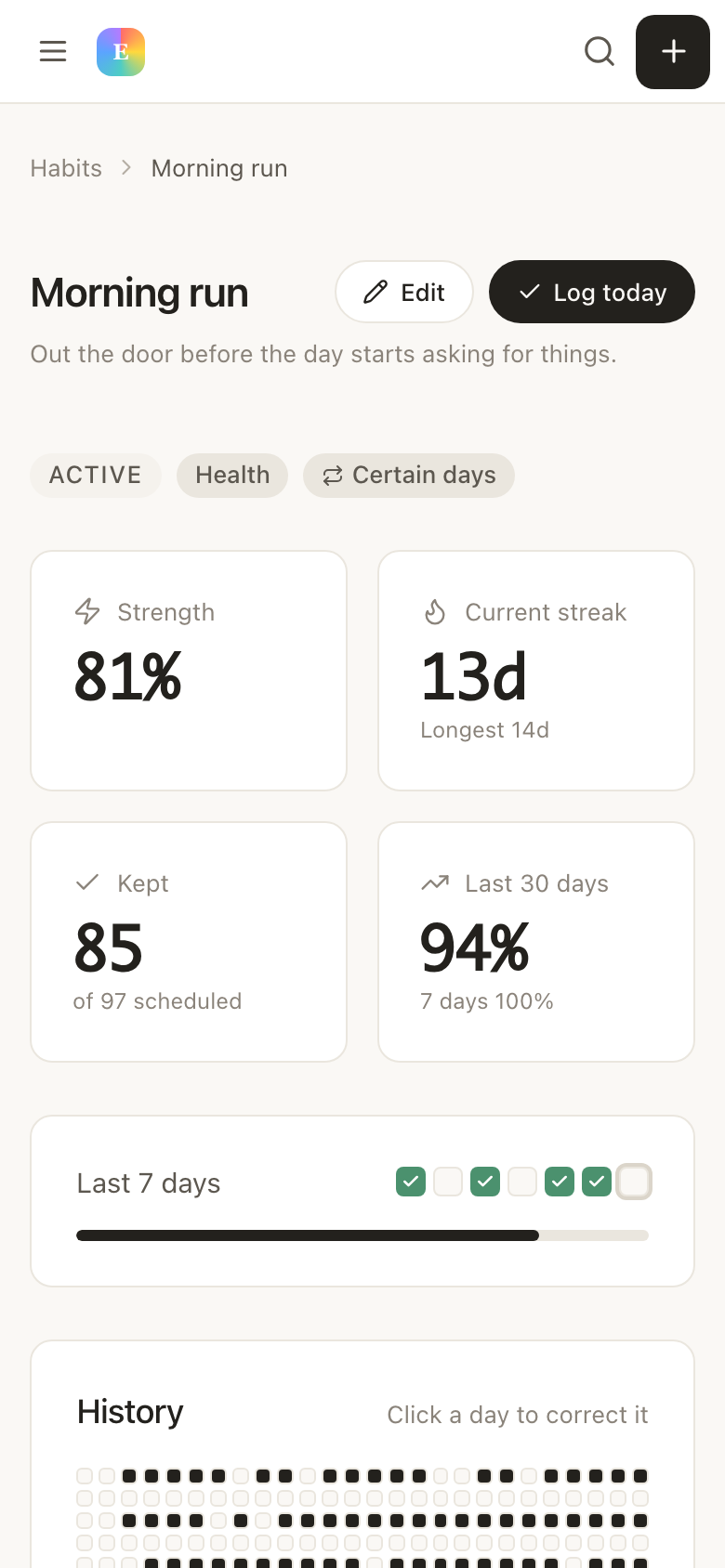
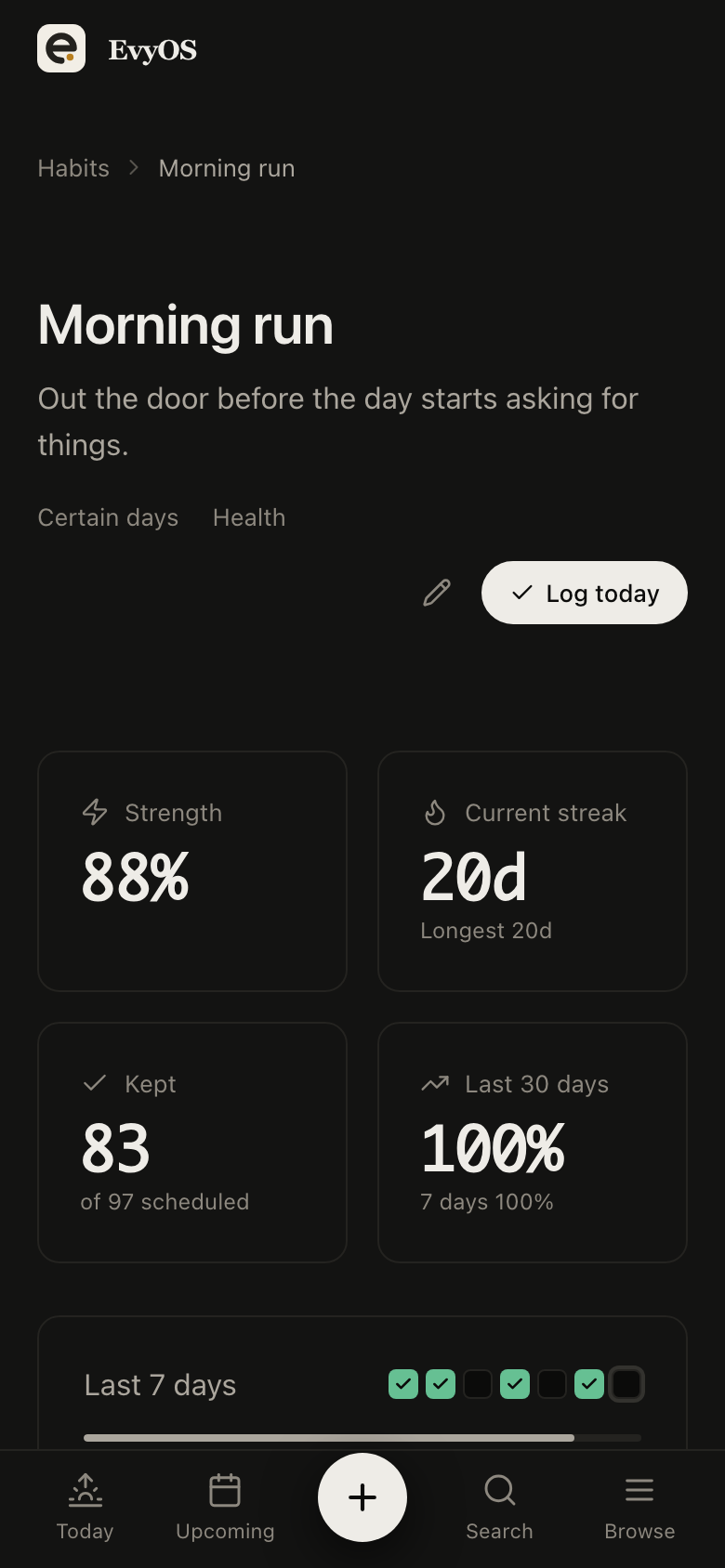
Set the habit to the days you genuinely play — six, or four, not a guilt-shaped seven. The streak, the strength score and the year-long graph then show the real pattern: the fortnight you stopped, the month you did not, and what each one did to how the pieces sounded.
Practice streakCustom schedulesYear graphStrength score
04 - Skills
This is the practice journal.
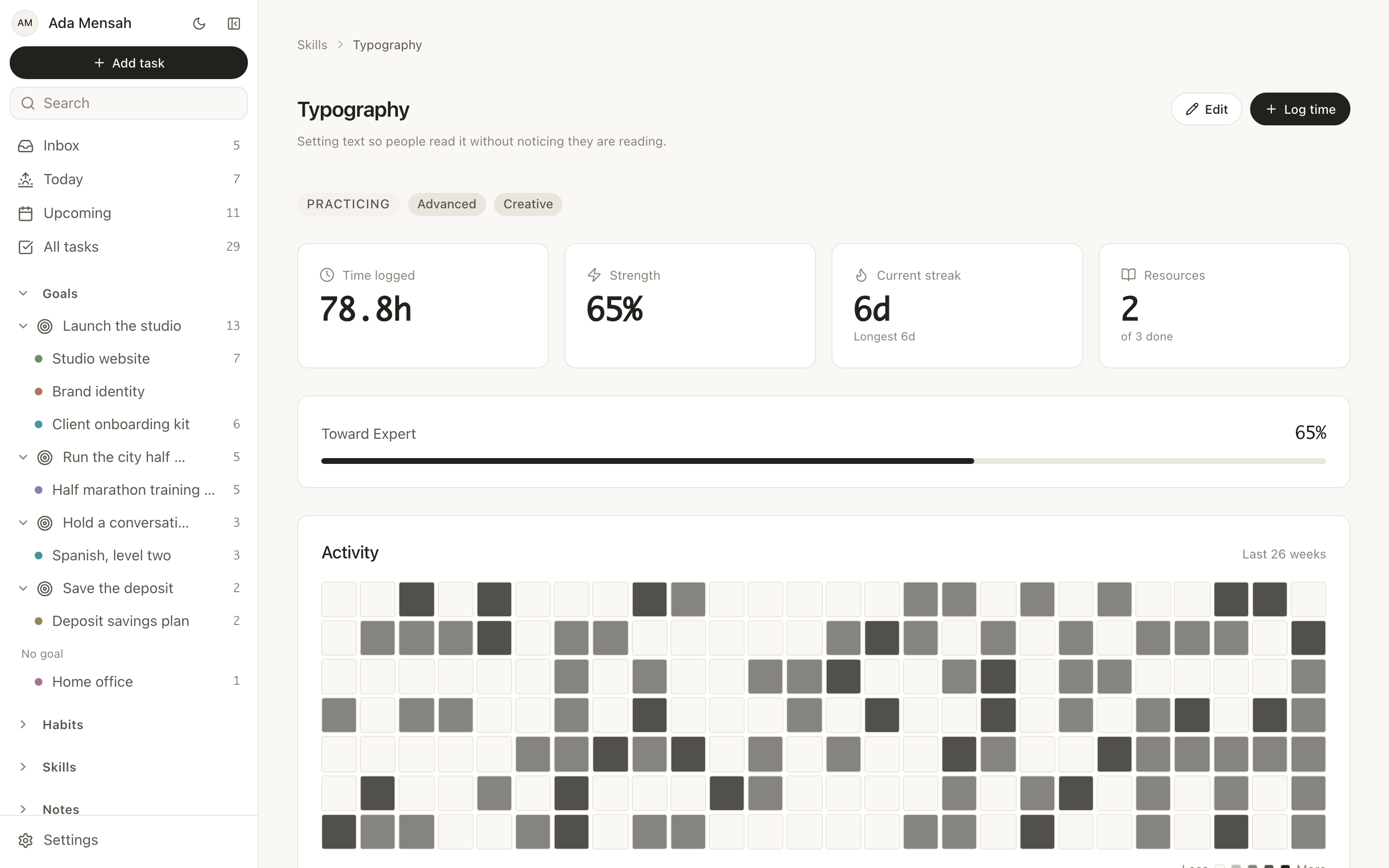
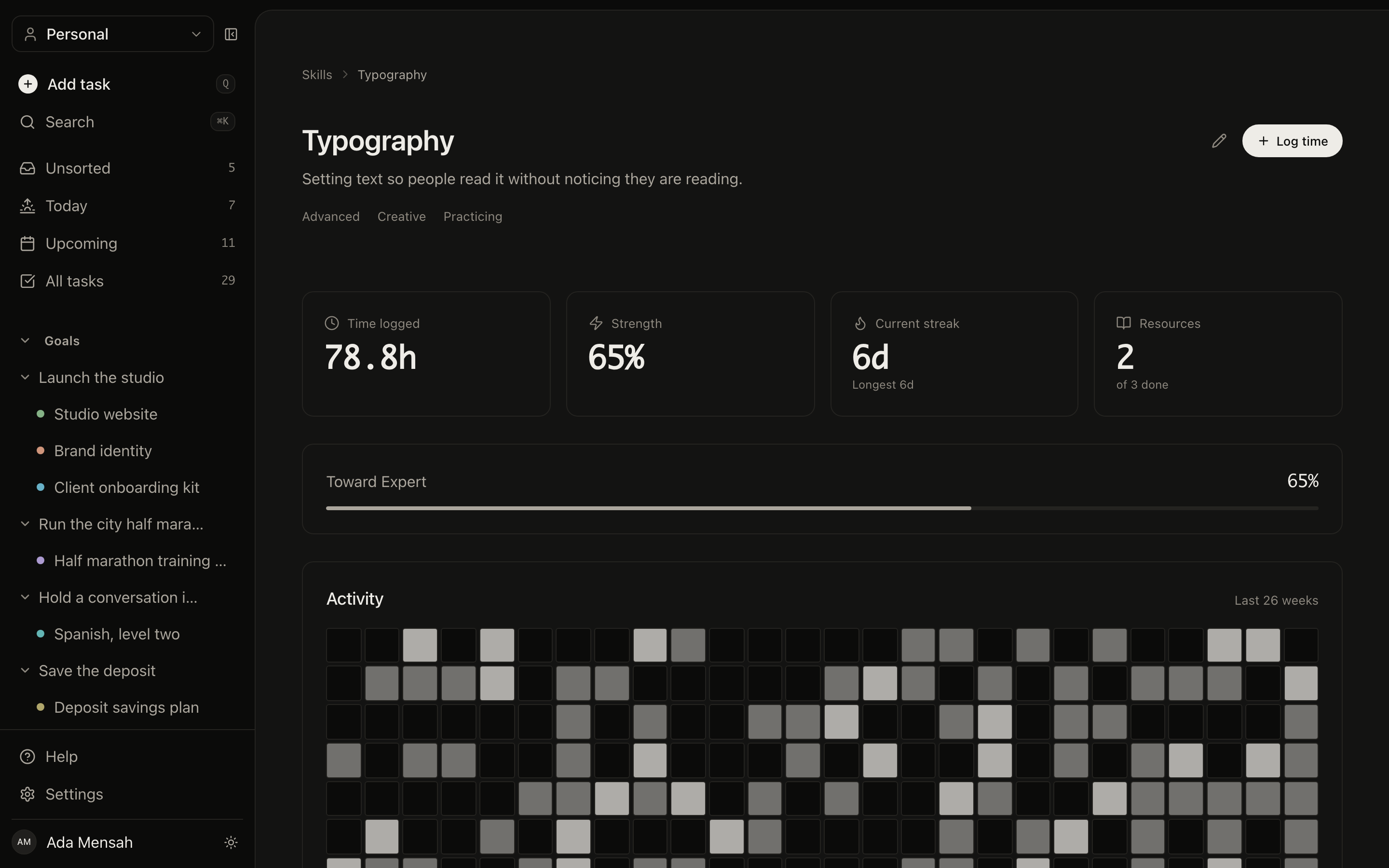
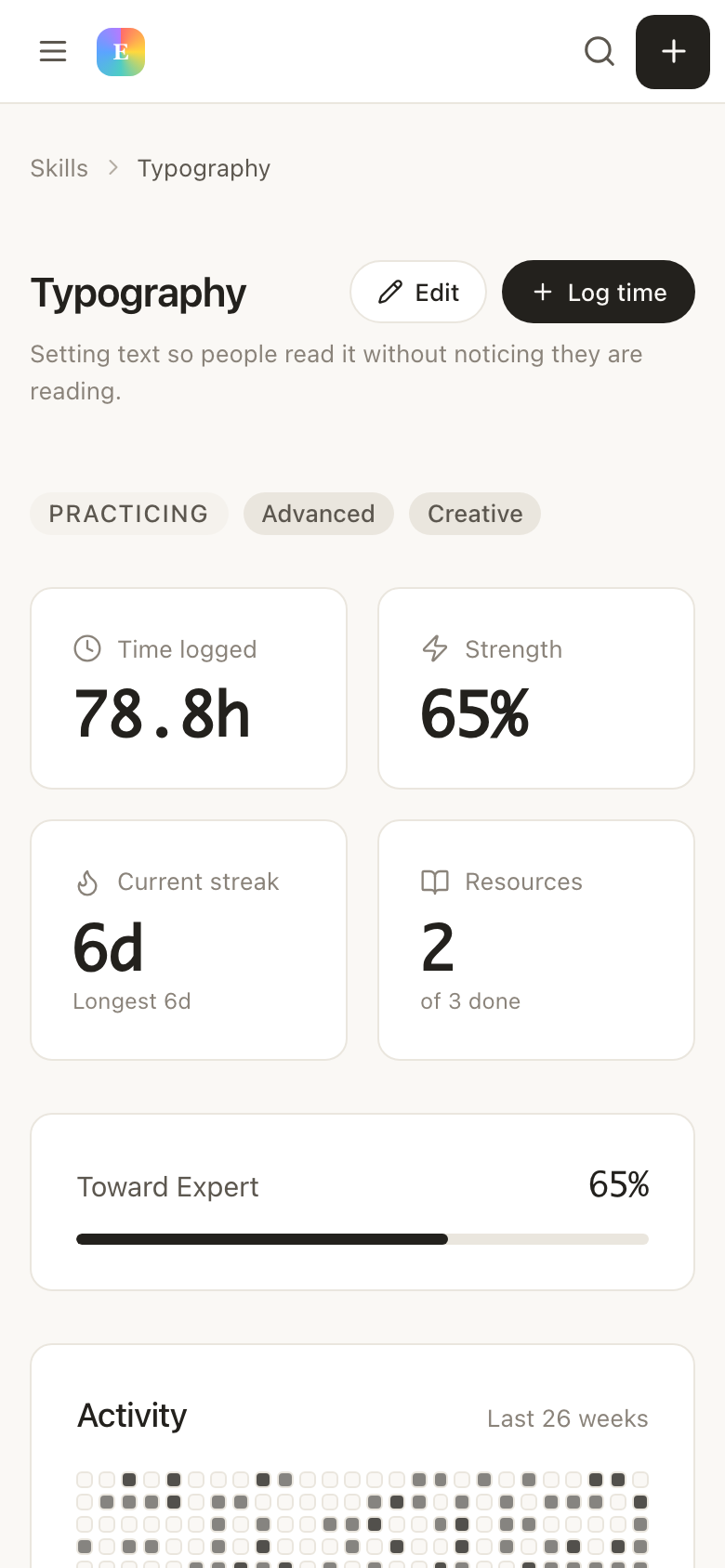
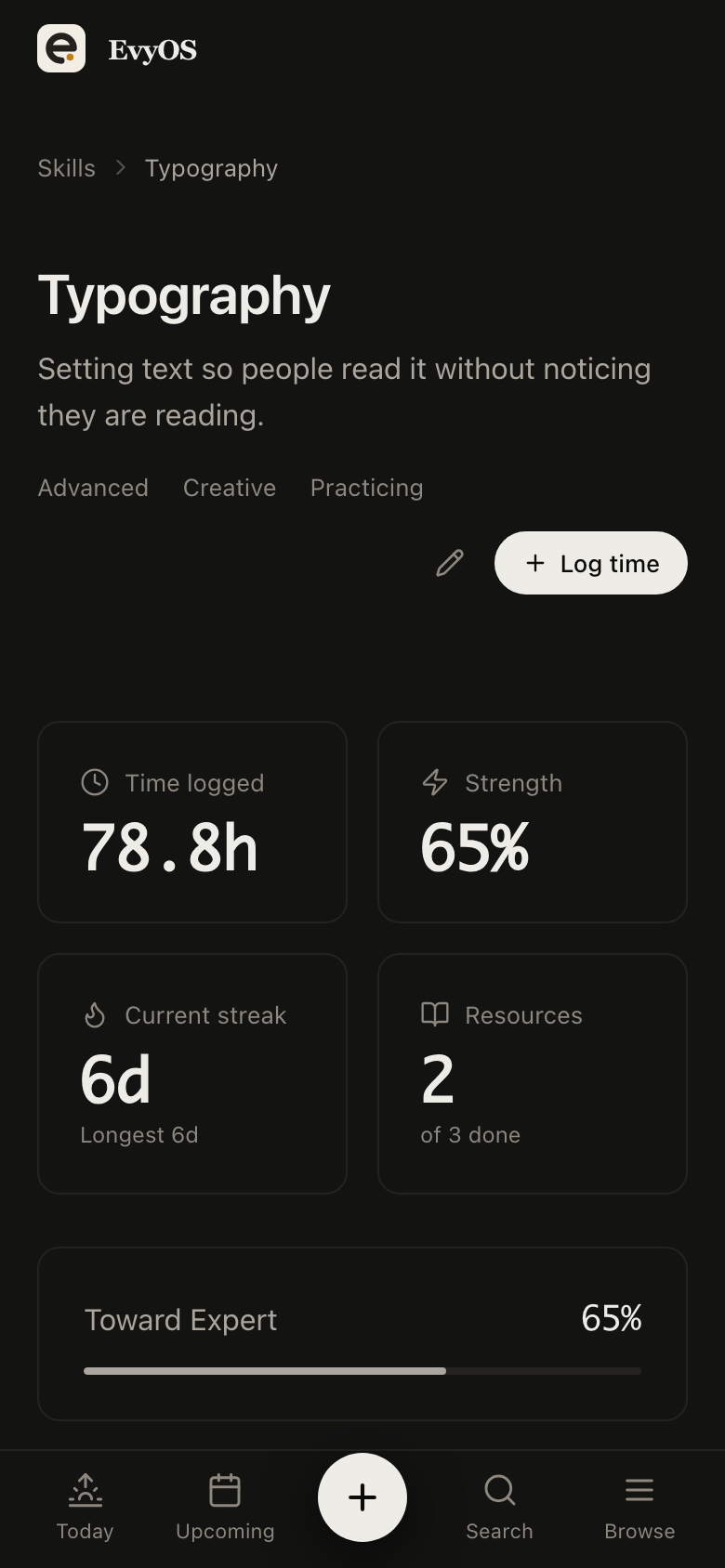
Log a session against the instrument or the discipline — technique, repertoire, ear training, improvisation — with the minutes and what it was. The hours accumulate and the activity graph fills in. Ask how much sight-reading you have really done this year and there is a number rather than a shrug.
Logged minutesActivity typeHours per disciplinePractice history
✦ Getting started
Up and running in under 5 minutes.
1
Write down what you are working towards
The recital or the grade goes in as a goal with its date. Each piece becomes a project with milestones — learned, up to tempo, memorised. Add practice as a habit on the days you really play.
2
Log the session, not the intention
Do the twenty minutes, then log it against technique or repertoire with the minutes. Deciding what to call it takes longer than recording it, and after a fortnight the record is doing the remembering.
3
Practise from the record
A few months in, the hours say where the time actually went, and it is usually the comfortable material. You aim the next month at the gap, and the recital arrives with the hard bar already solved.
✦ Pricing
Simple. No surprises.
Start free. Upgrade when you're ready to go deeper.
Make each instrument a skill and log sessions against it with the minutes and the activity type. Piano and guitar then keep separate totals and separate activity graphs. A month where one instrument quietly took all the time becomes visible instead of suspected.
Usually one habit — practised today — with the session plan carrying the detail as tasks. Set the habit to the days you actually play rather than to seven. A schedule you keep produces a streak that means something; a schedule you do not produces a number you learn to ignore.
No. There is no audio and no score library. Recordings stay wherever you make them and the music stays on the stand or in your reader. A task can carry an attachment and a note can hold your markdown practice observations, but what EvyOS keeps is the log, the habit and the dates.
Make the exam a goal with its date, then one project per piece underneath, with milestones for learned, up to tempo and memorised. The goal page shows every piece against the same deadline, so the slow movement is obvious in February rather than in the final fortnight.