The short answer: within an hour of waking, spend about 10 minutes outside in daylight — 20 to 30 if it is overcast. No sunglasses unless you need them, and never look directly at the sun. Tie it to something you already do every morning, like drinking your coffee on the step, walking the dog or taking the long way to the bus, so it does not depend on remembering.
That is the whole protocol. The rest of this page explains why it works, what to do when the weather or your schedule gets in the way, and how to make it stick.
Why morning light matters
Your body clock is set mainly by light reaching your eyes. Specialised cells in the retina respond to bright light and signal the brain's master clock, the suprachiasmatic nucleus. Bright light early in the day moves your clock earlier. Bright light late at night moves it later.
What that means in practice:
- Earlier, steadier sleep timing. Morning light is one of the most reliable ways to shift a late body clock earlier, which is why it is standard advice for people who struggle to fall asleep at a reasonable hour.
- Feeling awake sooner. Melatonin is suppressed by bright light, and outdoor light is far brighter than indoor light, even on a grey day.
- A cue for the rest of your morning. Getting outside tends to bring other habits with it, like a walk, some movement and time away from your phone.
What it does not do: it will not fix a sleep disorder, replace treatment for low mood, or make up for 5 hours in bed. Studies on light and sleep timing are solid. Claims that it transforms hormones, metabolism and every area of your life go far beyond the evidence.
How long, and when
| Conditions | Roughly how long outside |
|---|---|
| Clear or bright morning | About 10 minutes |
| Overcast | 20 to 30 minutes |
| Heavy cloud, rain, dark winter mornings | As long as is practical; see below |
Timing: within the first hour of waking is the common guideline, and earlier is better for shifting a late clock. Light at 11am still helps you feel awake, but it does less to move your sleep timing.
Through a window: better than nothing, but glass and indoor distance cut the light sharply. Standing outside for 5 minutes usually beats 20 minutes at a desk by a window.
Sunscreen: use it as you normally would. The light that matters for your body clock reaches your eyes regardless.
Tie it to something you already do
Adding "go outside for 10 minutes" as a new task rarely lasts. Moving something you already do outdoors usually does:
- Drink the first coffee on the step, balcony or at an open door.
- Walk to a slightly further bus stop or café.
- Take the dog out for the first walk instead of the second.
- Take the first phone call of the day outside and walking.
- Do the school run on foot for part of the way.
This is habit stacking: attach a new behaviour to one that already happens every day. What is habit stacking explains the method in general.
When the obvious version does not work
It is dark when you wake up. In winter at high latitudes, there may be no daylight until after you have left. Get outside at the first opportunity, like a walk at mid-morning or lunch. Some people use a light therapy lamp at breakfast. If you are considering one for low winter mood rather than just for waking up, talk to a doctor first.
It is raining. Overcast light is still much brighter than indoor light. A covered doorway, a porch or 10 minutes under an umbrella still counts.
You work nights. The same principle applies, shifted: bright light when your "morning" starts, and dim light and sunglasses on the way home. Shift workers should follow guidance written for shift work rather than a general article.
You forget. That means it is not tied to anything yet. Pick one cue from the list above and track it, so a missed morning is visible the next day instead of quietly becoming a missed month.
Tracking it
A habit this small is easy to skip without noticing. In EvyOS, "Morning light" is a daily habit with an optional reminder time, a streak, and a year-long graph that shows which weeks slipped. The strength score falls gradually after a missed day instead of dropping to zero, so one bad morning does not undo a good month.
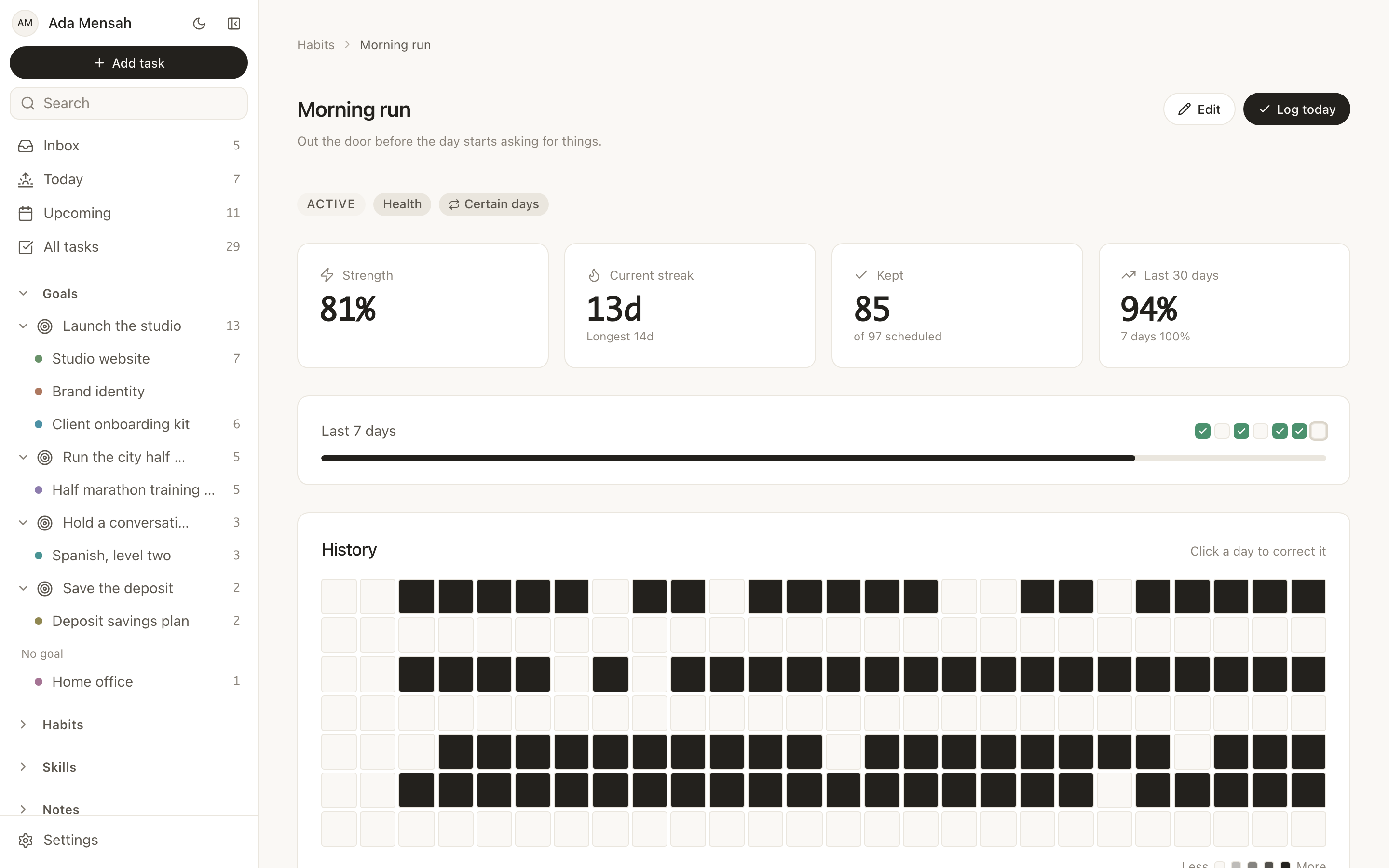
It fits naturally next to two related habits. A consistent sleep schedule is the other half of the same body clock. Water before coffee is another morning habit you can tie to the same routine. To fit all of them into one morning without it turning into a chore, see how to build a morning routine.
Frequently asked questions
How long should I get morning sunlight?
About 10 minutes outside on a clear morning, and 20 to 30 minutes when it is overcast. More is fine. Beyond 30 minutes the benefit for your body clock is small.
Does morning sunlight through a window count?
Partly. Glass and distance reduce the light a lot, so a few minutes outside does more than a longer time indoors. If a window is all you have, sit as close to it as you can.
Is it too late if I get outside 2 hours after waking?
No. It still helps you feel alert and adds light to your day. It just does less to shift a late sleep schedule earlier than light in the first hour.
Should I look at the sun?
No. Never look directly at the sun. Being outside in daylight is enough, and the light reaches your eyes without you staring at anything.
Does a sunrise alarm clock or light lamp work the same way?
A bright light therapy lamp can help when there is no daylight, especially in winter. A sunrise alarm clock is much dimmer and mainly makes waking up gentler. Neither is as bright as being outside.
Want to see the streak build? Start on the EvyOS free plan. It includes up to 5 habits with streaks, reminders and the year graph, and no card is required.